Key takeaways
- It is a UNESCO Daoist mountain ~1 hour from Chengdu — the birthplace of religious Daoism (Zhang Daoling, 142 CE).
- For most foreigners, choose the Front Mountain (前山, ¥80) — it holds the temples and the cable car; Back Mountain is a long waterfall hike.
- Front Mountain with the cable car is a 2–3 hour temple loop, up by car and down on foot; confirm cable fares at the window.
- Pair it with Dujiangyan if you have a full day: use ¥80 + ¥80 as the reliable ticket baseline, with packaged products varying by channel.
- Easiest DIY is the city rail — Xipu (Metro Line 2/6 interchange) → Qingchengshan, 23–40 min in a July 2026 12306 sample, then the signed local shuttle. Best Apr–May or Sep–Nov.
Who should add Mt Qingcheng to a Chengdu trip
Mt Qingcheng (青城山) is the quietest of Sichuan’s four UNESCO sites — a Daoist mountain 70 km west of Chengdu, joint-listed with the Dujiangyan irrigation system as World Heritage 1001. Most foreign travelers visit on a half-day add-on to Dujiangyan rather than as a standalone trip, and that is usually correct: the front mountain covers the highlights in 2–3 hours, while Back Mountain is a separate hike rather than a quick add-on.
| Verdict | Who |
|---|---|
| Worth it for | Travelers visiting Dujiangyan anyway; anyone interested in Chinese religion or Daoism; photographers wanting forested mountain scenes (spring or autumn); slower-paced travelers tired of the dense panda-temple-tea-house circuit. |
| Skip if | You have only 3–4 days in Chengdu and haven’t allocated Dujiangyan as a day; you’re already doing Mt Emei (the Buddhist counterpart and a much bigger experience); or mountain hiking on stairs isn’t your style. |
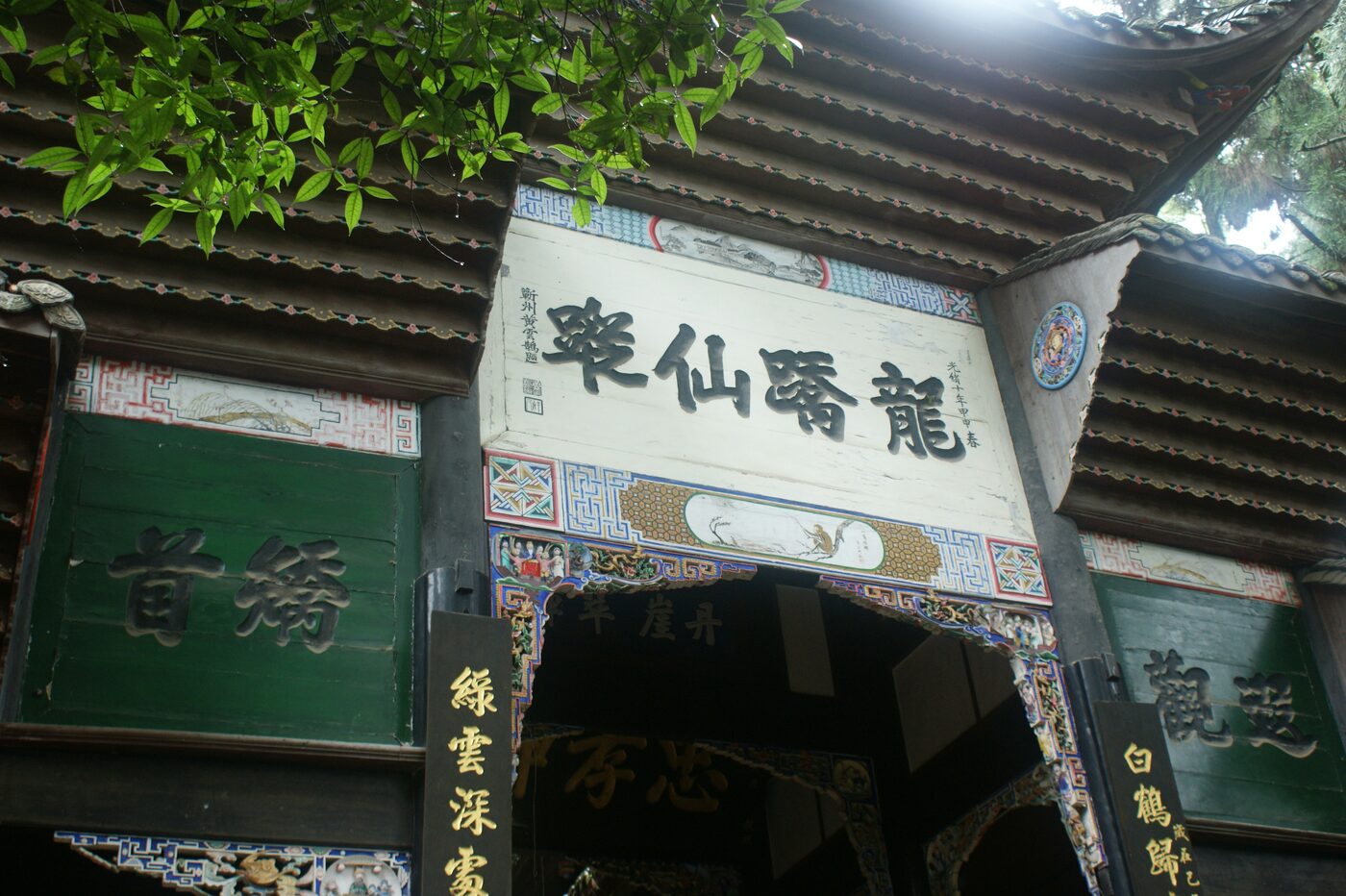
What Mt Qingcheng is — the Daoism connection
Religious Daoism — distinct from the older philosophical Daoism of the Tao Te Ching — was founded on this mountain in 142 CE. Zhang Daoling (张道陵), a Han-dynasty alchemist, allegedly received revelations in a cave on the front mountain and established the Way of the Celestial Masters (天师道), the first organized Daoist religious movement. The mountain has been continuously sacred to Daoism for 1,880+ years.
UNESCO inscribed Mt Qingcheng in 2000 jointly with Dujiangyan as a single World Heritage site (ID 1001), citing the cultural and natural importance of the linked Daoist mountain and the 2,000-year-old irrigation system below it. The protected zone covers 200 km² across both attractions.
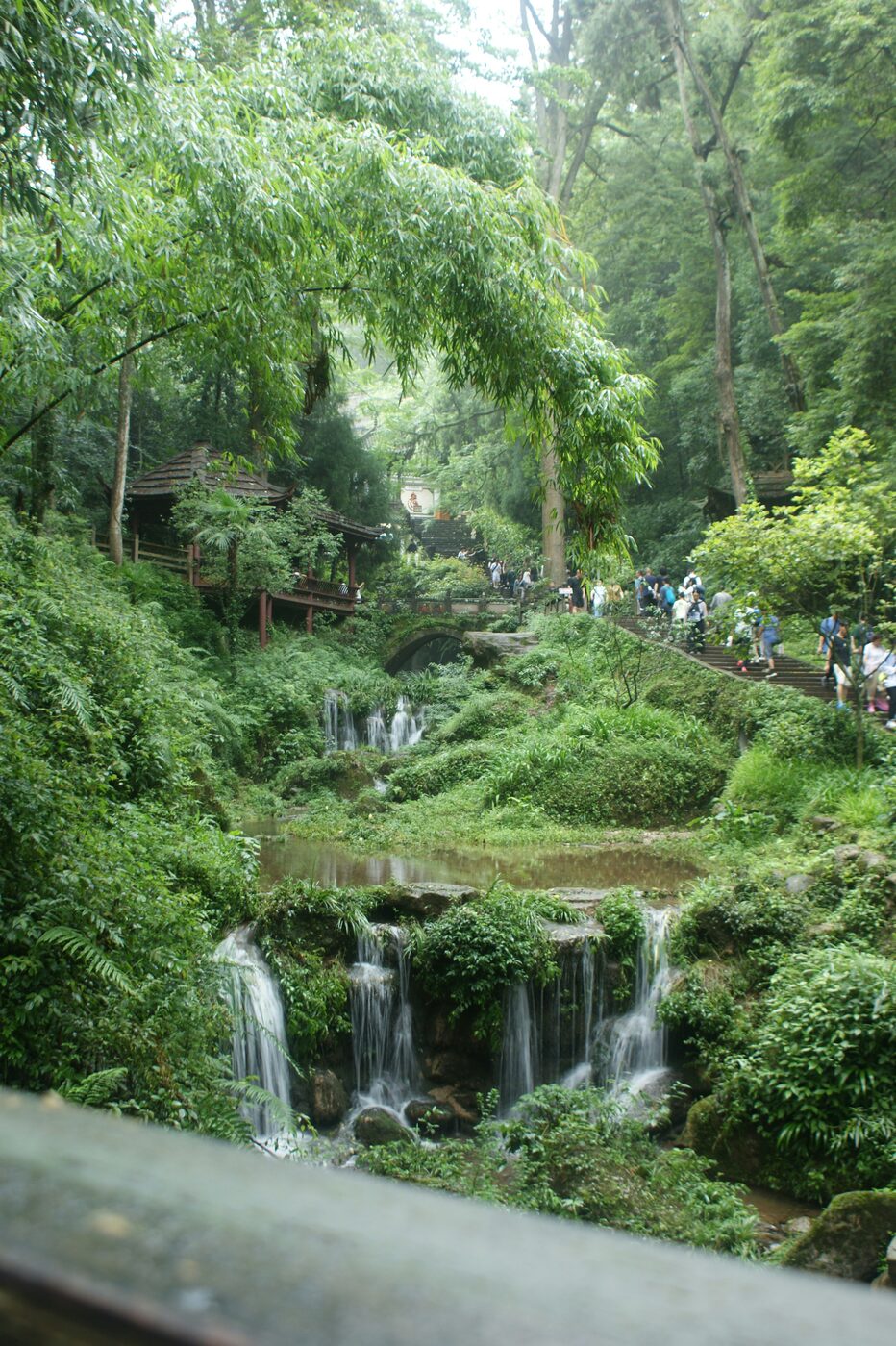
The mountain itself is moderate (highest point Laojun Pavilion at 1,260m), heavily forested — “Qingcheng” literally means “green city” for the dense canopy that shadows the trail even at noon. Multiple Daoist temples dot the route, each housing working priests and monks.
Front vs Back Mountain — pick one (mostly)
| Aspect | Front Mountain (前山) | Back Mountain (后山) |
|---|---|---|
| UNESCO listed | ✅ Yes | ❌ Same protected zone, not listed |
| Ticket | ¥80 (¥40 concession) | ¥20 (¥10 concession) |
| Cable car | ¥35 one way / ¥60 return | Yes; traveller-reported 金骊 / 白云 ropeway fares — they move |
| Time on-site | 2–3 hours | 4–6 hours |
| Main draw | Daoist temples + history | Waterfalls + suspension bridges |
| English signage | Bilingual at major temples | Almost none |
| Foreign visitors | Common | Rare |
| Best for | UNESCO + Daoism interest | Mountain hikers |
For most foreign visitors the answer is Front Mountain. Back Mountain is a worthwhile day-hike if you specifically want a long forested waterfall walk in Sichuan and don’t mind navigating without English signage — but it is essentially a different experience that happens to share the entrance area, with waterfall gorges (五龙沟 Five-Dragon Gorge, 飞泉沟 Feiquan Gorge), the 翠映湖 lake, two ropeways (金骊 / 白云), and farmhouse villages around 泰安古镇. It is best in May–October when the waterfalls are full, but it needs its own day rather than the spare afternoon after Dujiangyan.
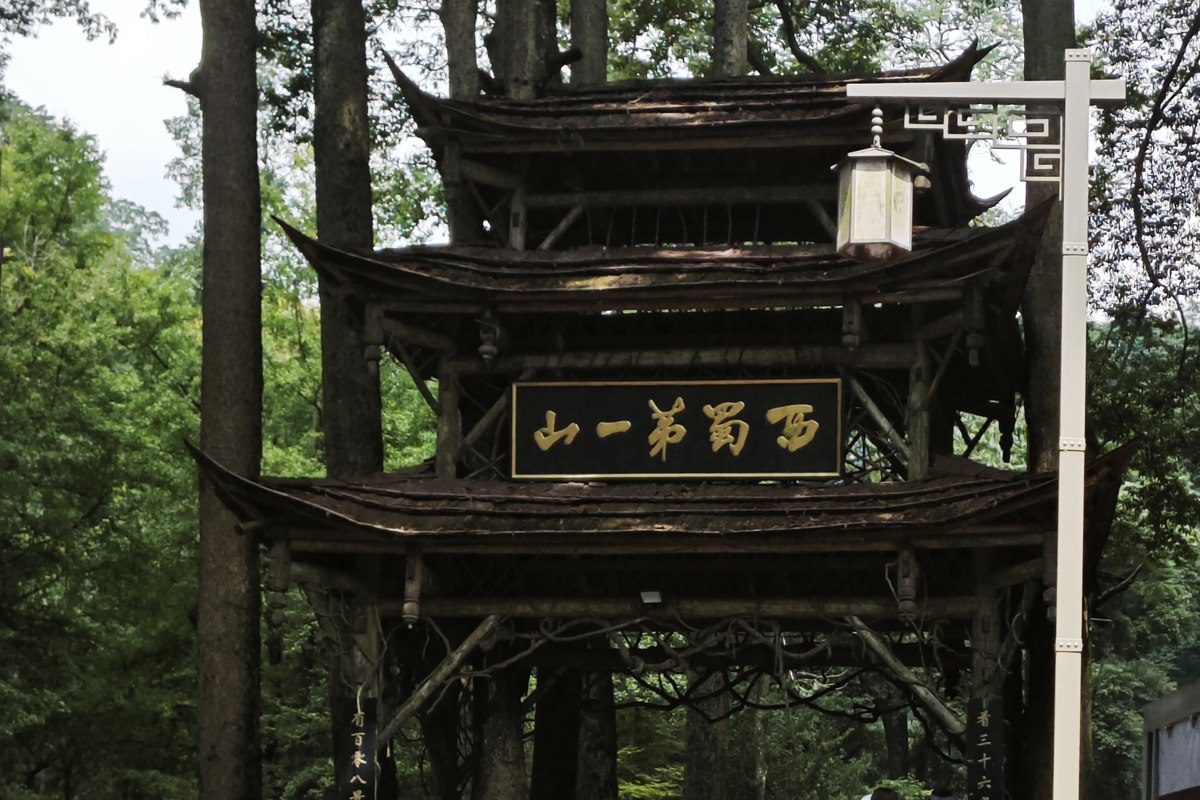
How to get there from Chengdu
Three sensible ways from Chengdu — the HSR is the easiest DIY in the city’s day-trip set:
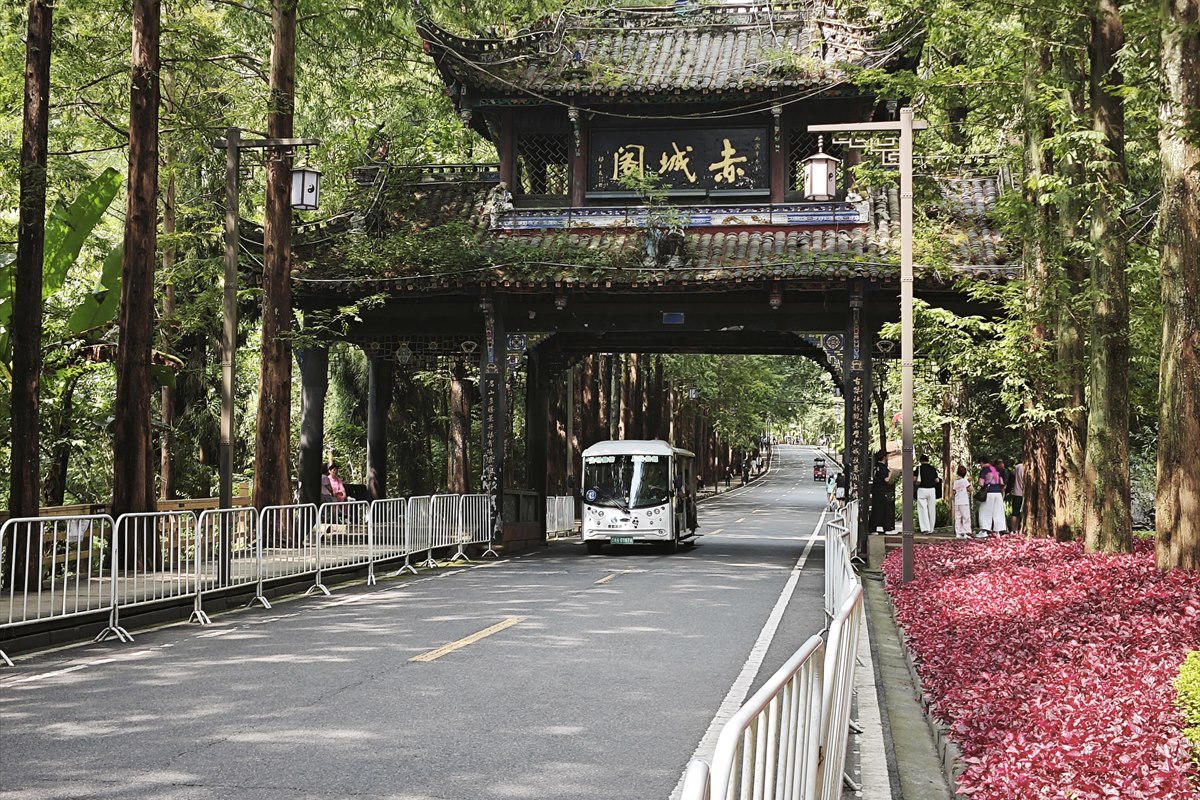
| Option | Cost | Time | Best for |
|---|---|---|---|
| HSR + local transfer (DIY) | Xipu rail from ¥10 + shuttle / taxi | 23–40 min rail + ~10 min road transfer | Budget + flexible itinerary |
| Trip.com group tour (with Dujiangyan) | USD $60–90/pp | 9–10 hrs | First-time foreigners |
| Private driver | ¥800–1,200/day | Flexible | Groups, comfort |
The city rail is purpose-built for the mountain — Qingchengshan station opened with the Chengdu–Dujiangyan–Qingchengshan line in 2010, and a station-front transfer flow serves both gates. Use Xipu (犀浦) as the default railhead: it connects to Chengdu Metro Lines 2 and 6, and a July 2026 12306 sample showed 41 direct Xipu→Qingchengshan services, 23–40 minutes, with sampled fare ¥10. Chengdu East / South / West may have a few direct trains, but they are sparse and should be treated as a nice bonus, not the default plan.
From Qingchengshan station, Amap places the Front Mountain ticket office about 4.1 km / 10 minutes by road and the Front Mountain visitor center about 2.0 km / 6 minutes by road. Follow the signed official shuttle / sightseeing-car flow for Front Mountain, or the bus / car transfer toward Back Mountain and Taian Old Town, which Amap places about 17–18 km / around 30 minutes by road. Bus-only routing from Chengdu is much slower; use rail + local transfer unless you have a very specific local-bus reason. Taxis and ride-hailing work, but holiday traffic controls can drop you short of the gate.
Front Mountain — the 2–3 hour Daoist temple loop
The loop most people walk goes UP on foot and DOWN by cable — about 4–5 hours, and the temples are on the walking half either way. Enter at 建福宫 by the front gate, cross Yuecheng Lake (月城湖) — a ¥5 ferry, or an 8–10 min lakeside-boardwalk walk — to the cable-car base, then ride up (roughly 8:00am–5pm) to the Ciyun Pavilion (慈云阁) mid-station. From there, walk uphill ~20 minutes through dense bamboo forest to Shangqing Palace (上清宫) — the highest active temple, founded in the Tang dynasty and rebuilt many times. From Shangqing, continue 10 minutes to Laojun Pavilion (老君阁), the 1,260m summit with a panoramic Sichuan plain view on clear days.
From the summit, descend the stair path (about 1.5 hours) through Tianshi Cave (天师洞) — Zhang Daoling’s meditation cave and the most religiously significant single spot on the mountain — and continue past the Sanqing Hall complex back to the front gate. The full down-loop is paved with stone steps; allow extra time after rain.
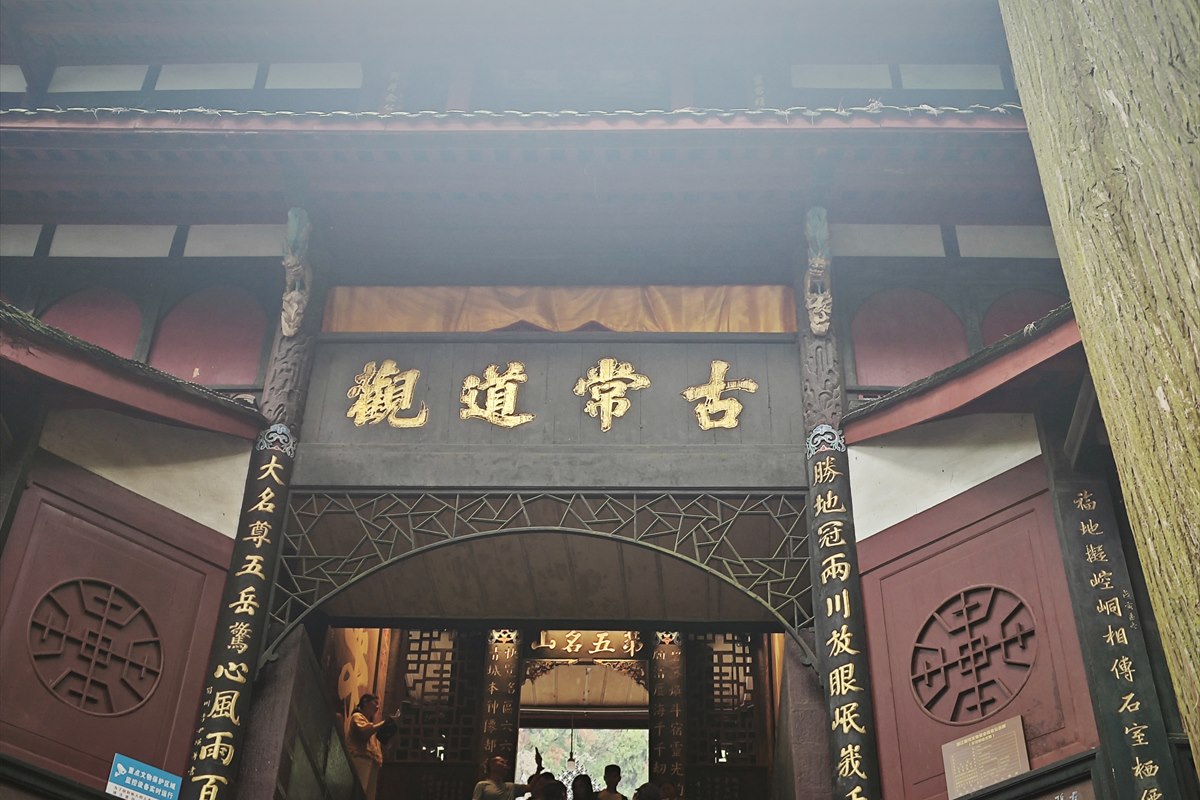
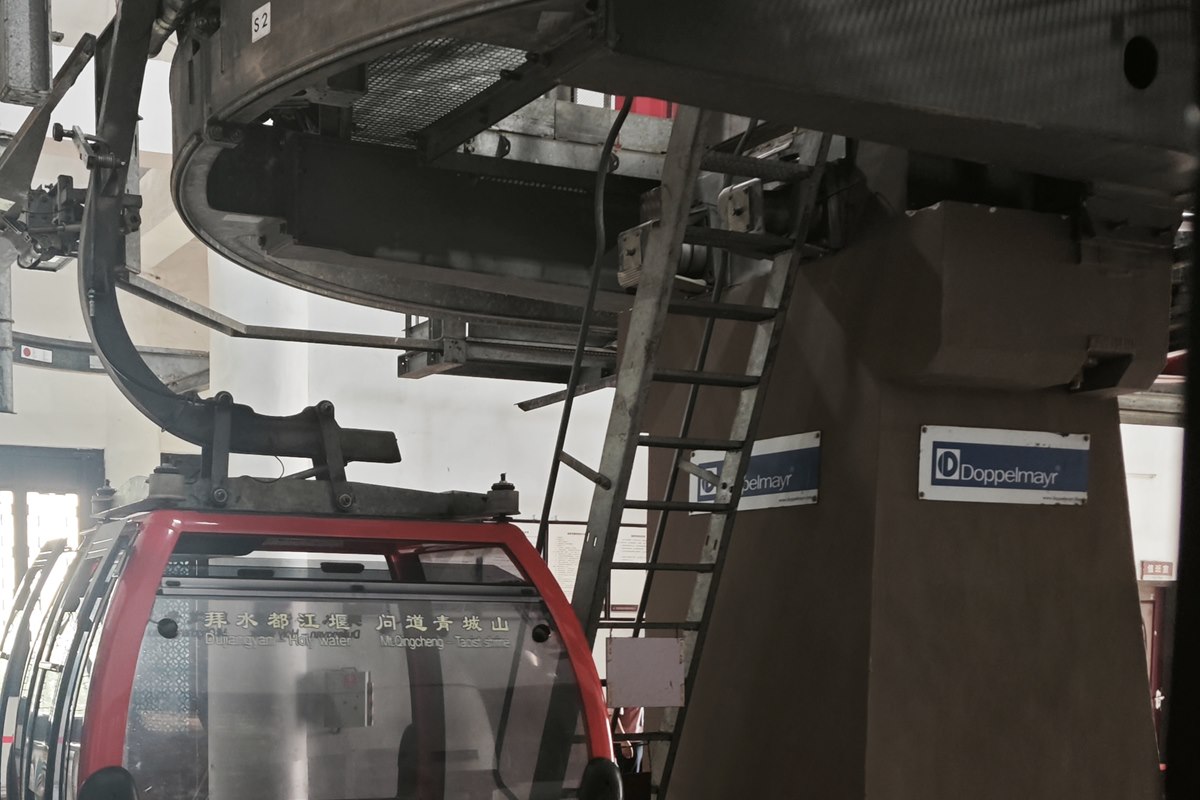
Cable car at a glance: the front-mountain car (青城山索道) runs from the Yuecheng Lake base to the mid-station, 910m of cable and about 6–8 minutes, for ¥35 one way / ¥60 return, roughly 8:00am–5pm. Peak-season queues run 40 minutes and up. A ¥5 ferry crosses Yuecheng Lake to the cable base but saves very little — the lakeside path is a short walk and the queue is usually longer than the crossing. The full no-car walk is 4–5 hours.
Combining with Dujiangyan in one day
A smoother DIY single-day plan is mountain-first, then Dujiangyan:
| Time | Stop |
|---|---|
| 7:30 am | Leave Chengdu for Qingchengshan station via Xipu rail. |
| 9:00 am | Mt Qingcheng Front Mountain — shuttle to gate, Yuecheng Lake, cable car up, temple walk down (3–4 hrs). |
| 1:00 pm | Transfer to Dujiangyan by taxi / ride-hailing or local bus; Amap puts Front Mountain ticket office → Dujiangyan main ticket office at about 16.7 km / 27 min by road before traffic. |
| 2:00 pm | Dujiangyan irrigation system (2.5–3 hrs) from the high-view section down toward the old-town side. |
| 5:30 pm | Dinner / Nanqiao riverside if you still have energy, then return Chengdu by rail. |
Tour operators often run the reverse order, Dujiangyan first and Qingcheng in the afternoon; that is fine when pickup, tickets and transfers are bundled. DIY travellers usually do better with the mountain while it is cooler. If you reverse the route, Amap puts the broader Dujiangyan scenic-area POI to the Front Mountain ticket office at about 24 km / 35 minutes by road, so leave buffer for afternoon traffic. Don’t try to add Back Mountain — that is a separate full-day trip. For a fuller, less-rushed experience, split into two days and stay overnight at Six Senses Qingcheng Mountain or one of the Dujiangyan-area mid-range hotels. See our Dujiangyan day-trip guide for the irrigation-system breakdown.
Book a Qingcheng + Dujiangyan day tourNASDAQ: TCOM
Rather not work out the HSR timings and the two ticket gates yourself? Trip.com lists day tours that bundle both UNESCO sites — usually Dujiangyan plus Mt Qingcheng Front Mountain by cable car — with an English guide, hotel pickup and tickets, booked on a foreign card.
Tickets, cable cars and combo deals
| Item | Price | Notes |
|---|---|---|
| Mt Qingcheng Front Mountain entry | ¥80 (¥40 concession) | Official 2026 notice. Valid the SAME DAY only — unlike Mt Emei’s 48 hours. The gate closes 17:30 in the warm half of the year and 17:00 in winter, with ticket sales stopping about 30 min before that — so be through by 16:30. Sources disagree on the exact season boundary and on whether the gate opens 08:00 or 08:30; the closing end is consistent. |
| Dujiangyan entry | ¥80 | Official 2026 notice; useful pairing baseline |
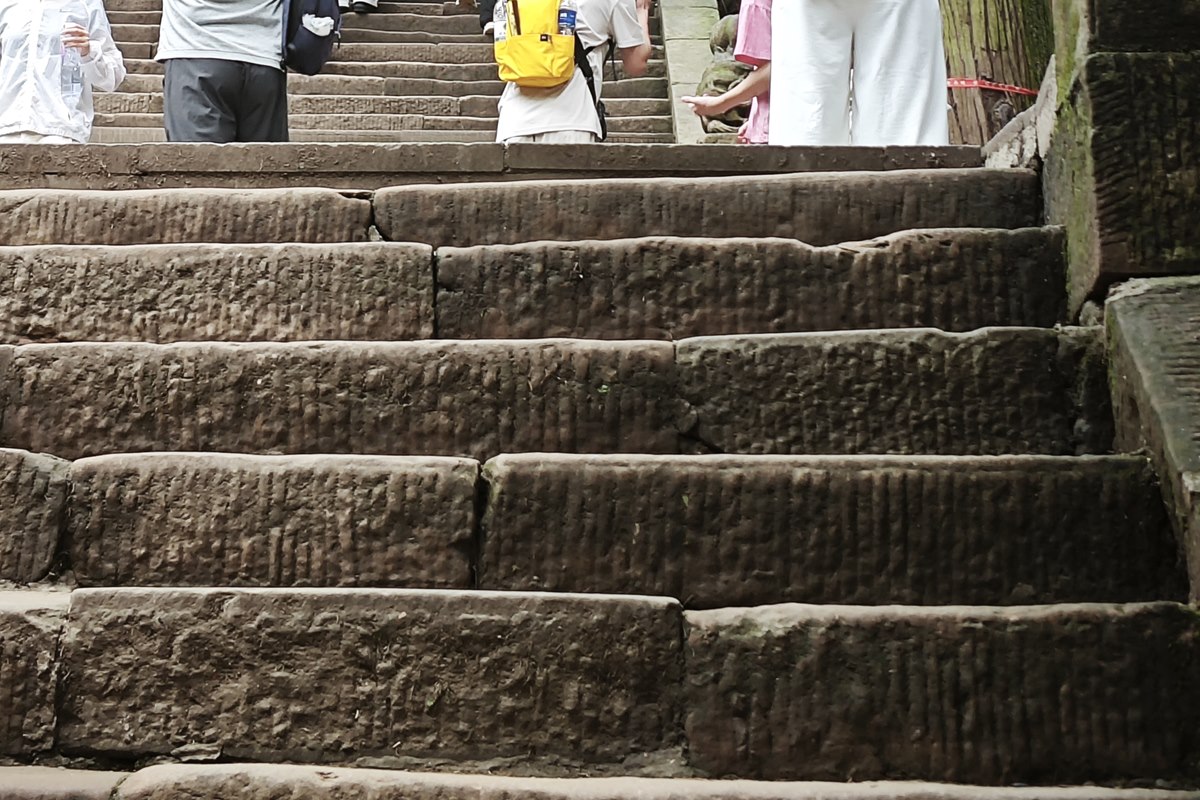
| Front cable car | ¥35 one-way / ¥60 return | Not included in entry. Ride it DOWN, not up — the worn descent steps are the hard part. Queues of 40 min+ in peak season |
| Yuecheng Lake ferry | around ¥5 | Gate → cable-car base; or walk the boardwalk free |
| Mt Qingcheng Back Mountain entry | around ¥20 | Separate nature-hike area; ropeways paid separately |
| Packaged Qingcheng + Dujiangyan products | often around ¥160 | Channel-specific convenience bundle, not a guaranteed discount |
Book the entry slot before you travel. Both this mountain and Dujiangyan run on compulsory online real-name reservation with a timed window — reported as reinstated on 4 February 2026, reversing the 2024 rule that let you buy at the gate — bookable up to 15 days ahead through the Qingchengshan-Dujiangyan official WeChat channels or a major Chinese booking app. The window at the gate sells only what the online allocation has not taken, and the daily cap here is 24,000. The two scenic areas hold separate allocations, so a combined ticket still needs a slot at each. Foreign visitors choose passport or residence-permit details when booking and then use the manual gate, because the automatic ones read mainland ID cards only. Chinese ticketing channels are still Chinese-first, so set up Alipay / WeChat Pay or use an English booking site when you want foreign-card checkout — see our Alipay-for-foreigners guide. Full-time foreign students at undergraduate level or below can use valid ID for half price; most other foreign adults pay full fare. Seniors 65 and over are listed as free on the official notice.
Official Qingcheng opening hours are seasonal: summer 8:00am–5:30pm, other seasons 8:30am–5:00pm. Last-sale and last-entry rules can tighten during weather, crowd-control or maintenance days, so check the same-day notice before travelling out from Chengdu.
When to visit (and when to skip)
| Window | What it’s like |
|---|---|
| Apr–May | Best — cherry blossom and warm hiking weather. |
| Sep–Nov | Best — autumn color and the clearest mountain views. |
| Mar · Jun · late Nov | Mid-range — rain risk in June; late November is cold but peaceful. |
| Jul–Aug | Skip — humid 32°C, mountain often fogged in, no relief from Chengdu heat. |
| Golden Weeks | Skip — Spring Festival, May 1, Oct 1: cable-car queues hit 90 min and Tianshi Cave is stop-and-go. |
Heavy-rain weeks make the stone-step descents hazardous; bring grippy shoes year-round, and pack a layer — it is noticeably cooler at the top than at the gate and the cable car is breezy. For the wider seasonal picture, see our best time to visit China guide.
Practical tips for foreign travelers
- Vegetarian monastery meals: temples on Front Mountain serve simple Daoist vegetarian lunches for ¥40–80 — order at Shangqing Palace or the Ciyun Pavilion (慈云阁) rest area. Communal seating, no English menu, but pointing at neighbors’ bowls works.
- Daoist priest interactions: priests at Shangqing Palace are friendly and will pose for photos with no fee expectation. Don’t touch ritual implements or interrupt chanting sessions (rare during daytime tourist hours).
- Photo etiquette: photography of temple interiors is generally allowed but flash is discouraged on painted statues. Some halls (small inner sanctuaries at Tianshi Cave) post a no-photo sign.
- Bring layered clothing: the temperature drops 5–8°C from base to summit; the cable car is breezy.
- Watch the station approach: use signed official shuttles, ticket windows and ride-hailing inside the normal station flow. Avoid roadside "ticket helpers", low-price day tours with add-ons, and private cars promising a cheap direct ride that may drop you short of the gate during traffic controls.
- Keep payment simple: set up Alipay / WeChat Pay before arriving and carry a small cash backup for ferries, lockers, temple snacks and smaller mountain vendors.
Where to stay
You don’t base at Mt Qingcheng unless you want the one luxury eco-resort, a basic monastery guesthouse, or a slow Back Mountain hiking day. For most first China trips the sensible call is the Chengdu downtown core — anywhere on the metro line toward Xipu / Chengdu rail departures — and to treat the mountain as a day trip. If you are carrying luggage, store it at the rail station when possible; visitor-center or gate storage can involve a detour and earlier closing times.
Frequently asked questions
Is Mt Qingcheng worth visiting from Chengdu?
Yes, especially if you're already going to Dujiangyan — the two UNESCO sites are close enough to pair in one long day. Official 2026 ticket notices list Front Mountain at RMB 80 and Dujiangyan at RMB 80; some channels package them together, but the reliable value is convenience, not a fixed discount. On its own merit, Mt Qingcheng is Sichuan's quietest UNESCO site and the birthplace of religious Daoism (Zhang Daoling founded the Way of the Celestial Masters here in 142 CE). It's worth a half-day if you're interested in Chinese religion or want a slower-paced contrast to Chengdu's panda-and-temple itinerary.
Front Mountain or Back Mountain — which one?
Front Mountain (前山, ¥80) for most first-time foreign visitors. It holds the temple sequence — Tianshi Cave where Zhang Daoling lived, Shangqing Palace near the top, and the easiest cable-car-supported loop — though note that Laojun Pavilion, the 1,260m pavilion at the very top, is under renovation with its interior shut and scaffolding netting outside, reported as running to about the end of September, so the view from it is not currently available. Back Mountain (后山, ¥20 adult / ¥10 concession) is wilder: 4-6 hours of waterfall hiking, suspension bridges, and rural villages, with less English and a separate transfer toward Taian Old Town. Pick Back Mountain only if you specifically want a long mountain day-hike.
How do I get to Mt Qingcheng from Chengdu?
Three options. (1) City rail + local transfer: Xipu is the default railhead. A July 2026 12306 sample showed 41 direct Xipu-to-Qingchengshan services, about 23-40 minutes, sampled fare RMB 10. From Qingchengshan station, Amap places the Front Mountain ticket office about 4.1 km / 10 minutes by road; Back Mountain / Taian Old Town is about 17-18 km / 30 minutes by road. (2) A guided day tour combining Mt Qingcheng + Dujiangyan is easiest for first-time foreign visitors. (3) A private driver from Chengdu is the comfort option for groups; Amap puts central Chengdu to Front Mountain at roughly 67 km / 1 hour by road before traffic.
Can I do Mt Qingcheng + Dujiangyan in one day?
Yes, but treat it as a full day and stick to Qingcheng Front Mountain, not Back Mountain. In hot or busy weather, Qingcheng first and Dujiangyan second is often smoother: do the temple loop while the mountain is cooler, then finish with the flatter irrigation-system walk and Dujiangyan town. Dujiangyan-first can still work if your tour uses that order. If you want either site in depth, split them over two days.
What's the Mt Qingcheng + Dujiangyan combo ticket price?
Use RMB 80 + RMB 80 as the reliable planning baseline: the official ticket notice lists Mt Qingcheng Front Mountain at RMB 80 and Dujiangyan at RMB 80. Some official and booking-site channels may show packaged products around RMB 160, but do not plan around a guaranteed discount. Cable cars, Yuecheng Lake ferry, sightseeing cars and Back Mountain are separate. On booking, the rule tightened again in 2026: advance online real-name reservation with a timed entry window is compulsory every day, reported as reinstated on 4 February 2026, bookable up to 15 days ahead, and the gate windows sell only what the online allocation leaves. That reverses the 1 July 2024 relaxation which most guides — this one included until August 2026 — still describe, so do not plan on buying at the gate. Dujiangyan and Mt Qingcheng hold separate allocations, so a combined ticket still needs a slot booked at each. The ticket is valid the same day only, unlike Mt Emei's 48 hours. The gate closes at 17:30 in the warm half of the year and 17:00 in winter, and ticket sales stop about 30 minutes before that, so be through the gate by 16:30 to be safe. Foreign visitors buy online through the official WeChat channels or a platform, choosing passport or residence permit as the document type. Two differences from Mt Emei worth knowing, both confirmed: there is NO foreign-national concession here, so budget full price; and the automatic gates do not read foreign passports, so you go through the staffed lane and a member of staff checks the physical document — bring the passport itself, not a photo of it.
How do I get from Qingchengshan station to the gate — and what are the touts offering?
Out of the station, turn left: a ¥2 shuttle bus runs to the main car park, and from there a ¥10 sightseeing bus covers the last 2km to the front gate. A taxi to the car park is ¥8-10. The scenic area also sells a return through-coach from an official desk inside the station (about ¥35 for the front mountain, ¥32-34 for the back). That is the whole system, and it is cheap. The reason to spell it out is the trade built on top of it: people at the station and the car park pose as staff or as helpful locals, tell you the official bus has stopped running, and offer a shortcut for ¥15-50. Travellers report being dropped halfway, at a different car park, or — worst — at the BACK mountain when they wanted the front, which is 12km away and a wasted day rather than a wasted fare. Buy from the official desk or take the ¥2 bus, and decline everything else.
How long is the Mt Qingcheng cable car?
The front-mountain cable car runs from Yuecheng Lake up to Ciyun Pavilion mid-mountain, about 6-8 minutes one way. From there it is roughly 20 minutes uphill to Shangqing Palace. The fare is RMB 35 one way and RMB 60 return. Take it DOWNHILL rather than up: parts of the front-mountain descent are worn into a see-saw profile, low in the middle and high at the edges, and damp with mountain dew — that descent, not the climb, is the difficulty travellers report most, so walking up and riding down is both what most people do and the safer way round.
Are there overnight stays on Mt Qingcheng?
Yes, but most foreign visitors do not need to stay. Base in Chengdu for a normal Front Mountain day trip. Stay near the mountain only for a slow retreat, a Back Mountain hike, a basic monastery guesthouse experience, or Six Senses Qingcheng Mountain. If you arrive by rail with luggage, station storage is usually cleaner than dragging bags to the visitor center or gate.
Why is Mt Qingcheng important in Chinese religious history?
Mt Qingcheng is where Zhang Daoling — the founder of religious Daoism — established the Way of the Celestial Masters (天师道) in 142 CE during the Han dynasty. Before this, Daoism was a philosophical school (the Tao Te Ching, ~400 BCE); Zhang's movement turned it into an organized religion with rituals, priesthood, and a deity hierarchy. Tianshi Cave on Front Mountain is the cave where he allegedly meditated and wrote the foundational scriptures. It's roughly equivalent in religious-history weight to Mt Athos for Orthodox Christianity or Mecca for Islam — the founding location of an organized faith that still has tens of millions of practitioners today.
Related guides
- Dujiangyan UNESCO day trip from Chengdu — the natural pairing with Mt Qingcheng
- Mt Emei UNESCO sunrise from Chengdu — the Buddhist counterpart, a bigger experience
- Chengdu 3, 5, or 7-day itinerary — where Mt Qingcheng fits in the wider trip
- Chengdu city overview — all attractions, transport, food, and stay
- 17 things to do in Chengdu
Sources
Checked July 2026 · Written from our own first-hand travel in China.