Key takeaways
- The National Forest Park (UNESCO 1992) is the “Avatar” landscape — 3,000+ quartz-sandstone pillars; Tianmen Mountain is a separate peak by the city.
- Enter via the east (Wujiayu) gate if you’re staying in Wulingyuan town and want the Avatar pillars — it’s closest, with a direct eco-bus to the Bailong Elevator.
- One ¥236 four-day pass covers entry + free eco-buses; the Bailong Elevator (¥65) and three cable cars are paid on top. Count your rides before buying a lift pass: 4 rides → ¥238 four-ride pass, 5+ (or 3+ days) → ¥298 unlimited, just 2 → pay per ride.
- Since 2025 you must reserve a timed entry slot and pick the gate for every visit; foreigners reserve online in English with a passport — no Chinese ID needed.
- Allow 2 days for the park (1 is a rushed dash), visit Sep–Nov or Apr–Jun, and reach the east gate before 8am to beat the tour buses.
What Zhangjiajie actually is
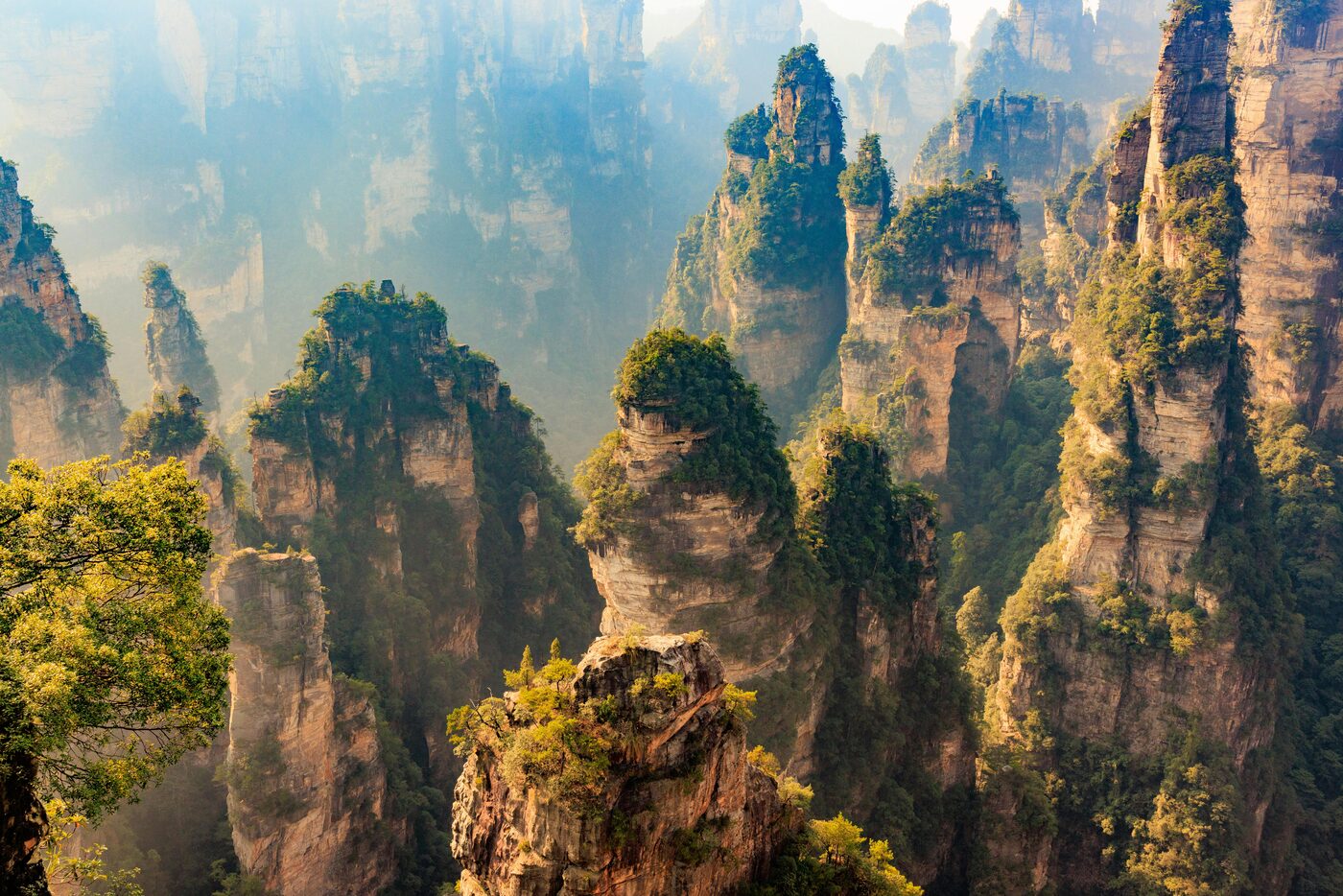
“Zhangjiajie” covers two separate things. The famous one is the National Forest Park in northwestern Hunan — officially Wulingyuan Scenic Area (武陵源), the name tickets and booking apps use — 264 km² of subtropical forest holding over 3,000 quartz-sandstone pillars, some above 200 m, carved over hundreds of millions of years. It has been a UNESCO World Heritage Site since 1992. The other is Tianmen Mountain — a separate peak right by Zhangjiajie city, on its own ticket and its own day, not the park this guide covers (see our Tianmen Mountain guide).
Terrain © Stadia Maps · Stamen Design · OpenMapTiles · © OpenStreetMap contributors.
Orientation — the National Forest Park this guide covers sits ~32 km north of Zhangjiajie city; Tianmen Mountain is a different peak right by the city, and the Grand Canyon glass bridge is east of Wulingyuan town — three separate parks, three separate tickets. Tap any pin for what it is and how far; the park’s own gate-by-gate route map is further down.
The pop-culture hook: the pillars were the visual reference for the floating Hallelujah Mountains in James Cameron’s Avatar (2009). The production team photographed the park in 2008, and in 2010 it renamed one pillar “Avatar Hallelujah Mountain.” That marketing is what put Zhangjiajie on the international map. The valleys are also home to the Tujia ethnic minority, whose smoky-sour cooking and stilt houses you’ll meet in the villages.
Gates, tickets & the 2026 reservation rule
Two things trip up first-timers: which gate to enter, and the fact that since 2025 you must reserve a timed entry slot in advance for every visit — you can no longer just turn up and buy.
Which gate do I enter?
- East gate ★ ~90% enter here
武陵源·吴家峪 · “Wulingyuan” / “Wujiayu” - Pick this if you’re staying in Wulingyuan town and want the Avatar pillars. It’s minutes from the town’s hotels, with a direct eco-bus (~20–25 min) to the Bailong Elevator → up to Yuanjiajie. Booking apps also label it Wujiayu or 标志门 (Biaozhimen) — it’s all the same gate.
- South gate
森林公园 · the “Forest Park” gate - Its name trips people up: 森林公园 (“Forest Park”) is this gate, not the whole area. It’s ~30 min from Wulingyuan town, on the Zhangjiajie-city side, and opens onto Huangshizhai and the Golden Whip Stream valley — the park’s gentler, lower half. It’s the long way to the Avatar pillars, so it’s not your day-1 gate; it’s the smart day-2 gate — enter here and walk the valley one-way east, finishing back at the east gate by your hotel (see the 2-day plan below).
Reach the east gate before 8am (gates open ~07:00; ~07:30 off-season). Most gates stop admission at 17:00 — the south / Forest-Park gate at 17:30 in peak — but in practice be in by ~15:00: after 16:00 the park is too big to finish and the lifts and buses start closing. Tour groups arrive ~9:30–10am and again ~4pm; before 8am or after 2pm the eco-buses and elevator barely queue.
Entry is a ¥236 four-day pass (景车联票) covering the park and the free internal eco-buses that link the gates, valley floor and cable-car bases — you re-enter on any of the four days. (A ¥165 entry-only ticket exists but skips the buses. It’s one price year-round — the old December–February low-season discount was abolished in January 2025, so ignore any guide still quoting a winter rate. And if a booking site quotes ¥239 or ¥168, that’s the same ticket with a ¥3 voluntary insurance folded in, not a markup.) The Bailong Elevator and the three cable cars are paid on top, or bundled into a combined lift pass sold in two versions:
| What | Price | What it covers |
|---|---|---|
| Park pass (景车联票) | ¥236 · 4 days | Entry + unlimited eco-bus rides — the only vehicles allowed inside the park (private cars are banned). They run from each gate to the lift bases and valley trailheads and loop between the zones (but not gate-to-gate — hopping between the east and south gates is an external taxi/bus). The ¥71 difference over the entry-only ticket is that bus access, and with 10+ km between zones it is not optional in practice. Re-enter on any of the 4 days (each entry needs its own timed slot — see below). |
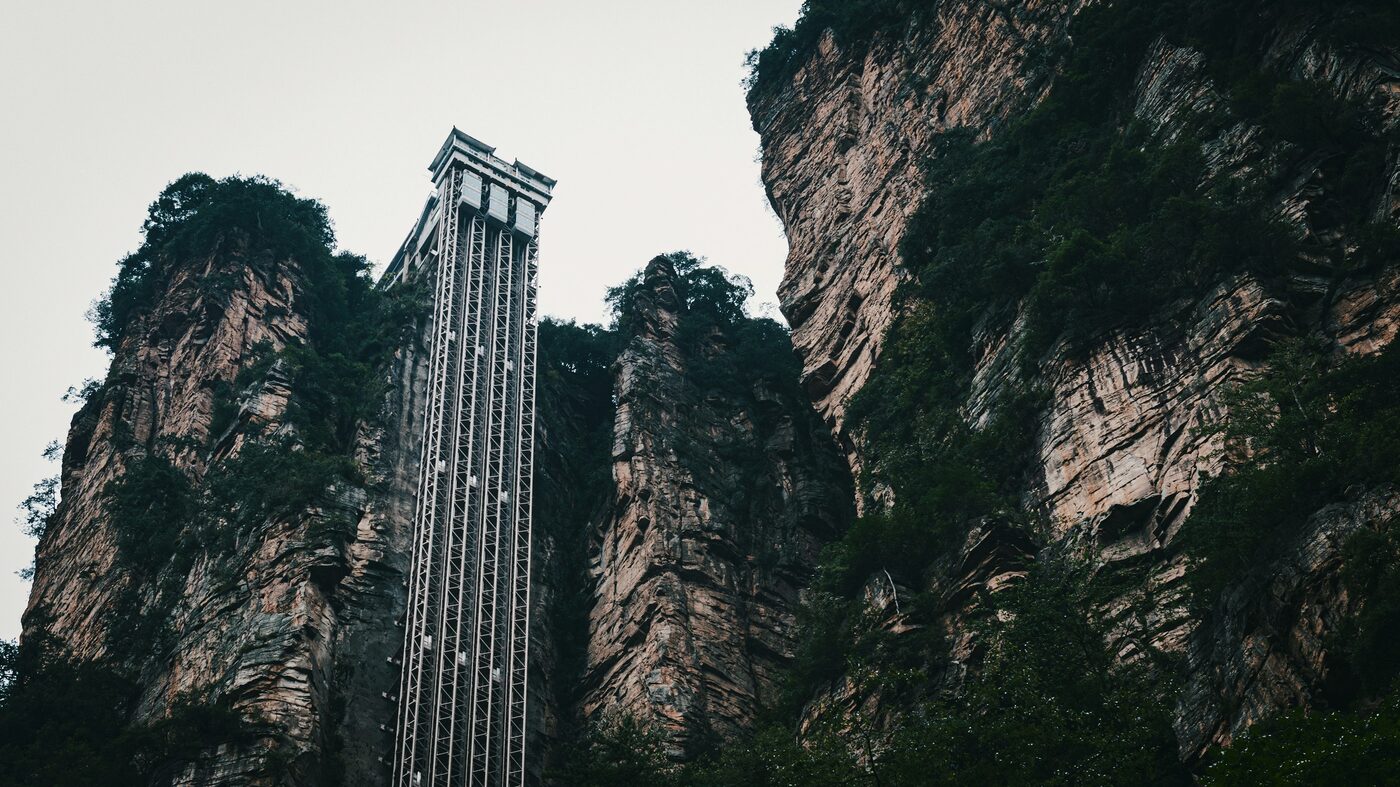
| Bailong Elevator | ¥65 each way | Essential — ridden one way, not round-trip. Up to the Yuanjiajie plateau on the B-line, or down from it on the A-line; you don’t take it both ways (a round trip would be ¥130). World’s tallest outdoor lift, 326 m, <2 min — and the longest queues. |
| Tianzi cable car | ¥72 each way | Essential — the other one-way leg. It pairs with the elevator: down from Tianzi Mountain on the B-line, or up on the A-line, so you ride each lift once. Editors’ pick if you ride only one; its last car runs early. |
| Yangjiajie / Huangshizhai cable | ¥76 / ¥65 each way | Ride Yangjiajie (¥76) only if you enter from the west gate or add the deeper Yangjiajie loop; Huangshizhai (¥65) only on the south-gate day — and you can walk it up and down. |
| Lift pass, 4 rides (三索一梯四程联票) | ¥238 · 4 days | Any four one-way rides across the Bailong Elevator and the three cable cars, in any combination. The Chinese-classic 2-day loop — Bailong up, Tianzi down, Huangshizhai up and down — is exactly four rides (¥267 bought singly), so this is the version that fits most 2-day plans. Riding each lift once costs ¥278 singly, so it saves ¥40 there too. |
| Lift pass, unlimited (三索一梯多程联票) | ¥298 · 4 days | Unlimited rides on all four lifts. Costs more than one ride of each (¥278), so it only beats the ¥238 pass from the fifth ride — 3+ day visits, west-gate (Yangjiajie) itineraries, or re-riding for photos. If you’ll walk Huangshizhai and only ride Bailong + Tianzi (¥137), skip both passes and pay per ride. Neither pass covers the Ten-Mile Gallery tram (¥38). |
Reserve a timed slot — every entry, since 2025
The park caps daily visitors (~53,000) and requires an advance timed reservation tied to a specific gate — the east gate is even split into an A-line (toward the Tianzi cable car) and a B-line (toward the Bailong Elevator) you choose when booking — the two walk the park in opposite directions, so it is worth choosing deliberately (route table below). Entry is real-name: Chinese visitors use self-serve ID + face-scan gates, and since a July 2026 ticketing upgrade those gates read foreign passports too — you scan through directly, with no paper ticket card to collect at a window first. Keep the staffed lane as your fallback: older non-chip passports still need it, and travellers report the readers struggling in bright sun. In the lane an attendant registers the passport and takes a face photo — after which the in-park eco-buses and cable cars recognise you by face-scan for the rest of the trip. Budget ~10–20 min for the lane at the 8–10am peak, a couple of minutes off-peak. Foreign passports pay the standard rate (the half-price concession is Chinese-ID students/seniors only). Peak 8–10am slots sell out — book a few days ahead.
Day one is simple. Day two is the catch.
- Your first entry needs nothing extra. Book in English on Trip.com with your passport number and the purchase carries its own timed slot — turn up and scan the passport.
- Coming back on day two does need a fresh slot. The pass is valid 4 days, but each re-entry has to be reserved in the official “张家界一机游” / Zhangjiajie Travel Assistant mini-program (门票改签、预约); slots open about a week ahead, split morning and afternoon.
- ⭐ The easy way to do that: ask at the park on day one. Staff will set your next entry up for you. Worth knowing because the mini-program is not a language problem — it runs Chinese, English and Korean — but an access one: plenty of foreign visitors simply cannot get it to open, and official customer service is hard to reach. Sorting it face-to-face while you are already there takes a minute.
That is not a booking mark-up. The pass is ¥236 (景车联票 — entry plus the eco-buses, which you genuinely need: the zones are kilometres apart) and the voluntary insurance is ¥3. So a ¥239 quote is the official total, not a surcharge — platforms simply include the insurance by default. The same arithmetic explains ¥168 quotes against the ¥165 ticket-only variant.
Leaving luggage behind matters here: large suitcases aren’t allowed on the eco-buses, cable cars or elevator, and the park is all stairs. Use the cheap luggage-transfer service (~¥10–20/bag, arranged through your hotel — station-side and city hotels send bags ahead to your inn in Wulingyuan town) or the left-luggage desks at the gate visitor centres, and walk in hands-free.
Two eco-bus realities travellers only learn on arrival: the valley-floor buses run in separate segments, not one through-line — getting from the Ten-Mile Gallery / Tianzi cable-car side across to the Bailong Elevator means changing buses at the Shuiraosimen (水绕四门) junction — and the mountain switchbacks are sharp enough that motion-sickness-prone riders should take tablets and sit near the front. Buses start ~07:00, but the last runs are staggered: the plateau loops (Tianzi–Yuanjiajie–Yangjiajie) stop earliest at ~17:30–17:40 (strict clear-out, no lights up top), the valley-floor lines run to ~18:00, and off-season everything ends ~1 h earlier (~17:00). Leave the plateaus by mid-afternoon rather than racing the last bus down — and don’t count on the ~19:00 buses some blogs mention: that’s the separate south-gate↔east-gate connector coach, not the in-park shuttle.
The must-see areas inside the park
The park splits into zones, and most are a half-day each once you count the cable-car queues. Three are essential; the fourth, Yangjiajie, works either as a one-hour stop or as a half-day of its own. Get to Yuanjiajie by 7:30am — the Bailong Elevator queue can hit 90 minutes in summer. Each zone below has its own full guide if you want the viewpoint-by-viewpoint detail.
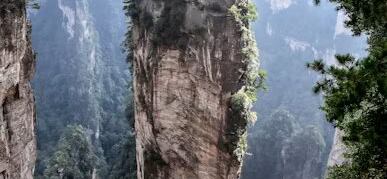
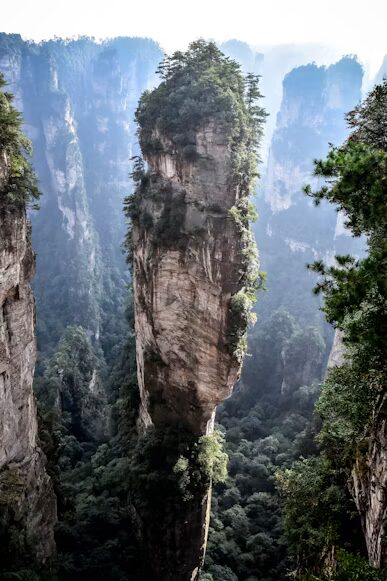
The Avatar Hallelujah Mountain pillar (the Southern Sky Column). Best viewpoints: Mihuntai (迷魂台) for the full pillar panorama, the signposted Hallelujah Mountain platform, No. 1 Bridge Under Heaven, and the quieter Lianxin Bridge. Allow 4–5h.
Reach it: Up the Bailong Elevator (¥65) or hike; eco-bus to the base.
Full Yuanjiajie guide →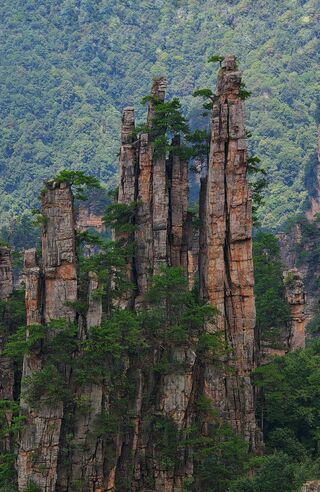
The “ten-thousand peaks” panorama from the park’s highest viewpoint — best at sunset, and the park’s stage for the sea-of-cloud effect. Allow 3–4h.
Reach it: Tianzi cable car (¥72); linked to Yuanjiajie by internal eco-bus.
Full Tianzi Mountain guide →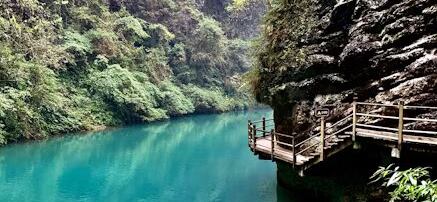
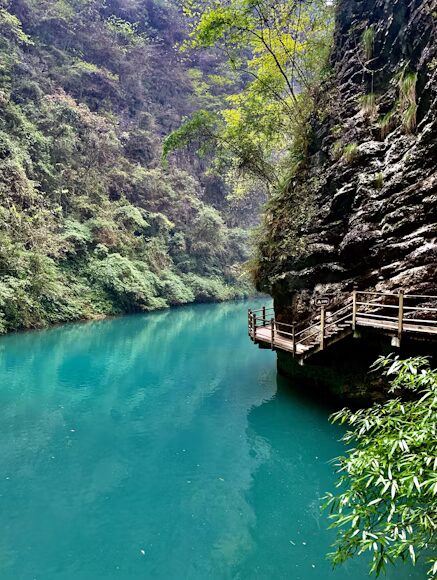
A 7.5 km valley-floor walk along a clear stream, pillars rising on both sides. The macaques are bold, not scenic — they snatch clear plastic bags and open snacks and can turn aggressive, so bag food out of sight and don’t feed them. Easy gradient; 2.5–3h end to end, or turn back at the Journey to the West filming spot for a 1–1.5h round trip.
Reach it: On foot; no cable car. Eco-bus to either end.
Full Golden Whip Stream guide →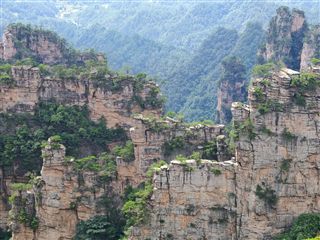
The quietest zone, and the one place the “peak wall” landform fills the horizon. Split it in two: the Natural Great Wall viewpoint is a near-flat ~1h round trip that every fitness level manages, and the plateau eco-bus passes it anyway — that is why the B-line below includes Yangjiajie. What a tight 2-day plan skips is the deep version: Wulongzhai and One-Step-to-Heaven are separate dead-end spurs, 2–4h each, out and back.
Reach it: Plateau eco-bus from Yuanjiajie, ~10 min. The Yangjiajie cable car (¥76) only matters if you enter or exit by the west gate.
Full Yangjiajie guide →The routes people actually walk
Chinese trip reports don’t sort the park into “easy” or “photography” routes — they name routes after the infrastructure: which gate you enter, which lift takes you up, which cable car brings you down. For a first visit we recommend just two gates — the east and the south — which give you the three routes below: the east gate’s A-line and B-line (the pair you pick when you book) and the south-gate valley route. There are three more gates; they need a car, and they are covered further down.
| Route | Sequence | Time | Suits |
|---|---|---|---|
| East gate, B-line ★ Most popular | Bailong Elevator up → Yuanjiajie (Mihuntai, No. 1 Bridge Under Heaven) → Yangjiajie → Tianzi Mountain → Tianzi cable car down | 7–8h | Families and older travellers — the least climbing |
| East gate, A-line | Tianzi cable car up (plus ~200 steps) → Tianzi Mountain → Yangjiajie → Yuanjiajie → Bailong Elevator down → Ten-Mile Gallery | 7–8h | Reasonable fitness; dodging the elevator queue |
| South gate, valley route | Huangshizhai cable car (Zhaixingtai, Wuzhifeng, macaques) → Great Oxygen Bar Square → Golden Whip Stream on foot → out at the east gate | 4–5h | A slower second day, or a half day |
Most first-timers take the East B-line. Tap any route to trace it, see the lifts it rides and how you cover each leg — the east gate’s A-line and B-line walk the same pillars in opposite directions.
Terrain © Stadia Maps · Stamen Design · OpenMapTiles · © OpenStreetMap contributors. Gate, lift and hub positions Amap-verified July 2026.
The same three routes as the table, drawn on terrain. Stop colours are the worth-it verdicts from this page; tap an underlined name (or its dot) for the verdict, time on site, lift price and a link through to that zone’s own guide — the numbers match the tables above.
The park has five ticket stations, not two — a common source of confusion. Besides the east (Wujiayu / 标志门, where ~90% of visitors enter) and south (Forest Park) gates, there are the west (Yangjiajie), north (Tianzi Mountain) and middle (Zimugang) gates; one ¥236 pass works at all five over its four days. For most foreign visitors only the east and south gates matter — the other three sit far out and only pay off with your own car — driving to the gate, that is: private cars park at the gate lots and everyone continues on the park’s eco-buses, because you cannot drive inside the park itself (the middle gate reaches the same Bailong Elevator core without the east gate’s queue; the north gate’s eco-bus even climbs to the plateau with no lift fee at all). If you are relying on public transport, book the east or south gate; the driver-only gates, and how to string a 3–5 day trip together, are in our Zhangjiajie itinerary guide.
Two quiet corners inside the park, both absent from English guides and both worth knowing if you have a second day. Laowuchang (老屋场, the “sky farmland”) is a terraced hollow reached from the Tianzi Mountain or Yangjiajie side — roughly 3 km and 1.5 hours on foot, with morning cloud sitting in the terraces and almost no tour groups. Yaozizhai (鹞子寨) is a pure walking route with no cable car at all, about 5.3 km and 3 hours, ending on a rim with a 360-degree view over the pillar forest. Both sit inside the core scenic area your ¥236pass already covers.
A-line or B-line? B puts you on the Yuanjiajie plateau in the morning, when the light is best and the platforms are still quiet — but in peak season you pay for that in the elevator queue. A gets you up the mountain with a much shorter wait, at the cost of reaching Yuanjiajie in the afternoon, when the pillars are backlit and photographs come out dark. Photographers take B and start early; travellers going in a national holiday week more often take A.
Queue reality: the Bailong Elevator runs 60–90 minutes on a normal summer morning, and travellers report up to ~3 hours over the May Day holiday. It queues in both directions — the wait to come down can run another 1–1.5 hours in peak season. But the standard fix, riding the Tianzi cable down instead, has the same problem in mirror image: because everyone converges there to descend, the Tianzi cable is worst going down — roughly 30–60 minutes up, but 1–2 hours or more down on a peak afternoon. The two ways round it are to leave the plateau early, before the afternoon convergence, or to walk down — the stair path down from the Tianzi Pavilion takes about 1.5 hours, skips the descent queue entirely and adds the mid-level views. (Walking up is a different proposition: the free “Health Avenue” (健康大道) stair trail is ~4.7 km and 2.5–3 hours of climbing.) Off-season weekdays, neither lift queues at all. The Huangshizhai cable car at the south gate is far calmer year-round — 20–40 minutes. And whichever lift you plan to ride down, be at its station by mid-afternoon: last cars run early and are pulled forward on busy days.
The classic 2-day plan — no backtracking
Base: one hotel near the east gate in Wulingyuan town, both nights. Both days end at the east gate, so you never change hotels or lug bags across the park — add a night in Zhangjiajie city only if you’re also doing Tianmen Mountain.
Day 1 · the mountain-top pillars — enter & exit the east gate
Eco-bus to the Bailong Elevator (be there for the ~7am opening to beat the queue) → up to Yuanjiajie for the Avatar pillars (Mihuntai, No. 1 Bridge) → eco-bus on to Yangjiajie, then Tianzi Mountain (the ten-thousand-peaks panorama, best in late-afternoon light) → Tianzi cable down (its last car runs early — don’t linger past it) → eco-bus out the east gate. Dinner in Wulingyuan town.
Day 2 · the valley, one-way — enter the south gate, exit the east
First get from Wulingyuan town to the south gate — the park’s free eco-buses don’t run gate-to-gate, so it’s a taxi (~¥40, 25 min) or the cheap shuttle (~¥8) from Wulingyuan bus station. From the south (Forest Park) gate → optional Huangshizhai cable up & back (the park’s most skippable zone, but its base is right at this gate) → walk the Golden Whip Stream one-way east (Oxygen Square → Shuiraosimen, 7.5 km, ~3h on the flat) → free eco-bus (~20 min) out the east gate, back by your hotel.
Why the south gate on day 2, not the east? The Golden Whip Stream runs south-to-east, so entering the south gate and walking east is one continuous line that ends back at the east gate by your hotel — no retracing, and you pass Huangshizhai on the way. Your ¥236 pass is valid 4 days, so day 1 (east) and day 2 (south) are the same ticket — just reserve a fresh slot for each gate. Finishing at the east gate also sidesteps the south gate’s after-dark problem (few buses back once it’s late), so don’t linger past the Huangshizhai / Golden Whip cutoffs. Prefer to skip the morning transfer? Walk the Golden Whip from the east gate instead — but you’ll miss Huangshizhai and double back for the bus.
Planning more days — or weighing all six ways into the park (including the no-lift north gate)? The full day-by-day version is in our Zhangjiajie itinerary: 1–5 days.
If Tianmen Mountain is also on your list, keep the forest park to day one only and give Tianmen its own day.
The Bailong Elevator & cable cars
The park is built around vertical transport — the headline rides are an attraction in themselves:
| Ride | Stat | Notes |
|---|---|---|
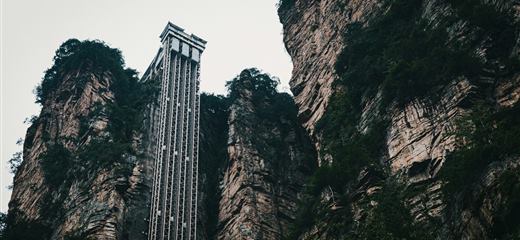 Bailong Elevator Bailong Elevator百龙天梯 | 326 m · ¥65/way | Glass lift bolted to a sandstone cliff — billed as the world’s tallest outdoor elevator. Carries you up to the Yuanjiajie plateau in ~2 min; longest queues (1h+ in summer). You never have to ride it — the walking alternatives are in its own guide. |
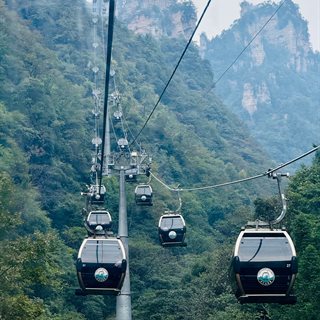 Tianzi cable car Tianzi cable car | ¥72/way | Links the Tianzi Mountain panorama and the plateau — the classic loop rides it down (the elevator’s return leg). Its last car runs early, so don’t leave the descent late. |
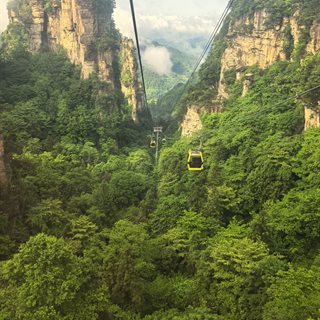 Yangjiajie cable car Yangjiajie cable car | ¥76/way | Optional — the quieter Yangjiajie / west-gate side; opened later, so shorter lines. Skip it on a standard east-gate visit. |
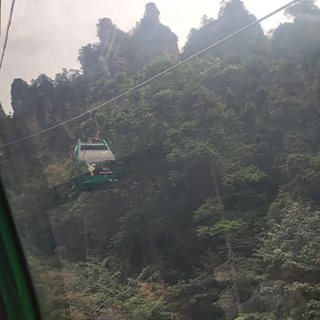 Huangshizhai cable car Huangshizhai cable car黄石寨索道 | ¥65/way | The south-gate lift — 973 m up a 430 m rise, running since 1997. Calmest of the four at 20–40 min, but ticket sales stop 17:30 (May–Oct) / 16:30 (Nov–Apr), so it is a morning job. |
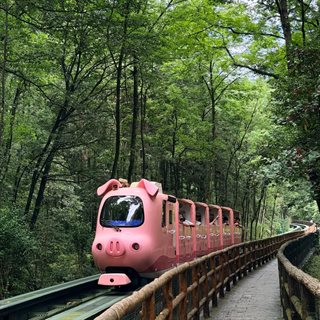 Ten-Mile Gallery tram Ten-Mile Gallery tram十里画廊观光电车 | ¥38/way | Not a lift — a level valley tram in the Suoxiyu section. The most criticised spend in the park: a few minutes’ ride, and the valley-floor views read as ordinary after the plateaus. Walk a stretch instead. |
Queue tip: in July–August every cable car backs up 60–90 minutes by 9:30am, and travellers report waits reaching ~3 hours over the May Day holiday. Start at 7:30am, take the elevator up first, and walk down later when the morning rush has cleared.
How to get there
Every route ends at the city of Zhangjiajie, 30 minutes from the park’s east gate. From Zhangjiajie West railway station it’s ~30 min by taxi (¥40–60) or ¥10 shuttle to the city/park.
| Route | How | Time |
|---|---|---|
| Fly to Changsha + HSR recommended | Changsha Huanghua (CSX), then HSR to Zhangjiajie West. From Changsha’s main station (长沙站) it is direct via Changde, ~40/day, ~¥155–165; from Changsha South — where you land — it loops via Huaihua, ~15/day, ~¥290–300. Metro Line 2 between the two, ~18 min. | 1h45–2h20 (main) 2h50–3h40 (South) |
| Fly direct (DYG) | Zhangjiajie Hehua airport — few international routes (Korean Air, a 3x-weekly Hong Kong service, Bangkok); domestic from Shanghai/Beijing/Guangzhou/Chengdu. | 30 min to park |
| HSR via Changsha | Beijing West or Shanghai Hongqiao → Changsha South (5–6h); Guangzhou South → Changsha South 2.5h (cheapest). Then on to Zhangjiajie West — either straight from Changsha South, or cross to the main station on Line 2 for the faster, cheaper leg. | +1h45–3h40 |
HSR from Beijing/Shanghai runs ¥600–900 all the way; ¥350–500 from Guangzhou — cheaper than flying but a long ride. See our interactive HSR map for the Changsha rail position and onward trains, or the step-by-step Chongqing → Zhangjiajie and Changsha → Zhangjiajie guides (the Changsha one covers the airport-maglev handover).
At Zhangjiajie West, ignore the touts. Anyone claiming “the official bus to Wulingyuan is gone”, pushing a cheap charter, or selling a low-price tour that ends at a shopping stop is running a scam. Take the official coach (~¥12–13) or a metered taxi / DiDi (~¥55–80) to Wulingyuan town.
Best time & how long to stay
The pillars only deliver on clear days, so timing matters more here than at most attractions. September–November and April–June are the windows, and they are not interchangeable: autumn is the one to pick if you want the sky to behave, while spring most often serves up the sea-of-cloud effect that makes the pillars look most like Pandora (it follows rain). Budget 2 days for the park itself.
| Season | What it’s like |
|---|---|
| Apr–Jun | Best: spring flowers, clearer mornings, 15–22°C on the mountain, fewer crowds before mid-June. |
| Sep–Nov | Best: stable post-monsoon skies, red foliage from mid-October, fewest crowds in Sep and Nov. Avoid Oct 1–7 (National Day — capacity shut-offs at peak cable cars). |
| Jul–Aug | Peak domestic season (avoid the school-holiday peak). Pleasant ~25°C but every cable car and the elevator queue 60–90 min — start at 7am. |
| Dec–Mar | Quietest, with snow and rime turning the pillars to ink-wash — but cold, and ice can briefly close the cable cars or elevator. The core pillars are always there; the photo just needs a clear-ish day. |
Rain strategy: light drizzle doesn’t ruin the park — the pillars drift in and out of mist, closer to an ink-wash painting than a washout — but steady rain erases them completely and slicks the stairs. The best views of all come on the first clear morning after rain, when cloud-seas fill the valleys and the pillars surface through them. Your pass is valid four days, so if the forecast shows rain breaking, it costs nothing to wait a day and ride up the morning after. Pack a poncho and grippy shoes either way.
One day in the park is a rushed dash — doable, but you spend it racing queues; if that’s all you have, many travellers swap in Tianmen Mountain instead (half a day, right by the city). 2 days does the park comfortably — Yuanjiajie and Tianzi one day, a valley walk the next — and 3–5 days add Tianmen and Phoenix Ancient Town. See our broader best time to visit China guide.
Practical for foreigners
- No foreigner surcharge — passports pay the standard ticket, cable-car and elevator rates; the only thing you miss is the resident half-price concession for students and seniors. Remember every entry needs a timed reservation — reserve online in advance (booking options in the tickets section above) and bring the passport you booked with: since the July 2026 upgrade the self-serve gates read it directly, and the staffed lane is there as a fallback.
- Visa-free transit: Hunan is in China’s 240-hour visa-free transit zone — enter at Changsha, do Zhangjiajie, exit to a third country within 10 days. Check your nationality with our visa-checker and build it with the 240-hour transit planner.
- Cost, end-to-end: ¥1,200–1,800 budget (3-day, hostel + entry); ¥3,000–4,500 mid-range (hotel + cable cars); ¥6,000–9,000 comfortable (5-day with Tianmen + glass bridge + private day-tour).
- Eating on the mountain is limited and pricey — plateau canteens run roughly ¥25–35 for a bowl of noodles and ¥30–40 for a rice box (there is even a KFC up on the Yuanjiajie plateau, by the No. 1 Bridge parking area). Most travellers carry snacks and water bought in Wulingyuan town or at the gate shops, then eat properly back in town (¥30–50/person).
- Pace yourself: this is a stairs-and-queues trip across a 264 km² park — wear real shoes, carry water, and don’t pack two zones into one short day.
How much walking — with kids, older legs or bad knees
How much climbing you do here is a choice, not a given: the lifts exist so you don’t have to earn the height, and the eco-buses cover the distance between viewpoints. Ranked from gentlest up:
- A flat day, no lift at all
- Golden Whip Stream — 7.5 km of level valley floor, 2.5–3h, looking up at the pillars. Turn back at the Journey to the West marker for a 1–1.5h version. The one route with no queue.
- An easy hour up top
- Yangjiajie’s Natural Great Wall — a near-flat ~1h round trip from the eco-bus stop. On Tianzi, the He Long Park → Yubi Feng → Dianjiangtai run covers the three best viewpoints on flat paths.
- The full plateau, least climbing
- The east gate B-line: the elevator takes the 326 m in two minutes, eco-buses link the plateau zones, the Tianzi cable brings you down. It’s a long day (7–8h) but the ascent is all mechanical. The A-line adds ~200 steps at the top of the Tianzi cable.
- What to skip on bad knees
- Walking up to the plateau (~2,000 steps, 1.5–2h) and the “Health Avenue” stair trail up Tianzi (~4.7 km, 2.5–3h). Walking down from the Tianzi Pavilion (~1.5h) is the gentler direction, and the deep Yangjiajie spurs involve hands-and-feet squeeze passes.
On the buses: the mountain switchbacks are sharp — if anyone in your group gets motion sick, take tablets and sit near the front. Toilets cluster along the main plateau roads and thin out fast at the quiet viewpoints; go before you leave the main road.
What we can’t tell you: whether a wheelchair user can do the plateau. The elevator and cable cars are enclosed cabins and the eco-buses are standard coaches, but we have not been able to verify step-free routing between them or which viewpoints have ramped access — the plateau paths mix boardwalk with stone stairs. If that is your question, ask at the gate visitor centre before you buy any lift tickets rather than relying on us.
Book Zhangjiajie park tickets & a guided tourNASDAQ: TCOM
Trip.com sells the park pass, Tianmen combos and same-day private tours with a guide and transfers — booked in English on a foreign card, with the queue logistics handled.
Where to stay
Two sensible bases. Wulingyuan ticket-gate town (5 min from the park gate) is best for a park-focused trip — you beat the day-tour buses. Zhangjiajie city (30 min from the park, 10 min from the Tianmen cable car) is better if you’re doing both parks, with a livelier food scene and the only international chains. Distances below are real, not guessed.
Where to book these: China’s home-grown chains — 全季 (JI), 亚朵 (Atour), Vienna, GreenTree — are listed most completely on Trip.com, with English checkout and foreign-card payment. It’s the main booking platform for mainland hotels; Western sites like Booking and Agoda carry only a fraction of their branches near the park.
Wulingyuan ticket-gate town (best for the park)
Wulingyuan town sits 5 minutes from the main park gate, so you are first in the queue before the day-tour buses arrive. There is no foreigner-friendly five-star here — it is mid-range and budget chains, and that is the right call for a park-focused trip. Base here for 2–3 nights, then ride the eco-buses inside. Mainland chains book most completely on Trip.com.
- Wulingyuan town, ~5 min from the main park gate.China's most popular home-grown mid-range chain — modern, spotless, easy English-app booking, and steps from the gate so you beat the 9:30am tour-bus wave.
- Wulingyuan town, ~10 min from the main park gate.Design-led mid-range chain that foreign guests rate highly — comfortable, well-run, and far better value than basing in the city.
- Wulingyuan town, 5–15 min from the gate.Reliable budget chains right by the entrance — a live list of what is currently bookable nearest the park.
Zhangjiajie city (best for Tianmen + both parks)
The international brands sit here rather than at the park gate — Pullman by the Tianmen cable-car base, IHG in the city centre. Trade-off: every park morning starts with a 30-minute drive out to Wulingyuan.
- LuxuryPullman Zhangjiajie →Zhangjiajie city, near the Tianmen cable-car base.The international five-star in the city — convenient for the Tianmen day and the airport/rail station.
- Zhangjiajie city center.IHG-branded comfort with English service in the city — handy if you want a known chain and are splitting time between Tianmen and the forest park.
Frequently asked questions
Are these really the mountains from Avatar?
Yes and no. The visual reference for the floating Hallelujah Mountains in James Cameron's Avatar (2009) was Zhangjiajie's sandstone pillars — the production team photographed them in 2008 and the lead art director publicly acknowledged the influence. The park renamed one of its peaks 'Avatar Hallelujah Mountain' in 2010 to capture the reference. So the mountains aren't 'in' the movie; the movie's invented landscape was based on these.
How long do I need to see Zhangjiajie?
For the National Forest Park itself, 2 days is the standard answer — Yuanjiajie (the Avatar pillars) and Tianzi Mountain on one day, the Golden Whip Stream valley on the next. One day is a rushed dash (doable, but you race the queues); if that is all you have, many travellers swap in Tianmen Mountain by the city instead. 3 days lets you add Tianmen and its glass walkway; 5 days adds Phoenix or Furong ancient towns at a slower pace. The park is 264 km² with multiple cable-car queues, so do not pack two zones into one short day.
Do I need to book Zhangjiajie tickets in advance?
Yes. Since 2025 the park caps daily visitors (~53,000) and requires a timed entry reservation tied to a specific gate for every visit — the east gate is even split into an A-line and a B-line you choose when booking. Entry is real-name, and this got easier in 2026: after a July 2026 ticketing upgrade the self-serve gates now read foreign passports directly, so you scan through like everyone else rather than collecting a paper ticket card at a window first. Keep the staffed lane as your fallback — older non-chip passports still need it, and travellers report readers struggling in bright sun — where staff register your passport and take a face photo; after that the in-park eco-buses and cable cars recognise you by face-scan. The staffed lane runs about 10–20 minutes at the 8–10am peak and a couple of minutes off-peak, so allow a margin if you are on an early slot. Your first entry is simple: book in English on an international travel site with your passport number and the purchase carries its own timed slot — there is nothing else to arrange, just turn up and scan the passport. The catch is re-entry. The pass is valid 4 days, but each return visit needs a fresh slot reserved in the official '张家界一机游' / Zhangjiajie Travel Assistant WeChat mini-program (门票改签、预约), with slots opening about a week ahead and split into morning and afternoon. That mini-program is not the Chinese-only dead end it is often described as — it runs Chinese, English and Korean — but the practical obstacle is access rather than language: many foreign visitors cannot get it to open at all, and official customer service is hard to reach. The simplest fix is to ask staff at the park on your first day to set the next entry up for you, which takes a minute while you are already there. Peak 8–10am slots sell out, so book a few days ahead.
Should I book the A-line or the B-line at the east gate?
The east gate's timed reservation splits into two directions and you choose one when booking. The B-line goes up the Bailong Elevator first, so you reach the Yuanjiajie plateau and the Avatar pillars in morning light with thinner crowds — but the elevator carries the longest queue: 60–90 minutes on a normal summer morning, and travellers report up to about 3 hours over the May Day holiday. The A-line starts with the Tianzi cable car (plus roughly 200 steps at the top), waits far less, and works the park in reverse — the trade-off is reaching Yuanjiajie in the afternoon, when the pillars are backlit and photographs come out dark. Either loop runs 7–8 hours. Photographers take B and aim for the 07:00 gate opening; visitors travelling in a national holiday week more often take A.
How long is the Golden Whip Stream walk?
7.5 km along the valley floor, 2.5–3 hours end to end at a strolling pace. It is flat, so the time goes on stopping rather than climbing. Many people walk only the western half and turn back at the Journey to the West filming spot, a 1–1.5 hour round trip. There is no cable car on this route and eco-buses serve both ends, so it can be walked in either direction — it pairs naturally with the south gate and the Huangshizhai cable car as a slower second day.
How do I actually get to Zhangjiajie?
Three routes. Easiest for foreigners: fly to Changsha Huanghua (CSX), then high-speed rail to Zhangjiajie West — but mind which Changsha station you leave from, because they are not interchangeable: trains from Changsha's main station (长沙站) run direct via Changde in about 1h45–2h20, while trains from Changsha South (长沙南站) loop the long way via Huaihua and take 2h50–3h40 for roughly double the fare. You land at Changsha South, and Metro Line 2 links it to the main station in about 18 minutes. Direct: fly to Zhangjiajie Hehua (DYG), a small airport with few international routes (Korean Air, plus a 3x-weekly Greater Bay Airlines service from Hong Kong and Bangkok flights). Slowest but cheapest: HSR from Beijing or Shanghai to Changsha (5–6h), then onward to Zhangjiajie West. From Hong Kong there is also one direct high-speed train a day — see our Hong Kong to Zhangjiajie guide. All three end at the city of Zhangjiajie, which is 30 minutes from the forest park's east gate.
What's the difference between Wulingyuan and Tianmen Mountain?
Two separate experiences, both labeled 'Zhangjiajie' in casual usage. Wulingyuan (武陵源) is the official scenic-area name of the National Forest Park — the UNESCO pillar park 30 min from the city. It covers Yuanjiajie (Avatar peaks), Tianzi Mountain, Yangjiajie, and the Golden Whip Stream walk. Tianmen Mountain is a separate peak just outside Zhangjiajie city itself — accessed by what's billed as the world's longest cable car (7.5 km), with a glass-floor cliffside walk and the natural 'Heaven's Gate' arch. Most foreigners visit BOTH; budget at least 1 full day each.
Is the glass bridge worth it?
Different bridge from the cliffside walk. Zhangjiajie Grand Canyon Glass Bridge (大峡谷玻璃桥, opened 2016) is in Grand Canyon scenic area, 30 min from Wulingyuan town. 430 m long, 6 m wide, 300 m above the canyon floor — at the time of opening it was the world's longest and tallest glass bridge. Crowds shuttle through and you have ~30 minutes on the bridge itself. Worth it if you specifically want the photo and aren't terrified of heights. Skippable if Tianmen's glass walkway is on your itinerary — that's the same effect (transparent floor over a sheer drop) and integrated with a more interesting overall mountain.
When is the best time to visit Zhangjiajie?
April–June and September–November. Spring brings flowers and clearer mornings; autumn has the most stable weather and richer foliage colors, with September and November the quietest of the good months. Summer (July–August) is peak season for domestic Chinese tourists — mountain temperatures are pleasant (22–28°C) but crowds at every cable car are oppressive. Winter (December–February) is closed-feeling: fog limits the views that make the trip worthwhile, snow can shutter the glass bridge, and several minor trails close. Peak shoulder for crowds-vs-views: late May or mid-October.
Are foreign tourists eligible for visa-free transit at Zhangjiajie?
Yes — Hunan province is one of the 24 regions covered by China's 240-hour visa-free transit policy. You can enter China at Changsha or another eligible port, travel to Zhangjiajie, and exit within 240 hours, provided your onward flight goes to a third country (not your origin). Use our visa-checker tool to confirm your nationality qualifies, and our 240-hour transit planner if you're building a transit itinerary.
How much does it cost end-to-end?
Budget level (2–3 day, hostel + park-entry-only): ¥1,200–1,800 / $170–250. Mid-range (mid-tier hotel + the cable/lift pass): ¥3,000–4,500 / $420–630. Comfortable (5-day, 4-star hotel + Tianmen + glass bridge + private day-tour): ¥6,000–9,000 / $850–1,260. The park pass is ¥236 (4-day, eco-buses included); the lifts cost extra — a ¥238 pass covers any four one-way rides (fits the classic 2-day loop), a ¥298 version is unlimited for 3+ days, and if you will only ride the elevator up and one cable car down, paying per ride is cheaper than either. Tianmen Mountain and the glass bridge are separate tickets. Foreign passports pay the standard rate — only the resident half-price concession for students and seniors does not apply.
Sources
Checked July 2026 · Written from our own first-hand travel in China.