Luoyang
洛阳A foreigner's 2026 guide to Luoyang — the ancient capital of 13 Chinese dynasties on the Yi River, home of the UNESCO Longmen Grottoes, China's first Buddhist temple, the Sui-Tang capital ruins and the famous April peony bloom. The natural eastward day-add or extension of a Xi'an trip.
Top Things to Do in Luoyang — Longmen Grottoes, White Horse Temple & the Tang Capital Ruins
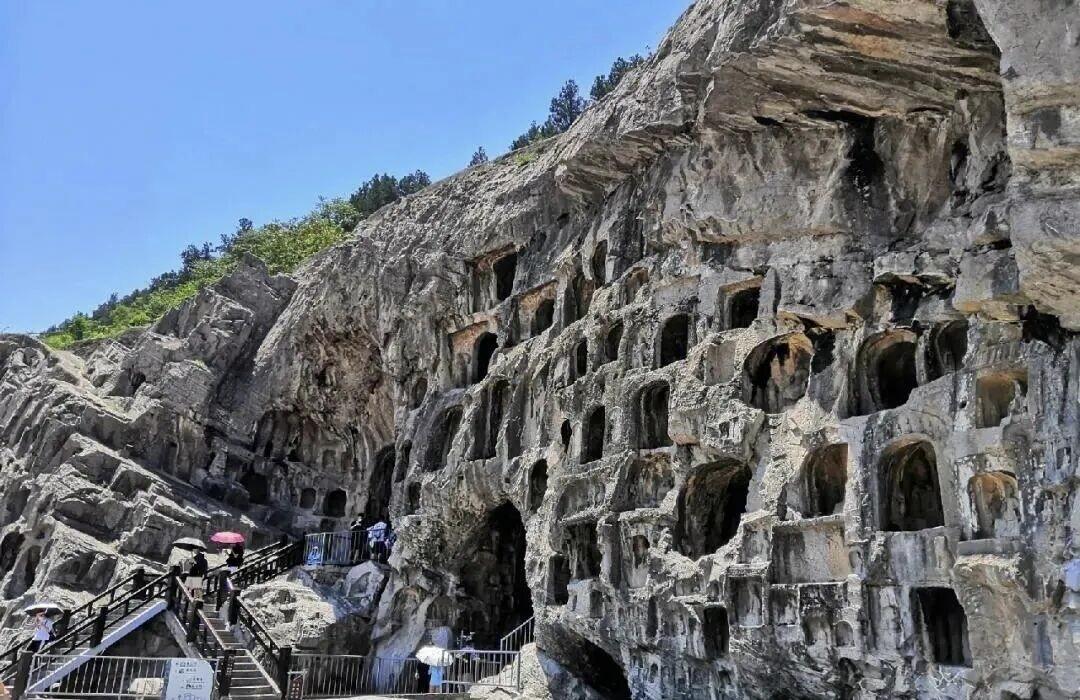
Luoyang is the city of the Longmen Grottoes — a UNESCO World Heritage site of about 100,000 carved Buddhist statues across more than 1,400 caves along a 1 km cliff face of the Yi River, started in the late 5th century. Around the Grottoes sit the White Horse Temple (China's first Buddhist temple, founded 68 CE), the Sui-Tang capital ruins around Yingtian Gate and the Luoyi Ancient City night-photo quarter, Guanlin Temple where Guan Yu's head is buried, the Luoyang Museum, and the peony bloom in April-May that is the city's signature event.
Longmen Grottoes — Luoyang's UNESCO Marquee
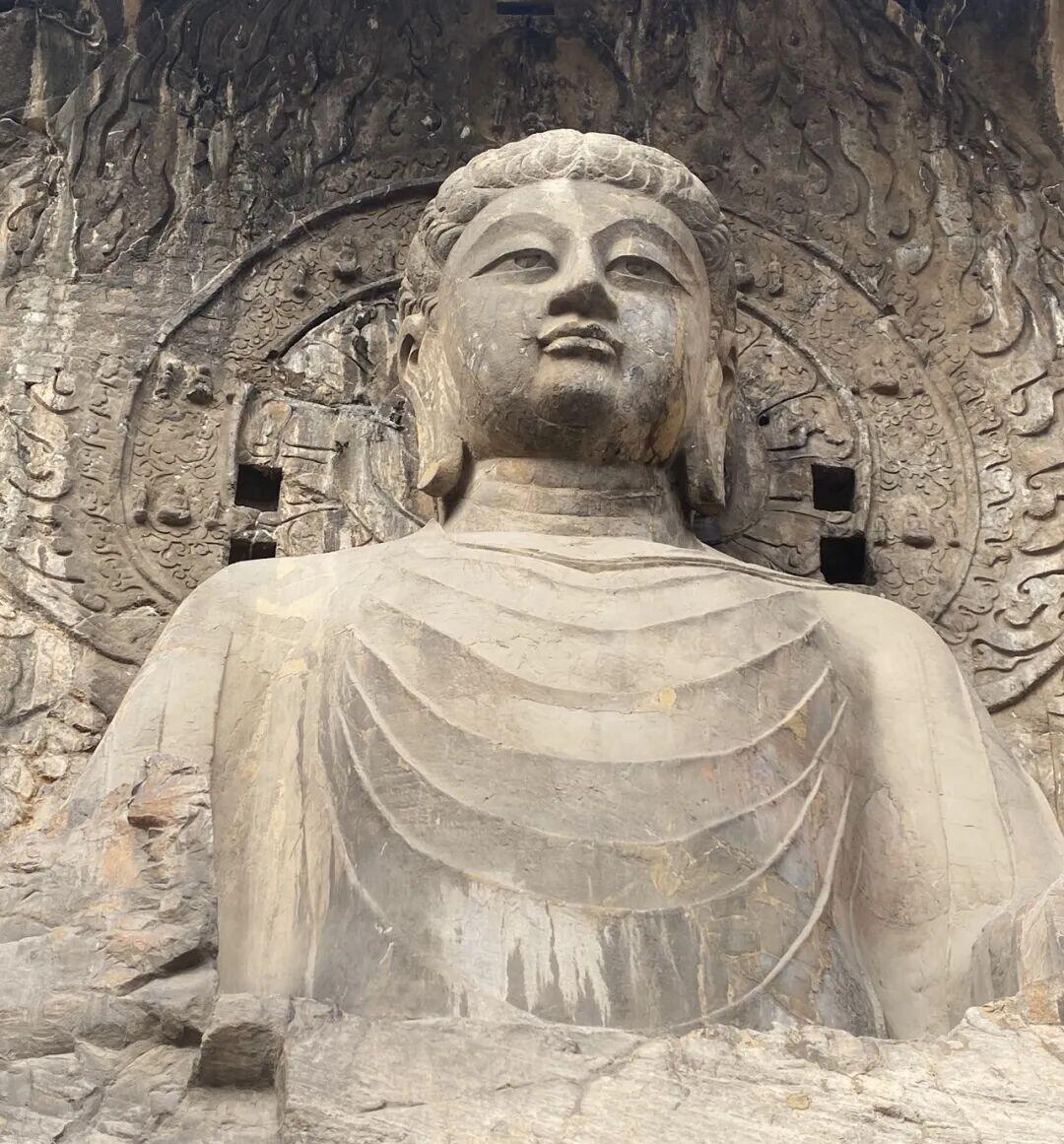
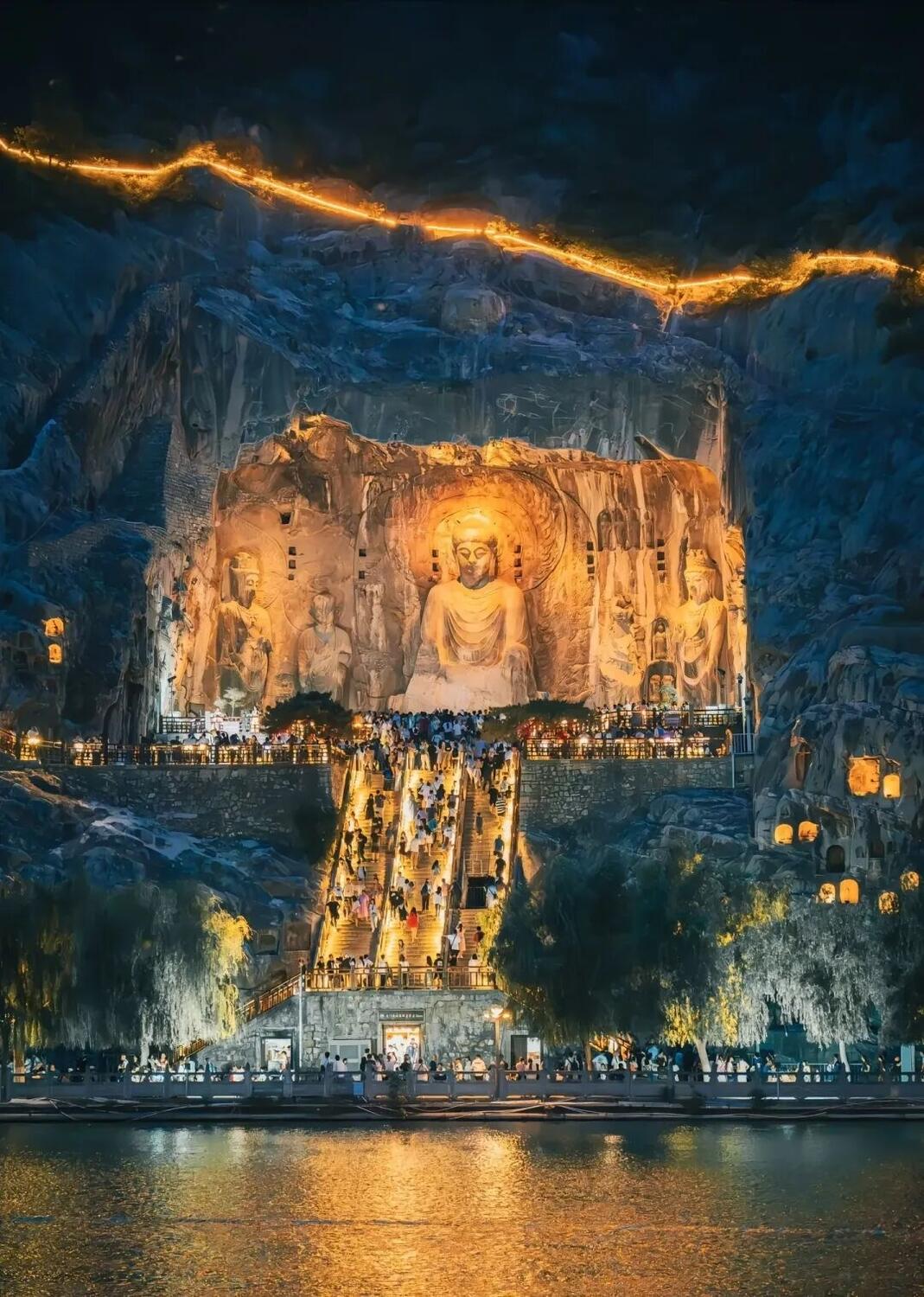
The sight Luoyang is built around — a UNESCO World Heritage site of ~100,000 carved Buddhist statues across more than 1,400 caves and niches over a 1 km Yi River cliff face, started in the late 5th century under the Northern Wei and carried on through the Tang. The Fengxian Temple cave's 17.4 m seated Vairocana Buddha is the famous photo. Bus 71/81 from central Luoyang.
Fengxian Temple — the Vairocana Buddha
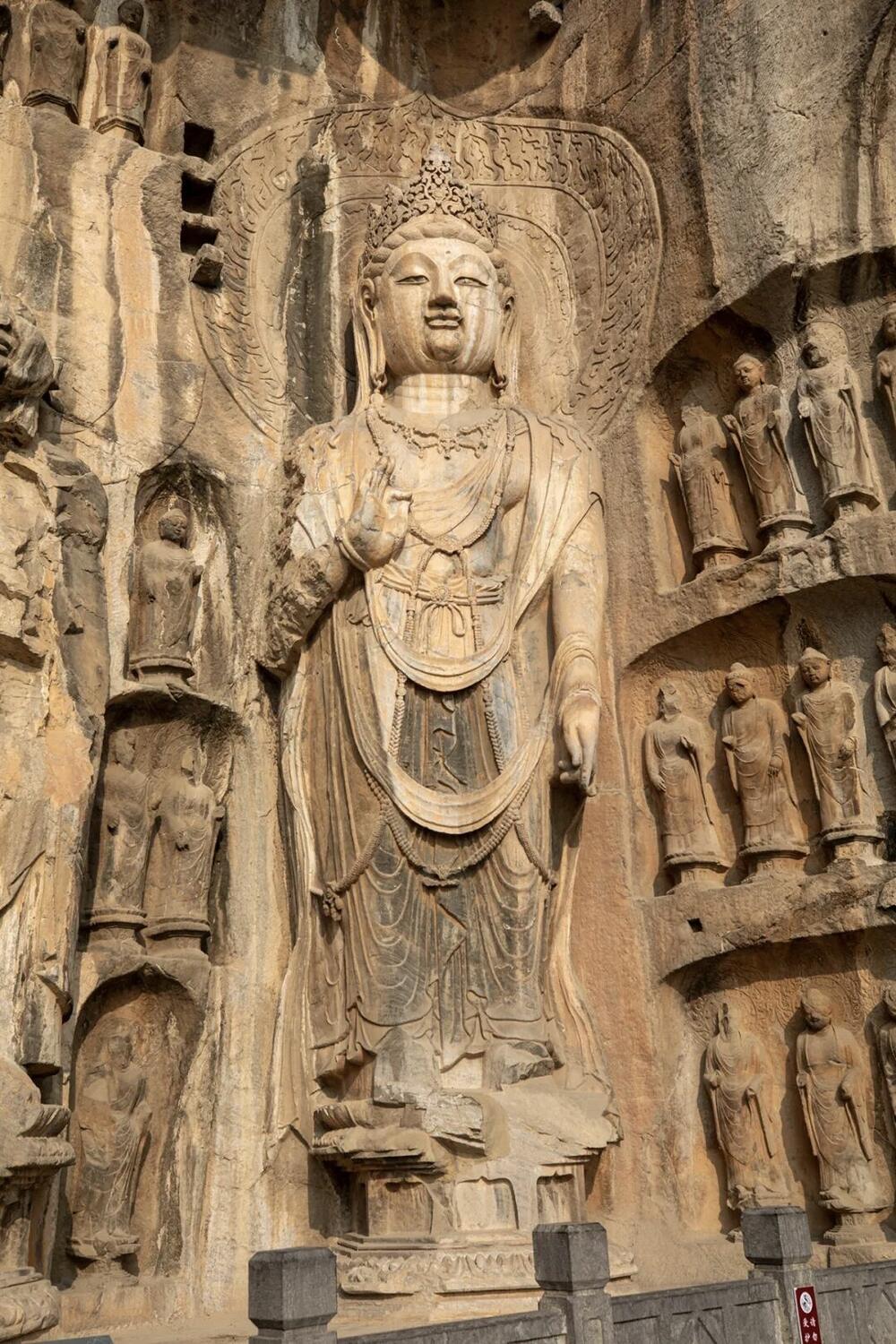
The single most famous cave at Longmen — an open-air shrine with a 17.4 m seated Vairocana Buddha at its centre, flanked by disciples, bodhisattvas, heavenly kings and guardians. The Vairocana's serene face is sometimes called the 'Chinese Mona Lisa'. Completed in the 670s under the Tang emperor Gaozong; the staircase climbs at the centre of the west-bank cliff.
White Horse Temple — China's First Buddhist Temple
The first Buddhist temple in China, founded in 68 CE under the Han emperor Ming and named for the white horses that brought the Buddhist scriptures from India. Multiple courtyards of the original old temple, plus a remarkable modern addition — Thai-, Indian- and Burmese-style halls built by partner countries in the 2010s. ~13 km east of central Luoyang, Bus 56 from Luoyang Station.
Yingtian Gate — the Sui-Tang Capital Gate
The reconstructed Yingtian Gate (应天门), the south gate of the imperial palace of the Sui and Tang capital — the gate from which Wu Zetian, China's only female emperor, was crowned in 690 CE. Rebuilt over its archaeological foundations and opened in 2019 as a night-lit cultural site; one of the strongest Sui-Tang-themed sights in Luoyang's old-town belt.
Sui-Tang Luoyang City Heritage Park
The Sui-Tang Luoyang City Heritage Park (隋唐洛阳城国家遗址公园) — a large archaeological-heritage park spread over the footprint of the imperial palace city. Reconstructed Mingtang and Tiantang halls (the latter rebuilt at 88 m over the original Tang foundations), excavated palace floor plans, and an excellent thematic museum on the Sui-Tang capital city.
Luoyi Ancient City — the Night-Lit Old Town
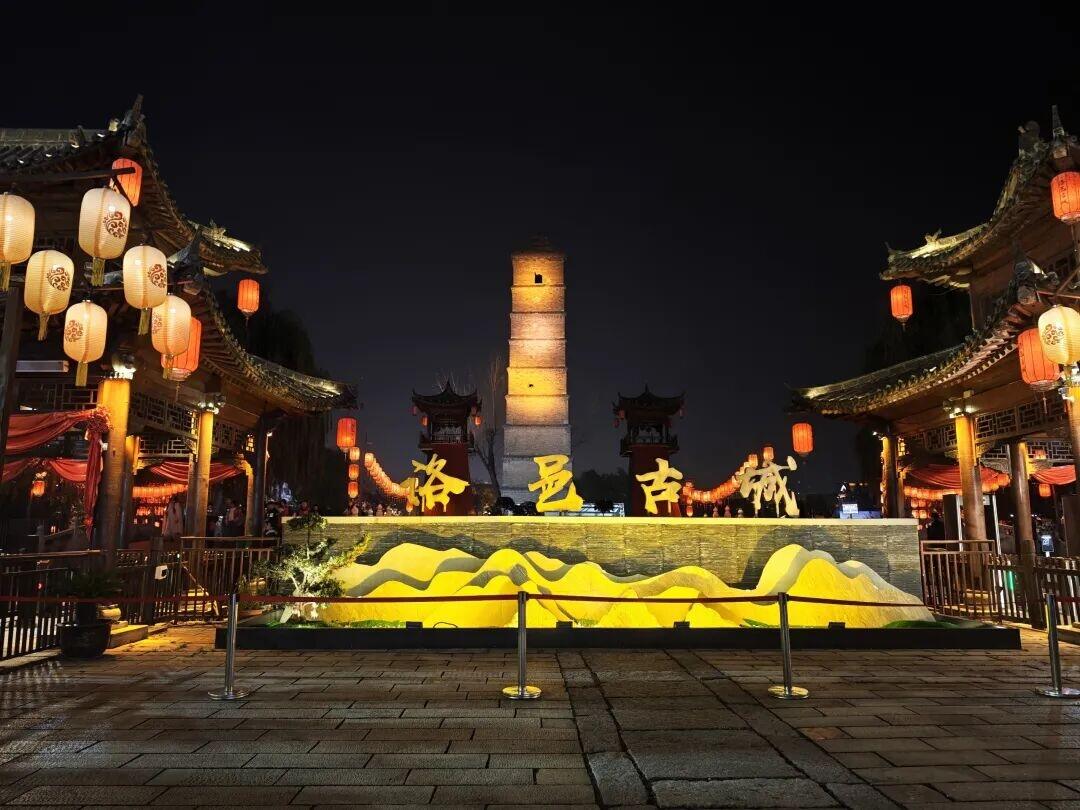
Luoyi Ancient City (洛邑古城) — a restored old-town quarter beside the Sui-Tang ruins, opened to compete with Xi'an's Datang Furongyuan as the city's headline night-tourism site. Walled lanes, paper-lantern streets, period-costume rental and stages of nightly Tang-era performances. The viral 'Hanfu in Luoyang' photo backdrop for Chinese visitors; foreigners come for the atmosphere.
Guanlin Temple — Guan Yu's Burial Mound
The only Chinese site that holds the head of the deified general Guan Yu (relics) plus a full memorial-temple complex around the burial mound — Guan Yu died in 220 CE and his head was sent to Luoyang under the warlord Cao Cao. A working temple of Guandi (the deified Guan Yu) and a place of pilgrimage for businesspeople. South of central Luoyang in Luolong district.
Luoyang Museum — Tang Sancai & the 13 Dynasties
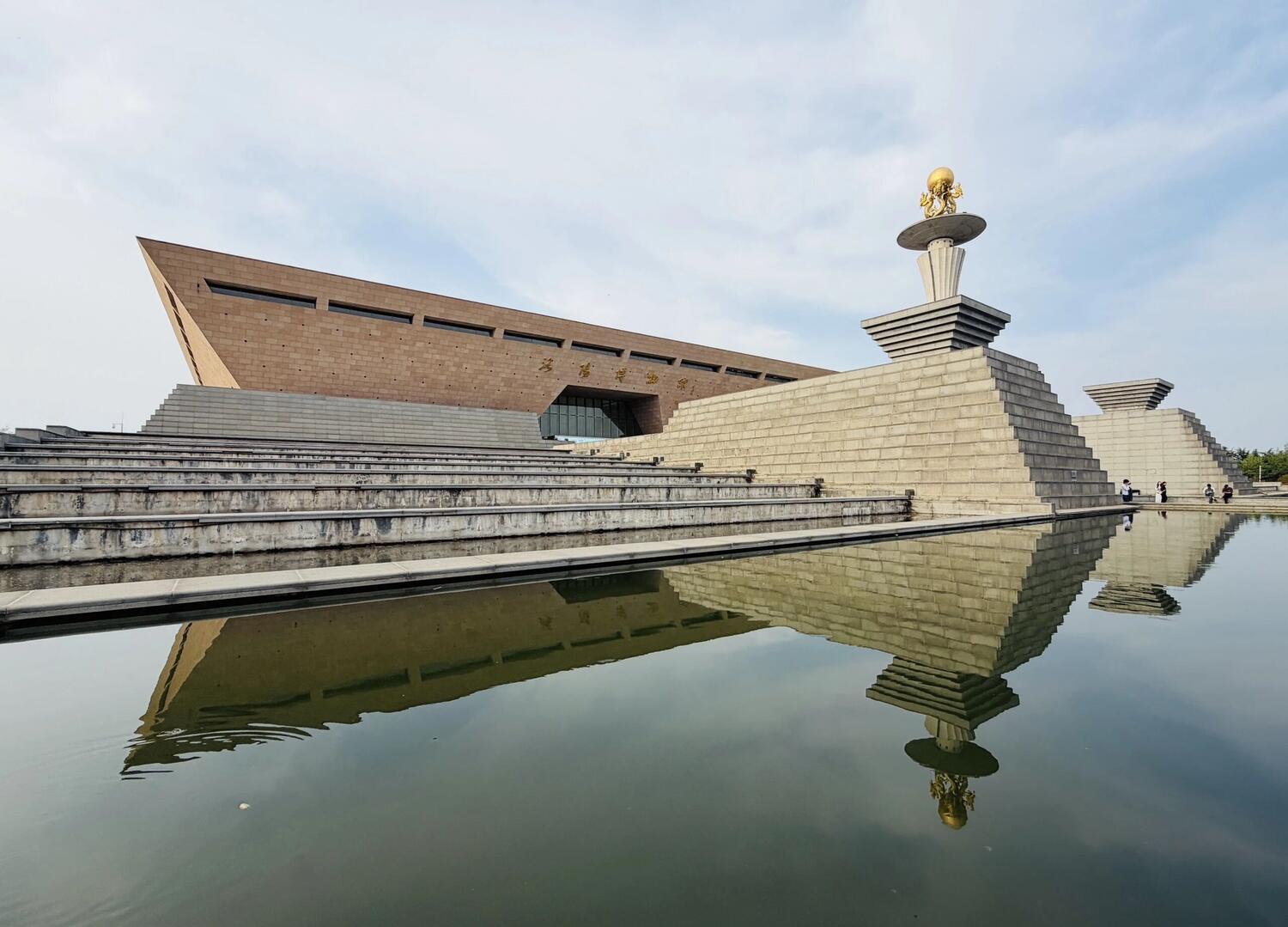
Luoyang has been a capital under 13 dynasties — and the Luoyang Museum holds the bronzes, Tang sancai (three-colour) ceramics, Tang-Buddhist statuary and Sui-Tang capital exhibits that you cannot read at the sites themselves. A clean modern building south of Wangcheng Park, free entry with passport, closed Mondays.
Luoyang Peony Festival (April-May)
Luoyang has been the peony capital of China since the Tang dynasty — the 牡丹 was the imperial flower, planted across the city by the order of the empress Wu Zetian. The annual peony bloom from mid-April to early May is the city's signature event, and the Luoyang Peony Festival (洛阳牡丹文化节) covers Wangcheng Park, the National Peony Garden and several smaller gardens with millions of blooms.
Wangcheng Park — the Peony Anchor
Wangcheng Park (王城公园) — central Luoyang's flagship peony venue and the historic Zhou-dynasty Royal City site. The biggest single peony garden in the city, on Metro Line 1's Wangcheng Park station. Quiet outside the April-May bloom; the central anchor of the Peony Festival in season.
Laojun Mountain — the Daoist Day Trip
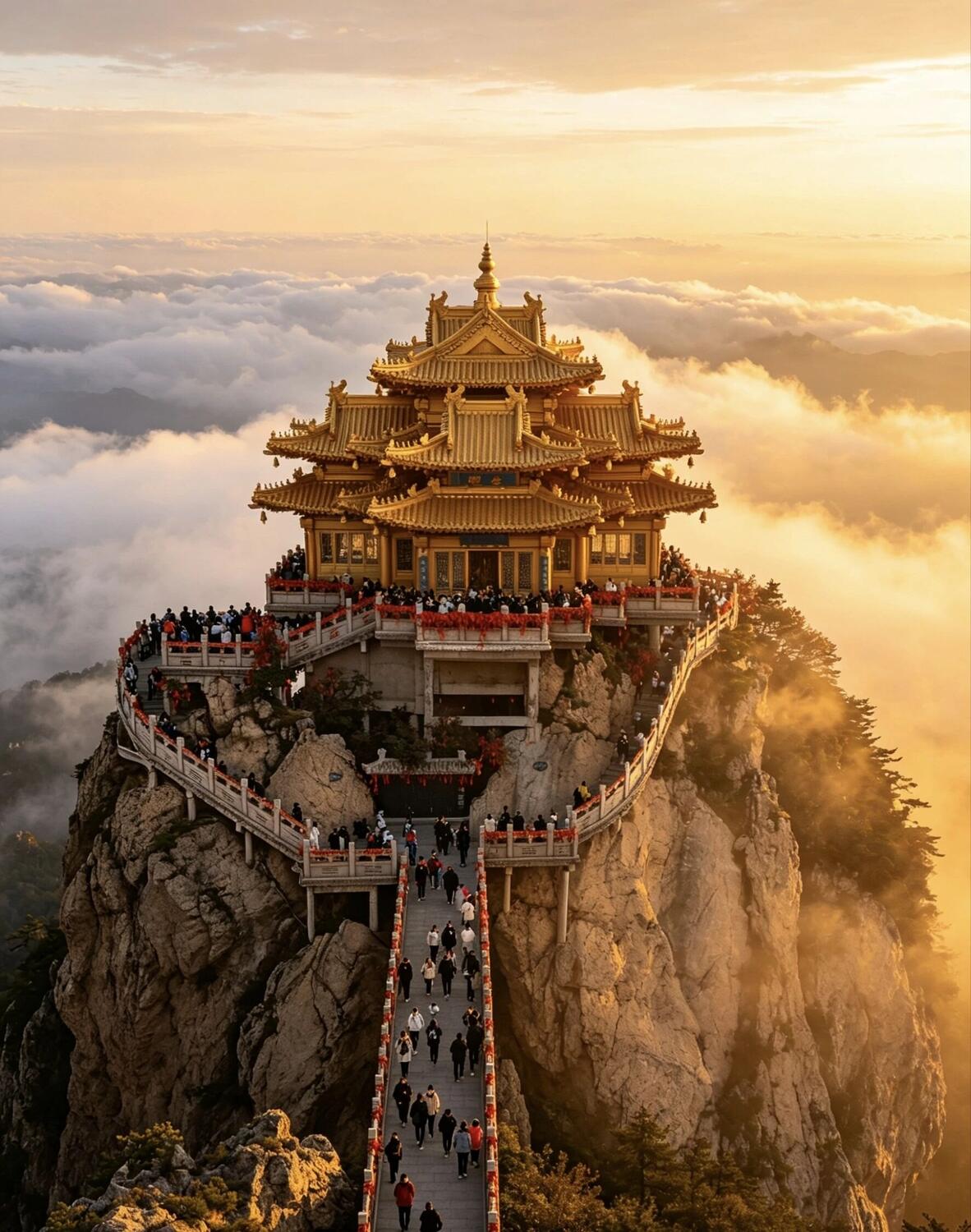
Laojun Mountain (老君山) in Luanchuan County, ~150 km south of Luoyang — a Daoist sacred mountain named for Laozi, with a famous golden-roofed peak temple complex above the cloud line and cable cars to the summit. About 2.5 hours by car or scheduled tour bus; the must-do day trip from the city, especially after autumn snow.
Things to Do in Luoyang — The Full Guide
The full editorial run-down of what is worth your time in Luoyang — the Longmen Grottoes, White Horse Temple, the Sui-Tang capital ruins (Yingtian Gate + the heritage park), Luoyi Ancient City night quarter, Guanlin Temple, the Luoyang Museum, the peony festival in April-May, Wangcheng Park, and the Laojun Mountain day trip — with honest reads on what to prioritise on a 2- or 3-day stop.
The Longmen Grottoes — The UNESCO Cliff of Carved Buddhas
Luoyang has one unmistakable claim: a 1 km cliff face of the Yi River with about 100,000 carved Buddhist statues across more than 1,400 caves and niches, carved over four centuries beginning in 493 CE under the Northern Wei. The famous photo is the Fengxian Temple cave — a 17.4 m seated Vairocana Buddha with a face sometimes called the “Chinese Mona Lisa”, flanked by disciples, bodhisattvas, heavenly kings and trampling guardians. Walk the west bank first (the famous caves), cross the bridge to the east bank and Xiangshan Temple, then return for the long Yi-River photograph. Go at opening — by mid-morning the tour groups arrive.
Luoyang Itinerary — 2, 3, or 5 Days for First-Time Visitors
Most foreign travelers give Luoyang 2-3 days, often as part of a longer Xi'an + Luoyang + Zhengzhou central-China trip. 2 days covers the Longmen Grottoes and the old town. 3 days adds the Sui-Tang ruins and the museum. 5 days reaches the Laojun Mountain day trip and pairs Luoyang with Xi'an or Zhengzhou by HSR. Pick a duration to see the day-by-day plan.
A full day at the Longmen Grottoes — west bank (Fengxian Temple's Vairocana Buddha, Binyang Caves, Wanfo Cave) and east bank (Xiangshan Temple, Bai Juyi's tomb) along the Yi River cliff.
Morning at White Horse Temple, the world's first Buddhist temple. Afternoon: Guanlin Temple, where Guan Yu's head is buried, and the Luoyang Museum on Metro Line 1 for the bronzes, Tang sancai and Sui-Tang capital exhibits.
Yingtian Gate and the Sui-Tang Luoyang City Heritage Park, then the Luoyang old town and the Luoyi Ancient City for the lantern-lit night quarter. Dinner: the Luoyang Water Banquet at Zhen Bu Tong (真不同) — the 24-course Tang-dynasty banquet form that survives only in Luoyang.
Emergency Essentials — Hospitals, PSB Offices & Consular Routing
Luoyang has no Western consulate — and neither does anywhere else in Henan province, including the provincial capital, Zhengzhou. A foreigner who loses a passport in Luoyang should phone their embassy in Beijing for instructions; the nearest full consular service is the embassy in Beijing (about 3.5 hours by high-speed train from Luoyang Longmen on the 京广 line via Zhengzhou) or the consulate-general network in Shanghai (about 5.5-6 hours by HSR). The local Luoyang PSB handles the police-report step regardless of where you travel for consular processing. The main municipal Exit-Entry hall is in the Sports Centre (体育中心) building on Nine Capitals Road (九都路) — the city's main foreigner-cases office; there are also district-level windows in the western Jianxi district (涧西区, the modern half of the city, by the China Pilot Free Trade Zone office) and the old city (老城区, by the Sui-Tang ruins and the Luoyi old town). Luoyang's foreigner-experienced hospitals are the university-affiliated systems — Henan University of Science and Technology runs the largest general hospital (with a central Jinghua-Road campus and a southern Kaiyuan campus closer to Longmen) and Zhengzhou University runs the central Luoyang Central Hospital next to Wangcheng Park on Metro Line 1.
Data verified against Amap (高德地图) on 2026-05-23. Editorial filter + ranking by an editor based in mainland China since 2018 (NOT a Luoyang resident; data is Amap-verified and aggregated from official sources).
National Emergency Phone Numbers (mainland China)
Hospitals
For medical emergencies dial 120 (ambulance). The major hospitals listed below are large, well-equipped, and most likely to have English-speaking staff. For non-emergency visits, ask your travel insurance for in-network options.
First Affiliated Hospital of Henan University of Science and Technology (Jinghua Road Campus)
河南科技大学第一附属医院(景华院区)First Affiliated Hospital of Henan University of Science and Technology (Kaiyuan Campus)
河南科技大学第一附属医院(开元院区)Luoyang Central Hospital (Affiliated with Zhengzhou University)
郑州大学附属洛阳中心医院PSB Exit-Entry Offices
Public Security Bureau Exit-Entry offices handle lost-passport reports, visa extensions, and foreigner residency registration. Use the most central municipal office for a standard lost-passport report; provincial or city-level offices handle complex cases such as visa-category changes.
Luoyang Municipal PSB Exit-Entry Administration (Main Hall)
洛阳市公安局出入境接待大厅Luoyang Jianxi District PSB — Exit-Entry Reception Hall
洛阳市公安局涧西区出入境接待大厅Luoyang Laocheng District PSB — Exit-Entry Reception Hall
洛阳市公安局老城分局出入境接待大厅Getting Around Luoyang — Metro, the Stations & the Bus to Longmen
Luoyang has a small but useful two-line metro (Lines 1 and 2, open since 2021), the three railway stations, the small Beijiao airport, and the standard city-bus + DiDi mix. The single most asked question is how to reach the Longmen Grottoes — the answer is Bus 71 / 81 from central Luoyang, or a 15-minute DiDi from Luoyang Longmen high-speed-rail station.
Line 1 (March 2021) runs east-west through Wangcheng Park, the Luoyang Museum and Luoyang Station. Line 2 (December 2021) runs north-south, linking Luoyang Longmen HSR to Luoyang Station. Fares ¥2-5, tap in with an Alipay or WeChat QR.
Luoyang Longmen (洛阳龙门) is the high-speed-rail hub on the Xi'an-Zhengzhou (徐兰) line and the closest station to the Grottoes (~6 km). Luoyang Station (洛阳站) is the older central station for conventional trains. Read the station name on your ticket — they are far apart.
The standard run to the Grottoes is Bus 71 (from Luoyang Station via central Luoyang) or Bus 81 (parallel route), about 50-60 minutes, ¥1-2. DiDi is faster from anywhere south of the Luo River; 15 minutes from Luoyang Longmen HSR.
Where to Stay
For a first Luoyang trip, base in the old town — the Sui-Tang ruins and the Luoyi Ancient City night quarter on your doorstep. The other three areas suit specific priorities.
The northeastern old-city quarter around Yingtian Gate, the Luoyi Ancient City and the Sui-Tang ruins — the most atmospheric base, especially in the lantern-lit costume-photo season. Mid-range and boutique hotels; foreign travellers' default for a first trip.
The central Wangcheng Park axis on Metro Line 1 — the Luoyang Museum, the central hospital and the city's international-brand hotels. The convenient base, especially if you want easy metro access east-west across the city.
Stay near Luoyang Longmen HSR station only if your trip is genuinely bookended by an early train. Metro Line 2 to the central city, 15 min DiDi to the Grottoes. Sparse dining; a transit precinct, not a neighbourhood.
A handful of hotels cluster near the Grottoes south gate — useful only if your priority is being at the cliff face at opening before the tour groups arrive. A long way from the rest of the city; for photographers and Buddhist-art pilgrims.
What to Eat in Luoyang — The Water Banquet & Henan Cuisine
Luoyang sits in Henan province — the cradle of Han Chinese civilisation and the seat of the imperial Yu (豫) cuisine. Three things, plus the famous house, define a first meal in the city.
A Tang-dynasty imperial banquet form that survives only in Luoyang — 8 cold plates followed by 16 hot soups, each served as the previous is removed “like a flowing river”. Reserve a table at Zhen Bu Tong (真不同).
The most-cited Water Banquet house in Luoyang — in the old town, in business since 1895. The full banquet runs roughly ¥600-1500 per table; smaller groups can order a half-banquet. Reserve ahead.
The wider Henan cuisine is wheat-based, savoury and restrained on chilli — stewed beef and lamb soup noodles (烩面), Kaifeng-style stewed pork, the lighter cold noodles. Different from the spicier Sichuan or Hunan you may know.
The lanes around Lijing Gate (丽景门) hold the densest cluster of Luoyang snacks, noodle houses and night-market stalls — the everyday face of the city's food, far cheaper than a Water Banquet sitting.