Key takeaways
- Free and open 24/7 — three restored Qing-dynasty alleys, not a ticketed park.
- Metro Line 4 → Kuanzhai Alley Station, Exit B — 154 m to the 宽巷子 entrance, two or three minutes; 8–15 min from downtown.
- Time it to the blue hour at light-on — lanterns follow sunset (~6pm midwinter, ~8pm midsummer); after 10pm is the calmest.
- Three lanes, three moods: Wide (tea + opera + dining), Narrow (galleries, quiet), Well (snack street).
- Allow 2–3 hours; budget ¥100–200 for snacks, one tea-house pot, maybe an opera ticket.
What Kuanzhai Alley is
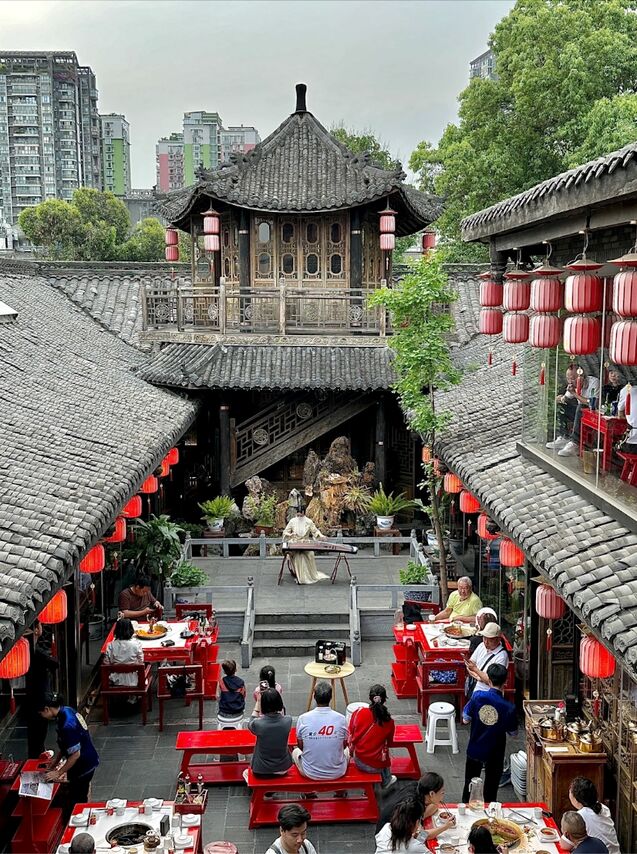
Wide-Narrow Alley (宽窄巷子, Kuān Zhǎi Xiàng Zi) is the central Chengdu attraction most foreign visitors actually walk away remembering — three parallel restored Qing-dynasty alleys stitched into a single tea-house, snack and slow-life complex right in the city core. It is touristy in the way Beijing’s Nanluoguxiang or Shanghai’s Xintiandi are touristy, but the tea-house culture is authentically Chengdu, the architecture is real Qing, and it is the fastest way to taste “old Chengdu pace” if you only have half a day.
Worth it for first-time Chengdu visitors wanting a slow half-day, photographers (Qing alleys + lanterns + tea-house light), foodies sampling Sichuan snacks, and anyone curious about ear cleaning by sidewalk masters. Skip it if you have already done Jinli Ancient Street and dislike repeated old-town aesthetics, have under 6 hours total in Chengdu, or are travelling mid-Golden-Week (Spring Festival, May 1, Oct 1) when crowds make Wide Alley uncrossable.
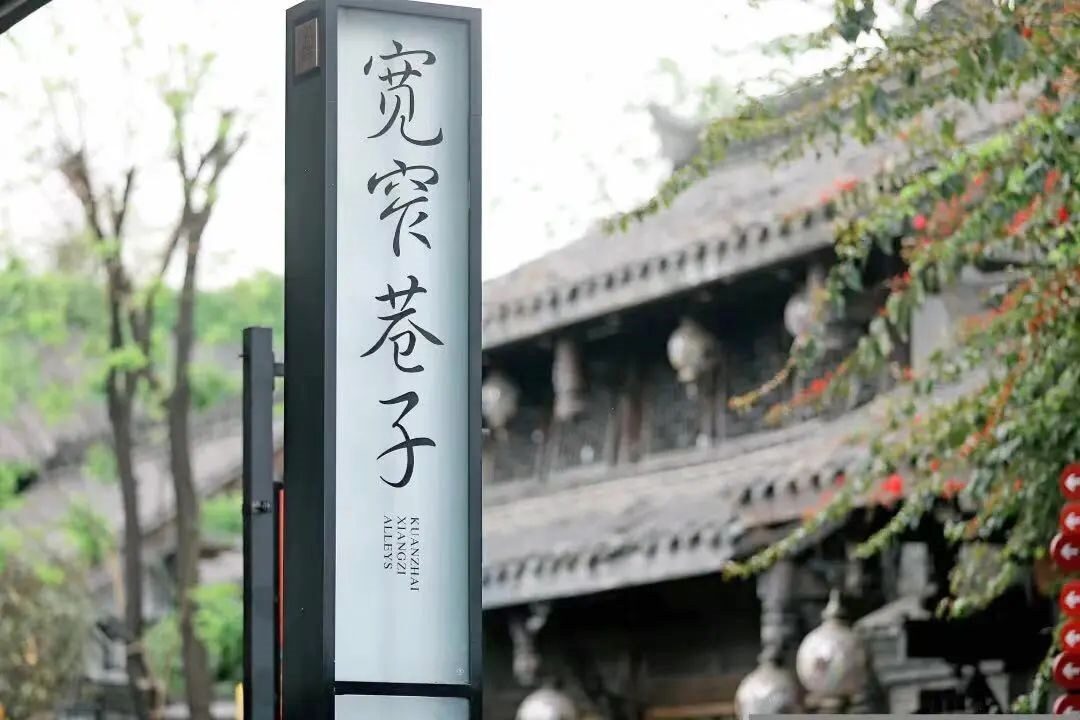
Where Kuanzhai Alley sits in Chengdu
5 km across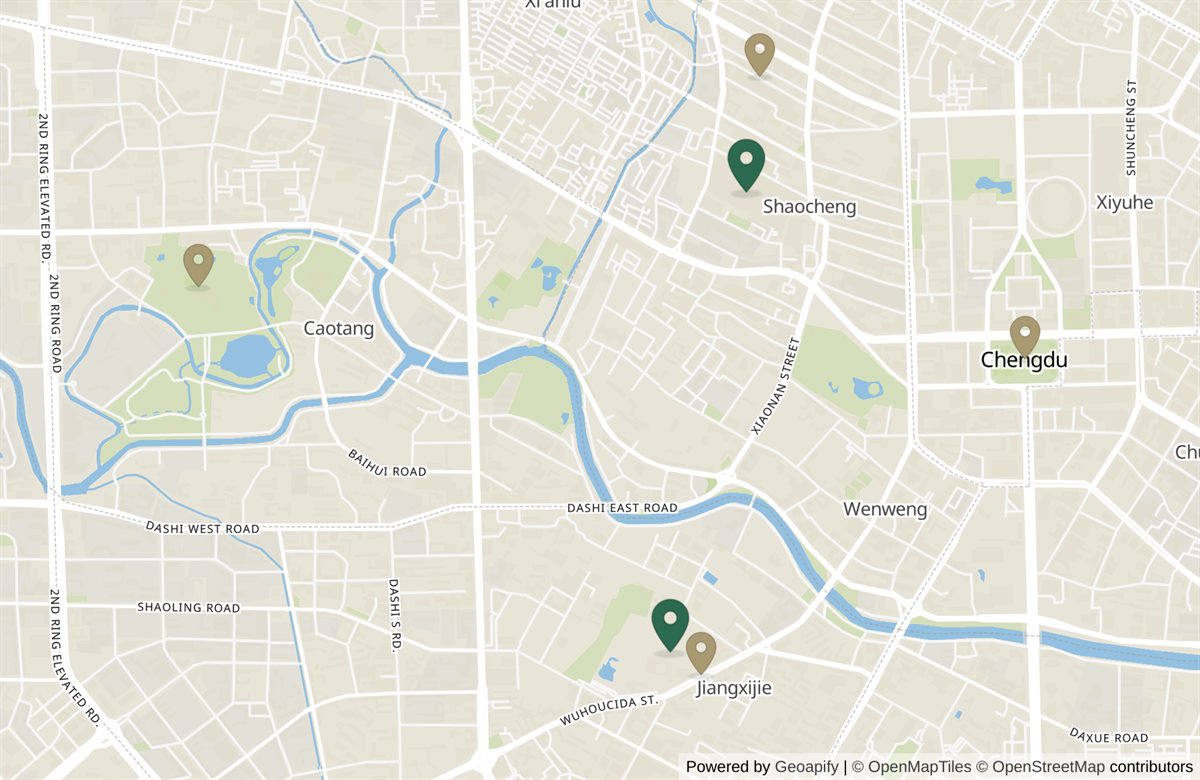 Wuhou Temple & JinliWuhou & Jinli武侯祠 station (Line 10)Kuanzhai AlleyKuanzhaiKuixinglou St — eat hereTianfu SquareDu Fu Thatched Cottage
The three alleys: Wide, Narrow, Well
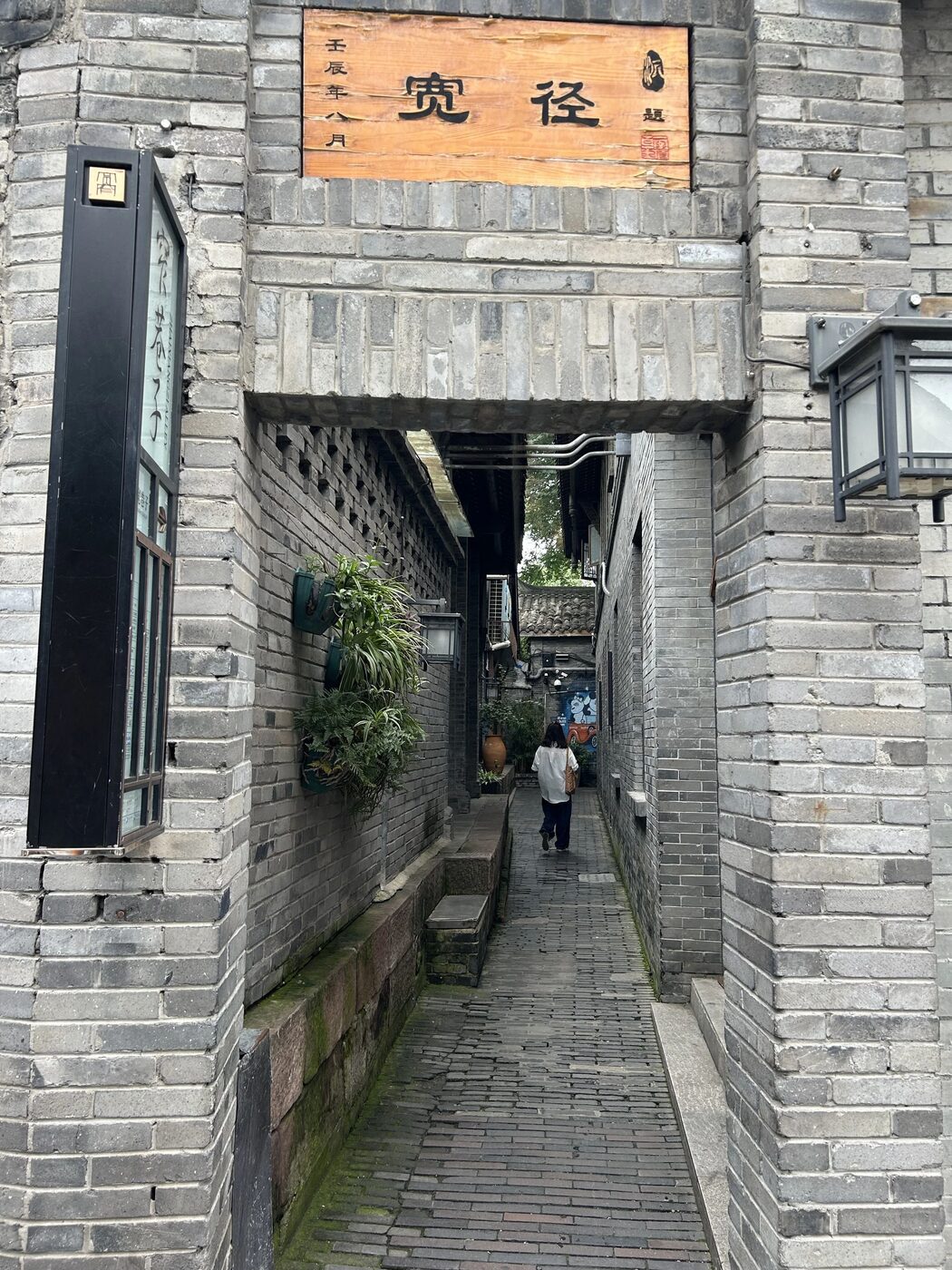
The complex is built around three parallel east-west lanes, each with a distinct character:
| Alley | Character | Best for |
|---|---|---|
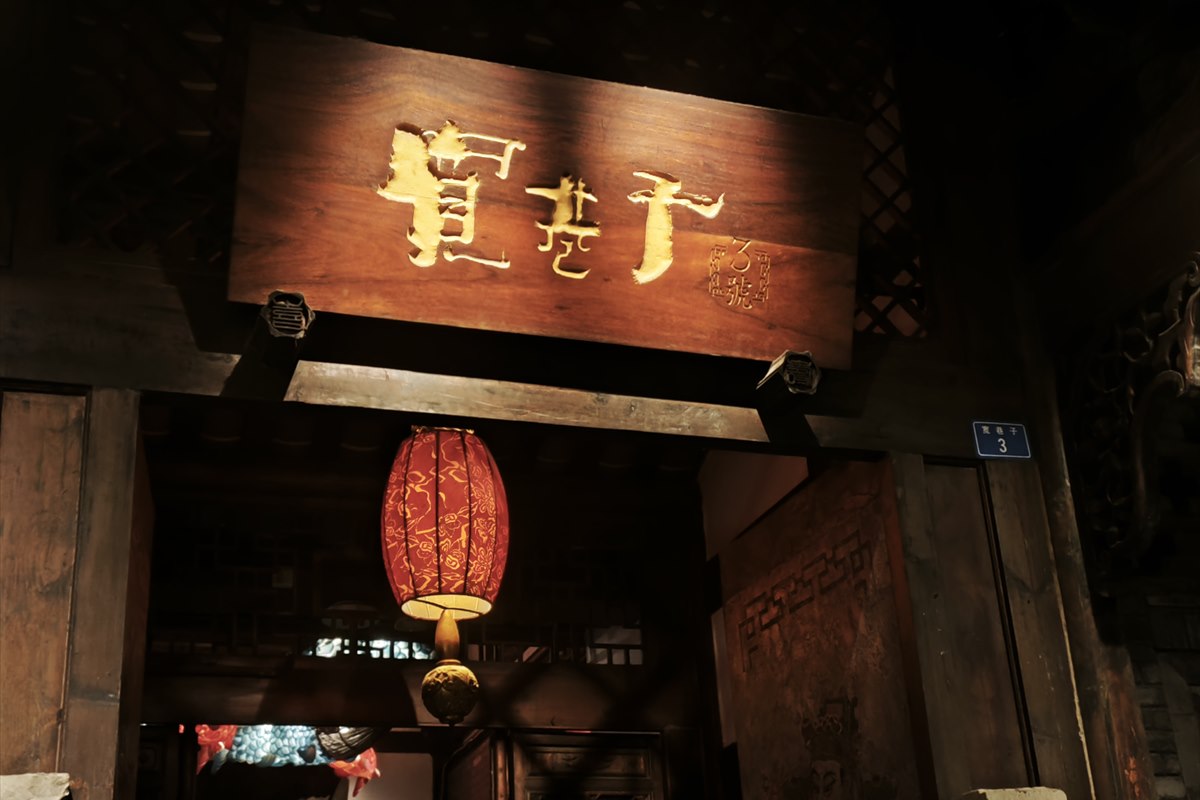
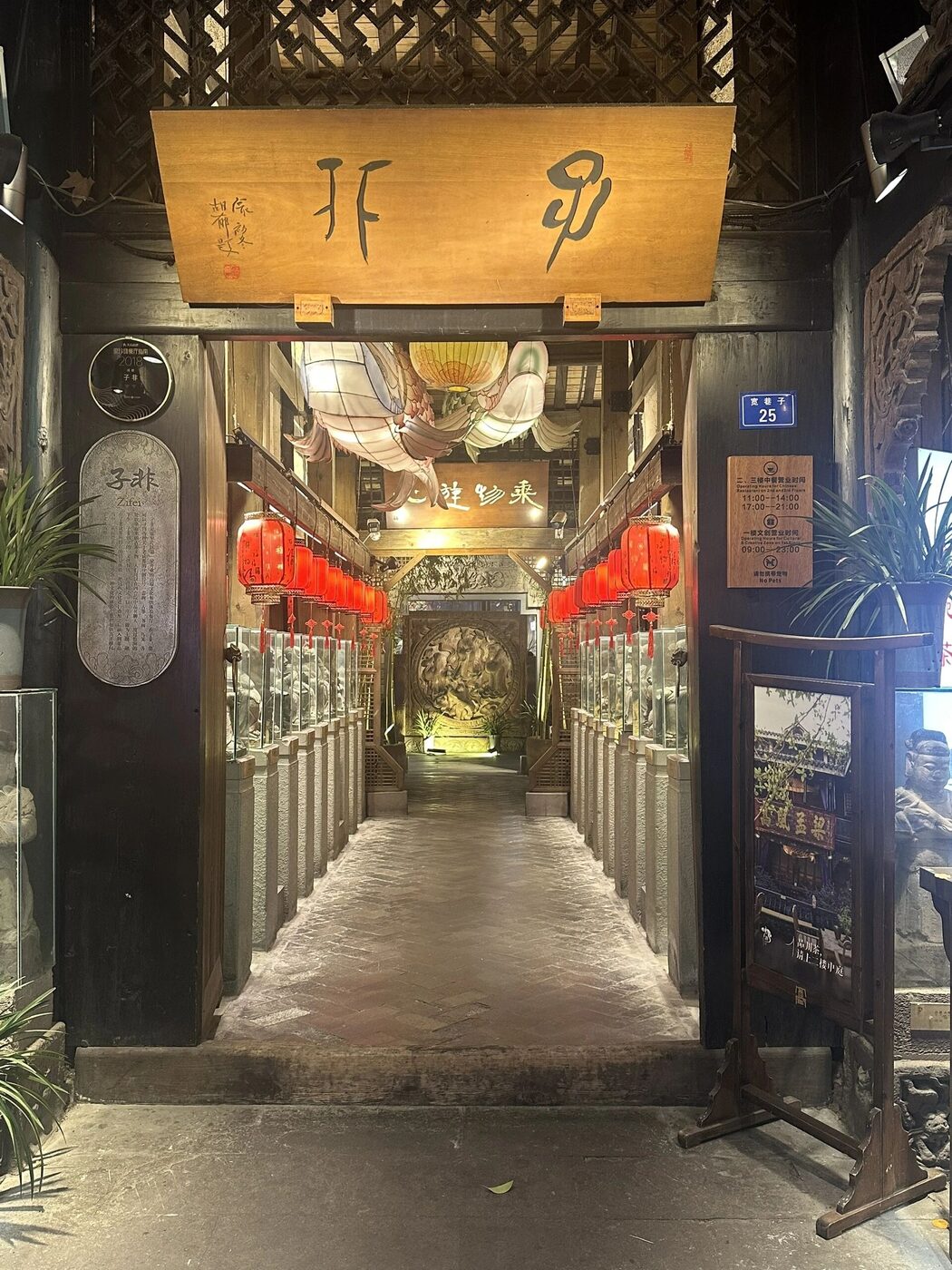
| Wide Alley 宽巷子 | The most touristed lane — restaurants, tea houses, boutique inns, Sichuan-opera courtyards. Heaviest lanterns and storefront décor. | First-time visitors and dinner. |
| Narrow Alley 窄巷子 | Quieter — more art galleries and design shops, fewer restaurants. The most authentically preserved architecture. | Browsing without crowds. |
| Well Alley 井巷子 | The snack street — cheap quick eats and a long carved-brick heritage wall illustrating old Chengdu street life. | Grazing through, photos. |
What to do (and how long it takes)
Five activities cover the whole complex. Walking the alleys is free; you pay only for what you do:
| Activity | Time · cost | What it’s like |
|---|---|---|
| Tea-house sit-down 盖碗茶 | 1–2 h · ¥40–60/bowl inside | The classic Chengdu activity — covered-cup tea (gaiwan-cha) with unlimited refills. Inside the alleys it is tourist-priced at ¥40–60 a bowl (and often mediocre); the local move is a ¥15–20 all-afternoon pot at Heming Tea House in People’s Park, 10 min away. For the architecture, one sit-down in a covered Wide Alley courtyard is still worth it. |
| Sichuan-opera face-changing 变脸 | ~30–40 min · ¥18–28 + tea | Courtyard tea-houses run rolling shows roughly 2–8pm (every 30–40 min — walk in anytime, no fixed session). The ~¥18–28 ticket often does not include tea, so with the near-compulsory tea/snack order real spend is ¥50–80. For a full 90-min professional programme, the dedicated Shufeng Yayun theatre (a short taxi away, shows from 8pm) is ¥80–260 with tea included and no hidden charges. Agree the tea price / any minimum before sitting — see our Sichuan opera guide. |
| Snack walk, Well Alley 井巷子 | ~1 h · ¥30–80 | Pick 4–5 snacks to share between two. The food details are in the next section. |
| Ear cleaning 掏耳朵 | ~10–15 min · ¥40–98 | An authentic Chengdu experience foreigners either love or hate — sidewalk masters use bamboo picks, feathers and tuning forks. The ¥15–20 signs are a 3–5-min taster; a real session is ¥40–60, a wash-and-clean combo ¥68–98. Watch the mid-service upcharge — a “you have ear-wax stones / need a wash” add-on of ¥28–188 sprung at the end is the classic scam. Agree the total and refuse add-ons before they start, insist on new disposable picks, or do it cheaper and calmer at People’s Park. |
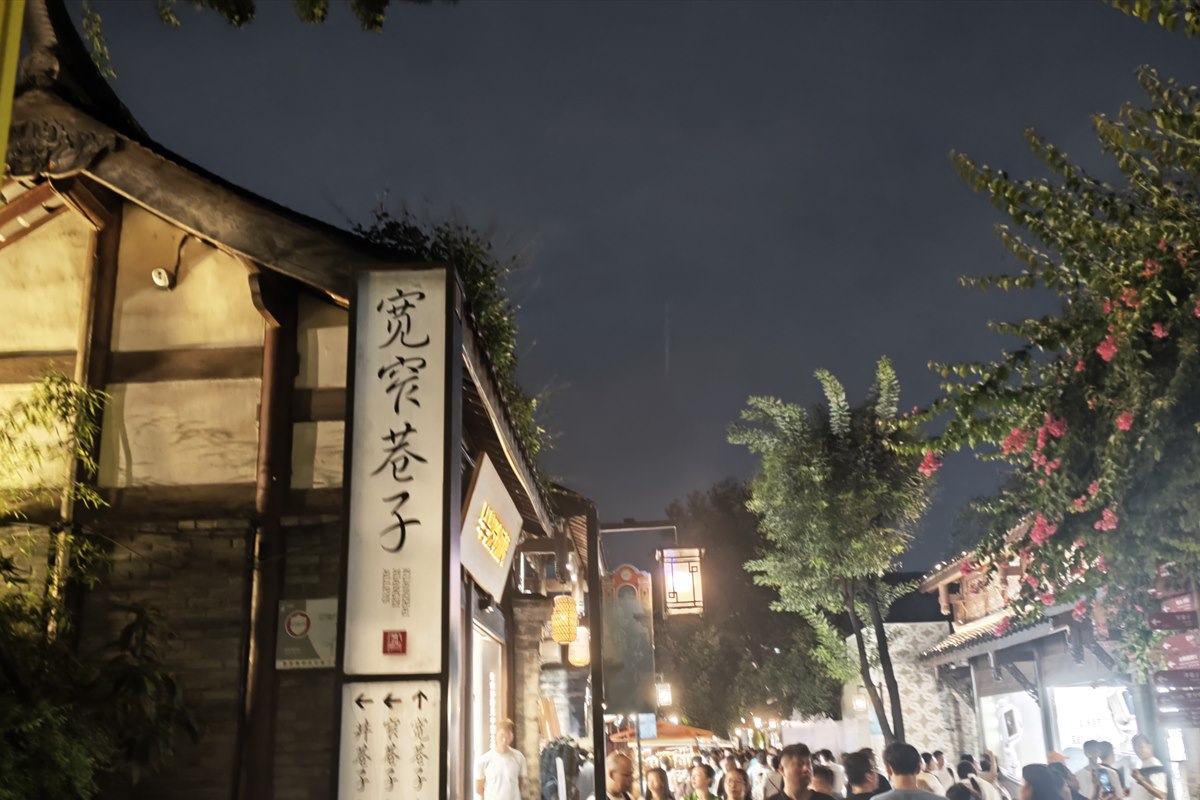
| Photography walk | ~1 h · free | Best at the blue hour as the lanterns come on (seasonal — ~6pm midwinter to ~8pm midsummer), when light still remains in the sky. Dusk runs late here because all of China keeps Beijing time while Chengdu sits ~16° west of that meridian, putting solar noon around 1:04pm: sunset is about 8:10pm in late June and about 6:05pm at the winter solstice. Well Alley’s carved-brick wall is the standout night frame; doorways and tea-house interiors also photograph well. |
Getting there + practical info
Kuanzhai Alley is in the city core in Qingyang District — no day-trip logistics needed:
| Detail | Info |
|---|---|
| Address | Kuanzhai Xiangzi, Qingyang District (青羊区宽窄巷子) |
| Metro | Line 4, Kuanzhai Alley Station (宽窄巷子站) Exit B — 3–5 min walk to the main 宽巷子 entrance (the east plaza is closer to Line 2 People’s Park, Exit D) |
| From Chunxi Road | ~15 min via Metro Line 4 |
| From Tianfu Square | One ride on Line 2 to People’s Park |
| Taxi from downtown | ¥15–25, ~15–25 min (2–5 km, central) |
| Hours | 24/7 (alleys never close); shops ~10am–10pm |
| Entry fee | Free |
| Best time | Dusk — the blue hour as the lanterns come on (seasonal: ~6pm midwinter, ~8pm midsummer); after 10pm is calmest |
| Time needed | 2–3 hours minimum |
Tips for foreign visitors
- Bring Alipay or WeChat Pay — most snack stalls take mobile pay only; foreign cards rarely work at small vendors. Carry a little cash as backup.
- English signage is mixed — major restaurants have English menus, snack stalls have picture menus, tea houses rarely have English. Pointing works fine.
- Avoid weekend evenings 6–9pm if you can — Saturday nights hit standing-room density on Wide Alley.
- Free public restrooms are signposted at the east and west ends of each alley.
Common tourist traps
- Fruit / snacks sold by weight — a stall priced “¥10 a cup” can ring up ¥100+ when it is actually per 50 g. Confirm the unit before you hand it over.
- Qipao-dressed touts pulling you into tea-houses — “just ten minutes / two-for-one” ends in an inflated bill; wave them off, pick your own courtyard and check the per-bowl price first.
- Ear-cleaning & tea upcharges (the big one) — a ¥15–20 ear-cleaning sign is a 3–5-min taster, and a “you have ear-wax stones / need a wash” add-on of ¥28–188 gets sprung at checkout; the “¥18 opera ticket” usually excludes tea, forcing a ¥30+ order. Agree the total and refuse mid-service add-ons before you sit — or take tea and ear cleaning at People’s Park (¥15–20) instead.
- Fake “paid reservation / fast-track” touts at the entrance — the street is free and needs no booking; anyone charging for “entry” is running a scam. The same applies to anyone approaching you in the street with cut-price ear cleaning, a “free” opera show, or a costumed-character photo.
- The “free” tea tasting — a shop waves you in to try something at no charge, and if you stand up without buying, a table charge of around ¥9.9 appears. Ask whether tasting is genuinely free of any seat charge before you sit down.
- Snacks sold without a marked price — you point at the food, nobody quotes a figure, and the total at the end is roughly double what you expected. Read the price board or ask for the number before ordering, which is the same defence that works on the by-weight stalls at Jinli.
- Influencer-queue stalls — a long line often just means a viral photo, not better food; the Well-Alley snack stalls are usually as good for less.
- Sit-down meals run pricey for what they are — for value, locals eat just outside the complex (around Kuixinglou Street).
What to eat — snacks & sit-down
Well Alley is the snack street; Wide Alley has the sit-down Sichuan restaurants. The picks worth seeking out:
| Dish | Price | What it’s like |
|---|---|---|
| San da pao 三大炮 | ¥10–15 | Three glutinous rice balls thrown loudly onto a drum-like platform, coated in sweet brown sugar — the noise is the show. |
| Long chao shou 龙抄手 | ¥10–30 | Chengdu wonton in spicy chili oil. The original opened on Chunxi Road; the Kuanzhai branch is convenient. |
| Tang you guo zi 糖油果子 | ¥10–15 | Fried syrup balls on a skewer — crisp, sticky, sesame-coated. |
| Tu tou 兔头 | ¥15–30 | Spiced rabbit head — a polarizing Sichuan delicacy, not for everyone, but a genuine local snack. |
| Sit-down Sichuan 川菜 | ¥80–200/person | Wide Alley restaurants serve Sichuan classics with English menus; reservations not usually needed on weekdays. |
Tea houses: bamboo-chair tea houses are everywhere in Wide Alley. Order 盖碗茶 (gaiwan-cha, covered-cup tea); the classic local choice is Maofeng or jasmine. Inside the alleys it is tourist-priced at ¥40–60 a bowl (unlimited hot-water refills) — the ¥15–20 local version is a 10-min walk away at Heming Tea House in People’s Park.
Best time to visit
Time it around the blue hour at light-on — here is the full picture by time of day:
| Time | What it’s like |
|---|---|
| 10am–12pm | Quietest, but half-asleep — shops opening, little atmosphere yet. Fine for an unhurried architecture walk. |
| Blue hour (light-on) | The photo sweet spot. There is no official lantern schedule — travellers report the lights following sunset, roughly 6pm in midwinter and 8pm at midsummer. The first 30 min, with blue still in the sky, is the shot everyone wants. |
| 6–9pm | Busiest: full lanterns plus tour groups, the main street shoulder-to-shoulder. Prime for the Sichuan-opera shows and dinner, but peak density. |
| After 10pm | Calmest and most atmospheric: shops close, tour groups leave, and you can actually stroll the stone lanes. Well Alley’s 400 m carved-brick wall is the standout night-photo spot — and the least crowded. |
| Golden Weeks | Avoid Spring Festival, May 1 and Oct 1 — Wide Alley becomes uncrossable during peak hours. |
See our best time to visit China guide for the broader seasonal picture.
Book a Kuanzhai walking tour or opera ticketNASDAQ: TCOM
Kuanzhai itself is free, but Trip.com lists guided old-Chengdu walking tours that bundle tea-house entry, a Sichuan-opera face-changing ticket and an English-speaking guide — booked in English on a foreign card.
Combining with other Chengdu attractions
Four things inside and beside the alleys that most first-time visitors walk past, because the crowd flows down Wide and Narrow and stops there:
- 成都画院 (Chengdu Painting Academy) — free, immediately beside the 宽巷子 entrance. A quiet western-Sichuan courtyard with a large ginkgo that turns in autumn. Most people pass the door without registering it.
- Well Alley (井巷子) — the third lane, and the least commercialised. Its 400 m brick-culture wall is assembled from bricks spanning the Qin and Han dynasties through the Ming and Qing, and it lights well after dark.
- The bookshop’s upper floor in Narrow Alley — the first-floor picture window looks out over the grey tiled roofs, which is the view of the quarter you cannot get from inside the lanes.
- 枣子巷 (Zaozi Alley), 427 m from the metro station — a local eating street where 蛋烘糕 and 糯米饭 cost a few yuan, with none of the scenic-area markup.
Kuanzhai Alley also pairs naturally with several nearby stops:
- People’s Park + Heming Tea House (1.0 km, ~13 min walk) — the locals’ spot, and the price gap is the point: a tea seat starts around ¥18 (with an early-morning special reported as low as ¥3) and ear cleaning runs about ¥30, against at least double for the equivalent inside the alleys. It also stages its own face-changing at about ¥58 including tea.
- Wenshu Monastery (15 min by metro, Line 1) — a Buddhist temple complex with a famous vegetarian lunch.
- Jinli Ancient Street + Wuhou Temple (~13 min by taxi — the metro takes 37 with two changes) — for a fuller old-Chengdu day; see our Jinli + Wuhou guide.
- Chunxi Road + Taikoo Li (15 min by metro) — modern-shopping contrast in the same afternoon.
Kuanzhai vs Jinli: Kuanzhai is restored Qing residential alleys — tea, opera, snacks, ear cleaning — more relaxed and architecturally interesting. Jinli is a Three-Kingdoms-themed covered street — denser snack stalls, more spectacle. Most foreigners do both; if you only have time for one, pick Kuanzhai.
Where to stay nearby
Kuanzhai Alley is right in the city core, so almost any central Chengdu hotel works — the alleys are a short walk or one or two metro stops from the downtown clusters around Tianfu Square and Chunxi Road. The sensible call for a first China trip is a home-grown mid-range chain in the centre.
Frequently asked questions
How do I pronounce Kuanzhai Alley?
Kuanzhai is pronounced [kwan-jai] — kuān like 'kwan' with a flat tone, zhǎi like 'jai' with a falling-rising tone. The full Chinese name is 宽窄巷子 (Kuān Zhǎi Xiàng Zi), literally 'Wide-Narrow Alleys' — describing the three parallel lanes that make up the complex (Wide Alley 宽巷子, Narrow Alley 窄巷子, and Well Alley 井巷子). Foreigners commonly mispronounce it 'kwun-zay' or 'kwon-zee' — locals will understand both, but [kwan-jai] is correct.
Is Kuanzhai Alley worth visiting in Chengdu?
Yes, especially if you want a slow-paced afternoon contrast to Chengdu's panda + UNESCO day trips. The three Qing-dynasty alleys are restored as tea houses, snack stalls, Sichuan opera courtyards, and small craft shops — it's the fastest way to taste 'old Chengdu pace' if you only have a half-day. It's touristy (think Shanghai's Xintiandi or Beijing's Nanluoguxiang), but the tea-house culture is authentic and the architecture is real Qing — most foreigners enjoy a 2-3 hour visit. Skip if you've already done Jinli Ancient Street and dislike repeated old-town aesthetics.
Is Kuanzhai Alley free to enter?
Yes — the entire complex is free to walk through, 24 hours a day, with no ticket and no reservation (ignore any 'paid reservation' or 'fast track' touts at the entrance — those are a scam). You only pay for what you consume. Inside the alleys tea houses are tourist-priced at ¥40–60 a bowl; ear cleaning by sidewalk masters is ¥40–98 for a real session (the ¥15–20 signs are a 3-5-minute taster, and watch a ¥28–188 'ear-wax stone / wash' upcharge sprung at the end); courtyard face-changing shows are ~¥18–28 but the ticket usually excludes tea, so real spend is ¥50–80. Most foreigners spend ¥100–200 total on a 2-3 hour visit including snacks and one tea-house sit-down — noticeably less if you take your tea and ear cleaning at People's Park nearby instead of inside the alleys.
What's the best time to visit Kuanzhai Alley?
Aim for the blue-hour window right around light-on. There is no official lantern schedule — travellers report the lights following sunset, roughly 6pm in midwinter and about 8pm at midsummer; the 30 minutes as they come on, with residual blue in the sky, is the photograph everyone wants. Crowds are heaviest 6-9 pm (tour groups plus full lanterns, main street shoulder-to-shoulder), then thin noticeably after 10 pm once the shops close — the calmest, most atmospheric time for a slow stroll. Mornings (10 am-12 pm) are quietest but feel half-asleep. Avoid Chinese Golden Weeks (Spring Festival, May 1, Oct 1) — Wide Alley becomes uncrossable during peak hours.
How do I get to Kuanzhai Alley from downtown Chengdu?
Easiest: Metro Line 4 to Kuanzhai Alley Station (宽窄巷子站), Exit B — 154 m to the 宽巷子 entrance, two or three minutes. (You will see 320 m quoted, including in Amap's own listing; that measures to the middle of the three-alley complex rather than to the way in, which is a useful distinction only once you are already inside.) For the east plaza and visitor centre, Metro Line 2 to People's Park Station, Exit D, is closer. From Chunxi Road it's ~15 minutes via Line 4. Taxi from anywhere downtown ¥15–25 (2-5 km, central). The complex is in the city core, no day-trip logistics needed.
What should I eat at Kuanzhai Alley?
Snack stalls in Well Alley (井巷子) cluster the cheap quick eats: 三大炮 (san da pao — sweet rice cakes thrown onto a drum platform), 龙抄手 (long chao shou — Chengdu wonton), 糖油果子 (tang you guo zi — fried syrup balls), 兔头 (tu tou — spiced rabbit head, a Sichuan delicacy not for everyone). Sit-down restaurants in Wide Alley serve Sichuan classics; expect ¥80-200/person. The original Long Chao Shou opened on Chunxi Road but the Kuanzhai branch is convenient. Snacks: ¥10-30 each, no reservations needed.
Should I get my ears cleaned at Kuanzhai Alley?
Maybe — it's an authentic Chengdu experience that foreigners either love or hate. Sidewalk ear-cleaning masters (掏耳朵, tāo ěr-duo) use bamboo picks, feathers, and tuning forks to clean and stimulate the ear canal — about 10-15 minutes. Inside Kuanzhai the ¥15–20 signs are a 3-5-minute taster; a proper session is ¥40–60, a 'wash and clean' combo ¥68–98. The common scam is a mid-service upcharge — the master claims you have 'ear-wax stones' or 'need a wash' and springs a ¥28–188 add-on at checkout — so agree the total and refuse add-ons before they start, and insist on new disposable picks. The sensation is unlike anything in Western grooming; some find it deeply relaxing, others unbearable. For a cheaper, calmer, more authentic version (¥15-20, longer, no touts), do it on the outdoor rattan chairs at People's Park instead. Skip entirely if you have ear problems, sensitive ears, or strict hygiene preferences.
What's the difference between Kuanzhai Alley and Jinli Ancient Street?
Kuanzhai is Qing-dynasty residential alleys restored as a slow-life cultural complex — tea, opera, snacks, ear cleaning, with three distinct 'wide / narrow / well' lanes. Jinli is a Three-Kingdoms-themed covered street next to Wuhou Temple with denser snack stalls, more lanterns, and louder evening atmosphere. Kuanzhai is more relaxed and architecturally interesting; Jinli is more spectacle-driven. Most foreigners visit both, and they complement each other — but usually take a taxi between them rather than the metro. They sit only 2.3 km apart in a straight line, yet no metro line joins them: the network routes you Line 4 to Line 5 to Line 10 with two changes, about 37 minutes, against roughly 13 minutes and 3.2 km by car. The exception is the evening rush, when central Chengdu congests badly and the train, slow as it is, at least arrives when it says it will. If you only have time for one, pick Kuanzhai.
Sources
Checked August 2026 · Written from our own first-hand travel in China.