Fares, the current 300 km/h speed cap, schedule and Longyang Road transfer paths cross-checked against the Shanghai Maglev operator, Trip.com listings and Amap driving routing in July 2026. Last on-the-ground PVG visit by the editor: February 2026 (VAT refund counter at T2 — not the maglev counter specifically; maglev ride/booking details are desk-verified for this visit).
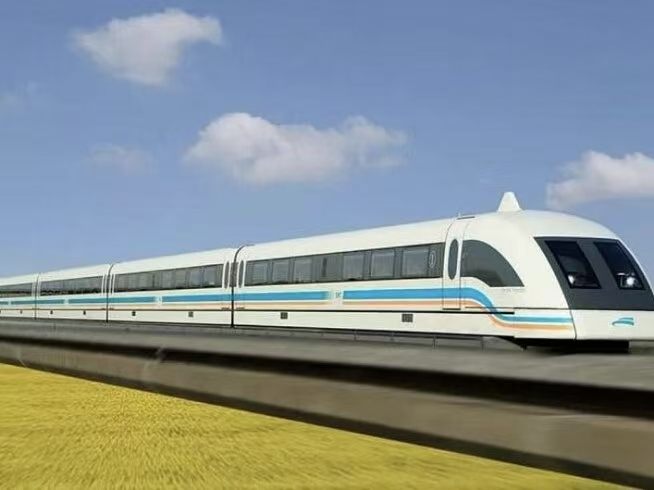
What is the Shanghai Maglev? A first-time rider's walkthrough
The Shanghai Transrapid (上海磁浮 / shàng-hǎi cí-fú) is the only commercially operating magnetic-levitation train in the world. It covers 30.5 km between Shanghai Pudong International Airport (PVG) and Longyang Road metro station in about 8 minutes. As of 2026 it runs at a capped top speed of 300 km/h: the 431 km/h peak service that set the world record was suspended in May 2021 to save energy and has not been reinstated for regular passengers. The system opened in 2004 using German Transrapid technology at a reported cost of around $1.3 billion. Proposed extensions never happened, so the line remains a 30 km shuttle between the airport and the edge of Pudong.
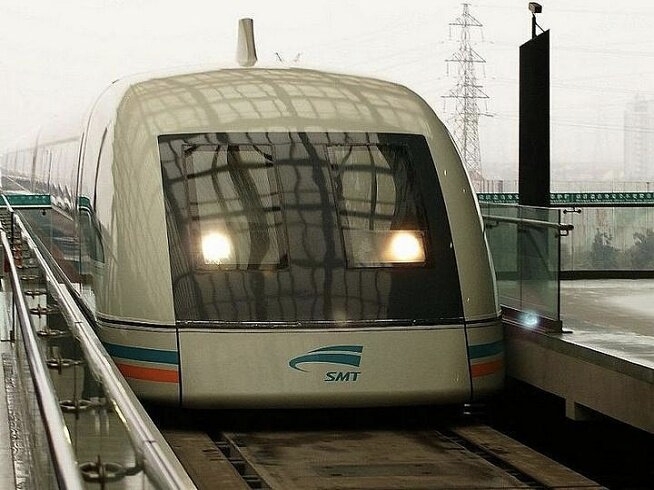
What the ride is actually like: you board at a clean modern station, take an assigned numbered seat (the cabin layout is closer to an airport shuttle than an HSR train), and after a soft chime the train glides forward with almost no shudder. The acceleration to 300 km/h takes about 3 minutes. Through the windows the elevated track turns the suburbs of Pudong into a streak. A small LED display at the end of each cabin shows the live speed, which is the main spectacle for most riders — it climbs steadily to 300 and holds there (the old 431 readout is gone for now). Deceleration starts about 2 minutes before arrival. Most riders are airport passengers on a one-way; a smaller share are tourists doing a round-trip just for the experience.
Is the Shanghai Maglev worth it in 2026?
The honest question isn't "is it cool" — yes, it is — but "is it the right choice for my trip". Four factors decide:
- What time do you arrive or depart? The maglev runs ~6:45 AM–9:40 PM. Flights outside that window mean taxi (or a pre-booked transfer) only.
- How much luggage are you carrying? Two big suitcases on the maglev → Line 2 transfer is awkward (see the dedicated luggage section below).
- Where is your hotel? Longyang Road connects to Metro Line 2, which runs through Pudong, Lujiazui, People's Square, Jing'an, and out to Hongqiao. On Line 2 or near it = maglev+metro is competitive. Far from Line 2 = a taxi is faster door-to-door.
- Is the goal transit or experience? If experience, do a round-trip from Longyang Road — ¥80, 45 minutes total, minimal hassle. If transit, evaluate it against the full door-to-door journey, not the headline 7.5-minute number.
The compact answer for 2026: take it if you have light luggage and a Line 2-adjacent hotel; skip it if you arrive with two big cases or your hotel is in the French Concession, Hongqiao far end, or any off-Line-2 neighbourhood. Either way, do a separate round-trip from Longyang Road later in the trip if the speed itself interests you.
Shanghai Maglev vs taxi from PVG: which is faster?
The headline 7.5-minute ride is misleading because the maglev only covers 30 km — about two-thirds of the way to most central destinations. Door-to-door comparison for five common arrival targets (driving distances and no-traffic times from Amap routing, July 2026):

| Destination | Maglev + Metro | Taxi from PVG | Faster |
|---|---|---|---|
| The Bund / Nanjing East Rd | ~30 min · ¥54 | ~43 km · 60–80 min · ¥180–260 | Maglev (by ~30 min) |
| Lujiazui (Pudong skyline) | ~22 min · ¥54 | ~40 km · 45–60 min · ¥150–220 | Maglev (by ~25 min) |
| Shanghai Disneyland | ~40 min · ¥55 | ~24 km · 30–40 min · ¥110–180 | Taxi (faster, no transfers) |
| Hongqiao Railway Station (HSR) | ~70 min · ¥57 | ~60 km · 65–90 min · ¥220–300 | Maglev (traffic-proof) |
| French Concession | ~55 min · ¥56 (Line 2 → Line 10/12 transfer) | ~60 min · ¥180–240 | Taxi (no luggage hassle) |
 PVGThe Bund42.9 km
Pattern: the maglev wins on time for any Line-2-adjacent destination. For off-Line-2 destinations or any trip with heavy luggage, the door-to-door winner is not the airport taxi rank — PVG's taxi queue has a long-running scam reputation (drivers refusing the meter, "broken" meters, suggesting a flat "tourist" rate, looping detours). The reliable off-maglev option is a pre-booked Trip.com private transfer — the driver meets you at arrivals with a name sign, the price is fixed (~US$25–40 for a sedan to central Shanghai), the booking tracks your flight number, and there's no rank-side negotiation. Use the airport taxi only as a fallback if you haven't pre-booked.
The Disney case now favours the taxi on time — the airport-to-Disney road hop is only ~24 km, so a car beats the two-transfer metro path. The deciding factor is really luggage and how many kids are in the party, and with either the pre-booked transfer is the cleanest choice (see the after-hours section below for the booking link).
Shanghai Maglev vs Metro Line 2 from PVG: when each wins
Metro Line 2 reaches PVG directly (no maglev needed) and runs all the way to Hongqiao on the west side of the city — but it's a 70–90 minute slog from the airport because Line 2 stops at every station. For four common destinations:
- Lujiazui / Pudong skyline: Direct Line 2 from PVG ≈ 45 min, ¥8. Maglev + Line 2 ≈ 22 min, ¥54. The maglev cuts time roughly in half but costs ~6× more.
- People's Square / Nanjing East Rd (Bund): Direct Line 2 from PVG ≈ 65 min. Maglev + Line 2 ≈ 30 min. The maglev wins by 30+ minutes.
- Jing'an / Nanjing West Rd: Direct Line 2 from PVG ≈ 75 min. Maglev + Line 2 ≈ 35 min. The maglev wins by 40 minutes.
- Hongqiao Airport (the Line 2 terminus): Direct Line 2 from PVG ≈ 90 min, ¥8. Maglev + Line 2 ≈ 70 min, ¥57. The maglev wins by 20 minutes but at a steep premium for a slow leg.
Rule of thumb: the further west your destination, the more the maglev pays off. For a Lujiazui hotel where direct Line 2 is already short, the maglev's speed is mostly novelty.
Decision table: pick your situation

Six common arrival scenarios with our pick:
| Your situation | Best option | Rough cost & time |
|---|---|---|
| Light luggage, hotel near Line 2 (Jing'an, People's Square, Nanjing Rd) | Maglev + Line 2 | ¥54–58 · 35–55 min |
| Heavy luggage, hotel anywhere | Pre-booked PVG transfer | ~US$25–40 · 55–75 min |
| Purely for the experience | Maglev round-trip from Longyang Rd | ¥80 · 45 min total |
| Red-eye arrival before 6:45 AM or flight after ~9:40 PM | Pre-booked transfer or Didi | ~US$25–40 · 60–90 min |
| Price-sensitive, plenty of time | Metro Line 2 direct | ¥8 · 70–90 min |
| Connecting to an HSR train at Hongqiao Station | Maglev + Line 2 to Hongqiao | ¥57 · ~70 min (no transfers after Longyang Rd) |
Operating hours, frequency, and the 431 km/h question
- Service hours: ~6:45 AM–9:40 PM daily (first / last departures from each end). Two occasional, not-guaranteed extra runs leave PVG at 22:15 and 22:40 for Longyang Road only.
- Frequency: Every 15–20 min for most of the day; longer (20–30 min) at the very start and end of service.
- Ride time: about 8 minutes at the current 300 km/h (it was 7 min 20 sec back when the line ran at 431 km/h).
The headline 431 km/h is not currently on offer. That peak — the number that made the maglev famous — was suspended in May 2021 to save energy and has not been reinstated for regular service, so in 2026 the train runs at a capped 300 km/h all day. That is still faster than any other scheduled commercial train in the world, but the record readout is gone for now. The display at the end of the cabin climbs to about 300 and holds; if the 431 km/h service ever returns, the departure board would mark the peak runs — worth checking the operator's notices before a trip if the record speed is the whole reason you are going.
Shanghai Maglev ticket prices in 2026
- Economy one-way: ¥50 (~US$7)
- Economy round-trip: ¥80 (~US$11) — valid 7 days
- VIP one-way: ¥100 (~US$14) — reclining leather seats, front cabin
- VIP round-trip: ¥160 (~US$22) — valid 7 days
- Airline-passenger discount: 20% off with a same-day boarding pass or air ticket (Economy one-way drops from ¥50 to ¥40). Ask explicitly at the counter — staff won't volunteer it.
- Children under 1.2 m: free with a paying adult.
The boarding-pass discount is counter-only. It does not apply to tickets bought in advance on Trip.com — the trade-off is queue time vs. the ¥10 you save.
How to buy Shanghai Maglev tickets: 3 options for foreigners
Three options, in order of foreigner-friendliness:
Option 1 — At the station (normal)
Walk from the arrivals hall at PVG (Terminal 1 or 2) to the Maglev Station — signs are English-friendly and it's a 5–10 minute walk through an underground passage. At the counter, show your passport, pay with cash / Alipay / WeChat Pay / foreign Visa or Mastercard. The ticket machines also have an English mode. Queue times are usually short (under 5 min), longer during peak arrival windows (early afternoon international flight arrivals).
Option 2 — Online in advance via Trip.com
If you want to skip the counter — useful when you're arriving late, travelling with a jet-lagged family, or worried about language at the counter — pre-book on Trip.com. You get an instant QR code by email; scan it at the gate. Cancellation is flexible.

Pre-book on Trip.com — get a QR code by email, flexible cancellation, pricing shown in your home currency. Best for late arrivals, groups, or anyone who wants one less thing to figure out at the airport.
Airport-counter tickets are a touch cheaper (and the ¥40 boarding-pass discount is counter-only) — pick whichever trade-off fits your arrival better.
Option 3 — Combo with a Trip.com hotel or airport transfer
If you're booking a Shanghai hotel or airport transfer on Trip.com anyway, maglev tickets can be added as a bundle. Usually not cheaper than separate purchase but saves a step if you're already in their checkout flow.
Shanghai Maglev with luggage: the honest reality

The maglev train itself has no formal luggage limit. The painful part is the transfer at Longyang Road. After arriving, you walk 3–4 minutes through a connected corridor to the Metro Line 2 entrance — no street crossings, but some stairs and an escalator-heavy stretch. With two large check-in suitcases plus a backpack, that corridor becomes a 10–15 minute fight with the escalators (Line 2 elevators exist but are slow and far from the maglev arrivals point).
- One carry-on + one backpack: Maglev + Line 2 is fine. The corridor and escalator routine is manageable.
- One check-in + one carry-on: Workable, but slower. Budget an extra 10 minutes for the transfer vs. our headline figures.
- Two large check-in cases (or more): Take a taxi from PVG directly. The maglev combo saves time on paper but the transfer undoes most of the benefit and adds physical hassle.
A common workaround: ride the maglev as a tourist round-trip from Longyang Road after you've dropped luggage at the hotel. ¥80, 45 minutes, no bags, no transfer. The experience case is the maglev's strongest case.
Shanghai Maglev with kids and families
Kids under 1.2 m ride free with a paying adult — no kids' ticket required, just walk through with them. The ride itself is extremely kid-friendly: smooth, quiet enough that toddlers stay calm, only about 8 minutes long, and the speed display is its own source of entertainment for school-age kids who like trains. Strollers fit through the gates and there's open floor space near the cabin ends to park one.
The hard part is the Longyang Road transfer, again. A stroller plus check-in luggage plus a jet-lagged child is the maglev combo's worst-case scenario. For families arriving on long international flights, our honest recommendation is: take a taxi or pre-booked transfer from PVG to the hotel, get everyone settled, then ride the maglev as a daytime round-trip activity on a different day. That converts the maglev from a stressful transit decision into a 45-minute Shanghai highlight.
Shanghai Maglev to the Bund — should you take it?
The Bund is the maglev's strongest transit-use case for first-time visitors. The nearest metro station to the Bund is Nanjing East Road on Line 2 — an 8-minute walk east to the river. Maglev + Line 2 path:
- PVG → Longyang Rd: ~8 min on the maglev, ¥50.
- Longyang Rd → Nanjing East Rd: 6 stops on Line 2 (Century Park · Shanghai Sci-Tech Museum · Century Ave · Pudong South Rd · Lujiazui · Nanjing East Rd) — about 17 minutes, ¥4. No transfer.
- Nanjing East Rd → the Bund: 8 min walk east through the Nanjing Road pedestrian street.
- Total: ~30 min, ¥54.
Direct taxi PVG → the Bund is ~43 km / around an hour with light traffic (budget 75–90 min in rush hour) / ¥180–260 (Amap driving routing, July 2026). The maglev combo still beats the taxi by ~30 minutes in normal traffic. With heavy luggage the taxi wins on door-to-door convenience even at nearly 2× the time.
For Bund-area hotels specifically: the where-to-stay decision matters more than the transport choice — staying near Nanjing East Rd or East Nanjing Rd keeps you on Line 2 with the shortest maglev transfer. See our Shanghai where-to-stay guide for the area-by-area breakdown.
Shanghai Maglev to Shanghai Disneyland — what to expect
Disney is one of the closer destinations to PVG by road, so the maglev advantage shrinks here. Both options take roughly the same time:
- Maglev + transfer path: Maglev to Longyang Rd (~8 min, ¥50) → Line 16 to Luoshan Rd (10 min, 2 stops via Huaxia Middle Rd) → Line 11 to Disney Resort (16 min, 3 stops via Xiuyan Rd and Kangxin Highway). Total ~40 min, ¥55, two metro transfers.
- Taxi PVG → Disney Resort directly: ~24 km, ~30–37 min, ¥110–180 via S1 + S2 highway (Amap, July 2026). No transfers, no bags on metro escalators.
 PVGDisneyland23.9 km
Honest call: for families with kids and luggage, the taxi wins here — it is both faster (the road hop is only ~24 km) and simpler, and the two metro transfers with a stroller are the kind of friction that turns a Disney day into a tired arrival. Save the maglev for a separate experience round-trip another day.
Shanghai Maglev to Hongqiao Railway Station for HSR connections
Hongqiao Railway Station is on the far west side of Shanghai — about 58 km from PVG — and it's where every onward high-speed train to Beijing, Hangzhou, Suzhou, Xi'an, and most of the country departs. If your itinerary is fly into PVG + HSR onward the same day, this is one of the maglev's highest-value transit cases:
- PVG → Longyang Rd: ~8 min maglev, ¥50.
- Longyang Rd → Hongqiao Railway Station: 16 stops on Line 2 (Century Park · Shanghai Sci-Tech Museum · Century Ave · Pudong South Rd · Lujiazui · Nanjing East Rd · People's Square · Nanjing West Rd · Jing'an Temple · Jiangsu Rd · Zhongshan Park · Loushanguan Rd · Weining Rd · Beixinjing · Songhong Rd · Hongqiao Airport T2). About 56 min on Line 2, ¥7. No transfer needed after Longyang Rd — the train stays on Line 2 the whole way.
- Total: ~70 min, ¥57.
 PVGHongqiao HSR62 km
Direct taxi PVG → Hongqiao Railway Station is ~60 km / around an hour with light traffic (85–100 min in rush hour) / ¥220–300 (Amap, July 2026). The fixed ~70-min maglev combo is roughly tied in light traffic and pulls ahead whenever the expressway is busy — and it is 4× cheaper. The taxi only wins if you have heavy luggage and the metro escalators are a non-starter.
Buffer recommendation: book HSR departure at least 2.5 hours after your flight lands — that covers a 30-minute deplane/immigration, the 70-minute transit, and a 30-minute station buffer (Hongqiao Railway is a huge terminal; security and platform-finding take time). Booking tighter than 2 hours is risky if your flight is even slightly late.
From Longyang Road into central Shanghai

Longyang Road itself is in eastern Pudong with nothing much around it — the whole point is the metro interchange. From the maglev concourse you walk 3–4 minutes through a connected corridor to the Line 2 entrance; no street crossings, but some stairs and escalators that are bag-unfriendly.
- Metro Line 2 (westbound) — frequencies and fares: Lujiazui (financial district) is 2 stops, 6 min, ¥4. People's Square 5 stops, 18 min, ¥5. Jing'an 7 stops, 28 min, ¥5. Hongqiao Airport terminus 16 stops, ~56 min, ¥8.
- Taxi from Longyang Road: ¥50–100 to most central locations. Use Didi (English mode inside Alipay) for fixed-fare booking and English support.
- Line 7 and Line 16: Both also stop at Longyang Rd. Line 7 goes north through Pudong to Putuo on the west bank. Line 16 goes south-east deeper into Pudong (Disney is two changes away).
What if your flight is at night? Maglev hours and after-hours options
Scheduled maglev service ends around 9:40 PM (bar two occasional, not-guaranteed extra runs from PVG at 22:15 and 22:40 to Longyang Road only) and restarts at 6:45 AM. If your flight arrives after the last train or departs before 6:45 AM, you have three after-hours options — listed in the order we recommend them for foreign visitors:
- Pre-booked Trip.com private transfer (recommended). The driver meets you at arrivals with a name sign holding your booking ID, the price is fixed (~US$25–40 / ¥180–280 for a sedan to central Shanghai, more for a 6-seater van), and the booking tracks your flight number — so a 90-minute delay isn't a problem. No cash, no haggling, no language friction. The right default for red-eye arrivals, jet-lagged families, or anyone who'd rather not stand in a taxi queue at 11 PM.
- Didi via Alipay (English mode). Open Alipay → Mini Programs → search "DiDi". The interface is in English, pricing is fixed upfront, pay through the app — no cash, no language exchange at the rank. Roughly the same price as a taxi but without the rank-side haggling. Reasonable fallback if you didn't pre-book.
- The airport taxi rank (use only as a last resort). Open 24h. ¥180–260 to central Shanghai by meter, 50–75 min depending on traffic. The honest catch: PVG's taxi rank has a long-running scam reputation — drivers refusing the meter, "broken" meters, suggesting a flat tourist rate, looping detours. Insist on the meter (打表 / dǎ biǎo), show your hotel address in Chinese (Trip.com booking confirmation has it), and screenshot the meter reading at the start of the ride. Cash, Alipay, or WeChat Pay only — foreign cards usually not accepted.
The maglev is closed. A pre-booked private transfer is the cleanest option — the driver meets you at arrivals, pricing is fixed, and the booking tracks your flight number, so a late landing isn't a problem.
Pricing varies by vehicle size; pre-pay shown is for a sedan to central Shanghai.
The honest take — and what surprised me
If you're a first-time visitor to Shanghai with one carry-on and a hotel near Line 2, take it — it's the most distinctive transport experience in the country and the time savings are real. If you're arriving with family and luggage and your hotel is off Line 2, take a taxi and ride the maglev as a round-trip tourist activity from Longyang Road later for ¥80. It's one of the cheapest thrills in Shanghai and the approach to the station at sunset is beautiful.
What to set expectations for: the ride itself is smoother and less dramatic than most first-timers expect. There's a brief moment of acceleration, then a long steady glide, then deceleration. As of 2026 the maglev is capped at 300 km/h (the 431 km/h record has been suspended since 2021), so the display tops out around 300 rather than flirting with the record — the draw is that it's the world's only commercial maglev and the uncanny smoothness, not a number on a screen. The idea is more impressive than the sensation. The other surprise is how quiet the cabin is — magnetic levitation has no wheels, no rail contact, and the loudest sound is the air rushing past the windows.
Now that you've landed in Shanghai: where next?
You've picked your PVG transit option. The next three decisions for most foreign visitors are where to sleep, what to see on day one, and how to leave Shanghai for the rest of China. Three short guides:
Pudong vs the Bund vs French Concession vs Hongqiao
The four areas every first-time visitor compares. We break down maglev access, food density, and the trade-offs.
Things to do in Shanghai
The Bund, Yu Garden, Pudong skyline, the French Concession, Shanghai Museum — ranked by foreigner-priority with realistic durations.
Shanghai → Beijing · Hangzhou · Suzhou
Hongqiao Railway is one Line-2 ride from Longyang Rd. Beijing in 4h18m, Hangzhou 45 min, Suzhou 30 min — all G-train, all passport-bookable.
Related
- PVG (Shanghai Pudong) airport guide — terminal layout, the new Airport Link Line, VAT refund.
- Book China high-speed rail on Trip.com — once you're in Shanghai, onward to Beijing, Hangzhou, Xi'an, etc.
- 12306 English app walkthrough — the official rail booking path for longer stays.
- China HSR network overview — train classes, stations, and how the system works.
- Interactive HSR route map — plan Shanghai onward travel visually.