Written by the China for Travelers editorial team — based in Chongqing, on the ground in China since 2018. Every train type and seat class below has been ridden first-hand by the team across China's HSR and conventional network. The photographs in this guide are our own, taken on recent business and leisure trips — not stock images — and the seat-layout and power-socket diagrams are our own illustrations. Sample prices are pulled from our verified data file routes.json (12306-sampled, refreshed monthly).
The 6 train-number prefixes at a glance
Every Chinese train number starts with a letter (or no letter), and that prefix tells you what kind of train it is. Here are all six prefixes plus the no-prefix "regular" service, ranked from fastest to slowest:
| Prefix | Meaning | Top speed | Typical use | Hardware |
|---|---|---|---|---|
| G | High-speed | 300–350 km/h | Headline HSR corridors (Beijing–Shanghai, Beijing–Guangzhou) | Fuxing CR400 (mostly), some Hexie |
| D | EMU / bullet | 200–250 km/h | Regional HSR + overlap routes; cheaper than G | Hexie EMU, older Fuxing |
| C | Intercity | 160–350 km/h | Short intercity (Beijing–Tianjin 350, Chengdu–Chongqing 350, Shanghai–Suzhou 200) | Hexie / Fuxing, EMU |
| Z | Direct | up to 160 km/h | Non-stop overnight long-haul (Beijing–Shenzhen, Shanghai–Lhasa) | 25T conventional carriages |
| T | Express | up to 140 km/h | Express conventional, day or night, more stops than Z | 25T / 25K conventional |
| K | Fast | up to 120 km/h | The everyday conventional train; many stops | 25K / 25G conventional |
| (none) | Ordinary | 60–100 km/h | Slowest local stopping service; cheap, mostly rural | 22 / 25B conventional |
HSR family (G / D / C) uses one set of seat classes; conventional family (Z / T / K / ordinary) uses a different set. The two families do not overlap on hardware or on what your booking experience looks like. Two deep-dive sections below cover each family in turn.
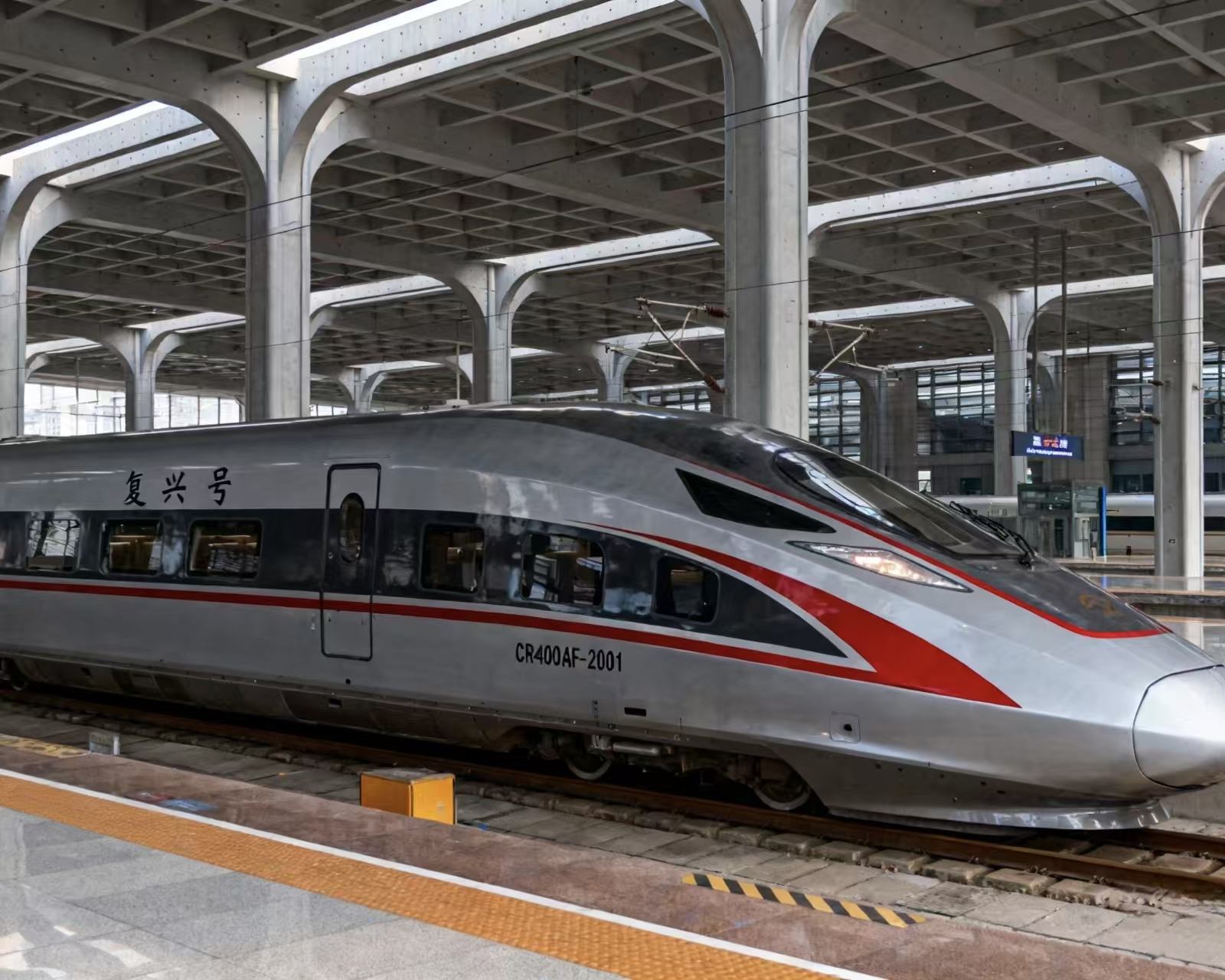
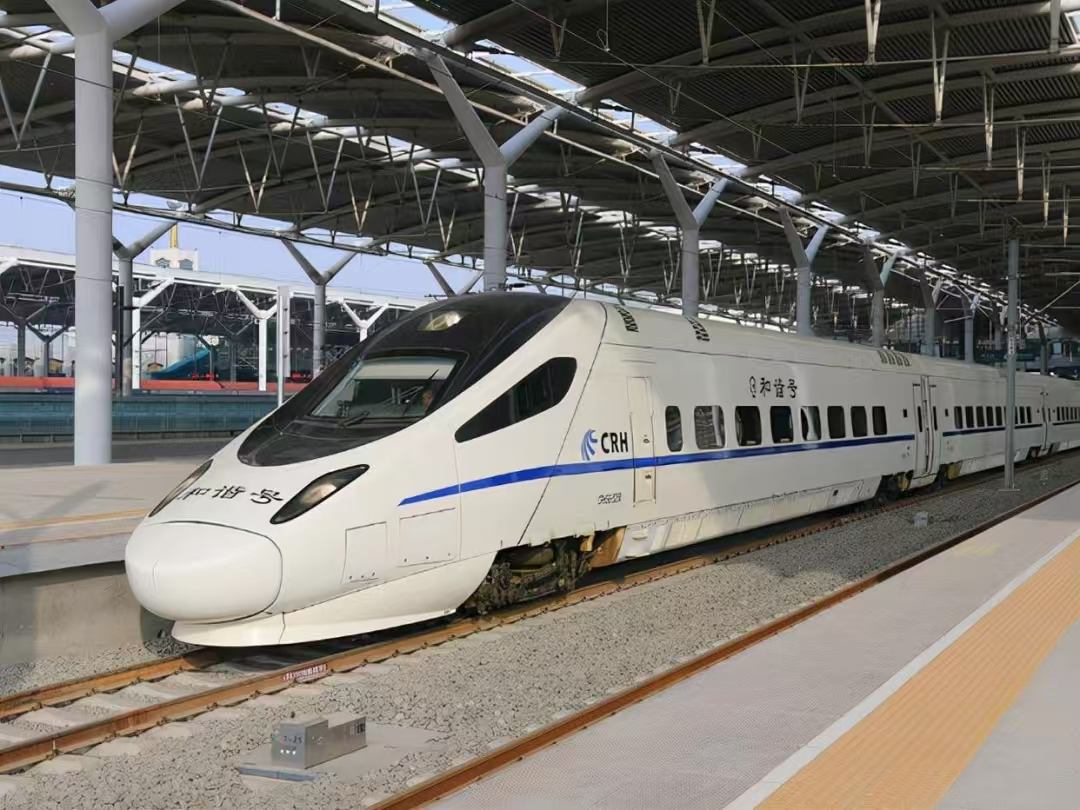
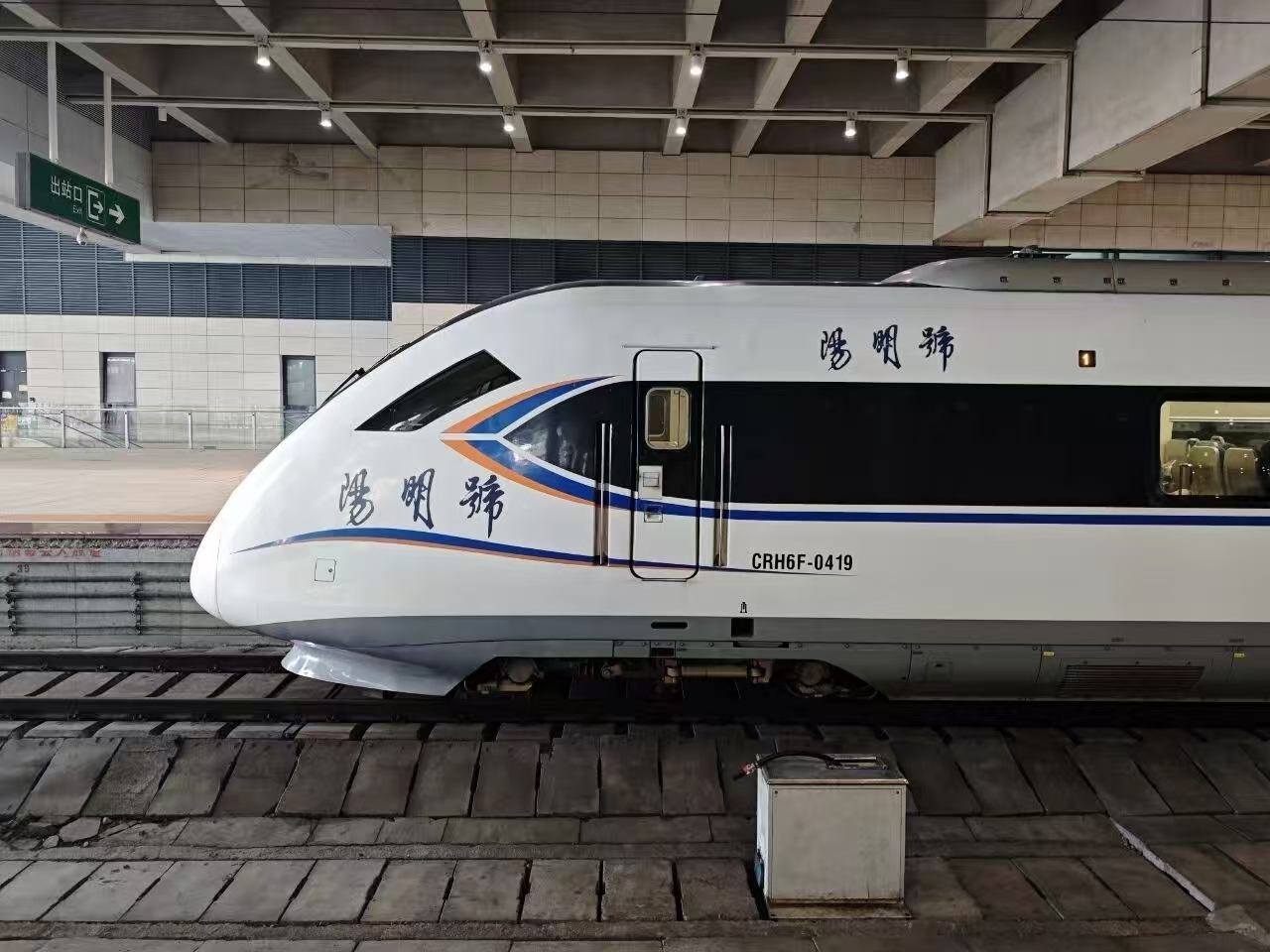
The three high-speed families look different from one another — and even within one family, livery and nose shape vary by rolling-stock generation. The photos below are real examples for orientation only: a G, D, or C train will not always look like this.
HSR family in detail (G / D / C)
HSR trains all run on dedicated electrified track, with a flat 80–90 dB cabin noise level (quieter than a typical airport terminal), passport-bound real-name booking and ticketless boarding via orange passport gates. The class hierarchy on G / D / C is the same shape; only the specific class options differ slightly by train.
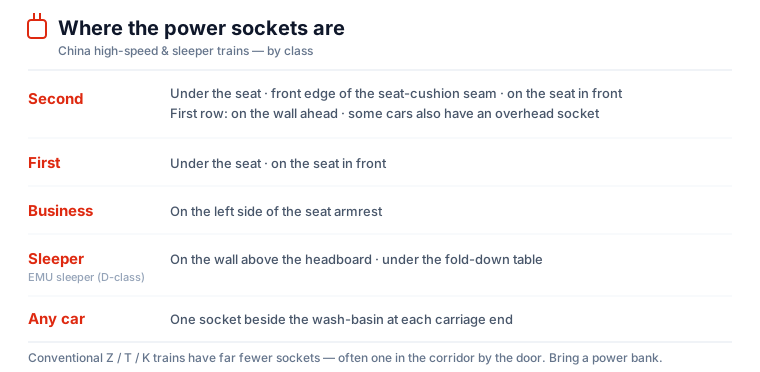
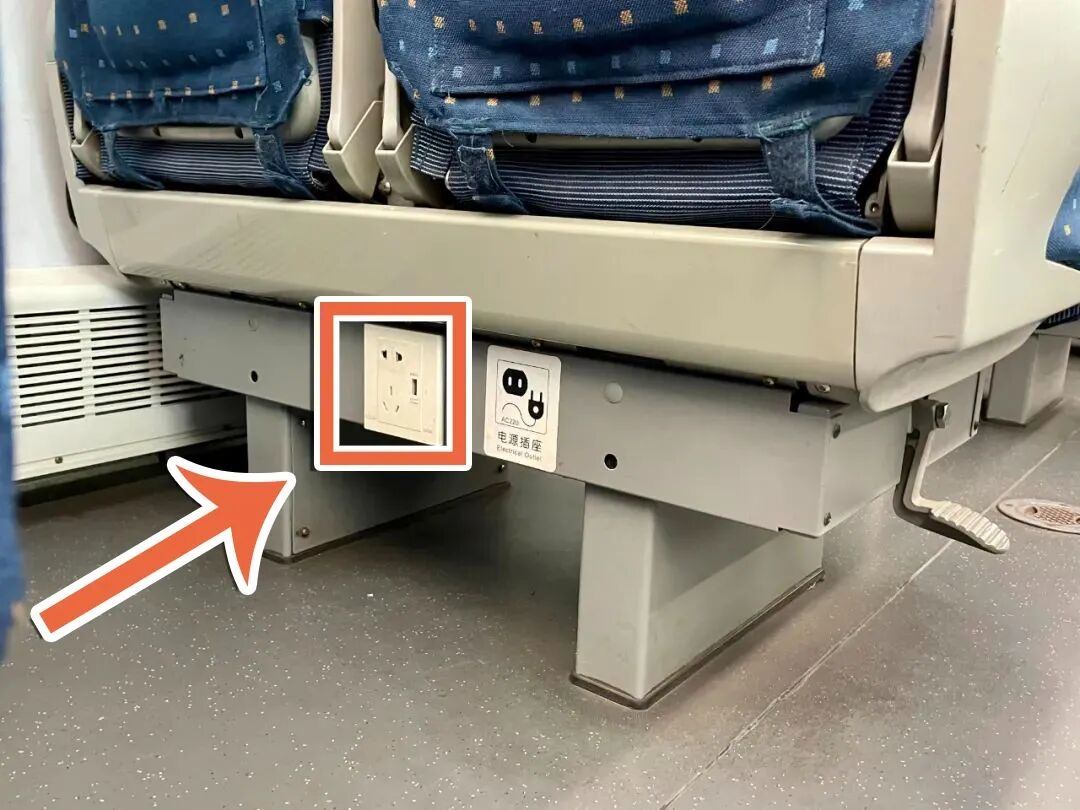
Cabin amenities — same across all HSR (G/D/C): clean and quiet carriages, smoke-free (smoking has been fully banned on HSR since launch and is enforced with fines), modern lavatories at the end of every carriage, hot-water boiler in every carriage for instant noodles or tea, food-cart service every ~90 min (skippable), and — importantly — power outlets at every seat on basically every train except a few of the oldest Hexie units. The outlet is one of three locations depending on the carriage generation: under your own seat, between the front-row seats (in the gap), or on the back of the front seat near the floor. Plug type is the standard Chinese 3-pin (you'll need a travel adapter coming from US/UK/EU).
G trains — 350 km/h Fuxing CR400
The headline HSR product. Beijing–Shanghai, Beijing– Guangzhou, Beijing–Xi'an, Shanghai–Hangzhou, Guangzhou–Hong Kong via West Kowloon — all run G trains at 300–350 km/h. Hardware is mostly Fuxing CR400 rolling stock (the indigenous-design family from 2017+); some older Hexie still in service. G trains carry the full hierarchy: business class / first class / second class / standing ticket. A few older Fuxing sets still sell the in-between Premier First tier, but it is uncommon in 2026 — and business class is the better top-tier buy anyway.
On the Chongqing ↔ Shanghai / Beijing / Xi'an / Chengdu G corridors: a typical Chongqing North → Shanghai Hongqiao G2882 run is around ¥578 in second class. Mobile-signal Wi-Fi is patchy in tunnels, every carriage has a water boiler, and the food cart is pushed through the aisle every ~90 min (skip the cart food and bring your own — Chinese travelers all do). The boarding window opens 30 min before departure; the gate closes 2 min before — late by 30 seconds and you're out.
D trains — 250 km/h Hexie / older Fuxing
The second tier of HSR. D-prefix trains run on the same dedicated track as G-trains in many cases but at lower top speed (200–250 km/h), or on overlap with mixed-use conventional–HSR track. Class lineup is more limited than G: most D trains carry only first + second class (no business class on the majority of routes), and Premier First is essentially absent because that's a Fuxing-only feature and most D trains are Hexie hardware. A handful of D services on busier corridors do offer business class, but assume 1st + 2nd class only when planning.
When D beats G: same route, ¥80–200 cheaper, 30–90 min slower. If you're flexible on time, the cost saving is real. Chongqing–Wuhan D train ¥255 vs G ¥358, travel time 6h45m vs 5h35m — saved ¥103, lost 70 minutes.
C trains — short city-pair
C ("intercity") trains are the commuter tier of HSR. Routes are short (30 min – 1 hour) and frequencies are aggressive. Top speed varies more than people expect: the older Beijing–Tianjin and the new Chengdu–Chongqing C lines run at 350 km/h(the same as a top-tier G), while Shanghai–Suzhou C trains run at 200 km/h. The seat-class lineup is usually business class + first class + second class on busier C routes (Beijing–Tianjin and Chengdu–Chongqing both have the full 3-tier offering); the smaller / shorter C lines may drop business class and run only first class + second class. Common C corridors: Beijing–Tianjin (33 min, 12 trains/hour), Chengdu–Chongqing (1h15m, 143 trains/day), Shanghai Hongqiao–Suzhou (25 min, every 10–15 min).
For foreign tourists C-trains are the easiest HSR introduction — the journeys are short enough that even a first-time HSR rider can get the booking and boarding flow down in a low-stakes setting. It's the train we point first-time visitors to on the Chengdu–Chongqing run for exactly this reason.
Conventional family in detail (Z / T / K / Ordinary)
The conventional family is everything the HSR family isn't — older locomotive-hauled rolling stock, slower top speeds (up to 120–160 km/h), no dedicated track, and the use case is overnight long-haul or extreme-budget short-haul. The seat classes on conventional trains are soft sleeper / hard sleeper / soft seat / hard seat / standing ticket — completely different from the HSR hierarchy.
Cabin atmosphere — meaningfully worse than HSR. Conventional Z/T/K carriages are 1990s/2000s design (the "25T", "25K", "25G" series in the official spec); cabin air is noticeably less fresh than HSR (HVAC is older, windows in hard seat sections sometimes do open which helps but invites smells), the general fit-and-finish is dated, and the bathrooms are basic. Power outlets are limited or absent: soft sleeper compartments usually have one shared outlet near the door; hard sleeper sections sometimes have a couple of outlets in the corridor; hard seat carriages essentially have none accessible to passengers. Smoking has been formally banned on conventional trains too, but enforcement in the connecting areas between carriages (the "vestibule") is uneven — you may smell cigarette smoke drifting in, particularly on K trains. None of this makes the conventional family unusable; it just means an overnight Z soft sleeper ride feels like a train-from-1995 rather than a train-from-2020. Bring a power bank and AirPods and you're fine.
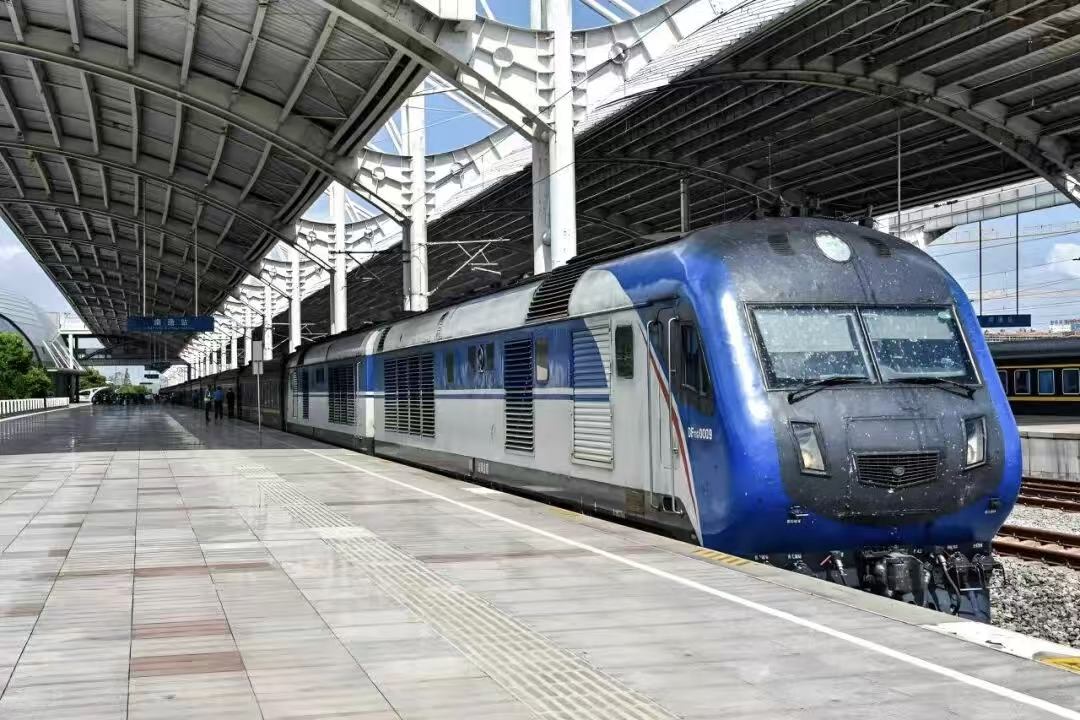
Z trains — non-stop overnight
Z ("direct") trains are the premium tier of conventional rail. Few stops between origin and destination, mostly run overnight, designed for the long-haul journeys where flying is the obvious alternative but the train ride itself is the experience. Famous Z routes: Beijing– Lhasa (Z21, ~40h), Shanghai–Lhasa (Z164, ~47h), Beijing–Shenzhen (Z107, ~24h), Beijing–Hong Kong (Z97, suspended in 2020, status varies).
Shanghai ↔ Lhasa Z164, soft sleeper (~47 hours): the canonical "train ride as the destination" experience. Roughly ¥1,262 per berth in a 4-person compartment; passes through the Qinghai Plateau (peak elevation 5,072m at Tanggula); cabin oxygen pressurized for the high-altitude segment. Food is a dining car (¥40–80 per meal) plus a hot-water boiler in every carriage for instant noodles. Most Western foreign tourists who do this ride do it for the experience, not the practicality.
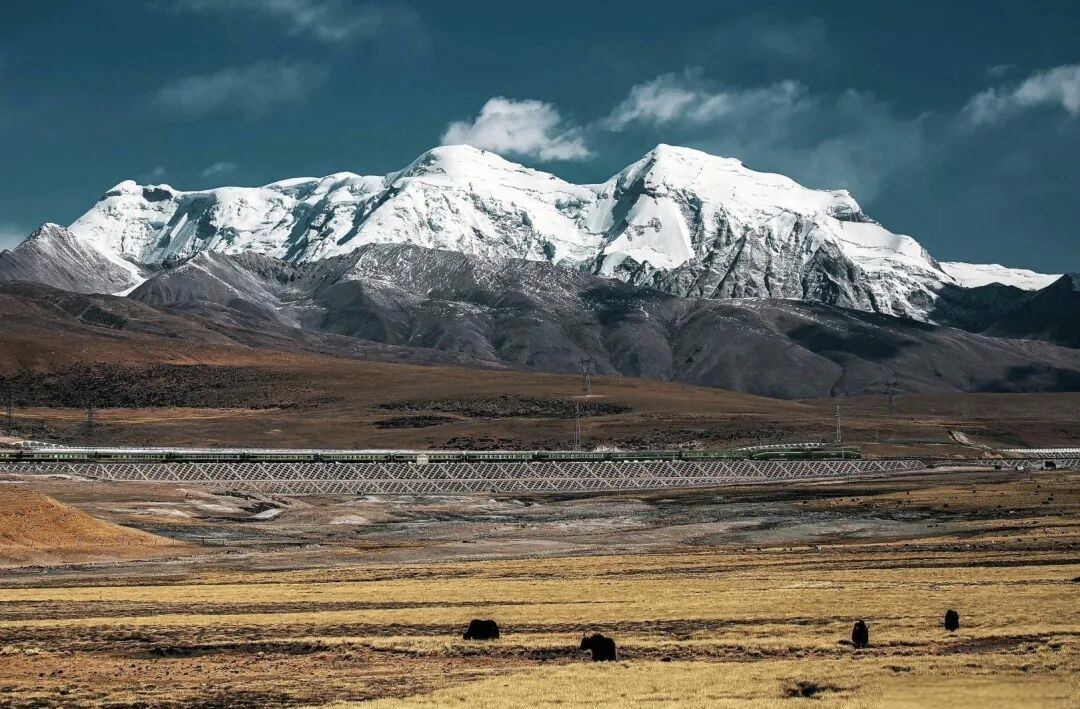
T trains — express conventional
T ("express") is one tier below Z — more stops, slightly slower, day or night service. Common for routes that have HSR alternatives but where T is significantly cheaper, or for routes that don't yet have HSR coverage (some Tibet, Xinjiang, and Yunnan interior corridors). T trains carry the full conventional class hierarchy.
K trains — fast conventional
K ("fast") is the everyday conventional train. Many more stops than Z or T, slower (100–120 km/h average), the workhorse of regional travel before HSR was built out. Cheapest option that still has soft sleeper and hard sleeper available. For foreign travelers the K-train use case is essentially: the route doesn't have a G or D yet, and flying is too expensive or your destination has no airport.
Chongqing ↔ Lijiang K117 / K118, hard sleeper: a ~24-hour overnight ride, mid-berth around ¥244; carriage lights stay dim 22:00–06:00. Hard-sleeper compartments are 6-berth and open (no door), so you'll end up chatting with whoever's on the other 5 berths. Before the 2020 nationwide train-smoking ban tightened, the connecting area between carriages was an active smoking spot — much less so now. This was how a generation of Chinese students moved across the country on summer break.
No-prefix ordinary — slowest local
Trains with a pure-number designation and no prefix letter (e.g. train 5633) are ordinary trains ("regular passenger") — the slowest local stopping service. Rural routes, stops at every village station, fares as low as ¥1–5 per leg. Foreign tourists almost never ride these — they exist primarily for rural Chinese commuters and are a social-history artifact more than a tourist option.
All 9 seat classes explained
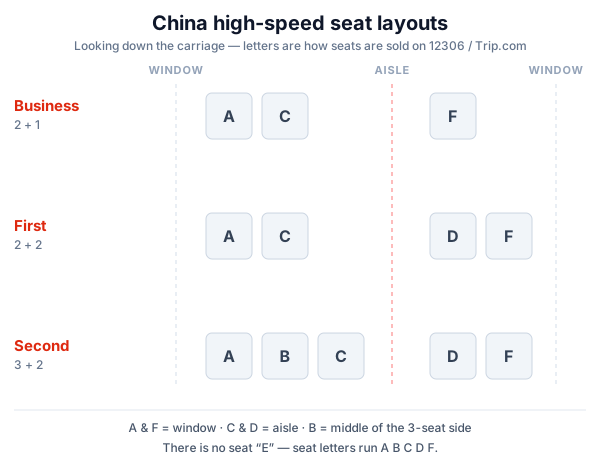
HSR seat tiers (G / D / C)
Five tiers, from premium to standing-only:
| Class | English | Layout | Price ratio vs second class | Available on |
|---|---|---|---|---|
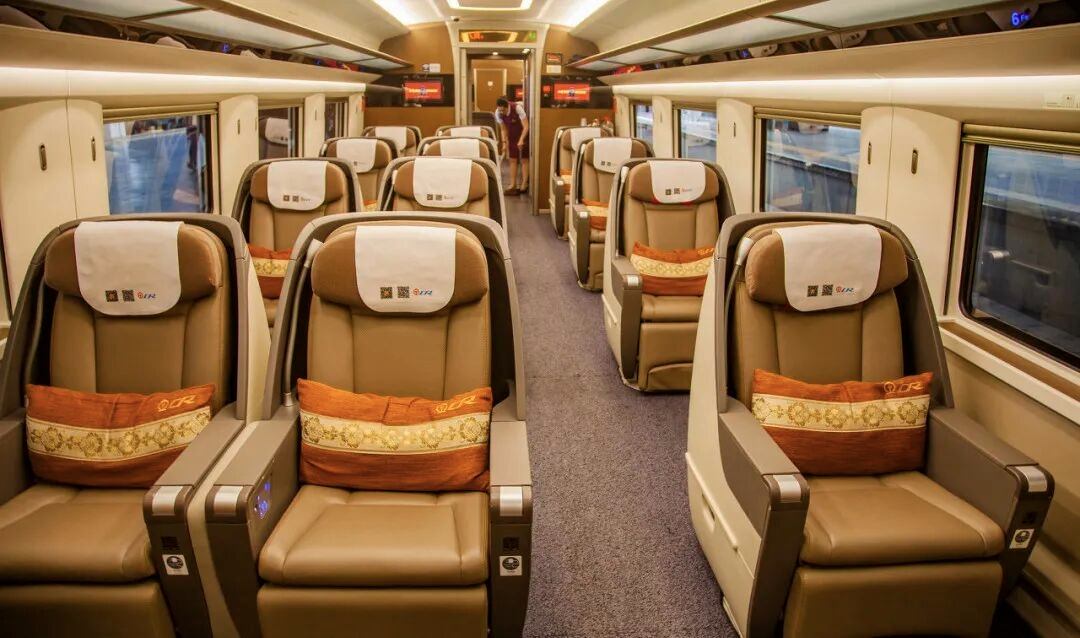
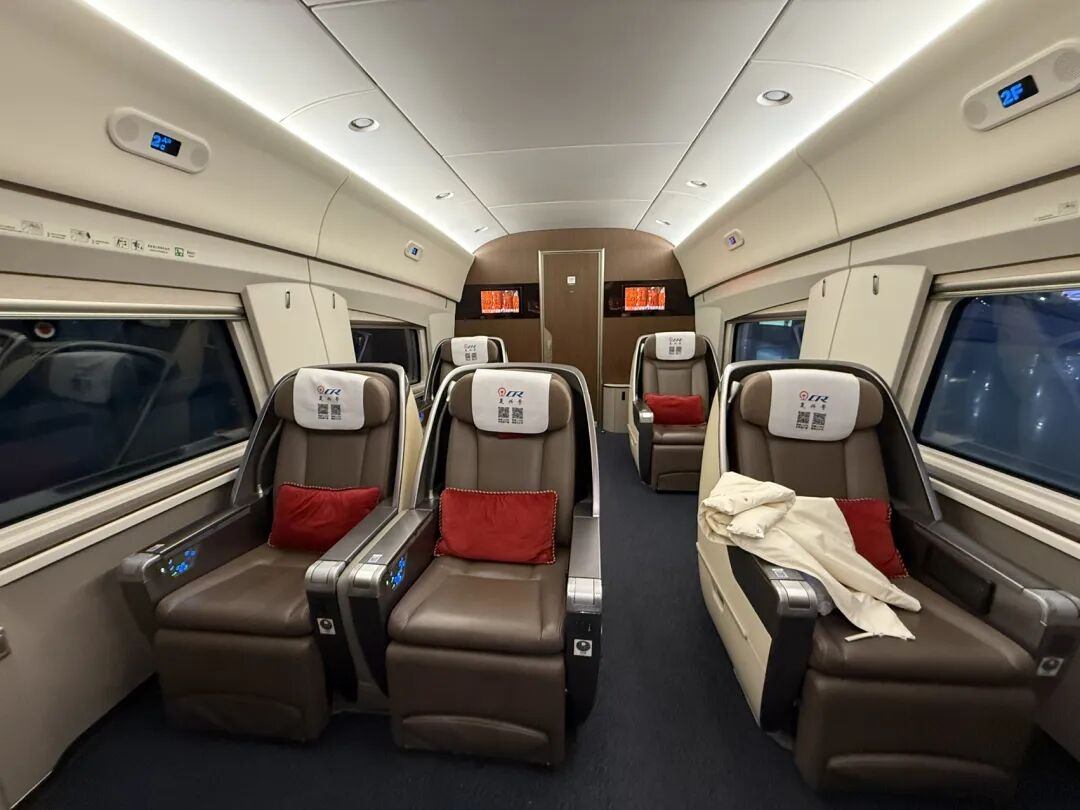
| business class | Business class | 2+1, full flat-recline | ~3.0× | Most G; busier C (Beijing–Tianjin, Chengdu–Chongqing); some D |
| Premier First class | Premier First (Fuxing-only) | 2+2, wider seat than first class | ~2.0× | Fuxing G only — uncommon in 2026 |
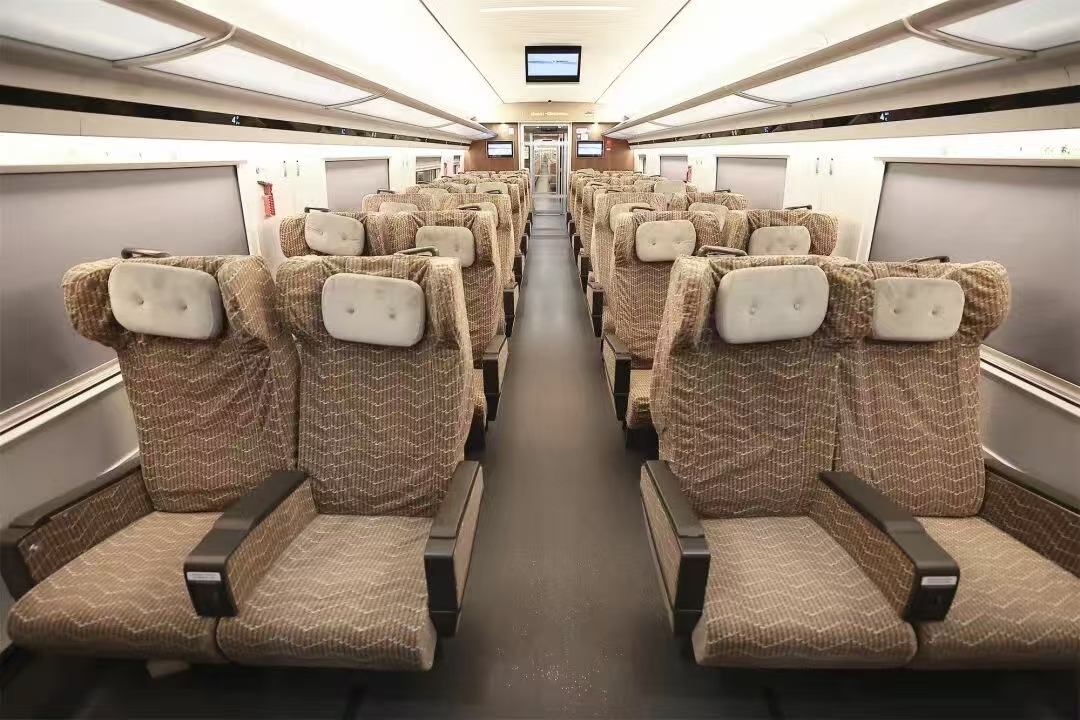
| first class | First class | 2+2, recline seat | ~1.6× | All G / D / C |
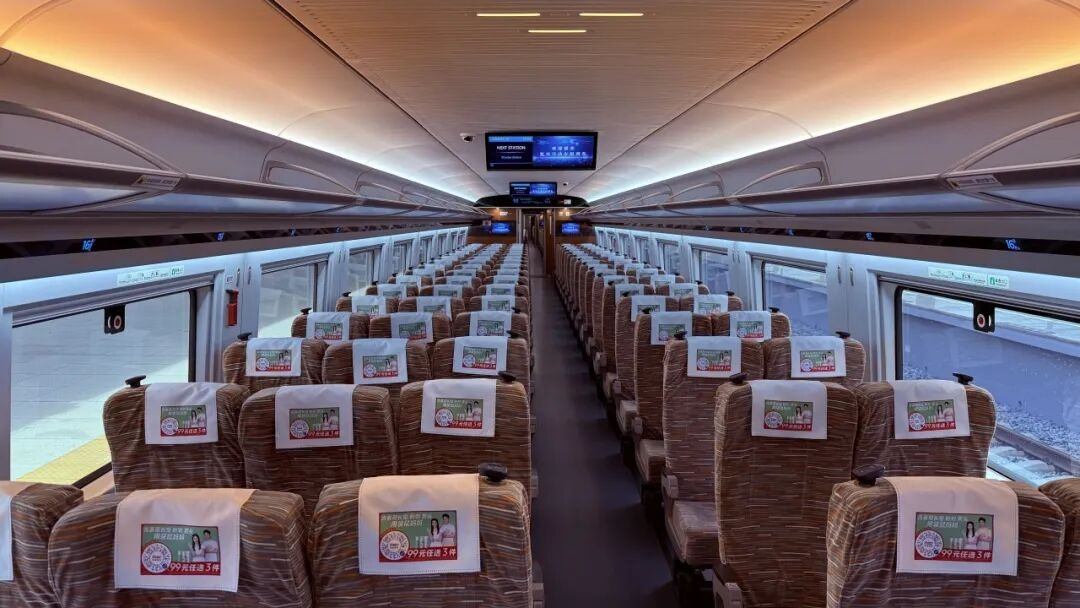
| second class | Second class | 3+2, fixed-recline seat | 1.0× (the baseline) | All G / D / C |
| standing ticket | Standing | No seat assigned | 1.0× (same as second class) | All G / D, plus some C, when sold out |
Worth-it guidance per HSR class:
- business class — worth it on routes >4 hours when the cost is <8% of trip budget. Includes complimentary meal, lounge access at major stations, flat recline. Skip on sub-2-hour routes.
- Premier First — a Fuxing-only in-between tier that has been phased down and is uncommon in 2026. If you do see it, it sits between first and business class — but business class is the better top-tier pick now, so mostly skip it.
- first class — the "photographer's class" — 2+2 layout means a guaranteed window seat, ~60% above second class. Worth it on routes >6 hours or when window photography matters.
- second class — the default. 3+2 layout, decent recline, comparable to international economy-plus. Window seats are the A and F positions; book early to secure them.
- standing ticket — only book if the route is sold out and you have to travel that day. Same price as second class but no seat. Foreign tourists should generally avoid; re-book a different time slot or bump to first class if second class is sold out.
Conventional seat tiers (Z / T / K / Ordinary)
Five tiers, totally different concept from HSR — this is sleeper-vs-seat, not recline-tier:
| Class | English | Layout | Use case |
|---|---|---|---|
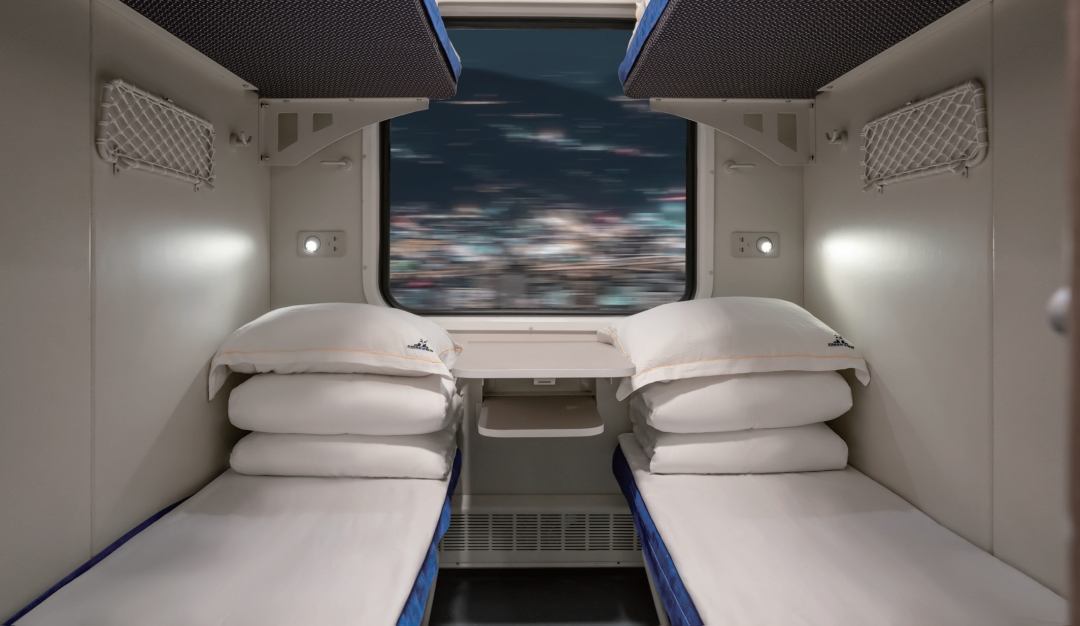
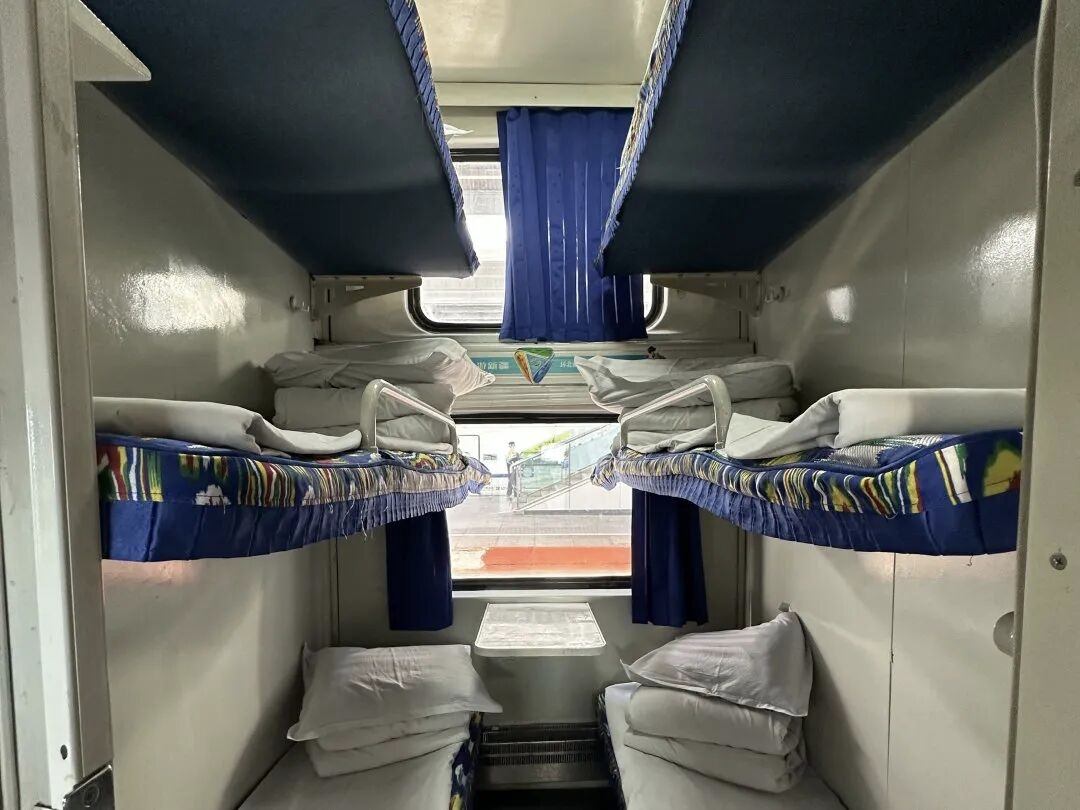
| soft sleeper | Soft sleeper | 4-berth compartment with door | Overnight long-haul, foreigner default for sleeper class |
| hard sleeper | Hard sleeper | 6-berth open compartment (lower / middle / upper) | Budget overnight; social ride; book the lower berth if you can |
| soft seat | Soft seat | 2+2, recline, daytime only | Rare in 2026 — phased out on most routes |
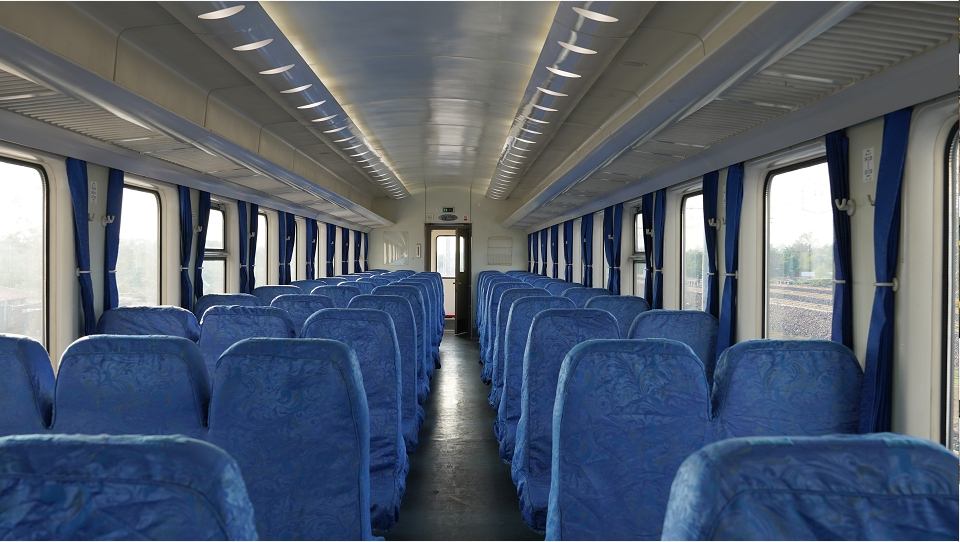
| hard seat | Hard seat | 3+2 bench-style, upright, lights stay on | Daytime <8 hours OR extreme budget; not recommended overnight |
| standing ticket | Standing | No seat assigned | Only buy if sold-out forces it; same price as hard seat |
Worth-it guidance per conventional class:
- soft sleeper — the foreign-traveler default for any overnight conventional ride. Closing door means privacy; 4-berth means at most 3 strangers. Book the lower berth (¥30–50 more than upper) for easier access and a usable seat during daytime hours.
- hard sleeper — the right pick if budget is tight or if you want the social experience. 6-berth open, lower / middle / upper berths. Lower is best (full sitting room, easy access); middle is acceptable; upper requires climbing and you can't sit up. Cost 50– 70% of soft sleeper.
- soft seat — mostly phased out by HSR; still exists on a handful of T/K routes. Skip unless you're a railway nerd specifically wanting the experience.
- hard seat — daytime 6–8 hour rides on a budget, sure. Overnight, no. The carriage lights stay on, the seats don't recline, and at peak holidays it gets standing-room crowded even with assigned seats.
- standing ticket — same comments as HSR. Only buy if sold out forces it.
Important: skip standing tickets if any seated option is still available.
On both HSR and conventional trains, a standing ticket costs the same as the lowest seated tier on that train — the same price as second class on G/D/C, the same price as hard seat on Z/T/K. Standing tickets exist only as overflow: when every seated class is sold out, the railway still releases a small batch of standing tickets so people who absolutely have to travel that day can board. If a seated class is available at the same or near-same price, always pick the seat — you're not saving money by buying a standing ticket. The exception is short sub-1-hour C / D rides where standing in the vestibule is tolerable; for any 4+ hour ride a standing ticket is genuinely uncomfortable.
Decision flow — which to book
A pragmatic decision tree based on route characteristics. Pick the first matching scenario:
- Daytime, <4 hours, route has G or D → G or D second class. The default for 90% of foreign tourists.
- Daytime, 4–8 hours, route has G → G first class if the budget supports it (~60% above second class); otherwise second class is fine.
- Overnight, route has G or D ending in evening → book a daytime G/D + a hotel at the destination. Don't do overnight HSR — HSR network mostly doesn't run 23:00–06:00.
- Overnight, route is Z to a sleeper-only destination (Lhasa, Hong Kong via Z route, etc.) → Z soft sleeper for comfort, hard sleeper for budget. Skip hard seat for any overnight.
- Beijing ↔ Lhasa specifically → Z hard sleeper for the experience — the Qinghai–Tibet plateau ride is the trip. soft sleeper if altitude sickness concerns you (closer to the cabin oxygen vent).
- Photographer wants window for sure → G first class (2+2 layout = guaranteed window or aisle, no middle seat).
- Budget priority + short route → D second class (typically ~30% below G for the same route, only slightly slower).
- You want the cheapest possible cross-country ride → K hard sleeper if overnight, K hard seat if daytime. ~30–50% cheaper than HSR equivalent; travel time 2–3× longer.
Traveler-type matrix, in case the situation flow above doesn't match cleanly:
| Traveler | HSR pick | Conventional pick (overnight) |
|---|---|---|
| First-time tourist (US/UK/EU) | G second class | soft sleeper |
| Family with kids | G first class (extra space matters) | soft sleeper (privacy + door) |
| Photographer | G first class (window-or-aisle) | hard sleeper lower (bigger window angle) |
| Business traveler | G business class or first class | soft sleeper |
| Backpacker / budget | D second class | hard sleeper mid/upper |
| Solo traveler wanting social | G/D second class (chat with seatmates) | hard sleeper (most social option) |
Pricing reality with real numbers
Sample prices pulled from our verified data file (12306-sampled, refreshed monthly). All prices in CNY (¥) one-way.
| Route | Type | Distance | Time | second class | first class | business class |
|---|---|---|---|---|---|---|
| Beijing → Shanghai | G | 1,318 km | 4h18m–6h | ¥626–695 | ¥1,035–1,111 | ¥2,158–2,318 |
| Beijing → Xi'an | G | 1,216 km | 4h10m–6h | ¥515–578 | ¥824–923 | ¥1,628–1,816 |
| Chengdu → Chongqing | G | 308 km | 1h15m–2h | ¥85–191 | ¥135–305 | ¥527–668 |
| Guangzhou → Hong Kong (West Kowloon) | G | 141 km | 47m–80m | ¥185–215 | ¥296–344 | ¥645 |
| Shanghai → Hangzhou | G | 160 km | 45m–75m | ¥34–87 | ¥101–140 | ¥190–275 |
For conventional (Z / T / K) overnight pricing, sample reference points (verified less recently — check 12306 before booking):
- Shanghai → Lhasa Z164 (~4,373 km, ~47h): hard seat ¥402 / hard sleeper ~¥793 / soft sleeper ~¥1,262
- Beijing → Lhasa Z21 (~3,757 km, ~40h): hard seat ¥360 / hard sleeper ~¥720 / soft sleeper ~¥1,144
- Chongqing → Lijiang K117 (~1,477 km, ~24h): hard seat ~¥150 / hard sleeper ~¥244 / soft sleeper ~¥380
Foreign-card payment notes are covered in our 12306 English booking walkthrough and Trip.com booking walkthrough — in short: 12306 takes some foreign cards via Alipay International rail; Trip.com takes Visa/Mastercard with a small service fee.
Compare live fares for your exact dates and book in English (Visa/Mastercard accepted):Check live train prices on Trip.com
How to spot the type from a 12306 / Trip.com listing
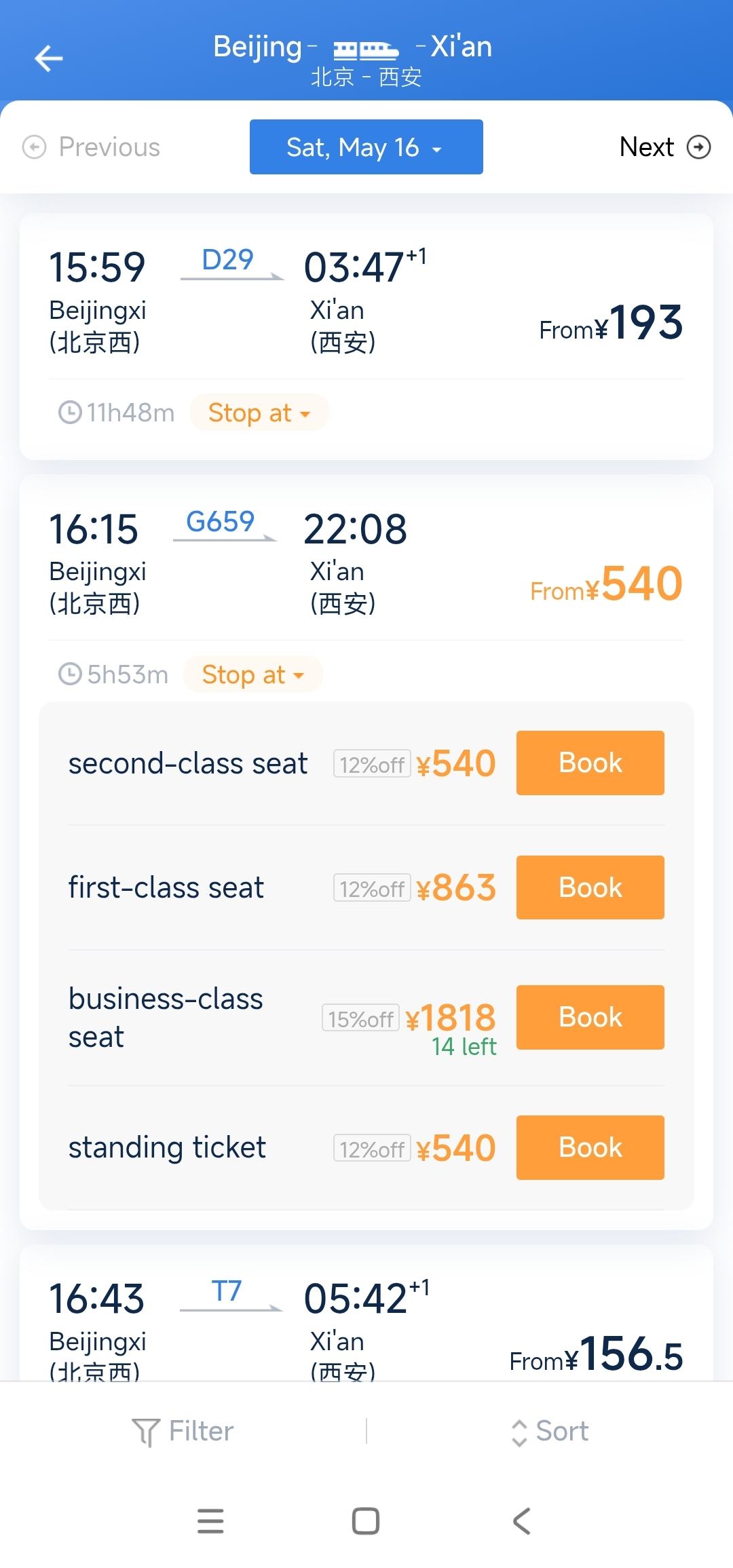
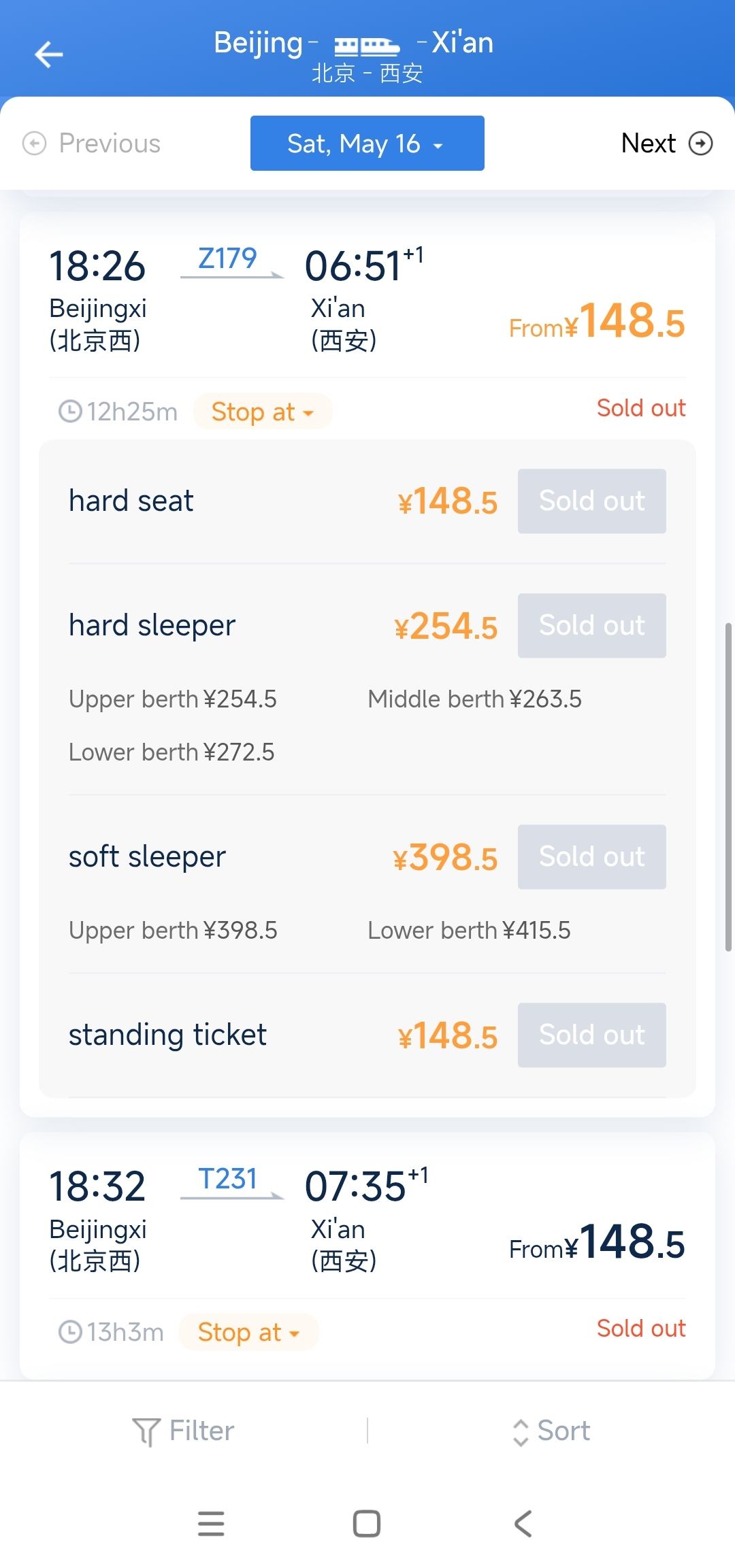
Every Chinese train number starts with the type prefix (or no letter for ordinary trains). On the booking apps:
- 12306 — the train number column shows the prefix as the first character (G15, D2287, C6017, Z164, K117, etc.). Filter pills at the top let you toggle "High-speed / EMU" vs "Ordinary".
- Trip.com — train number similarly shown with prefix. Filters under "Train type" allow picking just high-speed (G+D+C) or just regular.
- Klook — same train number prefix convention; filters slightly different naming.
So: when you see G15 in the listings, you know this is a top-tier HSR; when you see K117, you know it's a fast conventional, conventional class options apply.
Know the type and class you want? Book it in English with a foreign card:Check trains & prices on Trip.com
FAQ
- What's the difference between G and D trains in China?
- Both are high-speed (HSR) but G is the top tier. G trains run 300–350 km/h on dedicated HSR track and operate the headline corridors (Beijing–Shanghai, Beijing–Guangzhou, Beijing–Xi'an). D trains run 200–250 km/h on slightly older or mixed-use track and cover regional and overlap routes. For the same city pair where both exist, G is faster and more expensive, D is slower and cheaper, hardware quality is comparable. Foreign tourists book G by default unless the time difference is small.
- Is business class on a Chinese HSR worth it?
- On a 4–8 hour route like Beijing–Shanghai (¥2,158–2,318) or Beijing–Xi'an (¥1,628–1,816) it's a comfort upgrade — flat-recline 2+1 seating, complimentary meal, lounge access, ~3× second-class price. On a sub-2-hour route like Chengdu–Chongqing (¥527–668) or Shanghai–Hangzhou (¥190–275) it's not worth it; second class for 75 minutes is fine and the budget is better spent elsewhere. Rule of thumb: business class makes sense above 4 hours of travel time and when the cost is <8% of your total trip budget.
- Hard sleeper vs soft sleeper on a Chinese train — what's the actual difference?
- Soft sleeper is a 4-berth compartment with a closing door, individual reading lights, two upper and two lower berths, and ~50% more space per person. Hard sleeper is a 6-berth open compartment with no door, three berths stacked on each side (lower / middle / upper). Mattress quality is similar — 'hard' refers to compartment style, not the bed itself. Cost ratio is roughly 1.5–2× soft over hard. Foreign travelers usually pick soft sleeper for the door + privacy; hard sleeper is the budget-traveler default and a more social experience (you'll talk to your bunkmates).
- Can foreigners sleep in the hard seat overnight?
- Physically yes, practically not recommended. Hard seat is bench-style upright seating with thin padding; for an 8-hour daytime ride it's tolerable but for an overnight journey you'll be cramped, the lights stay on, and the carriage stays loud. An 8-hour daytime hard-seat leg (say Chongqing–Yichang) is survivable as a one-off; overnight it is not. For overnights, even on the tightest budget, find ¥80–150 more for hard sleeper. Foreign travelers planning Beijing–Lhasa or any 30+ hour ride should never book hard seat.
- What's the cheapest way to cross China by train?
- By train type: K (Fast) and the pure-digit ordinary trains (no prefix) are the cheapest, often half the price of HSR for the same route. By seat class within those: hard seat is the rock-bottom option. Trade-offs: K trains take 2–3× the travel time of HSR and stop frequently. Example: Beijing–Shanghai by K-train hard seat would be ¥158 vs ¥626 second-class HSR — but it's a 17-hour ride vs 4h18m. Most foreign tourists pick D second-class as the cheapest sensible option (~30% below G, only 1–2 hours slower).
- Is there a difference between Fuxing and Hexie trains?
- Yes, but for foreign tourists the practical difference is small. Fuxing is the newer indigenous-design family (since 2017), runs the 350 km/h G corridors, has slightly more legroom and the optional Premier First class. Hexie is the older family (Siemens / Bombardier / Kawasaki–licensed designs from the 2000s), runs at 250 km/h, no Premier First class. Same booking system — you don't pick by name; you pick the train number and the system serves whichever hardware runs that route. Headline G corridors are mostly Fuxing now.
- Do C trains have business class?
- Yes, on the busier corridors. Beijing–Tianjin (350 km/h, 33 min) and the new Chengdu–Chongqing line (350 km/h, 1h15m) both run the full business + first + second class hierarchy on most departures. Smaller and shorter C routes (Shanghai–Suzhou, some regional commuter lines) often drop business class and run only first + second class. Worth-it logic is the same as for G trains: business class on a sub-2-hour C ride is hard to justify on price unless you specifically want the flat-recline seat — for most foreign tourists second class is the default pick.
- What does the train number prefix actually mean?
- The first letter of the train number is the type code: G = high-speed (HSR top tier, 300–350 km/h), D = bullet/EMU (HSR second tier, 200–250 km/h), C = intercity (~200 km/h, short routes), Z = direct (conventional overnight, few stops), T = express (more stops than Z), K = fast (frequent stops, slow), pure digits / no prefix = ordinary (slowest local stopping service). The booking systems (12306, Trip.com, Klook) all show the prefix in the train number, so you can identify the type at a glance before buying.
- Can I change seat class after booking?
- Sometimes, with a change fee or by re-buying. On 12306 and Trip.com you can refund and re-book in a different class subject to the original ticket's refund rules (typically ~5% fee if >24h before departure, higher closer in). A faster path on the day of travel: if you want to upgrade and there are open seats in a higher class, find the on-train conductor (whose office is always in carriage 1, 8, or 16 depending on the consist), ask to upgrade on board, and pay the price difference. Downgrades work the same way but rarely worth doing for the small refund.
- Which seat class do most foreign tourists pick?
- Second class on G or D trains, by a wide margin. The reasoning: HSR second class is comparable to international economy-plus or business-class on legacy European intercity trains; the 3+2 seating is comfortable for 4–6 hour journeys; the price gap to first class (~1.6×) and to business (~3×) is hard to justify for tourist budgets; window seats are bookable at the time of purchase. First class is a worthwhile upgrade for routes over 6 hours or when you want a guaranteed window with the 2+2 layout. Business class is for special-occasion budget or business travelers.
- Are there power outlets on Chinese HSR trains?
- Yes, on basically every G / D / C train except a handful of the oldest Hexie units. The standard Chinese 3-pin outlet is in one of three locations depending on carriage generation: under your own seat, in the gap between the front-row seats, or on the back of the front seat near the floor. US/UK/EU travelers need a travel adapter (no built-in USB on most trains). Conventional Z/T/K trains are the opposite story — power outlets are limited to one shared outlet near the door of soft-sleeper compartments and a couple in hard-sleeper corridors; hard-seat carriages essentially have none. Bring a power bank for any conventional ride.
- What's the difference between a standing ticket and a second-class ticket?
- Same price, no seat. Standing tickets exist as overflow inventory — when every seated class on a train is sold out, the railway releases a small batch of standing tickets so people who must travel that day can still board. They cost the same as second class on HSR or the same as hard seat on conventional trains. Always pick a seated option if available — a standing ticket saves nothing and you'll spend the ride standing in the vestibule between carriages. The exception: short C / D rides under 1 hour where vestibule standing is tolerable.
Related
- HSR rail map — interactive planner: pick two cities, get the fastest train + flight comparison + booking link
- China HSR network overview — the 50,000-km network at a glance, station-by-station
- 12306 English booking walkthrough — register, book, pay, and board with a passport
- Trip.com booking walkthrough — alternate booking path with foreign-card payment
- Beijing ↔ Shanghai by HSR — the flagship route, 4h18m, 51 trains/day
- Chengdu ↔ Chongqing by HSR — 1h15m, 143 trains/day, the easiest first-time HSR ride
Sample prices from our verified data file (app/tools/rail-map/data/routes.json), 12306-sampled, refreshed monthly. Conventional sleeper prices verified less recently — treat as rough reference and confirm on 12306 before booking. Verification scope: the China for Travelers editorial team is based in Chongqing (2018–present) and has ridden every train type and seat class covered here first-hand. Conventional sleeper descriptions are additionally cross-checked against aggregated r/chinatravel + r/chinalife threads (n=18, 2024–2026) and China Railway Group annual operating reports.