A mosque that looks nothing like one
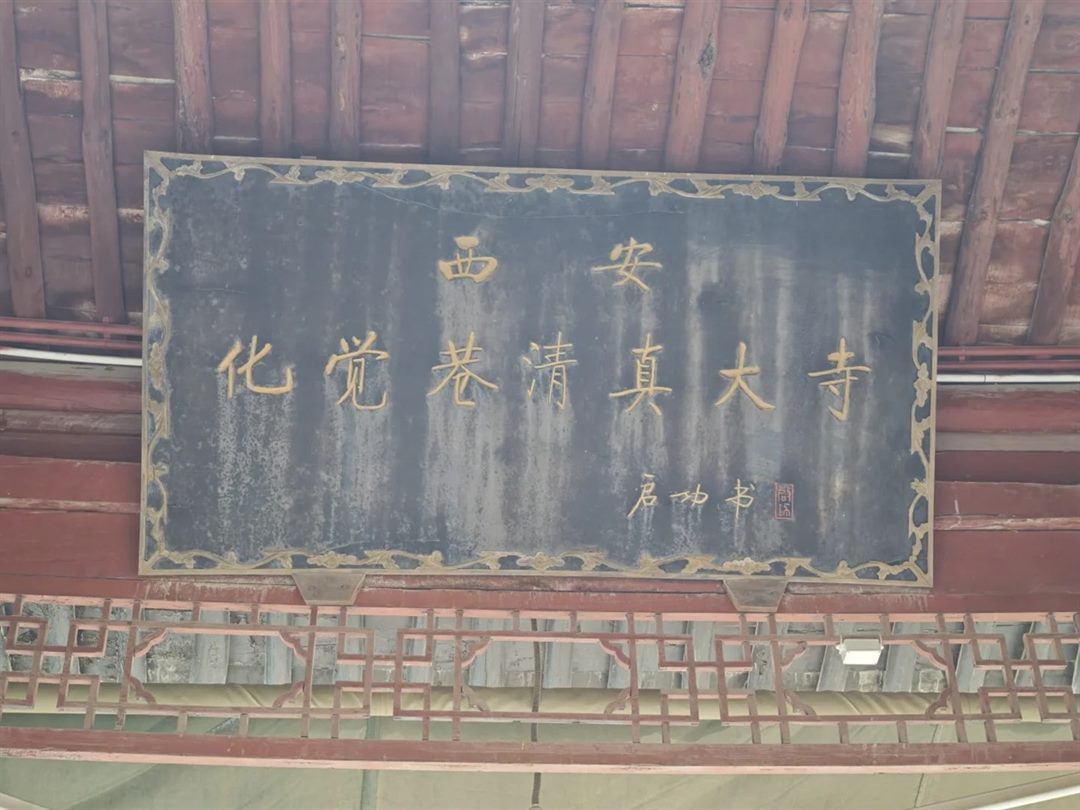
It sits behind a grey brick wall in a lane off the Muslim Quarter — 化觉巷清真大寺 on the signs, the Huajue Lane mosque in older English writing — and from the street it reads as a temple. Inside it is four garden courtyards on a single axis — timber pavilions, glazed roofs, carved screens, a stele hall — laid out exactly the way a Chinese temple or scholar’s garden is laid out.
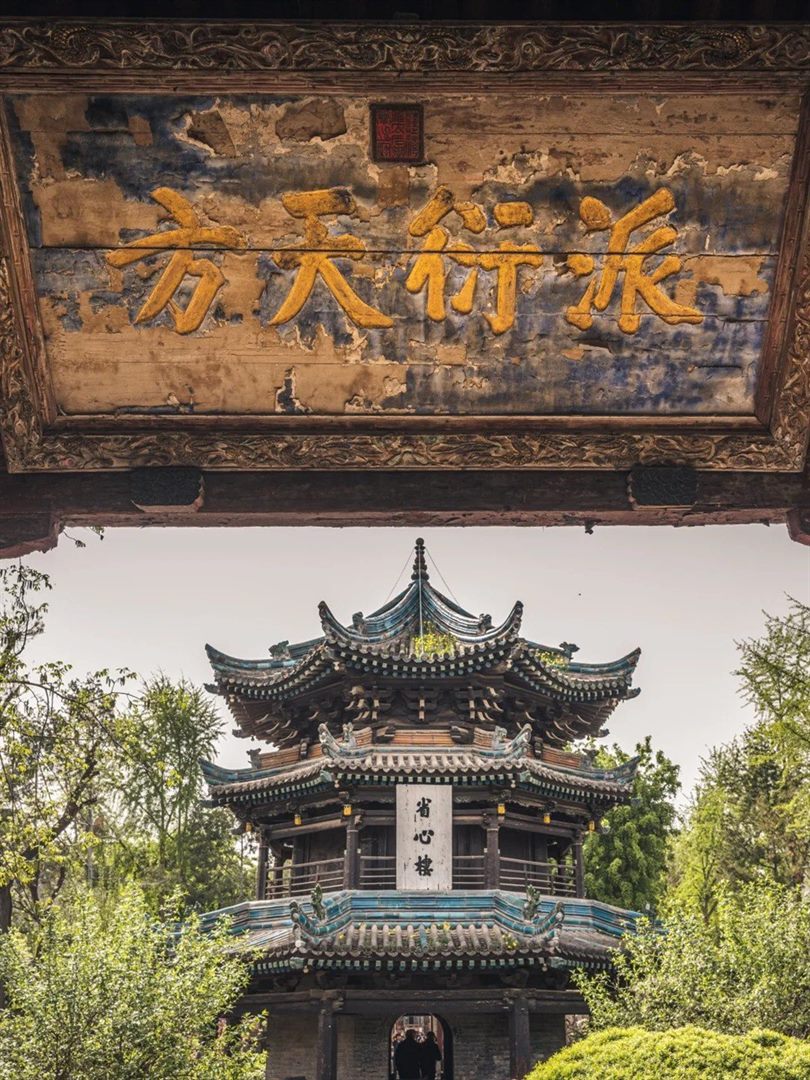
⭐ There is no dome and no minaret. That is not a quirk of this building; the mosque is specifically noted for lacking one. A three-storey octagonal timber pavilion in the third courtyard, the Shengxin Tower (省心楼), is thought by some scholars to have served the call to prayer in place of a minaret — but that is a scholarly suggestion, not a settled fact, and you will see it asserted more confidently elsewhere than the evidence supports.
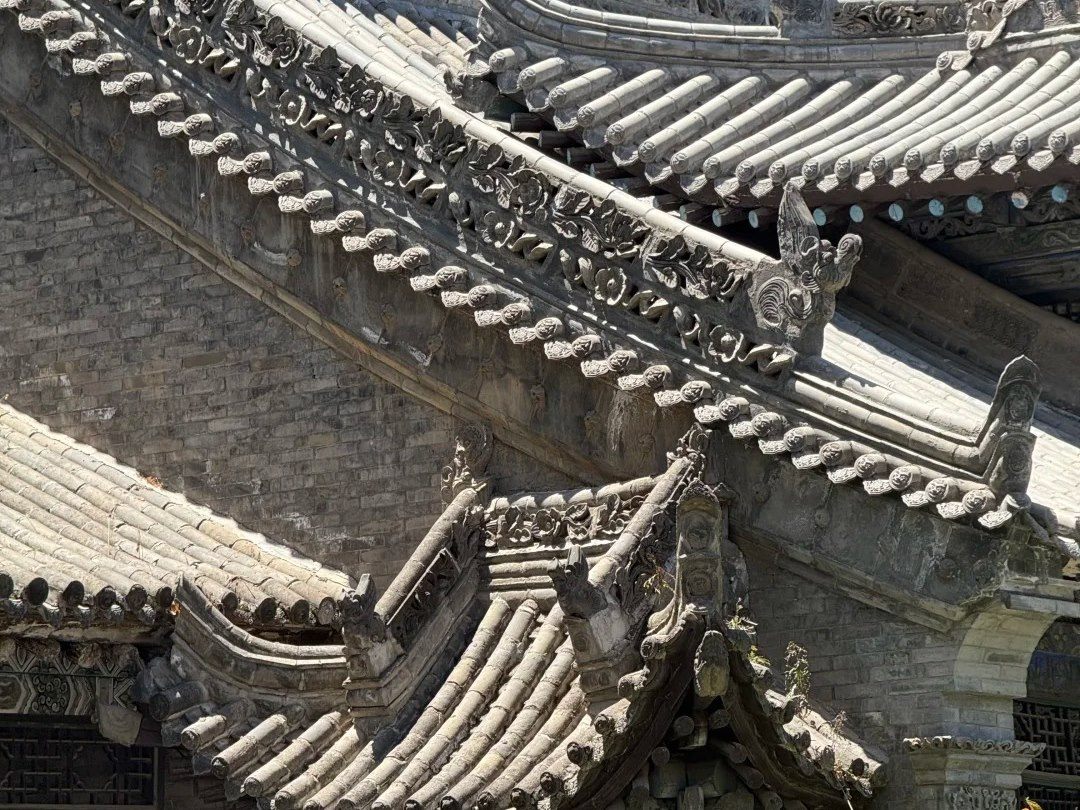
It was founded in 742 CE under the Tang. ⚠️ Nearly every write-up stops there, which is true and a little misleading: the complex was rebuilt at least four times, and what you walk through is largely a Ming rebuild of 1392 and later. You are not looking at eighth-century buildings.
Can you go in? Yes — with one line drawn
This is the question most people arrive with, and the answer is straightforwardly yes. It is a national protected monument as well as a working mosque, it sells tickets, and visitors of any faith walk the courtyards, the gardens and the stele halls.
⛔ The prayer hall interior is the exception. It is closed to non-Muslims. You see it from the raised terrace and the colonnade outside, which is where the turquoise roof and the carved doors are anyway. The ablution rooms are likewise not for visitors. Nobody will be rude about this — the line is simply there, and knowing it in advance saves an awkward moment at a doorway.
Muslim visitors enter free. If you have come to pray rather than to look, this is a functioning congregational mosque and Friday midday is its main gathering.
⚠️ Which is also the day to plan around. Friday midday is the congregational prayer (主麻日). The courtyards fill with worshippers, and accounts differ on whether ticketed visitor access is suspended around that slot — so if you are coming to sightsee, come earlier or later in the day rather than gambling on it.
Finding the door
People report this as hard to find, and there is a specific reason: the mosque is not on the street you are probably walking down.
The Muslim Quarter’s main drag is 北院门 — the one lined with food stalls and crowds, and the one every photo of the quarter is taken on. The mosque is not on it. It is on 化觉巷, a narrower lane running off it, with its own archway at the mouth.
- From the Drum Tower: 548 m on foot. Head for the north-west side, then take the 化觉巷 turning rather than continuing up the food street.
- By metro: Line 2 to 钟楼 (Zhonglou / Bell Tower), exit C, then 878 m past the Drum Tower and into the lane.
- Once you are in 化觉巷: keep going 100–200 m. The grey-brick gate and the ticket window are on the right.
⭐ Navigate by address, not by sight. Putting 化觉巷30号 or 化觉巷清真大寺 into a maps app takes you to the gate; wandering the food street looking for a sign does not, and that is how most of the reported difficulty happens.
⛔ And check you are at the right mosque. There are at least five within 500 metres — on 北广济街, 大皮院, 小皮院 and elsewhere — most of them working neighbourhood mosques rather than monuments. A good deal of the short-video coverage that circulates abroad is of a different one, 大学习巷清真寺, 660 m away on its own lane. If you search for “the mosque in the Muslim Quarter” you may well be sent there.
Tickets and hours
Buy at the window beside the gate. There is nothing to reserve, no daily cap and no mini-programme to fight with — a rarity among Xi’an’s ticketed sights, and worth knowing if you are having a day where everything else needs booking.
| Season | Adult | Hours |
|---|---|---|
| Peak | ¥25 | 08:00–20:00, last admission 19:00 |
| Off-season | ¥15 | 08:00–18:00 |
Muslim visitors are admitted free.
⚠️ A word on the closing time, because the sources do not agree. The seasonal figures above are what the ticketing information and the ticket-office record give. One mapping record gives a narrower window of 09:00–17:30. We are not going to pick a winner for you: if you are arriving late in the afternoon, plan on the earlier figure and you cannot be caught out. Arriving in the morning, the disagreement does not matter.
What to look for
Allow three quarters of an hour to walk it and an hour and a half if you sit down, which is rather the point: this is the only quiet ground in a quarter that is otherwise shoulder-to-shoulder. On a hot afternoon the courtyards justify the ticket without any of the history.
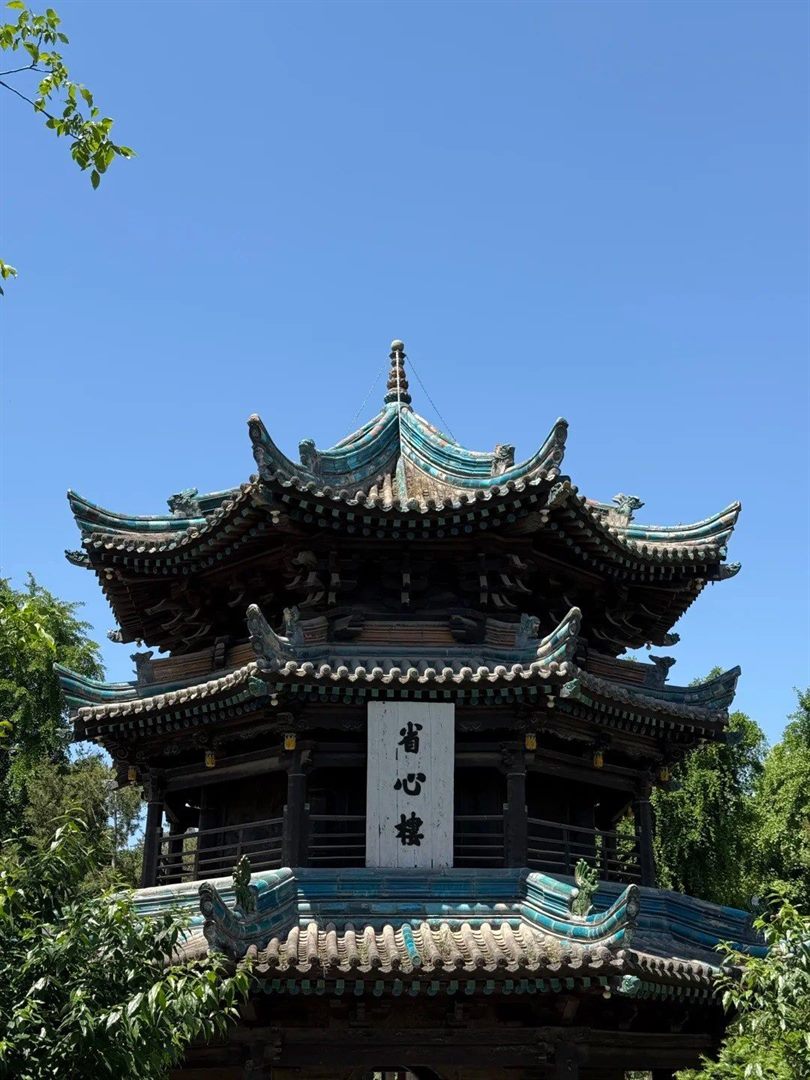
- The Shengxin Tower (省心楼), third courtyard — the octagonal timber pavilion described above. Whatever its original function, it is the building that most clearly states the mosque’s architectural argument.
- The prayer hall roof — turquoise glazed tile, against the yellows and greens of the city’s Buddhist and Daoist roofs. It is the fastest visual tell that this courtyard complex is a mosque at all.
- The Phoenix Pavilion (凤凰亭 / 一真亭), fourth courtyard — a hexagonal garden pavilion.
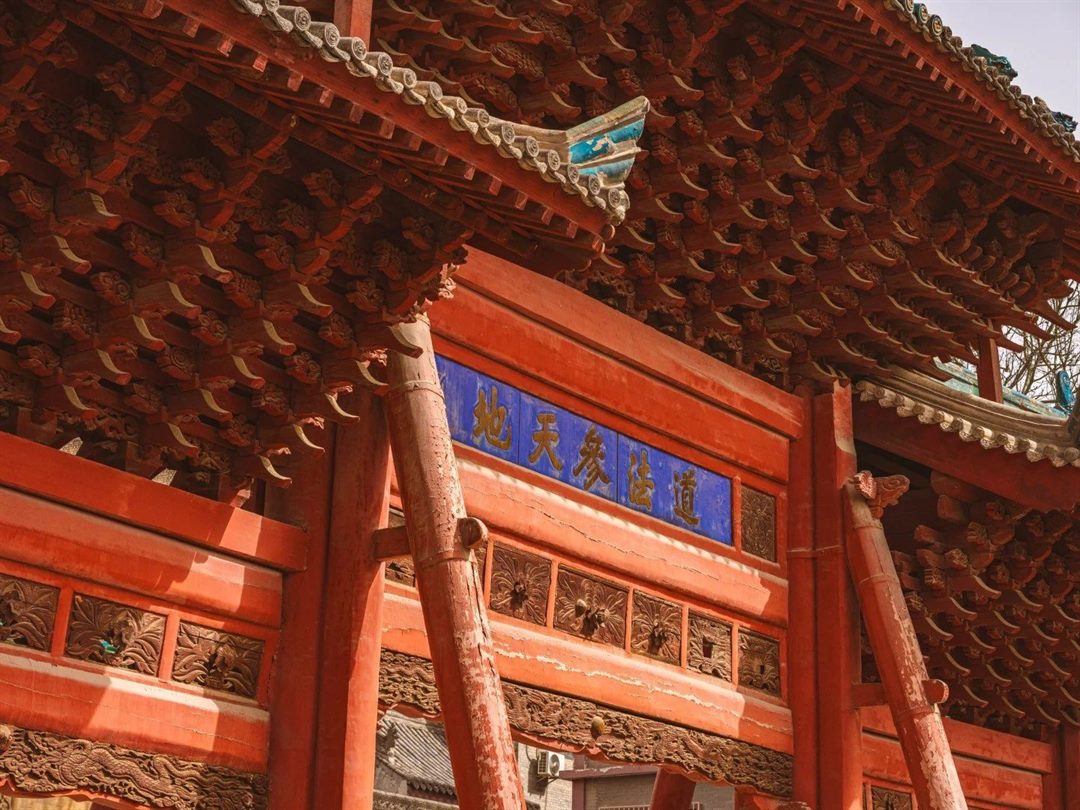
- The timber archway in the first courtyard, and the blue-and-gold plaque set into it reading 道法参天地. ⚠️ It is popularly credited to the Song calligrapher Mi Fu (米芾) — the scholarly summaries carry that attribution with an explicit “supposedly”, and we have kept the hedge rather than tidying it away. You will find the flat version stated elsewhere.
- The stone tablets, in Arabic and Chinese together — the fusion in one object. The inscription 敕賜禮拜寺, “mosque bestowed by imperial decree”, is associated with this mosque in the literature. ⛔ You will see it credited to the Ming calligrapher Dong Qichang; we could not corroborate that anywhere, so the inscription is here and the hand is left unnamed. His dates make it chronologically possible, which is probably why it circulates — possible is not attributed.
It is a working mosque. Cover shoulders and knees, keep your voice down in the courtyards, and do not photograph people at prayer. Traveller accounts say the audio guide sold at the gate is fairly basic; the building rewards looking more than listening.
Key takeaways
- ⭐ Neither dome nor minaret anywhere on the site. Four Chinese garden courtyards on an axis, timber pavilions and glazed roofs — whatever you expect a mosque to look like, this is not it, and that is the reason to come.
- ⛔ It is not on the food street. Turn off 北院门 into 化觉巷, go 100–200 m, gate on the right. Navigating to 化觉巷30号 beats hunting for a sign.
- Non-Muslims are welcome throughout except the prayer hall interior, which is viewed from the terrace outside. Muslim visitors enter free; everyone else pays ¥25 peak, ¥15 off-season.
- ⚠️ Do not plan a Friday visit for the middle of the day. Accounts differ on whether ticket-holders are admitted around the weekly prayer, so treat that slot as unreliable and come either side of it.
- Cover shoulders and knees, keep quiet, do not photograph worshippers. It is the one calm place in the quarter, which on a hot afternoon is worth the ticket on its own.
Frequently asked questions
Can non-Muslims visit the Great Mosque of Xi'an?
Yes. It is a national protected monument as well as a working mosque, and visitors of any faith are welcome in the four courtyards, the gardens and the stele halls. ⛔ The one exception is the prayer hall itself: its interior is closed to non-Muslims, and you view it from the terrace and colonnade outside. The ablution rooms are also not for visitors.
How much is the ticket?
¥25 in peak season and ¥15 off-season, bought at the window beside the gate — there is nothing to book in advance. Muslim visitors enter free.
Where is the entrance? I cannot find it.
This is the commonest problem, and the reason is that the mosque is not on the street most people search it from. Do not walk up 北院门, the busy food street. Turn off it into 化觉巷 — a narrower lane with its own archway at the mouth — and keep going 100–200 m; the grey-brick gate and the ticket window are on your right. From the Drum Tower it is 548 m. Navigating by the address 化觉巷30号, or by the name 化觉巷清真大寺, is much faster than looking for a signpost.
Should I avoid Friday?
Plan Friday around midday rather than through it. Friday midday is the congregational prayer (主麻日), when the mosque fills with worshippers; accounts differ on whether visitor access is suspended around it, so treat that slot as unreliable and come earlier or later in the day.
What are the opening hours?
It opens at 08:00. In peak season the gate closes at 20:00 with last admission 19:00; off-season it closes at 18:00. ⚠️ Sources disagree on the exact closing time — one mapping record gives a narrower 09:00–17:30 — so if you are arriving late in the day, treat the earlier figure as the safe one.
Is this the mosque I have seen in videos?
Possibly not. There are at least five mosques within 500 m of this one in the Muslim Quarter, and a lot of the short-video coverage abroad is of a different one — 大学习巷清真寺, 660 m away on its own lane. If you navigate to "the mosque in the Muslim Quarter" you can easily end up at a working neighbourhood mosque rather than the ticketed monument.
Does it have a minaret or a dome?
Neither, and that is the point of the building. It is laid out as a Chinese courtyard complex — four garden courtyards on an axis, timber pavilions, glazed tile roofs, steles. The mosque is notable precisely for lacking a minaret; a three-storey octagonal pavilion in the third courtyard, the Shengxin Tower, is thought by some scholars to have served that function, though that remains a hypothesis rather than a settled fact.
How long does a visit take, and what should I wear?
Three quarters of an hour to walk it, an hour and a half if you sit — and sitting is rather the point, since it is the only quiet place in the quarter. It is a working mosque, so cover shoulders and knees, keep your voice down in the courtyards, and do not photograph people at prayer.
Sources
Checked August 2026 · Written from our own first-hand travel in China.
Corrected since publication: we called 道法参天地 a stele — it is a horizontal plaque, blue ground and gold characters, set into the timber archway of the first courtyard. A photograph of the courtyard settled it against our draft.