Written by the China for Travelers editorial team. Venue chains named here were checked against Amap in August 2026; prices are described as structures rather than figures, because the figures move and we would rather say so.
Two businesses, one English word
Almost every anxious question about KTV comes from the same place: in English there is one word, and in Chinese there are two, for premises that have little to do with each other.
| 量贩式 KTV | 商务 KTV | |
|---|---|---|
| What it is | A room of sofas, a screen and two microphones, rented by the hour. Self-service. | A corporate-entertainment venue. Bigger rooms, table service, hostess service. |
| How it charges | By the hour, with no minimum spend. You can buy nothing at all beyond the room. | A minimum spend, or a drinks package. No hourly concept. |
| Who is in there | Friends, colleagues, students, families with children on a weekend afternoon. | Business entertaining. |
| Which you want | This one. It is the default, and it is what every chain named on this page is. | Not somewhere to wander into. |
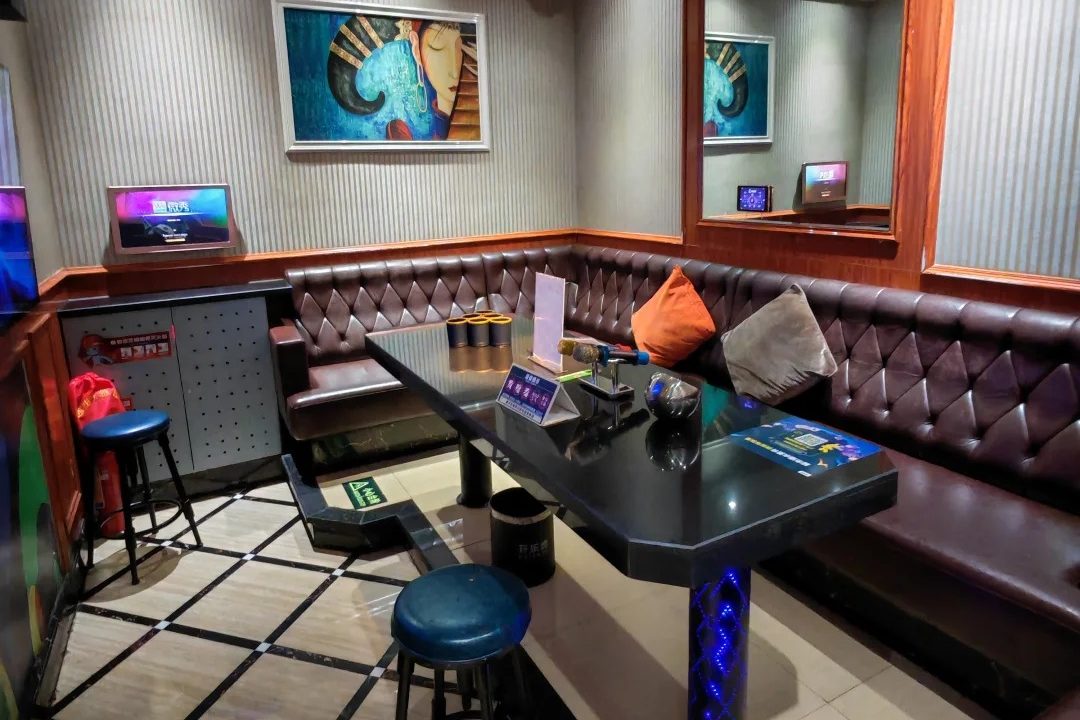
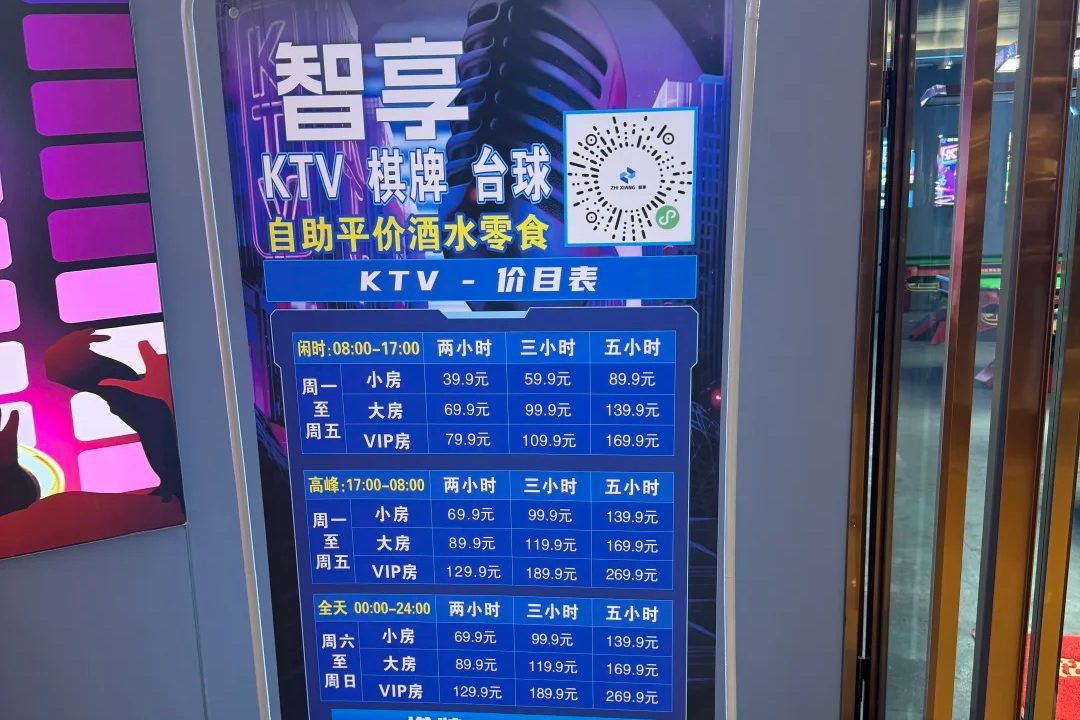
The chains a visitor will actually walk past are the first column: 纯K, 温莎 KTV and 钱柜 PARTYWORLD all run hourly rooms in ordinary shopping centres and office towers. If a place is on the third floor of a mall with a lit sign and a price list at the door, it is a 量贩式.
Going alone, and how many people a room is for
Rooms are sold by size, not per head — a small room is usually described as taking three to five people and a medium one six to eight. That is the thing to understand about cost: a room for five costs the same whether five of you turn up or one of you does.
You can absolutely book one alone and nobody will comment. But if what you want is an hour of singing rather than a room, look for the mini-booths — glass boxes for one or two people, in malls, cinemas and some metro stations, paid by the minute. They are built for exactly this and cost a fraction of a room.
Booking: there are two prices, and you will be quoted the higher one
You do not need an app, a Chinese phone number or a Chinese payment account to get a KTV room. Walking up to the front desk works, staff will show you to a room, and the whole thing takes a minute.
What you lose is the price everyone else is paying. Rooms are sold in advance on Chinese lifestyle apps — Meituan and Dianping are the two — at a group-buy rate that sits well below the counter rate for the same room in the same slot. Travellers report the walk-in price running close to double. The gap is widest at weekend prime time and narrowest on a weekday afternoon.
The friction, stated plainly: those apps expect a Chinese mobile number, and their interfaces are Chinese-only. If you are travelling with someone who has an account, have them book. If you are not, walk in and accept the premium — or go on a weekday afternoon, when the two prices are closest and the rooms are empty anyway.
Bring your passport. Entertainment venues may register a foreign guest's details at the desk; staff handle it, and it is the same document you are already carrying for hotel registration. For paying, WeChat Pay and Alipay are universal and some venues take foreign cards — if you have not set either up yet, our Alipay guide covers the version that works on a foreign card.
Finding your songs
The catalogue is not the problem. Mainstream English-language music is deep — chart pop, classic rock, film and Disney songs are all there. What is genuinely thin is music in other European languages and releases from the last few weeks.
The problem is the search box, which does not behave like the one on your phone. Four things make it work:
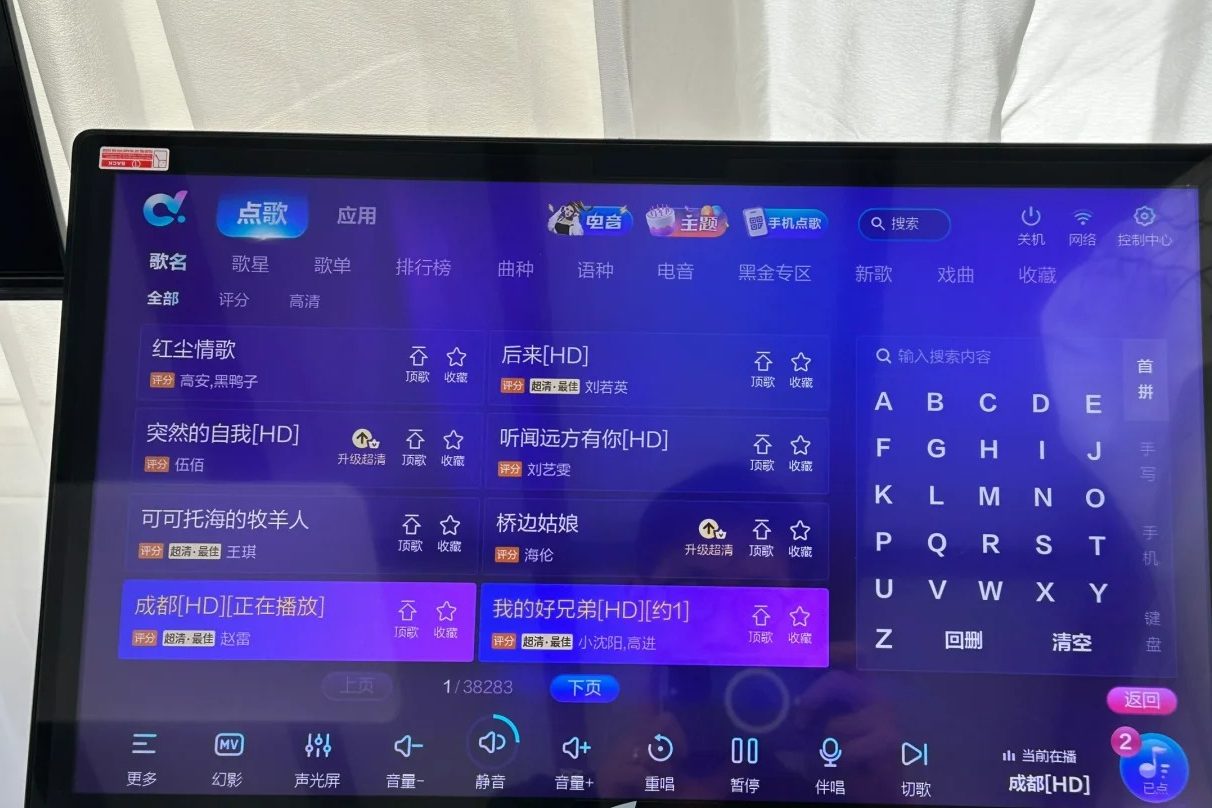
- Type the title with no spaces and no punctuation. The machine often will not match a title typed the normal way. “Rolling in the Deep” goes in as one run of letters.
- Search the artist, not the song. An artist name is one word and matches far more reliably than a title.
- Scan the QR code on the screen and order from your own phone. This is the real answer. Your phone keyboard has autocorrect and prediction; the wall-mounted touchscreen does not, and typing English on it is miserable. Songs you pick on the phone queue up on the room screen.
- Paste rather than type. Copy the exact title out of a music app and paste it in, which sidesteps spelling entirely.
If a song genuinely is not in the system, ask staff about the missing-song function — some venues can pull a track down from their supplier. Some rooms also accept a phone screen-cast, which lets you sing to a video from a streaming app using the room's microphones. Bilibili works on any connection in China; YouTube does not, without the arrangement described in our connectivity guide.
Two smaller things. The menus themselves are usually Chinese-only, with a language toggle on some newer systems — but a visitor never really needs to drive the machine, because one person ordering from a phone covers the whole room. And the video behind an English song is sometimes unrelated stock footage rather than the real music video, so it is worth picking the version with a sensible picture if the system offers more than one.
What gets charged that you did not order
The hourly rate is not the whole bill, and the extras are where a first visit goes wrong. None of this is unique to foreign visitors — it is the same advice Chinese first-timers give each other.
- The fruit plate, the snacks and the packet of wet wipes on the table are usually not free. If nobody said they were complimentary, assume they are on the bill. Look for a price card, or ask outright whether it is included — and if you do not want it, say so and it goes back.
- Ask what the room rate does and does not include before you sit down: the room fee, any minimum, a service charge, the overtime rate, and a corkage fee if you brought a bottle. Hourly venues generally do not allow you to bring your own drinks; some have an in-house shop instead.
- Settle about ten minutes before your hour is up. Overtime is charged, and the desk gets busy exactly when everyone else's rooms end.
- Read the bill line by line. This is the standard local advice, not a warning aimed at visitors.
Frequently asked questions
Is KTV in China legal?
Yes. The confusion comes from English using one word for two different businesses. A 量贩式 KTV (liàngfànshì, "supermarket-style") is an ordinary hourly karaoke venue — families book afternoon rooms in them. A 商务 KTV (shāngwù, "business") is a corporate-entertainment venue with a large minimum spend and hostess service, and that is the one people have heard stories about. They have different names in Chinese, different pricing models and usually different buildings.
Can I go to a KTV alone?
You can, and mini-booths exist in malls and metro stations for exactly this. But the normal unit is a private room booked by the hour for a group, and rooms are sized for people rather than sold per head — so going alone costs the same as going with five friends. Most solo singers use a mini-booth instead.
Do I need a Chinese app to book a KTV room?
No. You can walk up to the front desk without any app, any Chinese phone number and any Chinese payment account. What you lose by doing that is the group-buy price: rooms are routinely sold on Chinese lifestyle apps at a large discount to the counter rate, and travellers report the walk-in price running close to double.
Will there be songs in English?
Yes, and the mainstream English catalogue is deep — chart pop, classic rock, Disney. What is thin is non-English foreign-language music and very recent independent releases. The difficulty is usually finding the song rather than the song being absent, because the search box behaves differently from the one you are used to.
Do I need my passport?
Bring it. Entertainment venues in China may register a foreign guest’s passport details at the desk, and staff will handle the paperwork if they do. It is the same document you will already be carrying for hotels.
Related
- Alipay for foreigners — the payment method that works everywhere a KTV does.
- Lodging registration — why your passport travels with you.
- Staying connected in China — which apps work on an ordinary connection and which do not.
Sources
Checked August 2026 · Written from our own first-hand travel in China.