Key takeaways
- It is a free walking neighbourhood, not a ticketed sight — you experience it by wandering the streets.
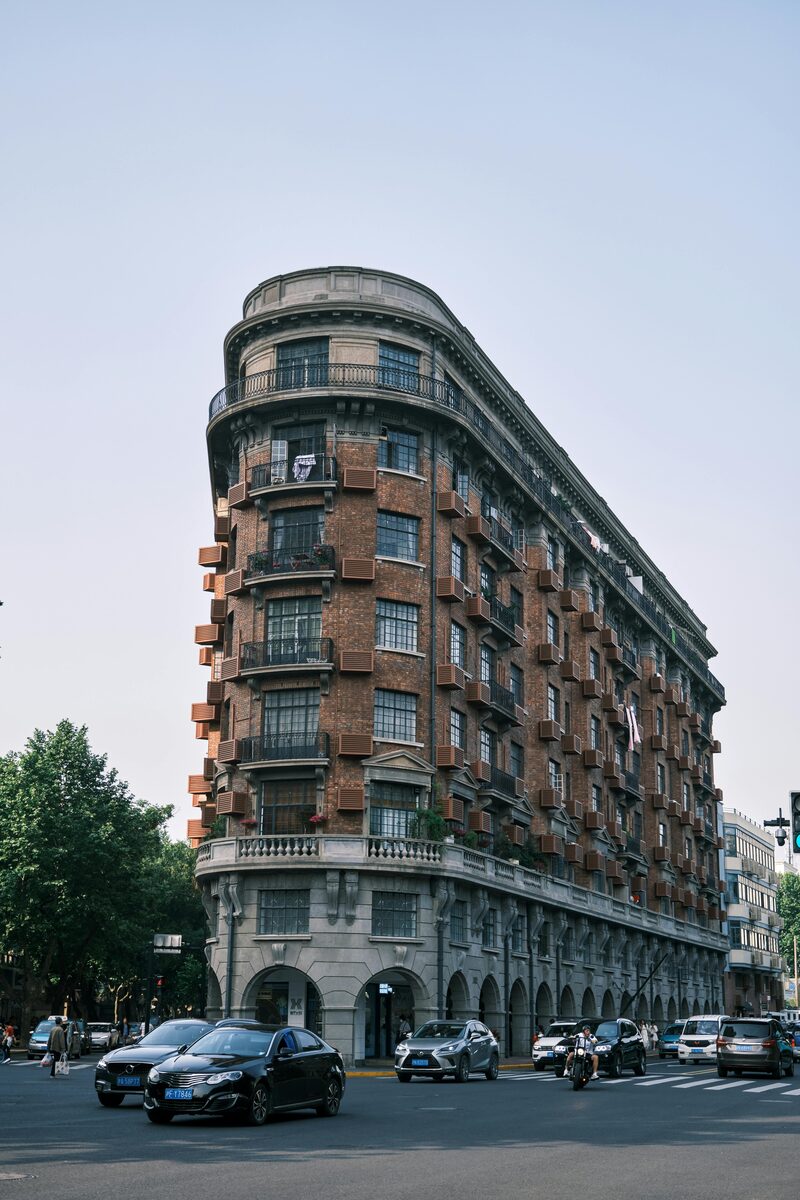
- Anchor on Wukang Mansion (武康大楼), the 1924 flatiron building at the Wukang/Huaihai corner.
- Walk Anfu Road for dinner and Wuyuan Road for cafés — the densest such strips in China.
- Pick one of Tianzifang (bohemian browsing) or Xintiandi (polished dining) — many skip the other.
- Best in late afternoon into evening, spring or autumn; metro Line 10/11 or Line 1/7 drop you in the middle.
What the French Concession is
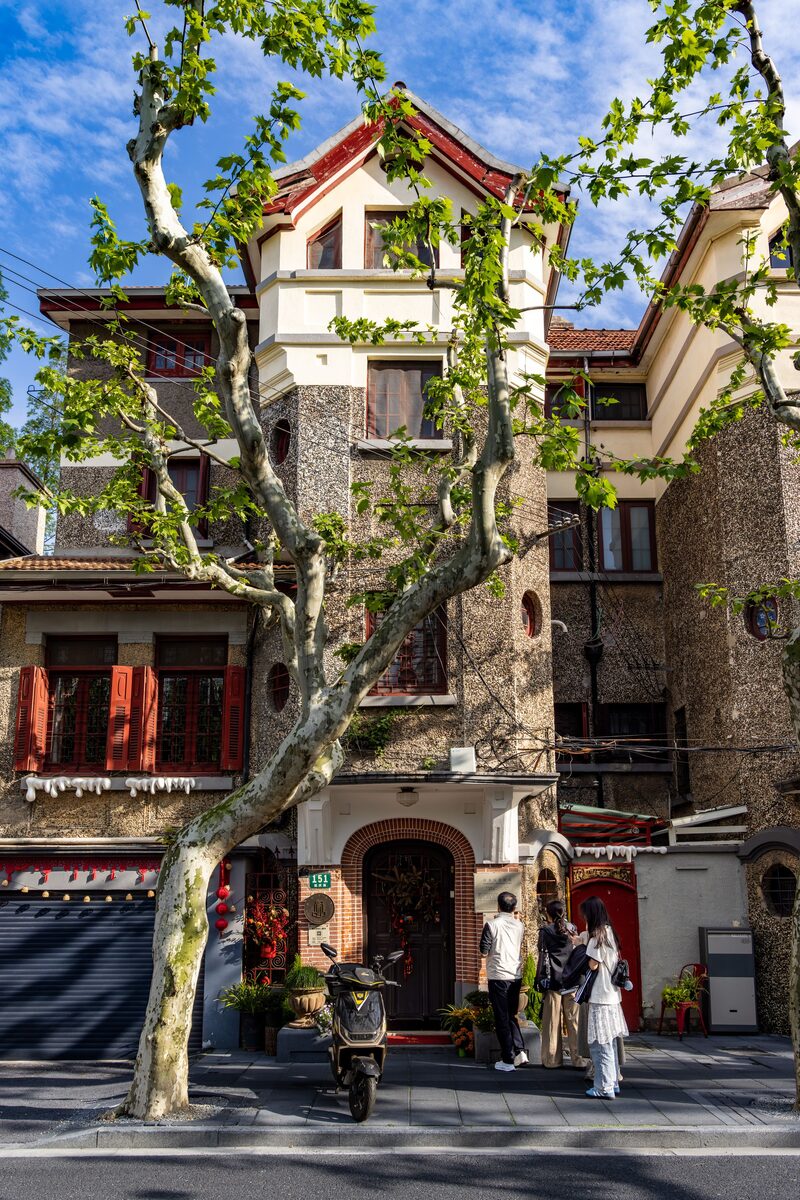
The former French Concession is the part of central Shanghai administered by France from 1849 to 1943. What survives of that era is not a monument but a townscape: low-rise buildings, a fine-grained street grid, and — most distinctively — avenues lined with plane trees that arch over the road. It spans western Huangpu and eastern Xuhui districts, loosely centred on Huaihai Middle Road.
It is a neighbourhood, not an attraction. There is no gate, no ticket, no “the” thing to see. You experience it by walking its streets, pausing at a café, looking at the 1920s–30s villas and apartment buildings, and letting it unfold. For many travellers it is the part of Shanghai that feels most livable and most rewarding to wander.
The streets to walk
A handful of streets give the best of the area. The most rewarding approach is not a fixed route but to surface from a metro station and wander, letting the trees and the quieter side lanes pull you along.
| Street | Best for | What’s there |
|---|---|---|
| Wukang Road 武康路 | The signature walk & the photo | Anchored by Wukang Mansion (武康大楼), the 1924 flatiron-shaped apartment building at the Wukang/Huaihai junction — the most photographed corner in the area. |
| Anfu Road 安福路 | Dinner | A short, dense run of Italian, French, modern-Chinese, Japanese and natural-wine spots, plus a well-known theatre — the densest good-restaurant strip in the city. |
| Wuyuan Road 五原路 | Coffee & boutiques | Café territory — the surrounding lanes are full of small independent coffee shops and boutique stores. |
| Wuyuan / Yongfu / Fuxing West 五原路 / 永福路 / 复兴西路 | The prettiest, quietest walk | Travellers’ pick for the most photogenic, least touristy blocks — dense plane trees, discreet old villas, independent designers, vintage shops and specialty coffee, no loudspeakers. Best for a slow, mood-y wander. |
| “Ju-Fu-Chang” 巨鹿路 / 富民路 / 长乐路 | Eat-and-shop | The most established browse-and-graze cluster — Changle Road for affordable streetwear and craft, Fumin and Julu Roads packed with brunch spots and bistros; an easy 3-hour eat-walk. |
| Xinle & Donghu Roads 新乐路 / 东湖路 | Trendy / evening | Where old villas meet streetwear labels; Donghu Road glows at dusk — the spot for street-style and cinematic evening shots. |
| Fuxing & Sinan Roads 复兴路 / 思南路 | Quiet villas | Leafier and calmer, with some of the best-preserved villas and a few small house-museums of 1920s–30s figures. |
Wukang Mansion timing & photo spots: it’s mobbed at midday on weekends — travellers shoot it 7–9am (empty, soft light), 16:00–17:30 (golden light rimming the plane trees) or after 18:00(lit, with light-trails). The cleanest angles are from the ICBC bank steps directly opposite(low, a ~1.5× zoom to crop out the crowd), through the plane trees by the street sign, and the framed “Romeo balcony” window at Wukang Road 210. Anfu Road next door is the “centre of the universe” for internet-famous shops — fun to pass through, tiring to walk end-to-end.
Tianzifang vs Xintiandi
Two restored shikumen (stone-gate lane house) quarters sit within the broader Concession area, and visitors often ask which to choose. Both are touristy; they differ in feel. It is perfectly reasonable to see one and skip the other.
| Tianzifang (田子坊) | Xintiandi (新天地) | |
|---|---|---|
| Feel | Bohemian, cramped, a little chaotic | Polished, upscale, more corporate |
| What it is | A warren of narrow lanes of small craft shops, cafés and bars | A pedestrian development of restored facades housing international restaurants, bars and shops |
| Go for | Browsing and atmosphere | A smart meal or an evening drink |
| Price feel | Cheaper, scrappier | Cleaner, pricier |
The honest local read: many Shanghai locals now call Tianzifang the most overrated of the two — behind the shikumen shell it’s largely mass-market souvenirs, milk-tea and skewers, crowded and short on real neighbourhood life. If you mainly want old-Shanghai lane atmosphere without the crush, they steer visitors to Sinan Mansions (思南公馆) / Sinan Road and Nanchang Road (南昌路) nearby — quieter, with more intact character — or to the restored Zhangyuan (张园) near West Nanjing Road. The general rule holds across the whole district: the quiet is one street away in every direction — Tianzifang and Wukang Road carry the crowds, and the residential lanes between them carry almost none.
Eating and cafés
The French Concession is the best eating-and-café neighbourhood in Shanghai, and arguably the densest Western-restaurant and independent-café district in mainland China. It is the natural place to go for a Western-style meal or a proper brunch midway through a longer China trip, when a change from Chinese food is welcome.
Use Anfu Road for dinner, and Wuyuan Road and the side lanes for coffee. Reserve for weekend dinners; weekdays are usually walk-in. See the Shanghai city guide for the wider food context.
How to get there
Several metro lines serve the area. Pick a station, surface, and walk — the point is the streets between the stops.
| Metro line(s) | Station | Lands you |
|---|---|---|
| Line 10 / 11 | Shanghai Library (上海图书馆) · Jiaotong University (交通大学) | In the heart of the area, near Wukang Road. |
| Line 1 / 7 / 10 | Changshu Road (常熟路) · Shaanxi South Road (陕西南路) | The eastern edge — close to Anfu Road and the dining strip. |
| Line 1 | South Shaanxi Road, continuing east | Toward Xintiandi for the restored-lane quarter. |
The Concession is also one of Shanghai’s most desirable places to stay, for travellers who want the neighbourhood itself to be part of the trip — see the where-to-stay guide’s French Concession section.
Book a French Concession walking tourNASDAQ: TCOM
Rather have the history and the side lanes pointed out for you? Trip.com lists guided walking tours of the Concession — Wukang Road, the architecture and the lane houses — booked in English on a foreign card. A self-guided wander is free; a guide adds the context.
When to go
Late afternoon into early evening is ideal — the light through the plane trees is at its best, shops and cafés are open, and a walk rolls straight into dinner. Spring and autumn are the most pleasant seasons; the trees are bare in winter and the area is hot and humid in midsummer. It is pleasant any day of the week — weekends are busier at Tianzifang and Xintiandi specifically, so go on a weekday if either is your priority.
Where to stay nearby
The Concession is the boutique, slow-travel base in Shanghai — staying inside it puts the plane-tree streets, the cafés and dinner all on your doorstep. The sensible call for a first China trip is a home-grown mid-range chain in or beside the neighbourhood.
Frequently asked questions
Where is the former French Concession in Shanghai?
It is the area of low-rise, plane-tree-lined streets spanning western Huangpu and eastern Xuhui districts — roughly the zone around Huaihai Middle Road, Wukang Road, Anfu Road, Wuyuan Road and Fuxing Road. There is no gate and no single 'entrance': the former French Concession is a neighbourhood, and you experience it by walking its streets. It is not a single attraction but a district, which is exactly the point.
Why is it called the French Concession?
From 1849 until 1943, this part of Shanghai was a concession territory administered by France — one of several foreign-run areas in the treaty-port city. The street layout, the plane trees (planted along the avenues), and much of the low-rise residential architecture date from that era and the 1920s-30s. The name 'French Concession' is historical; today it is simply one of Shanghai's most desirable and atmospheric neighbourhoods, and locals often just call it by its street names.
How do I get to the French Concession?
Several metro lines serve it. Line 10 and Line 11 stop at Shanghai Library (上海图书馆) and Jiaotong University (交通大学), both in the heart of the area. Line 1, 7 and 10 meet at Changshu Road (常熟路) and Shaanxi South Road (陕西南路) on the eastern edge. Line 1 also runs through to South Shaanxi Road and on toward Xintiandi. Pick a station, surface, and walk — the whole point is the streets between the stations.
What is there to do in the French Concession?
Walk, look, eat and drink — it is a strolling neighbourhood rather than a sightseeing checklist. Specific anchors: Wukang Mansion (武康大楼), the 1924 flatiron-shaped building at the Wukang/Huaihai junction, is the photographers' corner; Anfu Road is the dense dining strip; Wuyuan Road is café-heavy; Tianzifang and Xintiandi are two restored-lane shopping-and-dining quarters at opposite ends in style. There are also small house-museums of 1920s-30s figures, leafy parks, and boutique shops throughout.
What is the difference between Tianzifang and Xintiandi?
Both are restored shikumen (stone-gate lane house) quarters, and both are touristy — but they differ in feel. Tianzifang is a warren of narrow lanes packed with small craft shops, cafés and bars; it is more cramped, more bohemian, more chaotic. Xintiandi is a polished, upscale pedestrian development of restored facades housing international restaurants, bars and shops; it is cleaner, more expensive, more corporate. Tianzifang for browsing and atmosphere, Xintiandi for a smart meal or drink. Many visitors see one and skip the other.
Is the French Concession good for eating and cafés?
It is the best eating-and-café neighbourhood in Shanghai, and arguably the densest Western-restaurant and independent-café district in mainland China. Anfu Road in particular packs Italian, French, modern-Chinese, Japanese and natural-wine spots into a short strip; Wuyuan Road and the surrounding lanes are full of independent coffee shops. It is also the obvious place to go when you want a Western-style meal or a proper brunch midway through a China trip. Reserve for weekend dinners; weekdays are usually walk-in.
When is the best time to walk the French Concession?
Late afternoon into early evening is ideal — the light through the plane trees is at its best, shops and cafés are open, and you can roll a walk straight into dinner. Spring and autumn are the most pleasant seasons; the trees are bare in winter and the area is hot and humid in midsummer. It is pleasant any day of the week; weekends are busier at Tianzifang and Xintiandi specifically.
Sources
Checked August 2026 · Written from our own first-hand travel in China.