Key takeaways
- UNESCO World Heritage (inscribed 1997) — an 800-year Naxi canal town, formally Dayan (大研古城).
- No ticket gate, but an Old Town Maintenance Fee (古维费) of ¥50 / 365 days applies (rule from Aug 2025) — currently only checked at Black Dragon Pool & Jade Dragon Snow Mountain, not walking the lanes.
- Lanes are pedestrian-only — your hotel meets you at the nearest gate and carts luggage in.
- Sits at ~2,400 m; arrivals flown in from sea level may feel mild altitude symptoms for 24–48h.
- Give it 2–3 nights — the magic is the quiet 6–9am and post-9pm hours day-trippers miss.
What Lijiang Old Town is
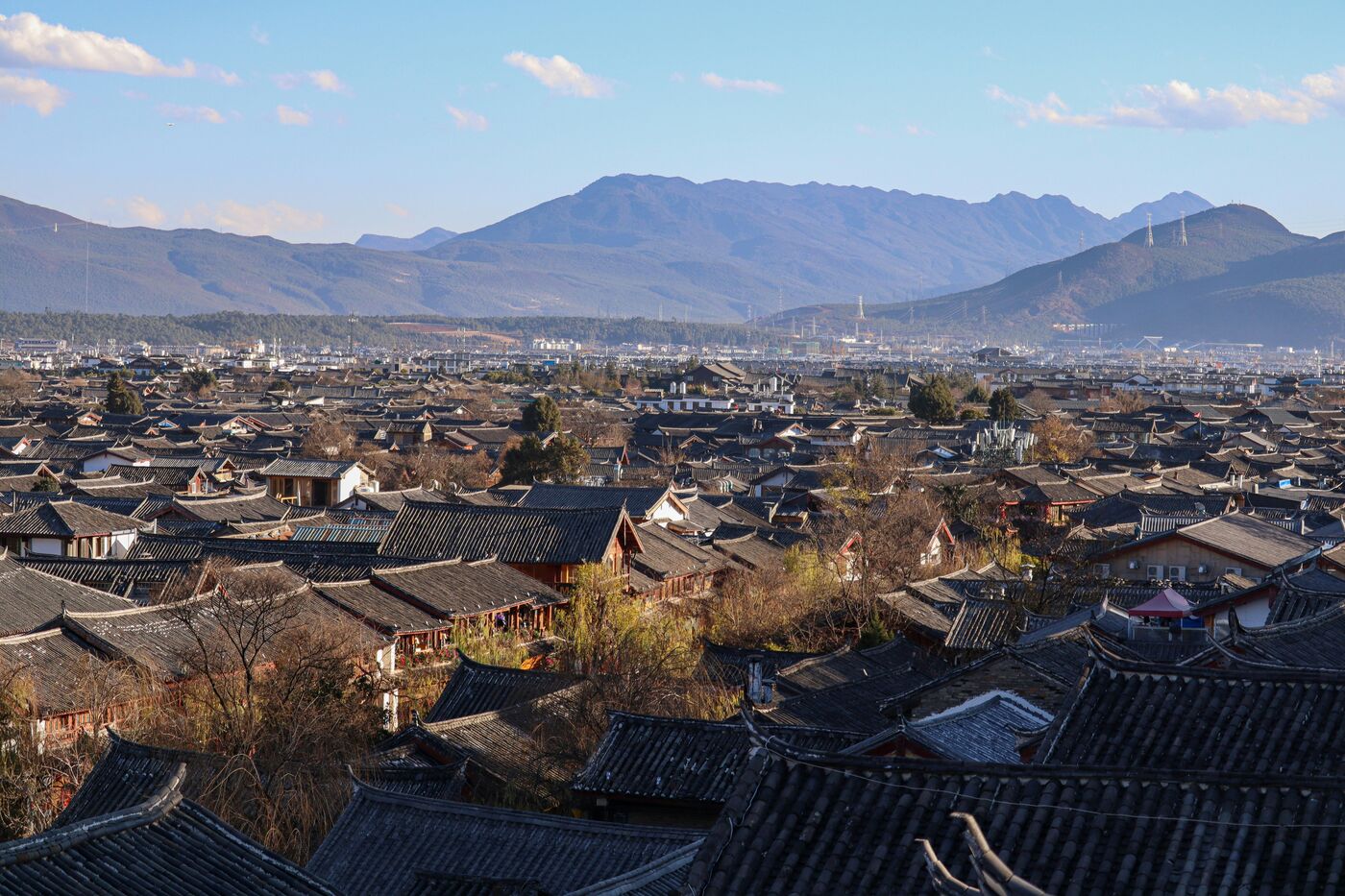
Lijiang Old Town (丽江古城) — formally Dayan Old Town (大研古城) — is the cultural headline sight of Yunnan and one of the best-preserved minority-ethnic old towns in China. It sits at 2,400 m on the eastern edge of the Tibetan plateau, in a high valley below Jade Dragon Snow Mountain (玉龙雪山). The UNESCO inscription came in December 1997 — barely a year after a magnitude-7.0 earthquake hit the area in February 1996, partly because the traditional timber-frame construction flexed and survived where modern concrete frames fractured.
The town has been continuously inhabited for over 800 years, originally as a waystation on the Ancient Tea Horse Road (茶马古道) that moved Yunnan tea north into Tibet for horses and wool. The Naxi people (纳西族) are the cultural majority — a matrilineal minority with their own pictographic Dongba script, an animist-Buddhist religion, and an orchestra that preserved Ming-dynasty court music long after it vanished elsewhere. Three things define the physical character:
- A canal grid of running water — channels fed by the Black Dragon Pool spring thread every quarter, keeping the lanes clean and giving the town a sound unlike any other Chinese old town.
- Pedestrian-only lanes — no vehicles enter the grid; hotels meet guests at the nearest car-accessible gate (大水车 Water Wheel Gate north, 古城口 east) and cart luggage in.
- Naxi-courtyard architecture — timber compounds (三坊一照壁, three wings and a spirit wall) with carved eaves and red lanterns, one of the most photographed townscapes in China.
The lane network is famously labyrinthine — there is no grid; paths follow the channels downhill. Getting mildly lost is the standard experience. Sifang Street (四方街) in the centre is the compass bearing: when lost, walk downhill and downstream and you return to it.
The maintenance fee & tickets
There is no ticket gate to walk into the Old Town — but the widely-repeated claim that the maintenance fee was “abolished in 2019” is out of date. Under rules effective August 2025, the Old Town Maintenance Fee (古城维护费 / 古维费) is ¥50 per person, valid 365 days (reduced from the old ¥80/one-week), and independent travellers are meant to pay it. In practice it is currently only verified at Black Dragon Pool and the Jade Dragon Snow Mountain ticket counter — walking, eating and sleeping in the lanes is not usually checked, because the town has no wall or gate. Pay it online via the 游云南 app or the 丽江古城旅游 WeChat account, let your guesthouse collect it, or scan to pay at a service booth. If you plan to do Jade Dragon Snow Mountain, pay it ahead so you aren’t held up at the ticket line. Individual attractions still charge their own tickets on top:
| Attraction | Fee | Time · notes |
|---|---|---|
| Old Town Maintenance Fee 古城维护费 | ¥50 · 365 days | No gate; verified at Black Dragon Pool & the snow mountain, not the lanes. Pay via 游云南 app / guesthouse. |
| Old Town walking 大研古城 | Free to walk | Pedestrian-only street grid; no ticket booth on the lanes. |
| Mu Family Mansion 木府 | ~¥40 | 2–3 h thorough · 45–60 min fast walk. Southwest quarter, ~10 min from Sifang Street. |
| Wangu Tower 万古楼 | ~¥15 | 30–60 min · the panorama over the rooftile carpet, best morning or late afternoon (on Lion Hill 狮子山). |
| Black Dragon Pool Park 黑龙潭公园 | 古维费 ¥50 checked | ~7am–9pm · the mountain-reflection photo. This is where the maintenance fee is actually verified. |
| Naxi Ancient Music Orchestra 纳西古乐 | ~¥120–160 | ~90-min performance, nightly. Book ahead in peak season. |
Pay attraction tickets at the venue’s own window or pre-book via Trip.com / a WeChat Mini-Program. Rates shift — the venue's own window and the booking platforms carry the current price.
What to see — the core stops
The sights split into the built fabric of the town (lanes, canals, lantern-lit evenings) and the named attractions that charge admission. Budget two days to cover both without rushing.
| Stop | Time · cost | Why it’s worth it |
|---|---|---|
| Sifang Street 四方街 | 30–45 min · free | The cobbled central square, a market since the Ming dynasty on the Tea Horse Road; five lanes radiate out. Reads as its original self before 8am, before the stalls set up. |
| Mu Family Mansion 木府 | 2–3 h · ~¥45 | The Naxi chieftains’ palace (Yuan–Qing, ~5 centuries of rule) — ~46,000 m², ~350 rooms, imperial-palace axis with Naxi/Tibetan detail. The Wanjuan Library (万卷楼) held the Dongba manuscript collection. |
| The canal grid 水系 | walk · free | Channels from Black Dragon Pool divide the town; the old Naxi practice was upper reach for drinking, middle for washing, lower for laundry. Walk the canals, not the main lanes, for the quiet residential quarters. |
| Wangu Tower 万古楼 | 20–30 min climb · ¥15–30 | Six-storey timber pavilion on the northwest hill — the canonical panorama of the rooftile carpet with Jade Dragon Snow Mountain behind on a clear day. |
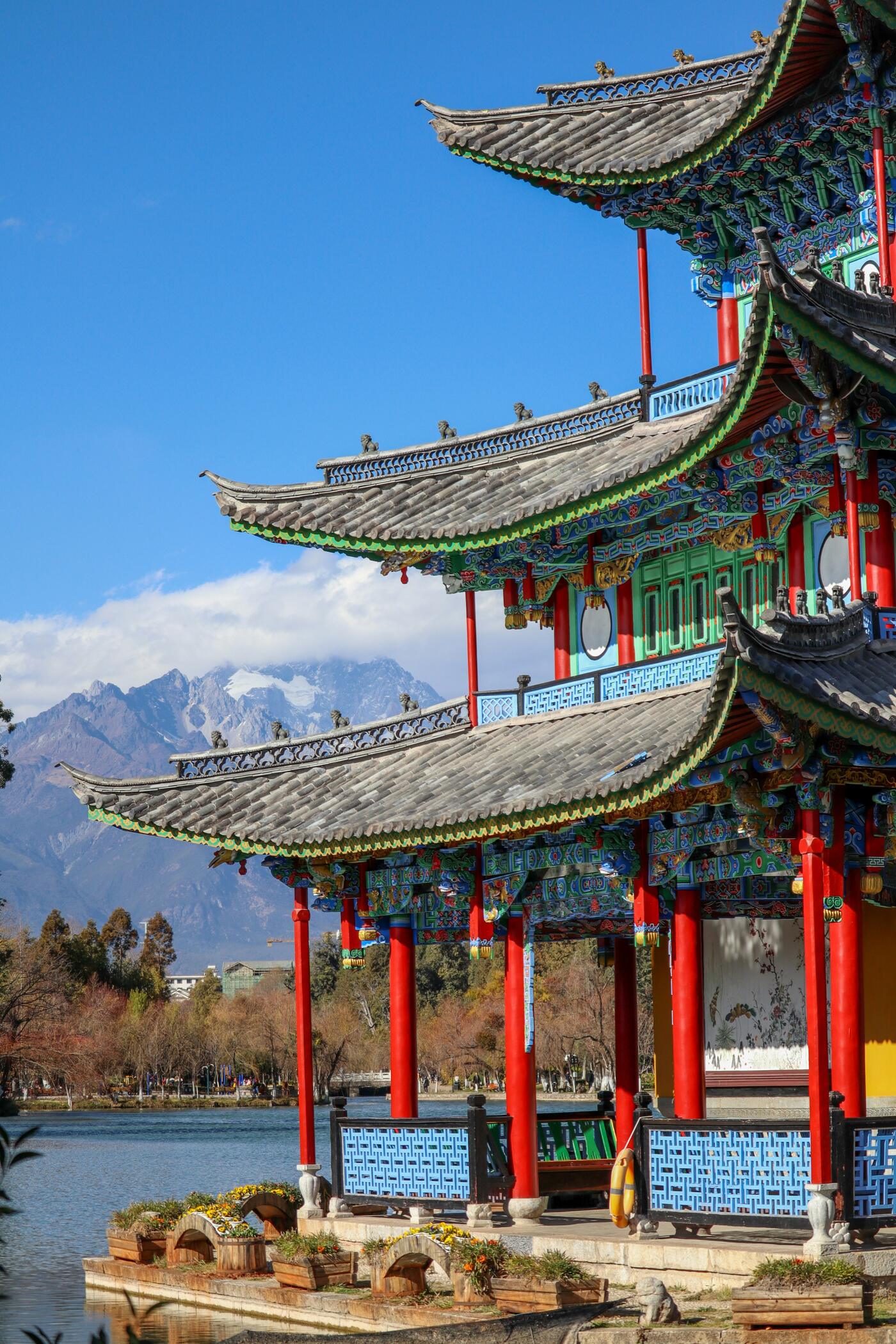
| Black Dragon Pool 黑龙潭公园 | 1 h · 古维费 ¥50 checked | Spring-fed park ~5 min north of the Old Town — the one place the ¥50 maintenance fee is actually verified at entry. The famous shot: the five-arch bridge and Deyue Pavilion with the snow mountain reflected — needs a clear, still morning (spring/autumn best). |
For a quieter, smaller version of the same Naxi-courtyard aesthetic, Shuhe Old Town (束河 古镇), 6 km north and inside the same UNESCO zone, has a spring-fed pool, willows and fewer tour groups — a DiDi from Dayan runs ~15 min (¥12–18). A half-day in Shuhe pairs easily with a morning in Dayan.
Day vs night — and the Naxi orchestra
The Old Town changes completely across the day, and the contrast is the whole point of staying inside the walls rather than day-tripping:
| Time | What it's like |
|---|---|
| 6–9am | Genuinely peaceful — residents, runners, canal-water sounds, minimal tourists. The Black Dragon Pool reflection is best now (still water, mountain visible on clear mornings). |
| 10am–8pm | Peak density. Sifang Street and the main lanes (2–3 m wide) can approach standstill on weekends, Golden Week and summer Fri–Sun. |
| Evening | Red lanterns over the lanes, channels catching the light — the canonical Lijiang image. Bar Street / Xinyi Street (新义街) runs loud until 2am+; lanes west and north of Sifang Street stay quiet. |
| After 9–10pm | Tour groups gone, lanterns still on — the lanes away from Bar Street are calm again. |
The lanterns and facade lights come on around 19:00 in summer and 18:00 in winter; the town is liveliest 20:00–22:00 (Sifang Street bonfire dancing, the bar street bands), while the best photo light is the “blue hour” ~18:30–19:30. Traveller-favourite viewpoints:
| Photo spot | What you get |
|---|---|
| Wangu Tower, Lion Hill 狮子山万古楼 | The panorama — a 360° overlook of the tiled-roof carpet and the sea of lanterns. The tower itself is ticketed (~¥15); bring a telephoto. |
| Wenchang Palace terrace 文昌宫观景台 | The locals’ free overlook — quieter, with the palace’s red wall framing the old-town lights. The alternative to paying for Wangu Tower. |
| The Big Water Wheel 大水车 | The north-gate landmark, lit at night — the classic silhouette-and-panorama shot; empty for clean frames at dawn. |
| Sifang Street 四方街 | The centre — Naxi bonfire circle dancing at night; a long exposure catches the moving crowd against the still buildings. |
| Xianwen Lane (umbrella street) 现文巷 | Hung with oil-paper umbrellas and red lanterns — the most photogenic lane for hanfu / ethnic-dress shots; go early for fewer people. |
An evening fixture is the Naxi Ancient Music Orchestra (纳西古乐队) — Ming court music and Taoist ritual pieces (Dongjing 洞经音乐, Baisha Xiyue 白沙细乐) that survived only in this valley, played on partly-archaic instruments by a famously elderly ensemble. Nightly at the Naxi Music Hall, ~90 min, ~¥120–160; the MC speaks Chinese and limited English, so a little background reading helps. Golden Week, Spring Festival and summer weekends sell out — book ahead.
Getting there & into the lanes
Lijiang has its own airport and a high-speed rail station; from either you transfer to a gate, then walk in (vehicles can’t enter). A new HSR link via the Dali–Lijiang line opened in 2023, putting Kunming ~3–3.5 h away by train.
| From | How to the Old Town gate | Approx. time · cost |
|---|---|---|
| Lijiang Sanyi Airport LJG 丽江三义机场 | Airport shuttle to the south gate, or DiDi/taxi | ~35–45 min · shuttle ¥20–25 / DiDi ~¥60–80 |
| Lijiang Railway Station 丽江站 | Bus 11 or DiDi to the gate area | ~30–40 min by bus · ~20 min by DiDi (¥25–35) |
| Kunming KMG / 昆明 | Direct flight to LJG (~55 min) or HSR via Dali | Flight + transfers ~3h · train ~3–3.5h |
| Dali Old Town 大理古城 | HSR to Lijiang Station (line opened 2023) or long-distance bus | ~1.5–2h by train · ~2.5h by bus |
| Shangri-La 香格里拉 | Long-distance bus (G214/G220) or DiDi | ~3.5–4.5h · mountain highway |
Tell your driver which gate — the main car-accessible drop-offs are 大水车 / Water Wheel Gate (north, the iconic waterwheels) and 古城口 / Old Town Entrance (east, the largest car parks), with the south gate (南门) the primary airport- and HSR-shuttle bay. Your hotel meets you at the nearest one and carts luggage in. The full Kunming-gateway picture is in our getting to Yunnan guide.
Best time, how long & altitude
Spring (Mar–May) and autumn (Sep–Nov) give the best mix of clear skies and comfortable temperatures — and the clearest chance at the snow-mountain reflection. At 2,400 m, summers are mild (highs rarely above 25°C) and winters cool (rarely below freezing by day), but nights are cold year-round. The June–August rains bring afternoon showers that clean the air and thin the crowds. Avoid October 1–7 National Day and Spring Festival, when the fixed lane-width makes passage uncomfortable; the late-July Naxi Torch Festival (火把节) is vivid but busy.
How long: a minimum of two nights in or near the Old Town. One day covers the main lanes, Mu Mansion and Black Dragon Pool — but the character lives in the early-morning and evening hours day-trippers miss. Two full days adds Shuhe and a Naxi orchestra night; three-plus suits using Lijiang as a base for Jade Dragon Snow Mountain or Tiger Leaping Gorge.
Altitude note (not medical advice): the Old Town sits at ~2,400 m. Travelers flown in directly from sea level may feel mild symptoms — headache, fatigue, poor sleep — usually for 24–48 hours; rest, hydration and skipping alcohol the first night help. Shangri-La (3,200 m) is a bigger step north. Arriving by train from Kunming (1,890 m) is a more gradual ascent. Anyone with relevant conditions should consult a doctor. See our best time to visit Yunnan guide.
The Lijiang scams to know
Lijiang is heavily touristed and has a well-known set of traps. None are dangerous, but a few can cost real money — travellers flag these most often:
| Trap | How to handle it |
|---|---|
| Bar-street “romance” touts (艳遇托) | Bar Street is pricey; don’t follow a friendly stranger (met on the street or online) to a “hidden” bar to drink — check the menu prices first and stick to places with clear pricing. |
| Cheap Lashi Lake horse tours (拉市海低价骑马团) | Refuse the ¥tens “Lashi Lake day trip / horse riding” pushed by touts, guesthouses or unlicensed drivers — you get forced add-ons (riding, insurance, boating, meals) and muddy trails. Book a proper stable or a pure-play small group instead. |
| Forced silver / tea shops | Ignore ethnic-dressed sellers pushing “heirloom snow silver,” “wild saffron” or maca — usually low-grade alloy or dyed goods at inflated prices. Buy souvenirs at Zhongyi Market (忠义市场) or a supermarket, silver at a proper jeweller. |
| Jade Dragon “shortcut” tours & fake Dongba fortune-telling | The snow mountain needs a real-name cable-car ticket and your ID — there is no “local takes you in free / skips the queue.” Street “Dongba fortune-telling” is a money hook; smile and walk on. |
| Cheap photo-shoots (低价旅拍) | “¥199 ethnic photoshoots” often hand over only a few images and charge extra for retouching and costumes — if you want one, get the number of edited photos, all raw files and “no hidden fees” in writing first. |
Practical for foreigners
- Entry & vehicles: free, lanes pedestrian-only 24/7; hotels meet you at the nearest gate with a luggage handcart.
- Payment: Alipay and WeChat Pay are universal; many shops and tea houses take foreign Visa/Mastercard, but carry some RMB cash for small stalls.
- English: significantly less common than in Shanghai or Beijing — foreign-visitor numbers are low. Bring Baidu Translate for menus and tickets; attraction signage is bilingual but thin on interpretation.
- Accessibility: cobbled, uneven lanes with stepped sections and stone bridges — hard going for wheelchairs and tiring with luggage.
- The ¥50 maintenance fee is real (古维费, from Aug 2025, valid 365 days): pay it via the 游云南 app or let your guesthouse handle it. It’s only checked at Black Dragon Pool and Jade Dragon Snow Mountain, not on the lanes — but pay ahead if you’re doing the snow mountain.
Book Lijiang tours & day tripsNASDAQ: TCOM
Trip.com lists guided Old Town & Mu Mansion walks, Naxi-orchestra tickets, and Jade Dragon Snow Mountain / Tiger Leaping Gorge day trips — booked in English on a foreign card.
How Lijiang fits a Yunnan trip
Lijiang is the natural northern base on the standard Kunming → Dali → Lijiang → Shangri-La loop:
- Jade Dragon Snow Mountain (玉龙雪山) — the glacier massif above town, 30–40 min by shuttle; cable cars to ~4,500 m (real altitude risk above 3,200 m). See our Jade Dragon Snow Mountain guide.
- Tiger Leaping Gorge (虎跳峡) — one of the world’s deepest gorges, ~60 km north; a short viewpoint hike or the classic two-day high trail. See our Tiger Leaping Gorge guide.
- The wider loop — Dali (~1.5h HSR), Kunming (~3–3.5h), and the road north to Shangri-La (~3.5–4.5h). Most Yunnan-loop visitors give Lijiang 2–3 nights before continuing.
When NOT to come: National Day and Spring Festival Golden Weeks (near-impassable lanes), summer weekend afternoons, or if you only have a few hours — Lijiang rewards overnight stays, not a flying day-trip. More options in our things to do in Yunnan guide.
Where to stay — inside the walls
You stay in Lijiang. The defining accommodation is the Naxi-courtyard guesthouse inside the Dayan walls — a timber compound with carved eaves and a planted, lantern-lit courtyard, and the reason most visitors stay inside rather than in the new city. International chains and the big Chinese mid-range chains do not operate inside the UNESCO Old Town; the new city is the practical fallback for an early flight or a lower rate. Pick a quieter east or north lane if Bar Street noise matters.
Where to book these: Lijiang’s courtyard guesthouses and the home-grown chains — 全季 (JI) and 亚朵 (Atour) — are listed most completely on Trip.com, with English checkout and foreign-card payment. It’s the main booking platform for mainland stays; Western sites like Booking and Agoda carry only a fraction of these properties.
Inside the Dayan Old Town walls (the immersive choice)
The defining stay is a Naxi-courtyard guesthouse (纳西院落客栈) inside the walls — a timber compound with carved eaves, a planted courtyard and red lanterns. International chains and the big Chinese mid-range chains do NOT operate inside the UNESCO Old Town, so the courtyard-inn category is what's available, and it's the right answer for the experience. Vehicles can't enter the lanes; your guesthouse meets you at the nearest gate and carries luggage in on a handcart. Pick the quieter east/north quarters if Bar Street noise matters.
- In the walls, walkable to Sifang Street, Mu Family Mansion and the canals — a search list of what is currently bookable inside Dayan.The signature stay: traditional timber courtyards adapted for guests. No chain operates inside the walls — check English service and exact lane location before booking, as vehicles cannot reach the door.
Lijiang new city — reliable chains for early flights or budget
If you have a pre-dawn LJG departure, or want a predictable mid-range chain at a lower price, base in the new city (outside both old towns). You lose the heritage environment but gain car access to the door and lower rates. Most foreign visitors do best in a home-grown mid-range chain like 全季 (JI) or 亚朵 (Atour). Two international five-stars sit just outside the Old Town if you want them.
- Lijiang new city — car access to the door; ~10–15 min by DiDi to the Old Town south gate.China's most popular home-grown mid-range chain — modern, spotless, easy English-app booking, a fraction of the five-star rate. Best for early-flight nights.
- Lijiang new city — car access to the door; ~10–15 min by DiDi to the Old Town.Design-led mid-range chain that foreign guests rate highly — comfortable, well-run, and far better value than the luxury resorts.
- On the southern edge near the Old Town — resort grounds with car access; short transfer to the lanes.
- LuxuryBanyan Tree Lijiang →Villa resort outside the Old Town toward Jade Dragon Snow Mountain — mountain views, full car access.
Frequently asked questions
When was Lijiang Old Town inscribed as a UNESCO World Heritage Site?
Lijiang Old Town (丽江古城) was inscribed on the UNESCO World Heritage List in December 1997 — the same year the committee met following the February 1996 earthquake. The inscription covered the Dayan Old Town (大研古城) as the core zone, recognising both its continuous urban fabric — an 800-plus-year cobbled-lane canal grid — and its cultural significance as the surviving heart of Naxi civilisation. The post-earthquake reconstruction work, which preserved the traditional timber-frame layout rather than rebuilding in concrete, was explicitly noted by UNESCO as a model for disaster-recovery heritage management. Shuhe Old Town (束河古镇) was added to the inscription later as an extension.
Is there an admission fee to enter Lijiang Old Town?
There is no ticket gate to walk into the Old Town, but Lijiang does charge an Old Town Maintenance Fee (古城维护费). The often-repeated claim that it was 'abolished in 2019' is out of date: under rules effective August 2025 it is ¥50 per person, valid 365 days (down from the old ¥80/one week), and independent travellers are meant to pay it. In practice it is currently only verified at Black Dragon Pool and the Jade Dragon Snow Mountain ticket counter — walking, eating and sleeping in the lanes is not usually checked, since the town has no wall or gate. Pay it online via the 游云南 app or the 丽江古城旅游 WeChat account, or let your guesthouse collect it. Individual attractions still charge their own tickets: Mu Family Mansion (木府) ~¥40; Wangu Tower (万古楼) ~¥15; the Naxi Ancient Music Orchestra ~¥120-160. Confirm current rates before visiting — pricing can change.
How was Lijiang Old Town affected by the 1996 earthquake?
A magnitude-7.0 earthquake struck the Lijiang area on 3 February 1996, killing over 300 people and leaving roughly 300,000 homeless. The paradox noted at the time — and later by UNESCO — was that the Old Town's traditional timber-frame courtyard construction (木框架结构) performed better during the quake than the surrounding modern concrete-frame buildings. The flexible timber joints absorbed and dissipated seismic energy rather than fracturing. The Mu Family Mansion was destroyed by fire caused by the earthquake; it was reconstructed in 1999, reopening in 2001. The canal system and the majority of the lane network survived largely intact. The city's post-earthquake reconstruction plan deliberately preserved the Old Town layout and materials — which was a primary factor in the 1997 UNESCO inscription.
What is the Naxi Ancient Music Orchestra?
The Naxi Ancient Music Orchestra (纳西古乐队) performs a repertoire of Ming-dynasty court music — pieces that fell out of use in mainstream Chinese music centuries ago but were preserved by Naxi musicians in the isolated Lijiang valley. The music draws on three traditions merged during the Tang, Song and Ming periods: Dongjing music (洞经音乐, Taoist ritual pieces), Huangjing music and Baisha Xiyue (白沙细乐, the oldest tradition, dating to the Kublai Khan period by one account). Performances are held nightly in the Naxi Music Hall inside the Old Town. The director for many decades, Xuan Ke (宣科), became internationally known in the 1990s for bringing the orchestra to Western audiences. Tickets run approximately ¥120-160; seating is tiered. The audience is mostly Chinese tourists; subtitles or explanatory materials are limited in English — the music itself carries the performance regardless.
What is the best time of year to visit Lijiang Old Town?
Spring (March to May) and autumn (September to November) offer the best combination of clear skies and comfortable temperatures. At 2,400 m, Lijiang has mild summers and cool winters — daytime highs rarely exceed 25°C in summer and rarely fall below freezing in winter, though nights are cold year-round. The rainy season runs June through August; afternoon showers are common, which keeps the air clean and the crowds somewhat thinner than the May Golden Week peak. The Naxi Torch Festival (火把节) in late July is a vivid local event but draws crowds. October 1-7 National Day Golden Week is extremely crowded — the Old Town's lane-width is fixed and visitor density can make passage uncomfortable. See the full Yunnan seasonality guide at the link below.
Should I stay inside the Old Town walls or base in Shuhe?
Staying inside the Dayan Old Town is the immersive choice — waking up in a Naxi-courtyard hotel before the day-trippers arrive (the lanes are largely quiet before 9am) and after they leave (crowds thin after 9pm) is the Old Town experience most repeat visitors recommend. The trade-off is noise and crowds during peak daytime hours (10am-9pm), and prices run higher inside the walls. Shuhe Old Town (束河古镇, 6 km north) is the quieter base: a smaller version of the same Naxi-courtyard aesthetic, with fewer tour groups and a more local-feeling atmosphere. DiDi between Shuhe and Dayan takes approximately 15 minutes (¥12-18, Amap-verified). Budget travelers and those who prefer morning day-trips into the Old Town rather than staying inside it often prefer Shuhe. A third, smallest option is Baisha (白沙古镇), the most original and closest to Jade Dragon Snow Mountain — for travellers who want the 'old town under the snow peak' shot and maximum quiet over nightlife. The new Lijiang city (outside all three old towns) has chain hotels at lower prices but lacks the heritage environment; it is the practical choice only for early flight departures.
How crowded does Lijiang Old Town get?
Lijiang Old Town is heavily visited by Chinese domestic tourists year-round — particularly by young travelers for its aesthetic and bar-street atmosphere. Sifang Street (四方街) and the main lanes around it can feel uncomfortably crowded during Golden Week, Spring Festival, and summer weekends (Friday-Sunday). The lanes narrow to 2-3 m in places; peak daytime hours (10am-8pm) on busy weekends can produce near-standstill pedestrian density. The Old Town has a known nightlife strip along Xinyi Street (新义街) and Bar Street (酒吧街) that runs late and loud; if you are not interested in the bar scene, a room on the quieter east or north side of the town is significantly less noisy. Early morning (6-9am) is genuinely peaceful — residents and a few runners, canal water sounds, minimal tourist presence. Foreign visitor numbers are significantly lower than domestic numbers; English is less common here than in Shanghai or Beijing.
What is the altitude in Lijiang Old Town and should I be concerned?
Lijiang Old Town sits at approximately 2,400 m above sea level. This is above the altitude at which some travelers — particularly those arriving directly by air from sea-level cities — experience mild altitude symptoms: headache, fatigue, disturbed sleep, reduced appetite. The symptoms are usually temporary (24-48 hours) and manageable with rest, hydration and avoiding alcohol on the first night. Shangri-La (3,200 m) is a more significant altitude step if you continue north. This guide does not provide medical advice; travelers with cardiovascular conditions or who have experienced altitude sickness before should consult a doctor before planning the Yunnan route. Arriving by train from Kunming (1,890 m) rather than by direct flight from a low-altitude city gives a more gradual ascent.
How long should I allow for Lijiang Old Town?
A minimum of two nights inside or near the Old Town is the practical recommendation — one day is enough to walk the main lanes, visit Mu Family Mansion and reach Black Dragon Pool, but the Old Town's character comes from the early-morning and evening hours that day-trippers miss. Two full days covers the Old Town thoroughly, including a half-day trip to Shuhe and an evening Naxi orchestra performance. Three or more days makes sense if you are using Lijiang as the base for day trips: Jade Dragon Snow Mountain (30-40 min by shuttle), the Tiger Leaping Gorge approach (a full-day drive or the start of a multi-day trek), or Lashi Sea wetland. Most visitors arriving on a Yunnan loop from Kunming and Dali plan 2-3 nights in Lijiang before continuing to Shangri-La.
Sources
Checked August 2026 · Written from our own first-hand travel in China.