Key takeaways
- A ~1.6 km canal lane in the old city’s northeast quarter — Suzhou’s best-preserved historic street, inside the UNESCO World Heritage buffer zone.
- It is free to walk; you only pay for the extras — a short canal boat ride, the Kunqu opera (昆曲) and Pingtan storytelling (评弹) parlours, and some courtyard sub-attractions.
- Whitewashed houses with grey-tile roofs, low stone bridges and willows over the water; the street already appears on the 1229 AD Pingjiang Tu stone map.
- Reach it on Metro Line 6 to 悬桥巷 station, or walk ~19 minutes south from the Humble Administrator’s Garden and Suzhou Museum (one stop north).
- Honest call: the more intact of Suzhou’s two canal streets — best at dawn or after dark; pair it with Shantang Street in the evening.
What Pingjiang Road is
Pingjiang Road (平江路) is the old city’s best-preserved historic street — a roughly 1.6 km lane running alongside a narrow canal in the northeast quarter, within the UNESCO World Heritage buffer zone. Whitewashed plaster houses with grey-tile roofs line the water, low stone bridges arch over the canal, and willows trail into it. The street looks much as it did eight centuries ago, and it already appears on the 1229 AD Pingjiang Tu (平江图) — a stone cadastral map of the city, one of the oldest detailed city maps in the world.
Today the lane is lived-in and busy. The ground floors hold teahouses, bookshops, craft studios and mid-range restaurants, along with Kunqu opera (昆曲) and Pingtan storytelling (评弹) parlours — Suzhou’s two great heritage performing arts, heard here in small rooms over tea. Short canal boat rides glide along the waterway. It is touristy by the afternoon, but the bones of an 800-year-old water town are real, and at the quiet hours it shows them.
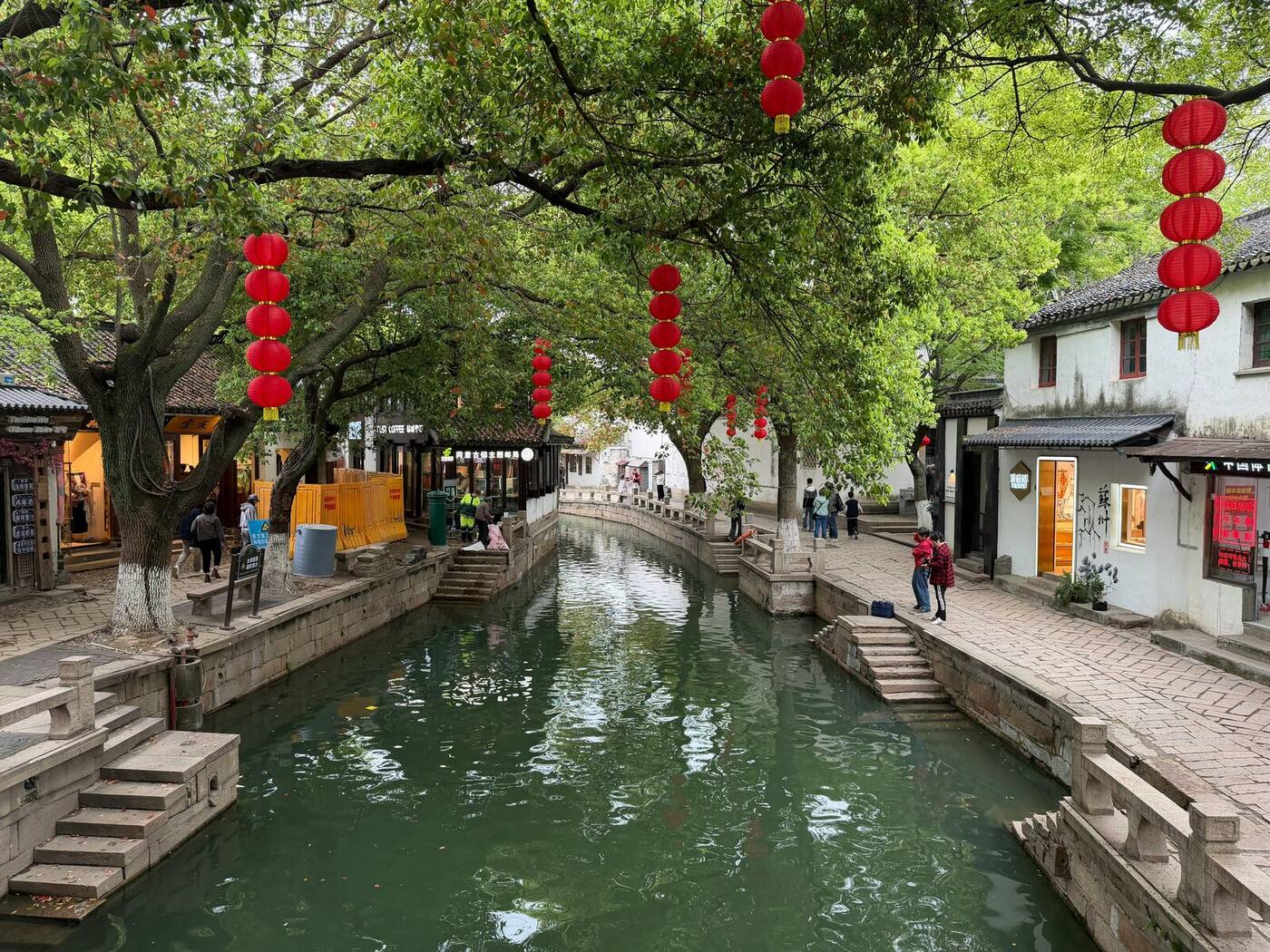
What it costs & what's there
The street itself is free. Pingjiang Road is an open public lane, so walking it, crossing the bridges and browsing the shops costs nothing — there is no admission gate. You pay only for the extras you choose: the canal boat ride, the opera and storytelling parlours, and some courtyard sub-attractions and teahouses.
| Item | What it is | Cost |
|---|---|---|
| Walking the street | The open canal lane, its bridges and shopfronts — no ticket, no gate. | Free |
| Canal boat ride | A ~40-minute hand-rowed loop along the waterway (daytime dock, ~8:30am–5:30pm) — the signature paid extra. | ~¥40/person (under 1.2 m free) |
| Opera / Pingtan parlour | A Kunqu opera or Pingtan storytelling session in a teahouse room, usually with tea. | Per-show / tea charge |
| Courtyard sights & teahouses | A handful of small historic courtyards along the lane charge a modest entry; tea is extra. | Varies |
Boat routes, show times and which courtyards are open shift through the year, and there are usually concessions for children and seniors — so treat the above as a guide and confirm the current rates on the day. Pay with Alipay or WeChat Pay: the boats, parlours and shops are cashless-first.
Getting there
Pingjiang Road sits in the northeast quarter of Suzhou’s old city. The simplest approach is Metro Line 6 to 悬桥巷 (Xuanqiaoxiang) station, a short walk from the lane. It also pairs neatly with the garden cluster — it is about a 19-minute walk south from the Humble Administrator’s Garden and Suzhou Museum, which sit one stop north on Line 6 at the 拙政园苏博 stop.
| From | How | Time |
|---|---|---|
| Anywhere on the metro | Metro Line 6 to 悬桥巷 (Xuanqiaoxiang) + short walk | + ~5 min walk |
| Humble Administrator’s Garden / Suzhou Museum | Walk south, or Line 6 one stop south from 拙政园苏博 | ~19 min on foot |
| Suzhou Railway Station | Metro (Line 2 + Line 6) or a short taxi / DiDi | ~15–25 min |
The lane runs roughly parallel to, and just east of, the old city moat, so it stitches into a day around the gardens and the museum. Our things-to-do guide sets out how the sights connect.
Best time & how long
| What | Detail |
|---|---|
| Time needed | About 2 hours to walk the lane, the bridges and the shops |
| Early morning (6–8am) | Quietest, best light on the water, and the boat dock is just opening |
| After ~4:30pm | Sunset then the lanterns and teahouses — the most atmosphere; an evening over dinner |
| Busy main lane? | Duck into the side lanes (大儒巷, 丁香巷, 中张家巷) for the quiet canal-and-bridge scene |
| Weekday afternoons | The busiest and most commercial hours — expect crowds |
Timing here is about atmosphere, not opening times — the lane is open and free at all hours. Dawn is the connoisseur’s slot for the quiet and the light; after dark is the popular one for the lanterns and a meal. The classic Suzhou plan is Pingjiang Road in the morning and Shantang Street, the other canal street, in the evening.
Practical & how it fits a Suzhou trip
- It’s free — go early: the lane has no gate, so the only way to “beat the queue” is to arrive at dawn, before the day-trippers.
- Eat canal-side: order songshu guiyu (squirrel-shaped mandarin fish), a Suzhou-style noodle breakfast and biluochun tea — food is part of the street, not a side trip.
- Pay with Alipay or WeChat Pay: the boats, parlours and shops are cashless-first, so set up a mobile wallet before you travel.
- Pair it with the gardens: it is one Line 6 stop south of the Humble Administrator’s Garden and Suzhou Museum, so do the gardens, then walk down.
Avoid the traps. Take a boat only from the official dock (a proper ticket booth, turnstile and uniformed boatman with a clearly-priced fare) — roadside touts offering a “cheaper” ride down a “shortcut” are unlicensed boats that add a song or guide fee mid-trip. The main-street “Suzhou special” restaurants (photogenic hotpot, crab-roe noodles) are overpriced and average — eat in the side lanes or at an old-brand shop (采芝斋, 万福兴, 黄天源 for pastries). The free Kunqu and Pingtan museums along the lane beat the paid “VR” halls, and a cheap Hanfu/qipao photoshoot usually turns into a retouching upsell — agree an all-in price in writing first.
The honest call: Pingjiang Road is the more historically intact of Suzhou’s two great canal streets — best at dawn or after dark. Do the classical gardens in the morning, walk down the lane, and save Suzhou’s food for a canal-side table.
Book a Suzhou old-town walk or canal experienceNASDAQ: TCOM
The street is free to walk — but Trip.com lists guided Suzhou old-town walks, canal boat rides and evening experiences that take in Pingjiang Road, booked in English on a foreign card.
Frequently asked questions
Is Pingjiang Road free to visit?
Yes — the street itself is free. Pingjiang Road is an open public lane, so walking it, crossing the bridges and browsing the shopfronts costs nothing. You only pay for the extras you choose: a short hand-rowed canal boat (about ¥40 per person for a ~40-minute loop, children under 1.2 m free, from a daytime dock roughly 8:30am–5:30pm), the Kunqu opera and Pingtan storytelling parlours, and a handful of courtyard sub-attractions and teahouses along the way. Prices change — treat those as planning figures.
Is Pingjiang Road worth visiting?
Yes — it is one of Suzhou's two great canal streets and the more historically intact of the pair. A roughly 1.6 km lane runs alongside a narrow canal, lined with whitewashed Ming- and Qing-style houses, low stone bridges and willows; the street already appears on the 1229 AD Pingjiang Tu stone map. It is touristy and busy by afternoon, but at dawn or after dark it is genuinely atmospheric, and it folds naturally into a day around the gardens and Suzhou Museum.
How long do you need at Pingjiang Road?
Plan about two hours to walk the lane end to end, cross a few bridges, browse the shops and pause for tea or a canal-side snack. Many visitors instead come in the evening and turn it into a longer outing over dinner and a slow waterside stroll. Add roughly half an hour if you take the short canal boat ride.
How do you get to Pingjiang Road in Suzhou?
It is in the northeast quarter of the old city. The easiest way is Metro Line 6 to 悬桥巷 (Xuanqiaoxiang) station, a short walk from the lane. Pingjiang Road is also about a 19-minute walk south from the Humble Administrator's Garden and Suzhou Museum, which sit one stop north on Line 6 at the 拙政园苏博 stop — so it pairs neatly with the garden cluster.
When is the best time to visit Pingjiang Road?
Early — around 6–8am for the quiet and the best light on the water — or from about 4:30pm into the evening for the lanterns and teahouses. Weekday afternoons are the busiest and most commercial; when the main lane is packed, duck into the side lanes (大儒巷, 丁香巷, 中张家巷) for the real 'small bridges and flowing water' Suzhou. The classic sequence is Pingjiang Road by day and Shantang Street, the other canal street, after dark — and if you only take one boat, Pingjiang's daytime ride has the more lived-in feel.
What is there to do on Pingjiang Road?
It is a lane to wander rather than a single attraction. The ground floors hold teahouses, bookshops, craft studios and mid-range restaurants, plus Kunqu opera (昆曲) and Pingtan storytelling (评弹) parlours where you can hear Suzhou's two heritage performing arts. Short canal boat rides run from the waterway. Food is part of the visit — order canal-side: songshu guiyu (squirrel-shaped mandarin fish), biluochun tea and a Suzhou-style noodle breakfast.
Sources
Checked August 2026 · Written from our own first-hand travel in China.