Key takeaways
- The older, livelier of Suzhou’s two canal streets — “Seven-Li Shantang” (七里山塘), laid out in 825 AD by the poet-official Bai Juyi running ~3.5 km from Changmen gate toward Tiger Hill.
- The street is free to walk; the paid extras are a canal boat ride (~¥30–¥50, more at night) and a few courtyard sub-sites / lantern-lit night zones.
- The restored eastern half near Changmen is the tourist stretch — guild halls, restored shophouses, snack stalls, stone-arched bridges and a boat dock.
- Most atmospheric after dark, when red lanterns light the waterfront and the canal-side restaurants fill up; plan ~2 hours or a whole evening.
- Honest call: more commercial than Pingjiang Road — best for an evening meal and nightlife; pair Pingjiang Road in the morning with Shantang in the evening.
What Shantang Street is
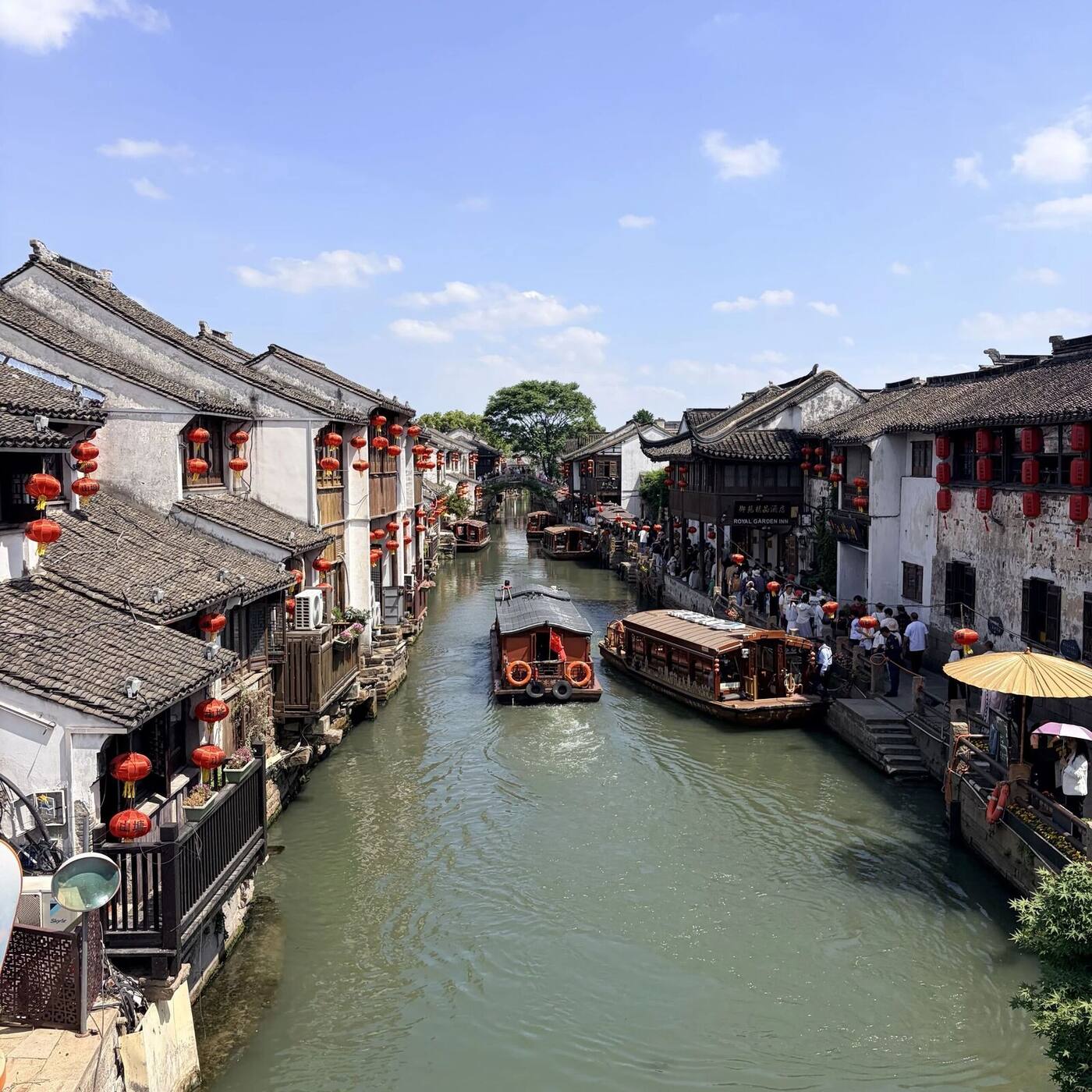
Shantang Street (山塘街) is the older and more commercial of Suzhou’s two great canal streets. It was built in 825 AD by the Tang-dynasty poet and official Bai Juyi (白居易) during his tenure as prefect of Suzhou, and runs northwest for about seven Chinese li (~3.5 km) from Changmen gate (阊门) toward Tiger Hill, with a canal alongside and stone-arched bridges at intervals — which is why it is also known as “Seven-Li Shantang” (七里山塘).
The restored eastern half near Changmen is the tourist section: old guild halls, restored shophouses, snack stalls, night-lit waterfront restaurants and a canal-boat service. It is livelier and more commercial than Pingjiang Road, and most atmospheric after dark, when the red lanterns are lit and reflect off the water. For most visitors the lively eastern end is the whole visit; the lane carries on toward Tiger Hill if you want to keep walking.
What it costs & what's there
The street is free to wander — there is no gate ticket to walk the lanes, see the lanterns or eat. What you pay for are the extras: the canal boat ride, and a few courtyard sub-sites and lantern-lit night zones that charge a small admission.
| Item | What it is | Cost |
|---|---|---|
| Street entry | Walking the restored lanes, the bridges, the shops and the lantern-lit waterfront. | Free |
| Canal boat | The signature ~40-minute ride along the canal between the shophouses; the lit-up night boats cost more than the daytime ones. | ~¥30–¥50 |
| Sub-sites | Some courtyard halls and a lantern-lit night zone charge a small separate admission. | Small extra |
Boat fares, the night-time premium and which sub-sites are open shift by season — so treat the above as planning figures and confirm the current rates on the day. Snack stalls and restaurants are cashless-first, so a mobile wallet covers most of an evening here.
How to see it & getting there
Aim for the restored eastern section near Changmen gate — the part with the shophouses, snack stalls and boat dock. The simplest route is Metro Line 2 to 山塘街 station, which comes out right in the tourist stretch.
| From | How | Time |
|---|---|---|
| Anywhere on the metro | Metro Line 2 to Shantang Street (山塘街) station, then a short walk in | Direct |
| Suzhou Railway Station | Taxi / DiDi to Changmen, or metro — the gate is just northwest of the old-town moat | ~10–15 min by taxi |
| Pingjiang Road | Taxi / DiDi or metro across the old town — pair the two canal streets in one day | ~15–20 min |
The canal runs from Changmen toward Tiger Hill, so the eastern end is where the restored street, the boat dock and the lantern scene concentrate. Our things-to-do guide sets out how the old-town sights stitch together.
Best time & how long
| What | Detail |
|---|---|
| Time needed | About 2 hours for the eastern stretch and a boat — or a whole evening with dinner |
| Arrive ~5–6pm | Catch the lanterns coming on around 6:30pm — the standout, when the red lanterns reflect off the canal |
| Best photo | Tonggui Bridge (通贵桥) or Xinmin Bridge (新民桥) for the “lantern corridor” over the water |
| After ~9pm | Tour groups thin out and the lanes feel more local — the calmest window |
| Daytime | Much like any restored old street and short on soul — the night is the point; pair Pingjiang Road by day |
Timing here is about atmosphere, not crowds. Evening is the sweet spot — arrive before dinner, eat on the waterfront, take the canal boat once the lanterns are lit, and stroll the lane at its most photogenic.
Practical & how it fits a Suzhou trip
- An evening, not a day-trip — fold Shantang into a Suzhou old-town day rather than building a whole outing around it.
- It’s commercial — expect snack stalls, souvenir shops and tour crowds; the appeal is the canal, the lanterns and the food, not quiet history.
- Pay with Alipay or WeChat Pay — stalls, restaurants and the boat are cashless-first; set up a mobile wallet before you travel.
- Pair it well — do the quieter, more intact Pingjiang Road by day and save Shantang for the evening.
Avoid the traps. Board the canal boat only at the official dock (ticket booth, turnstile, uniformed boatman, a clearly-priced fare) — roadside touts promising a “cheaper” ride are unlicensed boats that spring a song or guide fee mid-trip. The main-street “Suzhou special” restaurants are overpriced and photo-driven; eat in the side lanes or at an old-brand shop (采芝斋, 万福兴, 黄天源 for pastries). Souvenir “local specialties” and竹筒 milk-tea on the main drag are mass-produced, and a cheap Hanfu/qipao photoshoot usually becomes a retouching upsell — agree an all-in price in writing first.
The honest call: for the more historically intact street, go to Pingjiang Road; for an evening meal, canal nightlife and merchant-history atmosphere, Shantang wins. Pairing Pingjiang Road in the morning with Shantang Street after dark is the ideal Suzhou old-town sequence — and both fit easily into the wider Suzhou list.
Book a Suzhou old-town evening or canal tourNASDAQ: TCOM
The street is free, but Trip.com lists Suzhou evening, canal-boat and old-town walking tours that take in Shantang — booked in English on a foreign card, with the boat and guide sorted in advance.
Frequently asked questions
Is Shantang Street worth visiting?
Yes, especially in the evening. Shantang is the older and more commercial of Suzhou's two great canal streets — built in 825 AD by the Tang-dynasty poet Bai Juyi — and the restored eastern stretch near Changmen gate is at its best after dark, when red lanterns reflect off the water and the waterfront restaurants fill up. It is livelier and more touristy than Pingjiang Road, so the honest call is to use it for an evening meal, a canal-side stroll and a boat ride rather than as a quiet history walk.
How much does Shantang Street cost — is it free?
The street itself is free to walk; there is no gate ticket to wander the lanes, see the lanterns or eat. The paid extras are the canal boat ride (about ¥30–¥50, more at night) and a few courtyard sub-sites and lantern-lit night zones that charge a small admission. Treat these as planning figures: fares and which sub-sites are open change by season.
What is Shantang Street famous for?
It is 'Seven-Li Shantang' (七里山塘) — a canal street running about seven Chinese li (~3.5 km) northwest from Changmen gate toward Tiger Hill, laid out in 825 AD by the poet-official Bai Juyi during his time as prefect of Suzhou. The restored eastern half is known for old guild halls, restored shophouses, snack stalls, stone-arched bridges, a canal-boat service and, above all, the red-lantern night scene reflected in the water.
How do you get to Shantang Street?
The easiest way is Suzhou Metro Line 2 to Shantang Street (山塘街) station, which puts you in the restored eastern section near Changmen gate — the tourist stretch with the shophouses, snack stalls and boat dock. A taxi or DiDi from Suzhou Railway Station is short (the gate is just northwest of the old-town moat). It pairs naturally with Tiger Hill, which the canal runs toward.
How long do you need at Shantang Street?
About two hours to walk the restored eastern stretch, browse the shops and take a canal boat — or a whole evening if you stay for dinner and a lantern-lit stroll along the water. You can keep going for the full seven li toward Tiger Hill, but most visitors cover the lively eastern end and that is the part worth the time.
Shantang Street or Pingjiang Road — which is better?
They suit different moods, so the ideal is both. Pingjiang Road is the quieter, more historically intact canal street and is best in the morning. Shantang is livelier, more commercial and at its best after dark — better for an evening meal, canal nightlife and the merchant-history atmosphere. Pairing Pingjiang Road in the morning with Shantang Street in the evening is the classic Suzhou old-town day.
Sources
Checked August 2026 · Written from our own first-hand travel in China.