Airport guide · Shanghai
Shanghai Pudong Airport (PVG): transfers, terminals & the Maglev
Five ways into the city (¥3–260), two terminals plus a satellite concourse — and one check that matters before any of it: PVG is not SHA. Shanghai's two airports sit 40 km apart.
China for Travelers EditorialUpdated Fares & timings re-verified Jul 2026
- To the Bund
- ~70-90 min
- Metro Line 2, ¥3-9
- To Hongqiao HSR
- ~40 min
- Airport Link Line, ¥26
- Maglev
- ~8 min
- to Longyang Rd, ¥50/¥40
- Taxi / DiDi
- ¥140-260
- ~50-70 min by district
Confirm your airport first: PVG or SHA? You are on an international long-haul — most land at PVG, 30 km east. Domestic or regional (Japan/Korea/HK/Taiwan) flight — SHA sits 13 km west, inside the Hongqiao HSR hub. Between the two: Airport Link Line 市域机场线, ~40 min train time, ~1 h all-in, ¥26. Then check the gate letter — G/H gates board at the satellite concourse.
Flying into Shanghai — PVG or SHA?
Shanghai has two airports on opposite sides of the city, ~40 km apart — and arriving at the wrong one is the most common Shanghai aviation mistake:
PVG — Pudong International (this page): 30 km east. You are on an international long-haul — most land at PVG, 30 km east.
SHA — Hongqiao International: 13 km west, inside the same complex as Hongqiao Railway Station. Domestic or regional (Japan/Korea/HK/Taiwan) flight — SHA sits 13 km west, inside the Hongqiao HSR hub. See the SHA airport guide.
Between the two: Airport Link Line 市域机场线, ~40 min train time, ~1 h all-in (¥26) — the practical link for a PVG-in / SHA-out itinerary. Metro Line 2 also crosses the whole city between them, but far slower. Full side-by-side comparison (fares, scenarios, wrong-airport recovery): Pudong vs Hongqiao — which Shanghai airport?
Shanghai airport transfer: which option is right for you?
Five ways from PVG into the city — the honest pick depends on where you are going, what time you land, and how much luggage you carry:
MetroMetro Line 2
¥3-9 by distance (~¥8 downtown)
→ across Puxi — Lujiazui, the Bund (Nanjing East Rd), People’s Square, Jing’an · ~70-90 min to central Shanghai
Pick it if: cheapest, true one-seat ride
Runs ~06:00-22:30 (Fri/Sun/holidays last trains ~23:00) from the T1/T2 Level-2 link hall. Catch: some outbound trains short-turn at 广兰路 Guanglan Rd — a same-platform change — awkward with big luggage.
Airport railAirport Link Line 市域机场线
¥4-26 by distance (¥26 full run PVG↔Hongqiao)
→ Hongqiao Railway Station / SHA (west side of the city) · ~40 min train time; ~60 min door-to-door per Amap
Pick it if: onward HSR from Hongqiao, a PVG-in / SHA-out itinerary — or Disneyland (it stops at Shanghai International Resort en route)
Opened 2024-12-27, trains every ~15 min, ~05:45/06:00-22:15 (extended 2026-04). The airport station is 浦东1号2号航站楼 ("Pudong Terminal 1 & 2"), in the transport hub between the terminals — easiest access via the T2 Level-2 transfer hall. Stops at 中春路 Zhongchun Rd (Metro Line 9 transfer) and Shanghai International Resort (Disney).
MaglevShanghai Maglev
¥50 one-way (¥40 with same-day air ticket)
→ Longyang Road, eastern Pudong — NOT downtown · ~8 min + Metro Line 2/16/18 transfer onward
Pick it if: speed on the airport leg + the experience itself
Runs ~07:00-21:40 — it stops EARLIER than the Airport Link Line and the metro; capped at 300 km/h since 2021 (431 km/h record suspended).
BusAirport buses + 守航夜宵线 night line
¥15-34 daytime; night line ¥18-34
→ Hongqiao hub, Shanghai Railway Station, Shanghai South and more · varies by line
Pick it if: landing after the trains stop — the night line meets late arrivals
Daytime lines from T1 arrivals door 8 / T2 door 27. The 守航夜宵线 night service runs 23:00 until the last flight lands (~05:30). Some suburban day lines have been cut — check the 空港巴士 mini-program before relying on one.
Taxi / ride-hailTaxi / DiDi
¥140-260 by district (the Bund corridor ~¥180-260 per Amap routing)
→ central Shanghai · ~50-70 min depending on traffic
Pick it if: red-eye arrival, heavy luggage, or a family
Official taxi ranks: T1 Level-1 doors 4/8, T2 door 26 — never terminal touts. Ride-hailing pickup: T1 = P1 garage Level 1, T2 = P2 garage Level B2 (walk to the zone BEFORE ordering to avoid detour/parking disputes). DiDi takes foreign cards via its app or the Alipay mini-program.
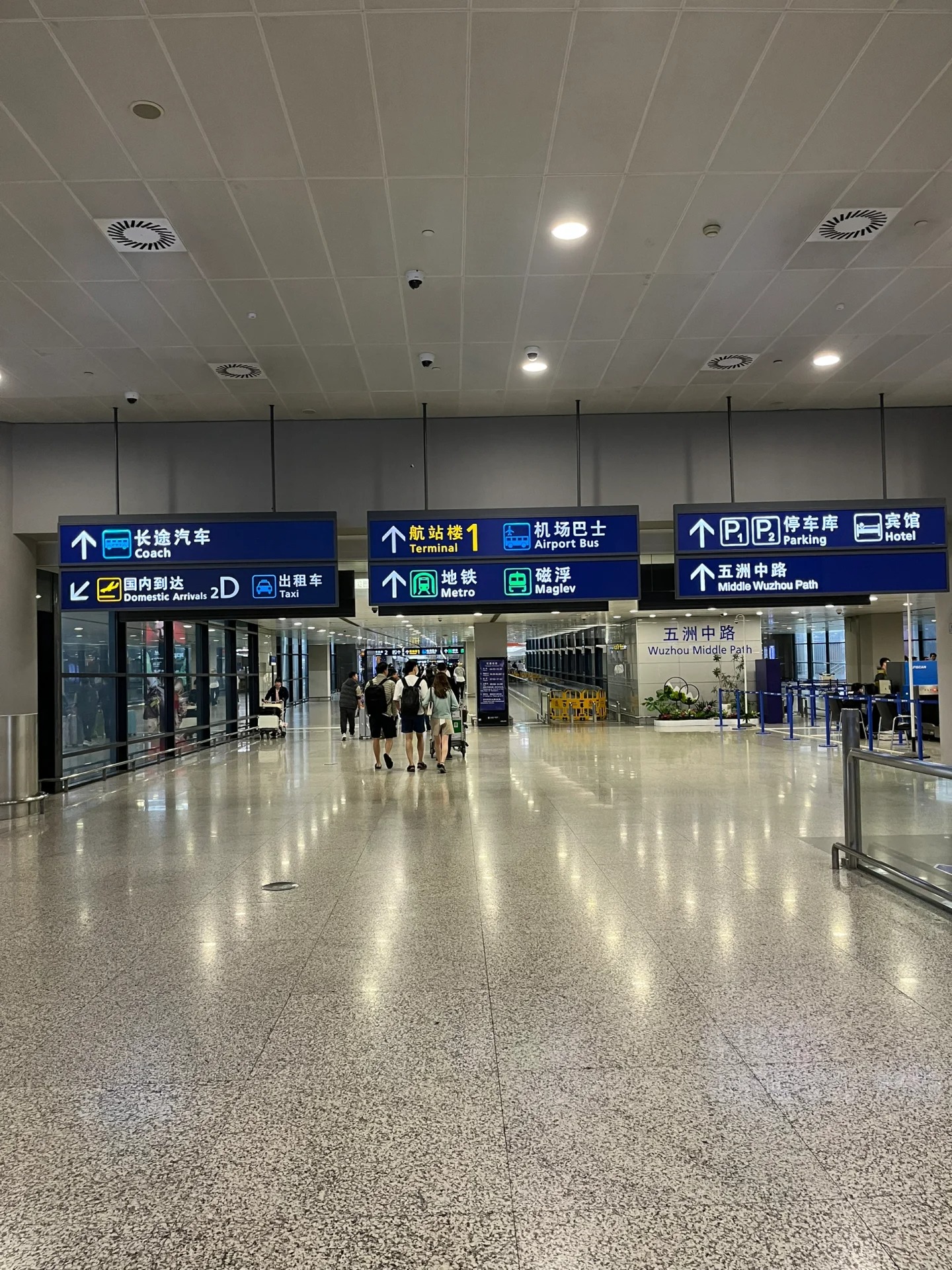
Landing late? After the last trains (Maglev ~21:40, Link Line ~22:15, metro ~22:30-23:00): the 守航夜宵线 night bus runs 23:00 until the final flight lands (~05:30, ¥18-34), plus the 24 h taxi rank and DiDi.
For a red-eye arrival, heavy luggage or a family, a pre-booked private transfer puts a driver at arrivals with your name — no rank queue, no Chinese phone number needed to hail:
Compare PVG private transfers on Trip.com
Door-to-door times (Amap routing)
| Destination | Public transit | Notes |
|---|---|---|
| The Bund / East Nanjing Road | ~70-90 min, Metro Line 2 direct (¥3-9) | Faster via Maglev to Longyang Road then Line 2 |
| Pudong / Lujiazui | ~65-85 min, Metro Line 2 direct | Lujiazui is on Line 2 — one-seat ride |
| Former French Concession | ~90-100 min | Line 2 across the city, then Line 1/10/11 |
| Hongqiao Railway Station / SHA | ~40 min train, ~60 min door-to-door — Airport Link Line, ¥26 | The fast cross-city link, opened Dec 2024 |
Transit durations from Amap (高德地图) routing 2026-05-22, door-to-door including walks; Airport Link Line train time per the official schedule (cross-checked 2026-07-24).
The two most common driving corridors, visualized from Amap routing:
 PVGThe Bund42.9 km
 PVGHongqiao HSR62 km
The last mile: what to show, where to stand, where to buy
You have picked a way into the city. These are the three things that still stop people at the kerb — the characters to show a driver, the exact spot a ride-hailing car may collect you from, and where the Maglev ticket is actually sold.
1. Show this to your driver
Taxi drivers here rarely read English, and “Pudong Airport” alone does not name a terminal — T1 and T2 have separate entrances a long way apart. Show the characters on your phone rather than trying to pronounce them:
| Show this | What it says |
|---|---|
| 上海浦东国际机场 | Shanghai Pudong International Airport |
| 上海浦东国际机场1号航站楼 | Pudong Airport Terminal 1 |
| 上海浦东国际机场2号航站楼 | Pudong Airport Terminal 2 |
| 上海市浦东新区迎宾大道6000号 | The airport street address (Pudong district) |
| 龙阳路地铁站 | Longyang Road metro station — where the Maglev ends |
Names and the street address cross-checked against Amap (高德地图) POI records, 2026-07-27.
2. Ride-hailing: where to stand, what to type
Ride-hailing cars cannot use the arrivals kerb at PVG — they collect from a marked zone inside a car park, and the app expects you to already be there. Walk to the zone before you order, or the driver ends up circling and you both pay for it. Follow the 网约车 signs:
Terminal 1 — P1 car park, Level 1
上海浦东国际机场1号航站楼P1网约车上客区
Terminal 2 — P2 car park, Level B2
上海浦东国际机场2号航站楼P2网约车上客区
Leaving Shanghai, type the terminal, not the airport. Setting “Pudong Airport” as your destination can drop you at the wrong building with bags and no time. Type or paste 上海浦东国际机场2号航站楼 (or 1号航站楼) — the same string the pickup zones above are registered under.
On the app itself: DiDi Rider, the international version, installs without a Chinese SIM, runs in English and takes most foreign Visa and Mastercard; the 滴滴出行 mini-program inside Alipay is the other reliable route. Full setup in our DiDi for foreigners guide.
3. Where to buy the Maglev ticket
The single most-asked PVG question we see, and the one no arrivals sign answers well. The Maglev has its own ticket office — 磁浮票务中心 (Maglev Ticketing Centre), on Level 2 of the airport — plus ticket windows and machines at the platform gates. The Maglev shares the transport hub between the terminals with the metro and the Airport Link Line; the station there is signed 浦东1号2号航站楼 (“Pudong Terminal 1 & 2”).
The ¥40 fare is counter-only. A single is ¥50, but ¥40 with a same-day air ticket — you have to show the boarding pass to a human, so the discount does not exist if you buy at a machine. Staff will not offer it unprompted.
At the far end, the Maglev does not deposit you downtown — it stops at Longyang Road, in eastern Pudong, where the Maglev hall sits beside metro Exit 2 and you change to Line 2, 7, 16 or 18 to finish the journey. That transfer is the part people forget when they compare 8 minutes against a taxi. The full ride, the speed cap and whether it is worth a special trip: the Shanghai Maglev guide.
Terminals: T1, T2 and the satellite concourse
T1 — runs paired with satellite S1 — mostly China Eastern / Shanghai Airlines / SkyTeam. Some international check-in (China Eastern, Shanghai Airlines, Air France …).
T2 — runs paired with satellite S2 — Air China / China Southern / Star Alliance / oneworld; MOST international + HK/Macau/Taiwan check-in.
Check-in, bag drop and security happen ONLY at T1/T2; the S1/S2 satellite is boarding-only, reached by a free underground APM (~3 min ride, every 2-5 min from 05:00-00:59, ~10 min overnight). Arrivals may land satellite-side and APM back for immigration and baggage.
Read your boarding pass: Gate letter tells you the building: G-gates (international) and H-gates (domestic) board at the satellite — allow ~30 min from clearing main-terminal security to a far satellite gate (APM + up to 10-15 min walking). Airlines are split across T1/T2 and the entrances are far apart — confirm the terminal on the airline app before setting out.
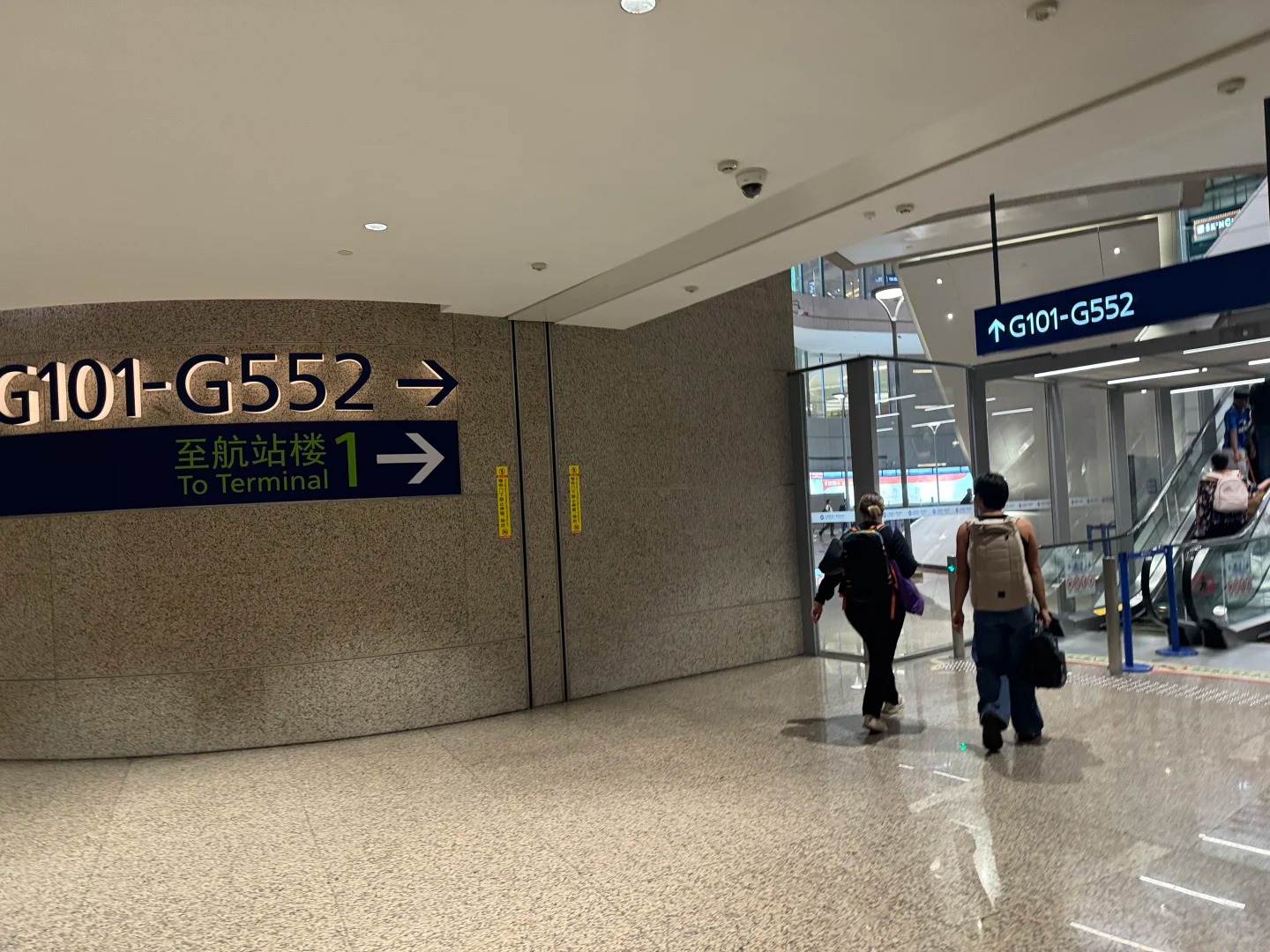
Fast facts
| Fact | Detail |
|---|---|
| Chinese name | 上海浦东国际机场 (Shànghǎi Pǔdōng Guójì Jīchǎng) |
| IATA | PVG |
| Location | ~30 km east of central Shanghai |
| Terminals | T1 + T2, satellite S1/S2 (boarding only, free ~3-min APM) |
| Gate-letter rule | G (intl) / H (domestic) gates board at the satellite |
| Metro | Line 2 from T1/T2 Level-2 link hall — ¥3-9, ~70-90 min downtown |
| Airport Link Line | ¥4-26 · ~40 min train to Hongqiao HSR / SHA · every ~15 min |
| Maglev | ¥50 (¥40 same-day air ticket) · ~8 min to Longyang Rd · ends ~21:40 |
| Taxi / DiDi | ¥140-260 by district · ~50-70 min · night: 24 h |
| Night bus | 守航夜宵线 23:00-last flight (~05:30), ¥18-34 |
| VAT refund | T2 international departures: customs stamp at the end of zone F (behind check-in island K, BEFORE security); payout window past security next to gate D83. T1 has its own counters on the departures level. |
| SIM counters | T2 arrivals — incl. a 24 h-ish international one-stop desk left of the intl exit |
Onward by high-speed rail — via Hongqiao
Flying into PVG then taking an HSR onward? Head to Hongqiao Railway Station — Airport Link Line 市域机场线 direct (from the T2 transfer hall), ~40 min train time (~60 min door-to-door). The onward-HSR move: Suzhou / Hangzhou / Nanjing trains leave from Hongqiao without crossing the city. ¥26, every ~15 min.
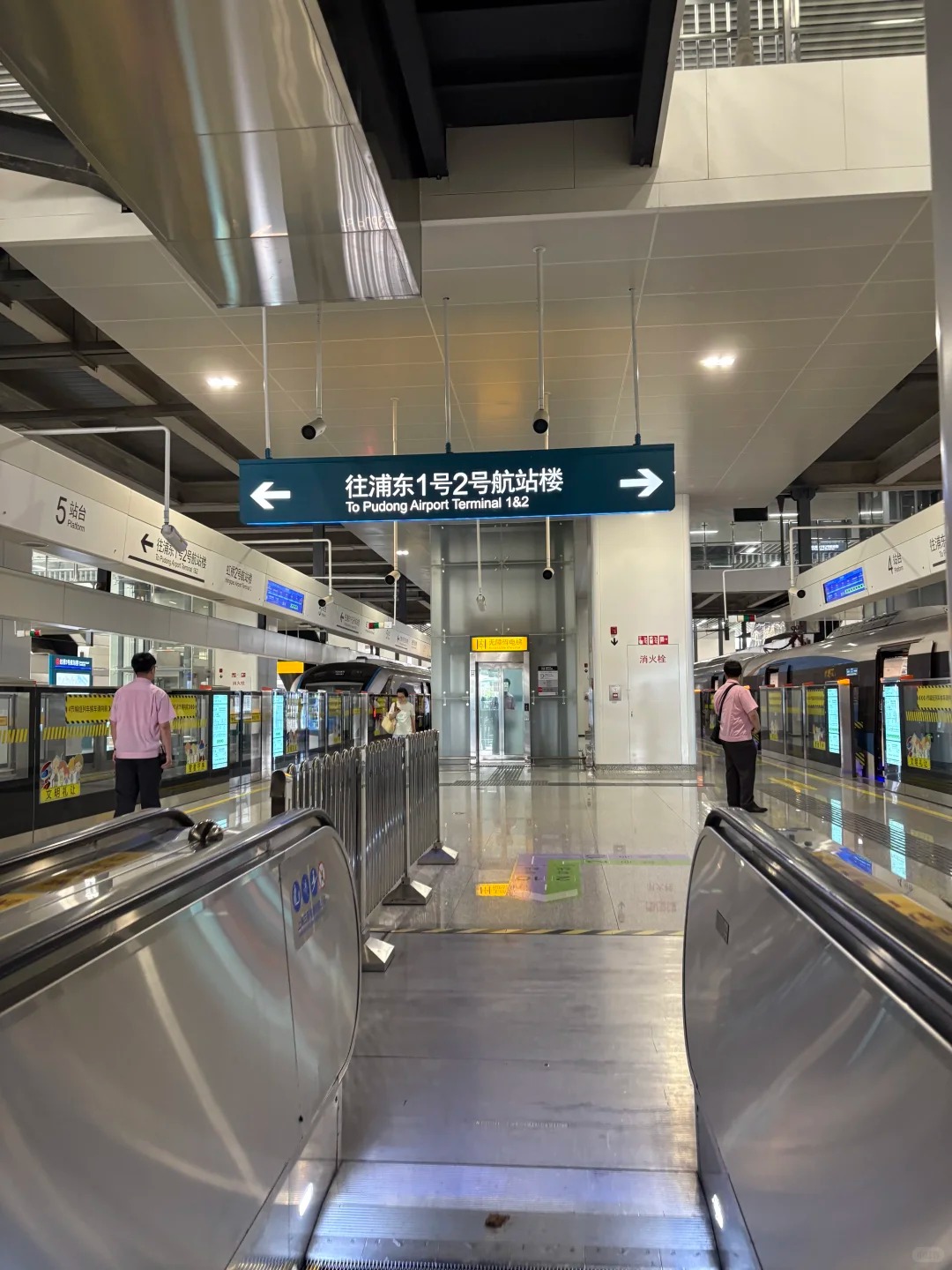
Book the train leg with the station name verified — 12306 vs Trip.com explains the two booking paths for foreign travellers.
In-terminal services
SIM card counters at arrivals
- China Mobile (airport flagship store) — T2 arrivals public area, ~300 m right of the international-arrivals exit (~3 min walk) (Amap POI
B0L0HCR3S7). - International one-stop service counter (multi-carrier) — T2, immediately LEFT of the international-arrivals exit — sells + activates tourist SIMs, staffed even for late-night arrivals.
- China Unicom — T2 F2 international / HK-Macau-Taiwan arrivals, exit 2A (Amap POI
B0LRKSIFM3). - China Telecom — T2 arrivals, unit 1D-J1 — 5G storefront with an international-roaming/SIM desk (国际漫游换卡).
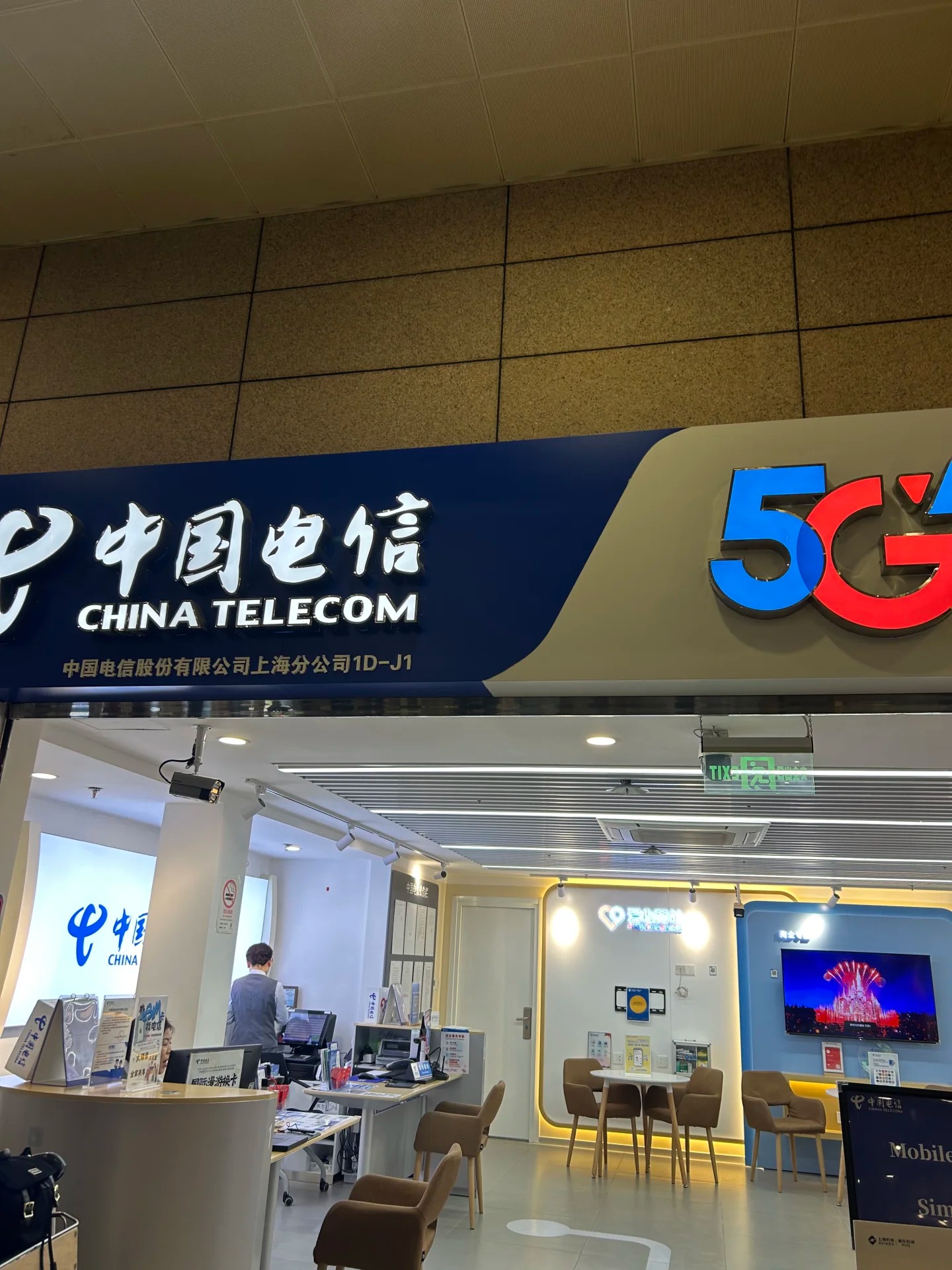
Passport real-name registration is legally required at every counter — allow 10-20 minutes. Pre-purchased travel eSIM activates on landing with no counter queue — data only, no +86 number for Chinese-app SMS. See our connectivity guide for the roaming + eSIM combo most travellers settle on.
VAT refund (离境退税) — two stops, in order
Where: T2 international departures: customs stamp at the end of zone F (behind check-in island K, BEFORE security); payout window past security next to gate D83. T1 has its own counters on the departures level.
Two stops in order: customs verification stamp (海关验核章) with goods + receipts + forms BEFORE bag drop, then the refund window airside pays cash or to card (~2% handling fee deducted).
Queue reality: First-hand Dec 2024: ~20 min in a moderate queue at T2. Counters back up before the 18:00-22:00 Europe/North-America departure banks — arrive 60-90 min earlier than usual to refund.
Eligibility basics: ≥¥200 per store per day at a participating “Tax Free”-marked retailer (threshold lowered from ¥500 in April 2025), goods leaving China unused, refund form issued by the shop. See the China departure checklist for the full step-by-step.
Customs (海关申报) on arrival and departure
PVG runs the standard PRC two-channel system: green channel (无申报通道) for nothing to declare — most short-trip visitors walk straight through — and the red channel (申报通道) if you carry:
- Cash ≥ US$5,000-equivalent in foreign currency, or ≥ ¥20,000 RMB.
- Goods above the personal-use allowance — roughly ¥5,000 inbound (foreigners), ¥8,000 outbound.
- Cultural relics / antiques / artwork on the way out — anything that could be classed as a Chinese antique needs the official export approval and red wax seal (火漆封识); market buys without the seal are commonly confiscated.
- Professional equipment — declaring high-value cameras/drones on arrival gets a stamped form proving the item entered with you, so departure customs can't treat it as a China purchase.
- Restricted plants/animals/seeds or large quantities of prescription medication.
On arrival the channels sit immediately after baggage claim at both T1 and T2, bilingual signage; on departure the declaration counter shares the landside zone with the VAT customs stamp — sequence is customs first, refund payout second.
Sleeping at or near PVG
In the terminal: Sleep pods sit AIRSIDE in T2 international departures near gates D64/D67 (¥35/30 min · ¥65/h · ¥299 overnight) — usable for transit/pre-flight only, not fresh arrivals. Landside: a full airport hotel.
Airport-belt hotels: Dense Pudong airport-belt hotel cluster (free or paid shuttles). Book one airport night for an early flight only — the belt is 30 km from the sights; keep the rest of the stay central.
For where to base the rest of your Shanghai stay, see Where to stay in Shanghai — including which areas suit a PVG arrival.
Frequently asked questions
How do I get from Pudong Airport (PVG) to central Shanghai?
Five ways. (1) Metro Line 2 direct — ¥3-9, but slow: roughly 70-90 minutes to the Bund, with some trains short-turning at Guanglan Road. (2) The Maglev — 300 km/h to Longyang Road in ~8 min, ¥50 (¥40 with a same-day air ticket), then a metro transfer onward. (3) The Airport Link Line (市域机场线, opened Dec 2024) to Hongqiao Railway Station / SHA in ~40 min, ¥26. (4) Airport buses ¥15-34, including the 守航夜宵线 night line that runs 23:00 until the last flight lands. (5) Taxi or DiDi, ¥140-260 by district, ~50-70 min. For a first arrival with luggage heading to a Puxi hotel, the honest pick is usually a taxi/DiDi or the Maglev-plus-Metro combination over the slow one-seat Line 2 ride.
What is the Airport Link Line and how much does it cost?
The 市域机场线 Airport Link Line is a 160 km/h suburban railway opened on 2024-12-27 that links PVG directly to Hongqiao Railway Station and SHA airport — about 40 minutes of train time (roughly an hour door-to-door), ¥4-26 by distance (¥26 for the full PVG–Hongqiao run), trains every ~15 minutes from about 05:45/06:00 to 22:15. The PVG station sits under the T2 transfer hall — there is no T1 stop, so from T1 walk across to T2 first. It is the connection to use for an onward high-speed train or a PVG-in / SHA-out itinerary.
Is the Shanghai Maglev worth taking from PVG?
If you are flying into or out of PVG anyway, yes — it is a genuine experience and at ¥40-50 it costs about the same as the metro plus a coffee. Two catches. First, the Maglev only runs between PVG and Longyang Road station in eastern Pudong — it does not go downtown; you transfer to Metro Line 2/16/18 to finish the trip. Second, it stops early: last trains around 21:40, earlier than the Airport Link Line and the metro. It has run at a capped 300 km/h since 2021 (the 431 km/h record runs are suspended).
What is the difference between PVG and SHA airports?
They are two different airports on opposite sides of Shanghai, about 40 km apart. PVG (Pudong) is 30 km east of the city and handles most international long-haul flights. SHA (Hongqiao) is 13 km west, handles mainly domestic plus regional routes (Japan, Korea, Hong Kong, Taipei), and shares one complex with Hongqiao Railway Station. Confirm which airport your flight uses when you book — arriving at the wrong one is the single most common Shanghai aviation mistake, and the cross-airport transfer (Airport Link Line, ~40 min train time, ¥26) still eats about an hour all-in.
How many terminals does PVG have, and will I board from the satellite?
PVG has Terminal 1 and Terminal 2, plus a large Satellite Terminal (S1 paired with T1, S2 with T2, opened 2019). Check-in, bag drop and security happen only at T1/T2; the satellite is boarding-only. Your gate letter tells you: G-gates (international) and H-gates (domestic) board at the satellite — after security, ride the free underground APM (~3 min, every 2-5 min) and allow about 30 minutes from clearing security to a far satellite gate. T1 runs mostly China Eastern / Shanghai Airlines / SkyTeam; T2 runs Air China / China Southern / Star Alliance / oneworld and most international check-in.
Where is the VAT refund at Pudong Airport and how does it work?
Two stops, in order. First the customs verification stamp (海关验核章) BEFORE security — at T2 the counter sits at the end of check-in zone F (behind island K); bring the goods, receipts and the refund forms the shops issued. Then, after security and immigration, the refund window next to gate D83 pays out in cash or to card, with roughly a 2% handling fee deducted. A refund processed at PVG in December 2024 (¥598 on one eligible receipt) took about 20 minutes in a moderate queue; the counters back up before the 18:00-22:00 Europe/North-America departure banks, so arrive 60-90 minutes earlier than your normal check-in time.
I land late at night — how do I get into the city?
After the trains stop (Maglev ~21:40, Airport Link Line ~22:15, Metro Line 2 ~22:30-23:00) you still have two options: the 守航夜宵线 airport night bus, which runs from 23:00 until the last flight lands (~05:30) for ¥18-34 from T1 door 8 / T2 door 27, and the 24-hour taxi rank and DiDi ride-hailing (¥140-260 to central Shanghai). Never accept an unmarked 'taxi' tout inside the terminal — use the official rank or the marked ride-hailing pickup levels.
Does DiDi work at PVG for foreigners, and where is the pickup?
Yes. DiDi works for foreign visitors through the DiDi app or the DiDi mini-program inside Alipay, with a foreign card linked. At PVG, walk to the designated ride-hailing zone BEFORE ordering: T1 pickup is in the P1 parking garage Level 1, T2 in the P2 garage Level B2 — following the 网约车 signs — which avoids driver-detour and parking-fee disputes. A DiDi to central Shanghai runs roughly ¥140-260 depending on district and traffic.
Related Shanghai guides
- Shanghai city guide — things to do, getting in and out, where to stay, practical essentials.
- The Shanghai Maglev — the decision guide and full schedule for the 300 km/h run.
- Hongqiao Airport (SHA) guide — Shanghai's other airport, mostly domestic + regional.
- Hongqiao Railway Station — the HSR hub the Airport Link Line delivers you to.
- Where to stay in Shanghai — areas compared, including which suit a PVG arrival.
- 240-hour visa-free transit — PVG is an eligible transit port for most Western nationalities.
- Staying connected in China — eSIM + roaming set up before you land.
Browse Shanghai hotels on Trip.com
Sources
Checked May 2026 · Written from our own first-hand travel in China.