Airport guide · Shanghai
Shanghai Hongqiao Airport (SHA): the HSR-hub airport
Thirteen km from downtown, metro under both terminals — and one complex shared with Hongqiao Railway Station: land, walk ~10-15 min, board a bullet train. Just confirm first that your flight is SHA, not PVG, 40 km east.
China for Travelers EditorialUpdated Fares & timings re-verified Jul 2026
- To People's Square
- ~35-40 min
- Metro Line 2/10, ¥4-5
- Walk to Hongqiao HSR
- ~10-15 min
- Level 3 route from T2
- To the Bund
- ~50-55 min
- by metro
- Taxi / DiDi
- ¥50-75
- ~25-40 min off-peak
Confirm your airport first: SHA or PVG? Domestic or regional flight (Japan/Korea/HK/Taipei), or a multi-city HSR trip — SHA shares one complex with Hongqiao Railway Station. International long-haul — those concentrate at PVG, 30 km east of the city. Between the two: Airport Link Line 市域机场线, ~40 min train time, ~1 h all-in, ¥26.
Flying into Shanghai — SHA or PVG?
Shanghai has two airports on opposite sides of the city, ~40 km apart:
SHA — Hongqiao International (this page): 13 km west, inside the Hongqiao hub. Domestic or regional flight (Japan/Korea/HK/Taipei), or a multi-city HSR trip — SHA shares one complex with Hongqiao Railway Station.
PVG — Pudong International: 30 km east. International long-haul — those concentrate at PVG, 30 km east of the city. See the PVG airport guide.
Between the two: Airport Link Line 市域机场线, ~40 min train time, ~1 h all-in (¥26) — it also stops at Shanghai International Resort (Disneyland) en route. Full side-by-side comparison: Pudong vs Hongqiao — which Shanghai airport?
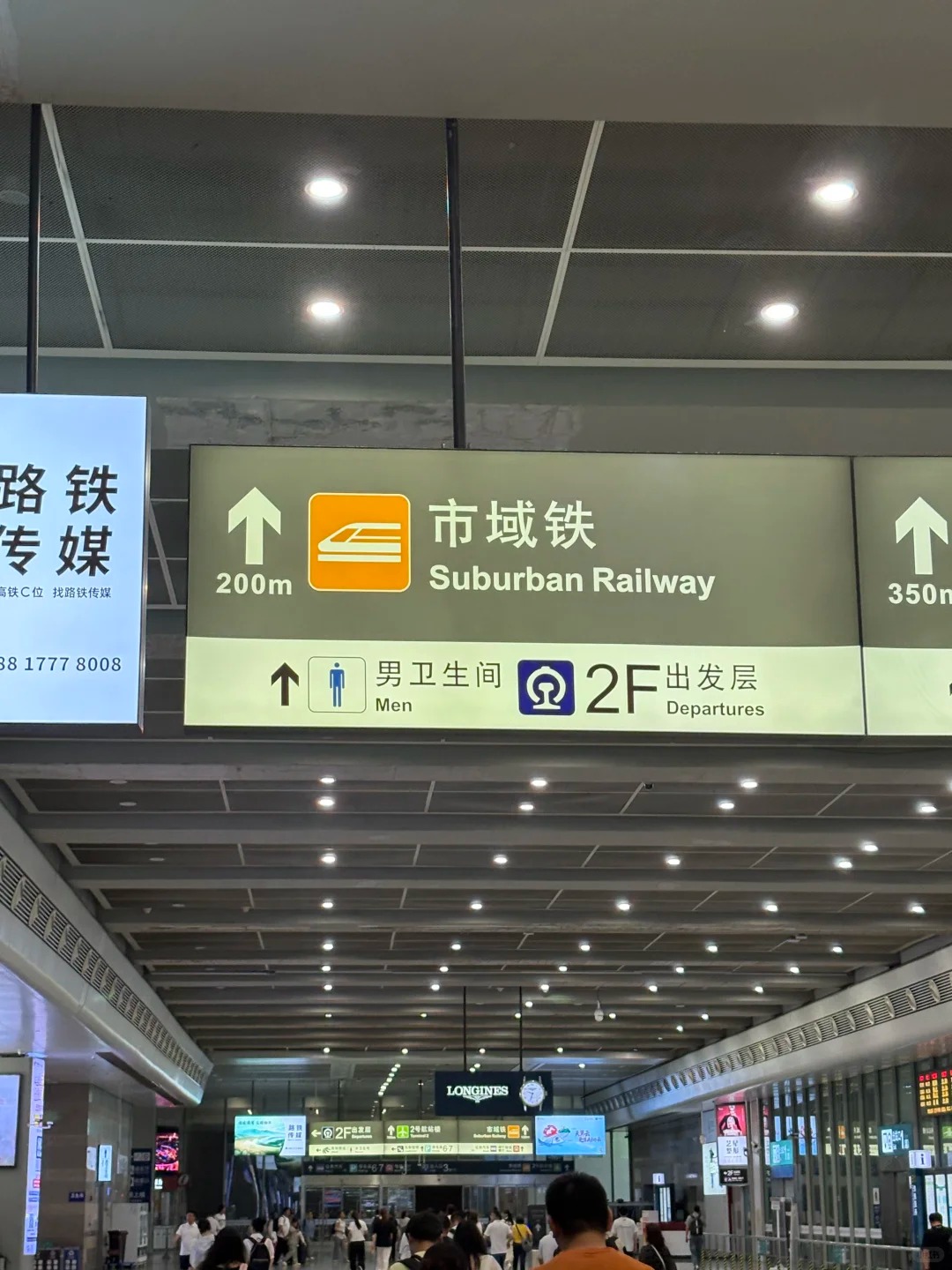
Walk to Hongqiao Railway Station — SHA's superpower
Same complex — walk from T2 through the hub (or one metro stop). ~10-15 min on foot without checked bags; ~20-30 min including bag claim. The routing that trips people up, solved:
From T2 arrivals, take the lift or escalator UP to Level 3 — do not go down to B1, which is the longer way around.
Follow the 火车站 / Railway Station signs straight through the hub — lifts and travelators run the whole way, so checked bags roll fine.
At the station entrance, pass the ID/security check into the departures hall — Suzhou 23 min, Hangzhou 45 min, Nanjing and Beijing all leave from here.
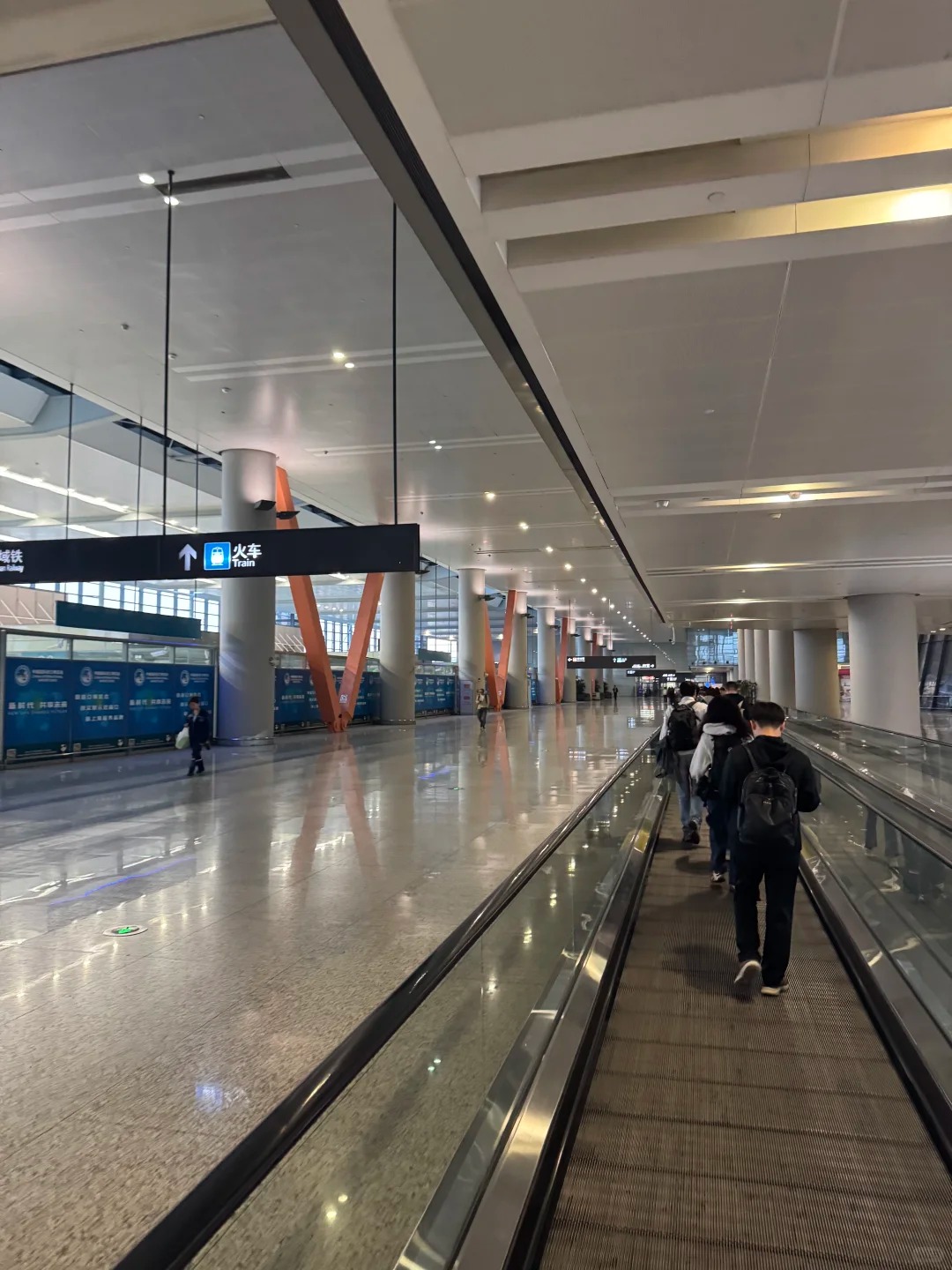
Full station detail (which trains, luggage storage, hotels over the station) in the Hongqiao Railway Station guide; booking paths in 12306 vs Trip.com.
Hongqiao airport transfer: into central Shanghai
SHA is the easy airport — the metro runs right under the terminals and the fares are trivial:
MetroMetro Line 2 / Line 10
¥4-5
→ People’s Square and central Puxi · ~35-40 min to People’s Square; ~50-55 min to the Bund
Pick it if: almost always — the metro runs right under the terminals
MetroMetro Line 10
¥4-5
→ Former French Concession direct · ~33 min
Pick it if: staying in the FFC — Line 10 runs straight there
Taxi / ride-hailTaxi / DiDi
¥50-75
→ central Shanghai · ~25-40 min off-peak
Pick it if: luggage-heavy or late arrival
DiDi works with a foreign card via its app or the Alipay mini-program; use the marked ride-hailing pickup points rather than accepting curbside offers. For a late arrival the taxi rank runs around the clock — at ¥50-75 to the centre, SHA rarely justifies a pre-booked transfer.
Terminals: T1 and T2
T1 — older terminal — the international/regional one: Japan (Tokyo, Osaka), Korea (Seoul), HK, Taipei; resumed 2023-03, low volume vs PVG. Metro Line 10, 虹桥1号航站楼 station.
T2 — large domestic terminal — inside the Hongqiao Transportation Hub. Metro Line 2 + Line 10, 虹桥2号航站楼 station.
Read your boarding pass: T1 and T2 are different buildings with different metro stops — check the boarding pass before choosing a station.
Fast facts
| Fact | Detail |
|---|---|
| Chinese name | 上海虹桥国际机场 (Shànghǎi Hóngqiáo Guójì Jīchǎng) |
| IATA | SHA |
| Location | ~13 km west of central Shanghai |
| Terminals | T1 (regional international) + T2 (domestic, inside the Hongqiao hub) |
| Metro | Line 2 + Line 10 at T2; Line 10 at T1 — separate stations per terminal |
| To People's Square | ~35-40 min, ¥4-5 (Line 2 or 10) |
| To the Bund | ~50-55 min by metro |
| Walk to Hongqiao HSR | ~10-15 min from T2 (Level 3 route — not B1) |
| Taxi / DiDi | ¥50-75 · ~25-40 min off-peak |
| To PVG | Airport Link Line ~40 min train time, ¥26 |
| VAT refund | T1 international departures area (eligible international departures only) |
In-terminal services
VAT refund (离境退税)
Where: T1 international departures area (eligible international departures only).
Long-haul VAT-refund volume concentrates at PVG — that is where most international departures leave from. See the China departure checklist for the full two-step sequence (customs stamp first, payout second).
SIM / eSIM
Carrier counters operate at the arrival levels (passport real-name registration required). The lower-friction path is a travel eSIM activated before you land — data only, no +86 number; see our connectivity guide for the roaming + eSIM combo, or grab a Trip.com travel eSIM →
Staying at the Hongqiao hub
Reliable Hongqiao business hotels (Hilton / Marriott / Renaissance / Cordis at Hongqiao Tiandi) — worth it only for an early SHA flight or morning HSR; it is a transport-business district 50-55 min from the Bund, dining is mall-based.
For a normal Shanghai visit, base yourself centrally instead — see Where to stay in Shanghai.
Frequently asked questions
How do I get from Hongqiao Airport (SHA) to central Shanghai?
SHA sits 13 km west of the city and is genuinely well-connected. Metro Line 2 and Line 10 both serve Terminal 2; Line 10 also serves Terminal 1. Line 2 or 10 to People's Square takes about 35-40 minutes for ¥4-5; the Bund is roughly 50-55 minutes; Line 10 runs straight to the Former French Concession in ~33 minutes. A taxi or DiDi runs ¥50-75 and ~25-40 minutes off-peak. Because SHA is close to the city and the metro runs right under the terminals, there is rarely a reason to do anything more complicated than tap into the metro.
Is Hongqiao Airport connected to Hongqiao Railway Station?
Yes — and that is SHA's defining feature. SHA Terminal 2, Hongqiao Railway Station and the long-distance bus station form one integrated Hongqiao Transportation Hub. From T2 arrivals the walk is about 10-15 minutes without checked bags (20-30 minutes including bag claim): take the lift or escalator UP to Level 3 and follow the 火车站 (Railway Station) signs — do not go down to B1, which is the longer way. Lifts and travelators run the whole way, so big luggage is fine. That makes SHA the natural airport for a multi-city China trip: land, walk to the platforms, and board a high-speed train to Suzhou (23 min), Hangzhou (45 min), Nanjing or Beijing without crossing the city.
What is the difference between SHA and PVG?
SHA (Hongqiao) is 13 km west of central Shanghai, handles mostly domestic flights plus regional international routes (Japan, Korea, Hong Kong, Taipei — resumed since March 2023, at low volume), and shares one complex with Hongqiao Railway Station. PVG (Pudong) is 30 km east and handles most international long-haul flights. The two airports are about 40 km apart on opposite sides of the city — always confirm which one your ticket uses. Between them, the Airport Link Line runs ~40 minutes of train time (¥26), about an hour all-in.
How many terminals does Hongqiao Airport have, and which metro serves them?
SHA has Terminal 1 and Terminal 2. Terminal 2 is the large domestic terminal inside the Hongqiao hub complex — Metro Line 2 and Line 10 both serve it (虹桥2号航站楼 station). Terminal 1 is older and handles the regional international routes — it has its own Metro Line 10 stop (虹桥1号航站楼 station). They are different buildings with different metro stations, so check your boarding pass for the terminal before choosing a stop.
Can I get from SHA to PVG directly?
Yes. The Airport Link Line (市域机场线, opened December 2024) connects the Hongqiao hub directly to PVG in about 40 minutes of train time — roughly an hour all-in — for ¥26, with trains every ~15 minutes. It also stops at Shanghai International Resort (Disneyland) en route. Metro Line 2 crosses the whole city between the two airports as well, but is much slower. For a PVG-in / SHA-out itinerary (or the reverse), the Airport Link Line is the connection to use.
Is there a VAT refund counter at Hongqiao Airport?
SHA handles mostly domestic flights, but Terminal 1 serves international and regional routes and has departure tax-refund (离境退税) facilities for eligible international departures. If you are leaving China on an international flight from SHA T1, process the refund in the international departures area after check-in. For most travelers the bigger VAT-refund operation is at PVG — that is where the long-haul international flights concentrate.
Should I stay near Hongqiao Airport?
Only if your trip is genuinely HSR- or airport-heavy. The Hongqiao area has reliable business hotels (Hilton, Marriott, Renaissance, Cordis at Hongqiao Tiandi) and removes a cross-city transfer before an early SHA flight or a morning high-speed train. But Hongqiao is a transport-and-business district, not a place to spend evenings — it is 50-55 minutes by metro from the Bund and the dining is mall-based. For a normal Shanghai visit, stay central and accept one metro ride on departure day.
Related Shanghai guides
- Hongqiao Railway Station — the HSR half of the hub: trains, luggage storage, hotels over the station.
- Pudong Airport (PVG) guide — Shanghai's international long-haul airport, 40 km east.
- Shanghai city guide — things to do, getting around, where to stay.
- Where to stay in Shanghai — areas compared (Hongqiao is for transit nights only).
- Shanghai to Suzhou by train — the 23-minute hop that starts at Hongqiao.
- 240-hour visa-free transit — eligibility rules for transiting via Shanghai.
- Staying connected in China — eSIM + roaming set up before you land.
Browse Shanghai hotels on Trip.com
Sources
Checked August 2026 · Written from our own first-hand travel in China.