What it is — and which building you mean
The Shaanxi History Museum holds the material of the plain that Xi’an sits on, which for roughly a thousand years was the material of the Chinese state: Zhou ritual bronzes, Qin and Han figures, and a Tang collection that is the reason most people come. It opened in 1991 in a purpose-built Tang-style block on Xiaozhai East Road, and the basic display has been free to enter for years.
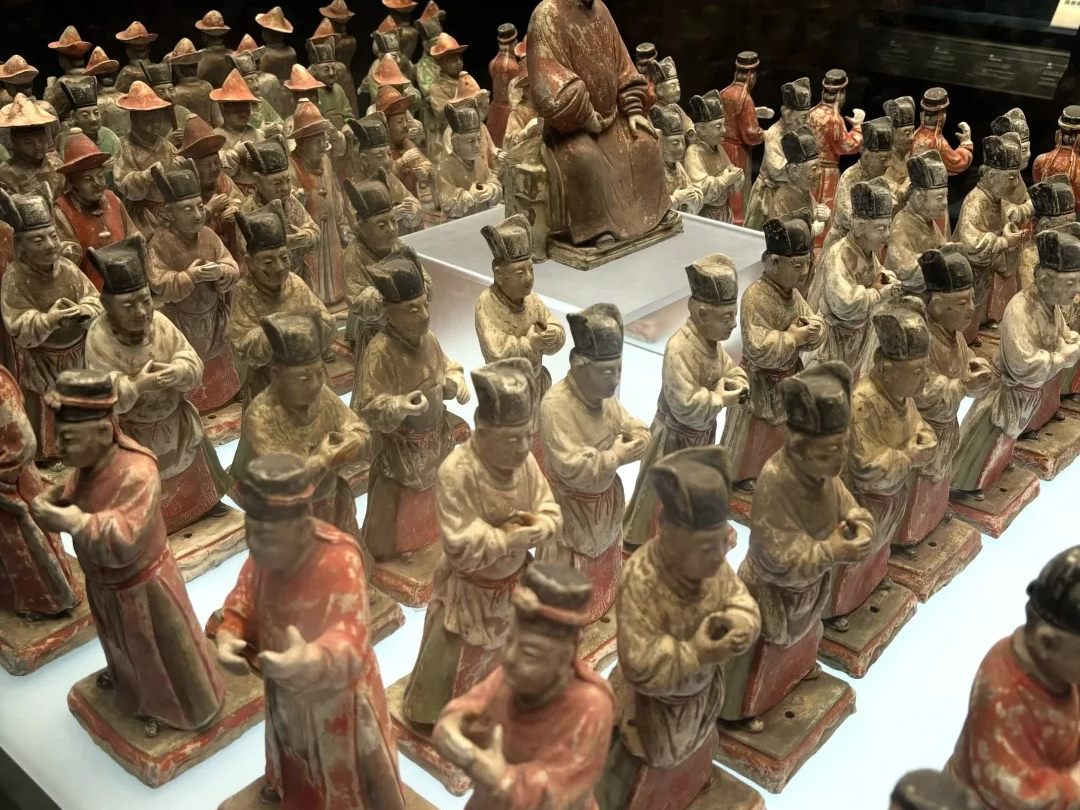
What the free ticket opens is one continuous exhibition, not a building full of separate shows: 陕西古代文明 (Ancient Civilization of Shaanxi) runs through three halls in seven chronological parts — prehistory, Zhou, Qin, Han, the Wei-Jin centuries, Sui-Tang, then everything after the Tang down to 1911 — with over 3,000 objects on show. Walk it in order. The Tang rooms are the ones people photograph, and they land harder when you reach them having just walked the Han.
⚠️ There are two museums under this name, and booking the wrong one is a real mistake rather than a pedantic distinction. The main museum is the one described above. The Qin-Han Museum (秦汉馆) is a separate building in the Xixian New Area, well outside the city, with its own collection, its own opening hours and its own ticket allocation released half an hour later. It is also, as the last section explains, the one you can simply walk into.
Booking — the part that goes wrong
Admission is free and capped, and the cap is the whole story. The allocation for a given day is released 5 days in advance at 17:00 — book on the 1st for the 6th — through the museum’s own WeChat official account. On ordinary weekdays out of season this is survivable. On a holiday or through the summer, travellers describe it going in seconds.
The step most people miss is that you can pre-fill. The system lets you enter the date, the time slot and every visitor’s document details before the release hour, and store them. At 17:00 you go to the stored-information screen and press the booking button — you are not typing passport numbers against a clock. ⚠️ Pre-filling is explicitly not a booking; only the confirmed order counts, and an unused pre-fill is cleared at midnight.
⭐ And do not close the page at 17:00 if you missed. Cancelled and unpaid orders drop back into the pool, and travellers consistently report the window 17:02–17:10 as when they succeeded — refreshing for ten minutes is a better strategy than refreshing for ten seconds.
| Rule | What it is |
|---|---|
| Window | 5 days ahead, released 17:00 for the main museum and 17:30 for the Qin-Han Museum |
| Per document | One order a day; four in any 30 days, cancellations counted |
| Per WeChat account | Three successful orders in any 7 days |
| Group size | Up to five visitors on one stored pre-fill |
| No-show | ⛔ Blocked from booking for 180 days. Cancel before entry closes instead |
⛔ The museum states plainly that it has authorised no third party — no platform, no travel agency, no individual — to sell its tickets or to attach paid services to them. A listing that offers “guaranteed entry” for a fee is not selling you something the museum recognises.
Three ways in when the slot is gone
This is the part most English-language guides skip, and the three routes are genuinely different — one is certain and expensive, one is cheap and probable, one is free and involves a different building.
| Route | Cost | How sure is it? |
|---|---|---|
| Buy the mural gallery online | ¥270 students ¥130 | Confirmed by the museum. Its own page states that buying a paid-exhibition ticket online removes the need to book the free basic-display slot separately |
| The Tang hoard gallery | ¥30 | Reported, not confirmed. A Xi’an guide site and travellers both say this ticket carries basic-display entry and is almost always available; the museum’s own wording names only the mural gallery. Likely, not guaranteed |
| Go to the Qin-Han Museum | Free | No booking at all for non-mainland visitors on a passport. A different building an hour out — the Qin-Han Museum |
If you want one sentence: ¥30 is the answer most of the time, and ¥270 is the answer when the day is not negotiable.
The two paid galleries — and why they cost nine times apart
Both are commonly rendered in English as “the Tang treasures”, which is how visitors end up at the wrong desk. They are not the same thing.
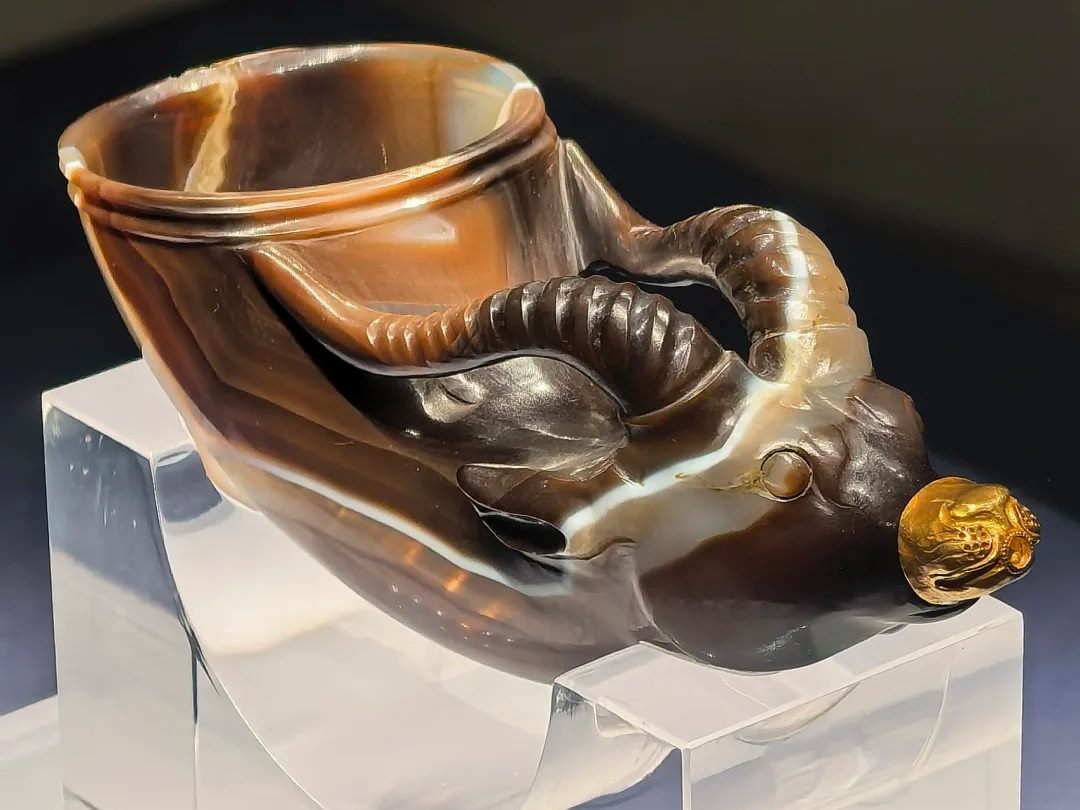
The Tang hoard gallery (¥30) — 大唐遗宝, the Hejiacun hoard, dug out of a Xi’an suburb in 1970. Gold and silver vessels, jade, and the agate rhyton carved as a beast’s head that is the museum’s single most reproduced object. Bought on site. This is the one that gives the most per yuan, and it is where a first visit should spend its money.
The Tang mural gallery (¥270, students ¥130) — 唐代壁画珍品馆. Original wall paintings lifted from Tang royal tombs, including Prince Yide’s, Prince Zhanghuai’s and Princess Yongtai’s, several of them on China’s list of artefacts forbidden to leave the country. Climate controlled, low-lit and quiet even in August. Visitors report that photography is not allowed inside — we have not found the museum saying so in writing, and there are traveller photographs of these murals in circulation, so treat it as the house rule to expect rather than a certainty. It is a specialist’s gallery at a specialist’s price: worth it if Tang painting is why you came to Xi’an, hard to justify if it is not.
Getting there
The museum publishes its own walking distances, which is unusually helpful: it is 778 m from Xiaozhai (小寨) on metro lines 2 and 3, and 834 m from Dayanta (大雁塔) on lines 3 and 4. Either is a ten-minute walk. From the Bell Tower, line 2 south to Xiaozhai is the simple version.
⭐ It sits between the Bell Tower and the Giant Wild Goose Pagoda, so the two make an obvious afternoon together — but only in one order. Do the museum first. The pagoda needs no booking and this does, so your slot fixes the shape of the day and the pagoda absorbs whatever is left of it.
Entry is by the original of the document you booked with, checked against your face at the gate, plus the confirmed order. If you have left the document at the hotel there is an exchange window at the museum’s South Gate. Over-65s need no booking at all; children under six or under 1.4 m need none either, and one adult may bring two of them in.
The Qin-Han Museum — the one you can walk into
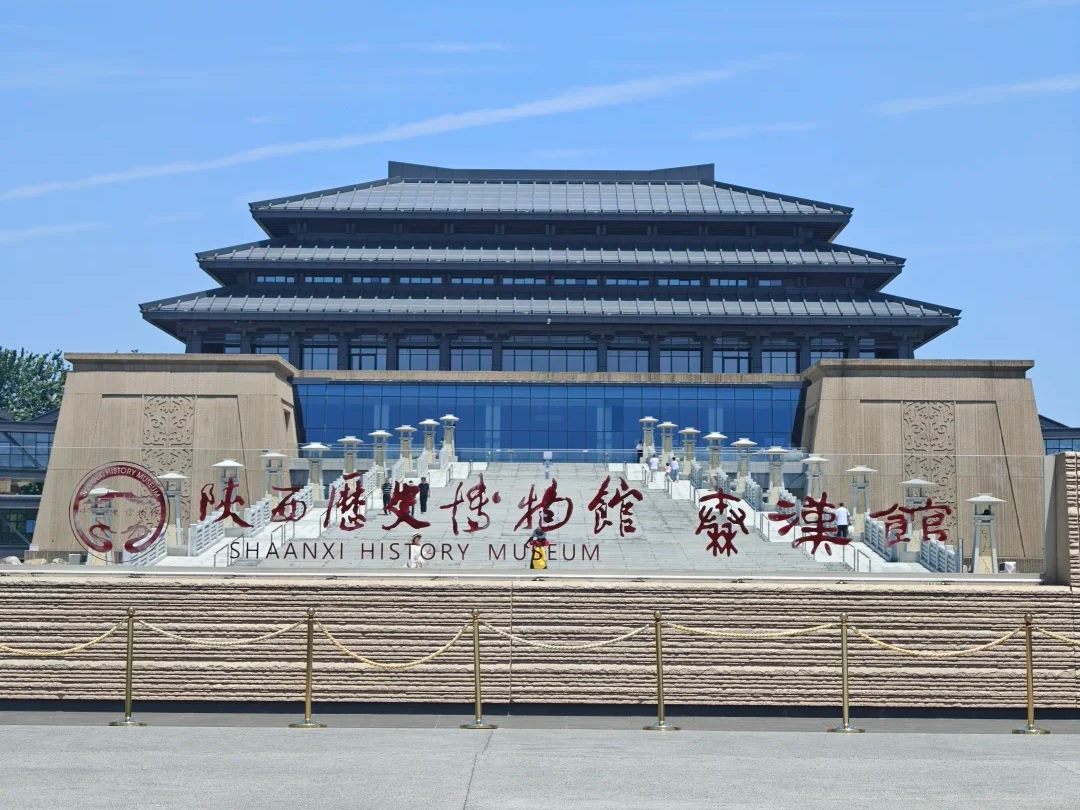
The museum’s second site opened in the Xixian New Area and is 666 m from Qingong (秦宫) on metro line 14 — about an hour from the walled city, and nowhere near the main building. It concentrates on Qin and Han material, in a very large modern hall.
⭐⭐ It admits visitors with no advance booking, and the museum states that non-mainland visitors may enter on a passport with staff completing the check on arrival. That single sentence is the answer to the question this whole page exists for: if the main allocation is gone and your dates are fixed, there is a version of this museum you can simply turn up to.
⚠️ It is not a like-for-like substitute and we should not pretend otherwise. Travellers describe it as architecturally impressive and much less crowded, but weighted towards digital and reconstructed display rather than the dense object cases that make the main museum what it is. Take it as the good second answer, not the same answer.
Key takeaways
- ⭐ Free does not mean walk-in. Put a reminder in your phone for 17:00 on the day 5 days before you want to go — that is when the free allocation drops, and on a holiday it is gone before you finish reading this sentence. Nothing is sold at the door.
- ⭐⭐ A passport books it. The museum lists the passport among its accepted documents; mainland visitors are the ones restricted to an ID card. The barrier is the WeChat channel, not the document.
- Missed it? ¥270 buys certainty — the museum's own page says an online paid-gallery ticket replaces the free booking — while ¥30 is the cheap version travellers report using, and is the one to try first.
- ⛔ A no-show costs you 180 days of booking privileges, attached to the document. Cancel rather than skip.
- The Qin-Han Museum is a second building an hour away that needs no booking at all — the answer when the main allocation is gone.
Frequently asked questions
Is Shaanxi History Museum free?
Yes — the basic display costs nothing. What it costs is a booked slot, and that is the hardest thing to obtain in Xi'an. The allocation opens 5 days ahead and drops at 17:00 each afternoon; on holidays and through the summer it is gone in seconds, and there is no ticket desk at the door for the free display. Two paid galleries inside are separate: the Tang hoard gallery at ¥30 and the Tang mural gallery at ¥270 (students ¥130).
How do I actually get a ticket?
Through the museum's own WeChat official account — it states that no third party is authorised to sell its tickets or to bundle paid services with them. The step most people miss is that you can PRE-FILL everything beforehand: the date, the time slot and each visitor's document details. At 17:00 you are then only pressing one button rather than typing. ⚠️ Pre-filling is not a booking; an unused pre-fill is wiped at midnight. Limits: one order per document per day, four per document per 30 days including cancellations, and three per WeChat account per 7 days.
Can a foreign visitor book it with a passport?
Yes. The museum lists the passport among its accepted booking documents, alongside the mainland ID card, the Hong Kong/Macau and Taiwan permits and the permanent-residence card — and says it is mainland visitors who are restricted to the ID card. So the document is not the obstacle. The obstacle is that the booking channel is a WeChat official account, which is a real barrier if you do not use WeChat. Two ways round it: buy a paid-gallery ticket online, or go to the Qin-Han Museum instead.
What if I can't get a slot?
Two escapes, and they are different in kind. The one the museum confirms itself: buy the ¥270 mural-gallery ticket online and you do not need to book the free slot separately — expensive, but certain. The one travellers use: the ¥30 Tang hoard gallery is reported to carry basic-display entry with it and to be almost always available, though the museum's own page does not name it in that sentence, so treat it as likely rather than guaranteed. And the third option is a different building entirely: the Qin-Han Museum (秦汉馆), an hour out in the Xixian New Area, admits non-mainland visitors on a passport with no booking at all.
What happens if I book and then do not turn up?
You are blocked from booking for 180 days. Cancel through the booking platform before entry closes for your slot if your plans change; missing it without cancelling counts as a no-show and the penalty attaches to the document you booked with, not to the account. It is an unusually hard rule for a free museum and it is worth knowing before you speculatively book two dates.
Is the ¥270 mural gallery worth it?
It buys something genuinely scarce: original murals lifted from Tang royal tombs — Prince Yide's, Prince Zhanghuai's and Princess Yongtai's — rather than the reproductions most museums show, in a climate-controlled hall that is quiet even when the rest of the building is not. Several of the panels are on China's list of artefacts forbidden to leave the country. Photography is banned inside. ⚠️ It is a specialist's ticket at a specialist's price; if you are not already interested in Tang painting, the ¥30 hoard gallery gives more per yuan.
When is it closed?
Mondays, except on public holidays. Hours at the main museum run 08:30–19:00 in the summer season with last admission 18:00, and 09:00–17:30 in winter with last admission 16:30. ⚠️ The museum publishes these as a dated window rather than a standing season, so check the current one before building a Monday-adjacent itinerary around it.
How do I get there?
Metro to Xiaozhai (小寨, lines 2 and 3) and walk 778 m, or to Dayanta (大雁塔, lines 3 and 4) and walk 834 m — both distances are the museum's own figures. It sits between the Bell Tower and the Big Wild Goose Pagoda, so the two pair naturally on one afternoon. ⛔ Do the museum first: the pagoda needs no booking and the museum does, so a slot dictates the order.
Sources
Checked August 2026 · Written from our own first-hand travel in China.
Official source: Shaanxi History Museum visitor guide (Chinese) · Permanent display (Chinese)