Three names, one park
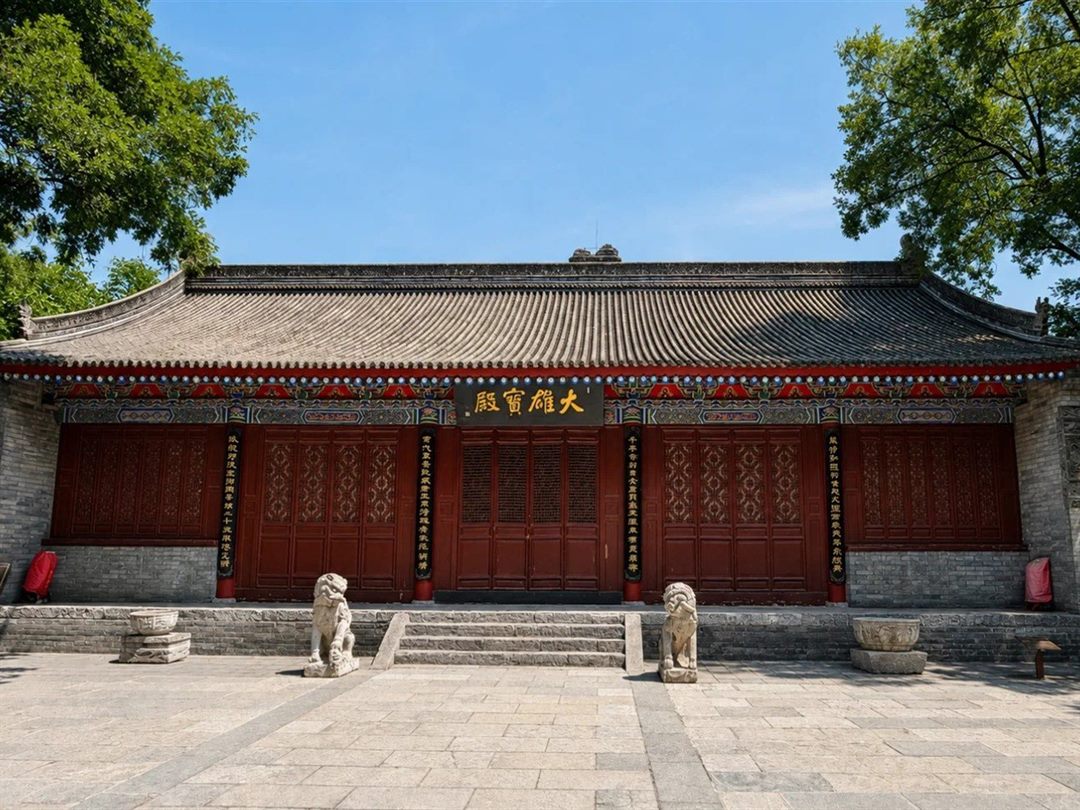
This is the single most useful thing to know before you plan anything here. You will see 小雁塔 (the Small Wild Goose Pagoda), 荐福寺 (Jianfu Temple, the grounds it stands in) and 西安博物院 (the Xi’an Museum) written up as separate attractions, sometimes on separate pages of the same guidebook.
⭐ They are one site. Locals describe the arrangement as 馆、园、塔 — museum, garden, pagoda — and a single free booking covers all of it. Searching them individually makes a half-day in one walled garden look like three stops scattered across the city.
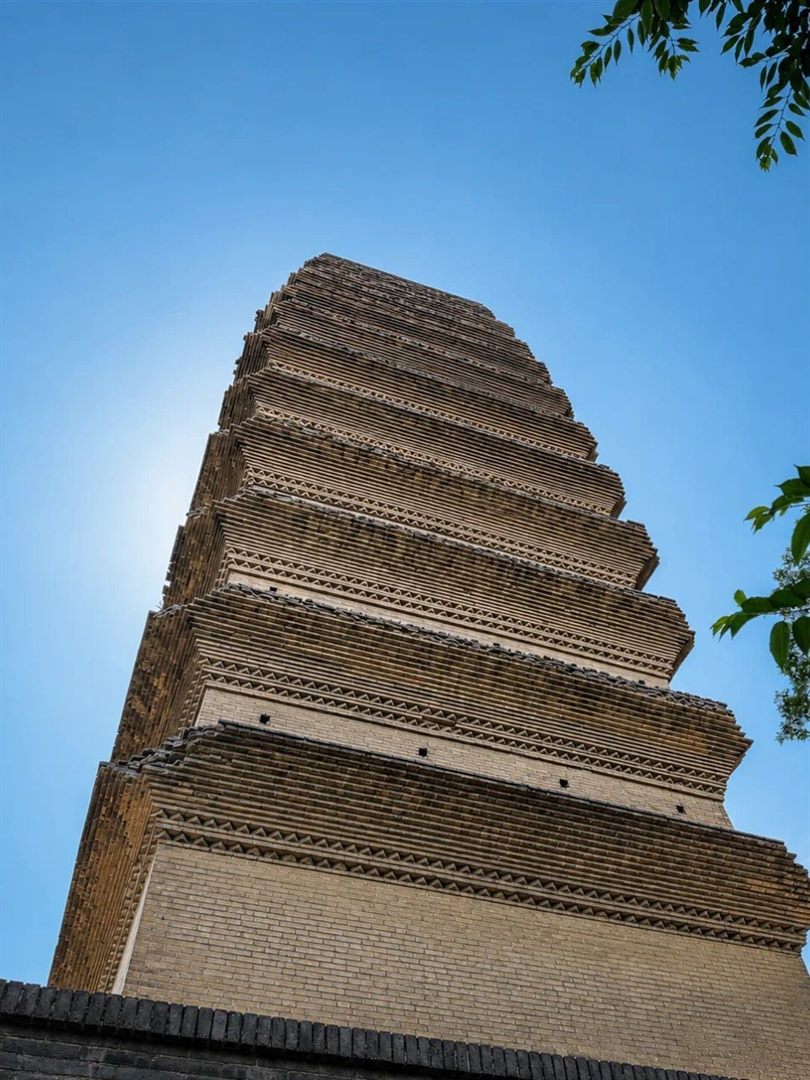
The pagoda dates from 707 CE, about fifty-five years after its larger namesake, and is built in a different form: dense, closely stacked eaves rather than the stepped, blockier profile of the Big Wild Goose Pagoda. It is recorded as having lost its upper storeys to earthquake damage — fifteen tiers reduced to thirteen after a 1487 earthquake. A traditional account has the tower splitting and closing again three times across successive quakes (三裂三合); that is what is told about the pagoda rather than a structural finding, and it is worth hearing in that spirit.
Free, but not walk-in
Everything here costs nothing — the pagoda, the temple grounds, the museum and its collection. ⭐ And the park still turns people away.
Admission is by advance real-name reservation, made 1–4 days ahead through the museum’s own WeChat account or website; travellers also report booking through the major Chinese review apps. On busy days the free slots are gone before the day itself. Turning up at the gate without a booking is the commonest wasted morning at this site, and it happens precisely because the place is free — nothing about a free attraction suggests you needed a ticket.
⚠️ Getting in with a passport. Entry is by scanning the document the booking was made against, and the turnstiles are built for a Chinese ID card. A passport is a counter transaction rather than a tap: go to the window rather than the gate, and allow a few minutes for it.
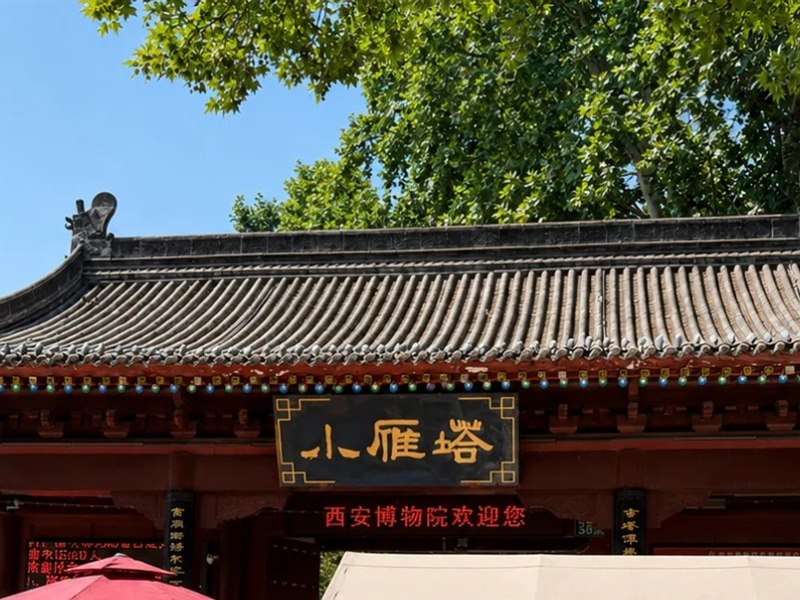
⛔ And it is closed on Tuesdays, except when a Tuesday falls inside a public holiday. This is worth trusting more than anything else on the page: every source we checked states the Tuesday closure, while disagreeing with each other about the opening hours. Over the May Day holiday the Tuesday closure is lifted and the park runs extended hours instead.
On the clock itself, we are deliberately conservative. The park closes at 18:00, extending to 19:00 in July and August. Last entry is reported as both 16:30 and 17:00, and the opening hour as either 08:30 or 09:00 — we print 16:30 because it is the figure that cannot catch you out.
Can you climb it?
Plan as though you cannot, and treat it as a bonus if you can.
Access to the inside is not offered every day. It turns on maintenance, on the weather and on how busy the park is, and it has been suspended for long stretches on conservation grounds — this is a brick tower some 1,300 years old that has taken repeated earthquake damage and lost its top storeys. Some accounts describe it as closed to visitors altogether.
⚠️ We are not going to write that flatly, because the sources split on it: one says climbing is now forbidden outright, another that it is simply irregular and governed by the notice at the entrance. Those are different claims and the difference matters if you have travelled for it. What is safe to say is that it is unreliable, so do not build a visit around going up.
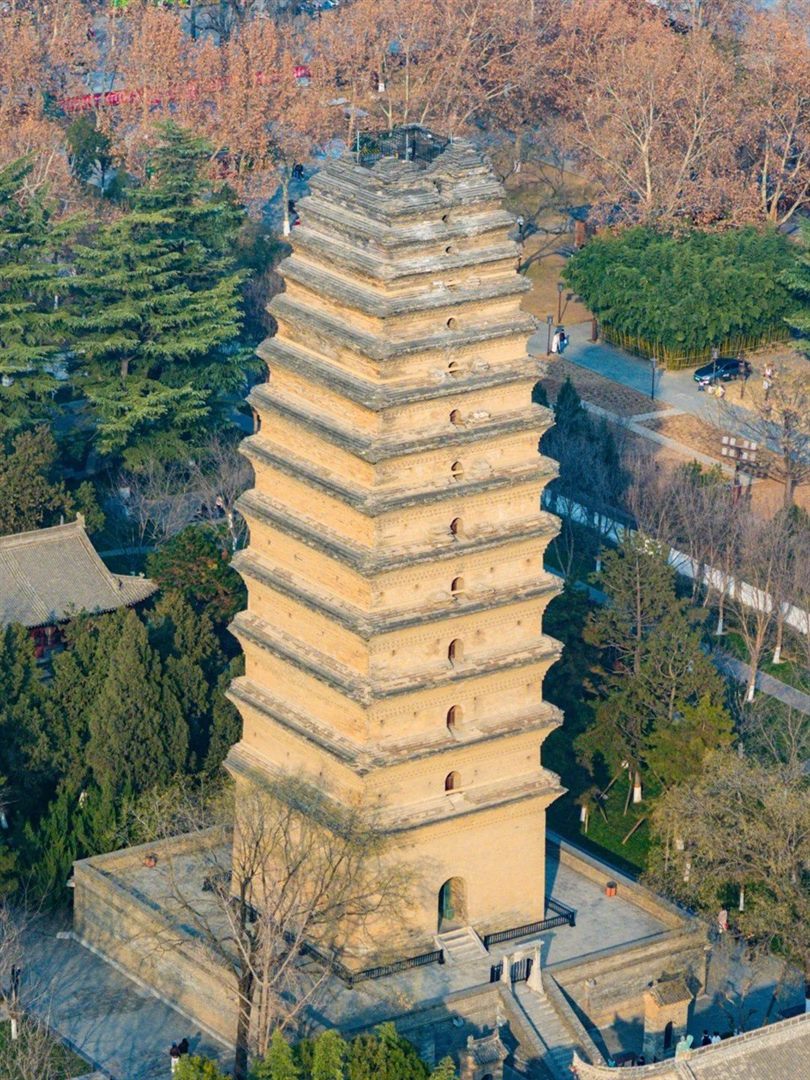
In practice this costs you less than it sounds. The pagoda photographs better from the garden than from inside it, and the thing that makes this park worth the morning — the museum — is open regardless.
The museum, and what it is not
The Xi’an Museum (西安博物院) holds a genuinely good Tang collection, it sits in the same garden as the pagoda, and it is free. On a trip where every other museum in this city involves a fight for a slot, that combination is unusual enough to be the reason to come.
⛔ It is not a substitute for the Shaanxi History Museum, and it is worth saying so plainly, because both are free and the confusion is natural. The Shaanxi History Museum is a different scale of collection and the hardest free ticket in Xi’an. This is a smaller, calmer museum in a garden.
What it is a substitute for is the crowd. If you have already queued at the Terracotta Army and pushed through the Muslim Quarter, an hour here with the old trees and the bells is the part of Xi’an most itineraries leave out.
Getting there
Metro Line 2 or Line 5 to 南稍门 (Nanshaomen), exit F — 529 m on foot to the park’s north ticket office. Two lines cross here, so it is an easy stop to reach from most of the city.
⚠️ On the distance from the Big Wild Goose Pagoda, most guides are wrong — including ours until we measured it. You will read that it is about 2 km south-west. Measured between the two sites’ own coordinates it is 3.1 km in a straight line to the north-west, and 5.2 km by road. Both the distance and the direction were wrong in the version that circulates.
That changes the plan rather than just the sentence: the two pagodas are a metro ride apart, not a walk between neighbouring stops. Doing both in one outing is perfectly reasonable — it is simply a journey, not a stroll, and worth ten minutes in your schedule rather than two.
Key takeaways
- ⭐⭐ Free is not walk-in. The whole park costs nothing and still needs a real-name booking made 1–4 days ahead. Arriving without one is the commonest wasted morning here.
- ⛔ Closed Tuesdays (public holidays excepted). Every source agrees on this while disagreeing about the clock, which tells you which fact to plan around.
- One booking covers three things people search separately — the pagoda, the Jianfu Temple garden it stands in, and the Xi’an Museum. They are one site, not three stops.
- Do not plan on climbing the tower. Access inside turns on maintenance, weather and crowding, and has been suspended for long periods; the board at the gate is what governs.
- ⚠️ It is 3.1 km north-west of the Big Wild Goose Pagoda (5.2 km by road) — a metro ride, not the short hop most guides describe.
Frequently asked questions
Is the Small Wild Goose Pagoda free?
⭐ Yes — and that is only half the answer. The whole park is free, including the Xi'an Museum, on a single booking. But free is not walk-in: you must reserve a real-name slot in advance, and on busy days same-day slots are gone. Turning up without one is the commonest wasted journey here.
Which day is it closed?
⛔ TUESDAYS, except when a Tuesday falls inside a public holiday. Every source we checked agrees on this while disagreeing about the opening hours, so it is the one to plan around. Over the May Day holiday it stays open on Tuesday and runs extended hours instead.
Are the pagoda and Xi'an Museum separate tickets?
No — they are one place. The pagoda (小雁塔), the Jianfu Temple grounds it stands in (荐福寺) and the Xi'an Museum (西安博物院) are a single site on a single free booking; locals describe the arrangement as 馆、园、塔, museum-garden-pagoda. Searching for them separately makes them look like three stops in different parts of the city.
Can I climb the pagoda?
Plan as though you cannot, and treat it as a bonus if you can. Access inside is not offered every day — it depends on maintenance, weather and how busy the park is, and it has been suspended for long stretches on conservation grounds, since this is a 1,300-year-old brick tower that has been damaged by earthquakes and lost its top storeys. Some accounts describe it as closed to visitors altogether. The board at the entrance governs on the day.
How do I get in with a passport?
Entry is by scanning whatever document the booking was made against, and the turnstiles are built for a Chinese ID card. With a passport this is a counter transaction rather than a tap — go to the window rather than the gate and allow a few minutes for it.
What are the opening hours?
It closes at 18:00, extending to 19:00 in July and August. ⚠️ Last entry is reported as both 16:30 and 17:00 depending on the source, and the opening hour as either 08:30 or 09:00 — we print the earlier cutoff because it is the only one that cannot catch you out. None of the disagreement matters as much as the Tuesday closure does.
How far is it from the Big Wild Goose Pagoda?
Further than most guides say, and in the other direction. It is 3.1 km in a straight line to the north-west — not the short south-westward hop often quoted — and 5.2 km by road. Treat the two pagodas as a metro ride apart rather than a walk between neighbouring stops; ours said the wrong thing about this until we measured it.
Is this a substitute for the Shaanxi History Museum?
⛔ No, and it is worth being clear about that, because both are free and both are museums. The Shaanxi History Museum is a different scale of collection and is the hardest ticket in the city. Xi'an Museum is a good, genuinely worthwhile Tang collection in a quiet garden. It is the substitute for fighting a crowd, not for the bigger museum.
Sources
Checked August 2026 · Written from our own first-hand travel in China.
Corrected since publication: our own Big Wild Goose Pagoda page called this site “2 km southwest” — it is 3.1 km to the north-west in a straight line, 5.2 km by road. Wrong distance and wrong direction; fixed on both pages.