This guide is written by an editorial team based in Chongqing — the editor has lived in mainland China since 2018 (8 years on the ground). The picks, logistics and priority calls draw on aggregated 2024-2026 r/travelchina, r/chinatravel and r/Guilin threads, Trip.com listings, and 2026-05-23 Amap (高德地图) routing and POI data. This is aggregated editorial coverage — corrections from Guilin and Yangshuo residents and recent visitors are welcomed (see the about page).
Browse Guilin tours and attraction tickets on Trip.com →
How to think about Guilin and Yangshuo — geography first
Guilin and Yangshuo are administered as one prefecture (Yangshuo County is part of Guilin Municipality) but they function as two distinct travel bases separated by roughly 80 km and the Li River. The Karst limestone peak landscape is the same — the dramatic scenery of pinnacle hills rising abruptly from flat rice paddies that defines the region — but the character of each place differs sharply:
- Guilin city is the transport hub — home to Guilin Liangjiang Airport (KWL) and Guilin North HSR station. It has the major Karst landmarks within the city itself (Elephant Trunk Hill, Solitary Beauty Peak, Reed Flute Cave) and the departure pier for the Li River cruise. It is a real Chinese city of 5 million, not a tourist village.
- Yangshuo is the activity base — a small town of around 300,000 where West Street has been a Western-backpacker destination since the 1980s. The countryside around Yangshuo (the Yulong River valley, Moon Hill, Xingping, the Xianggong Mountain viewpoint) is the densest concentration of rural Karst scenery in the region and is best explored by e-bike, bamboo raft, or the back seat of a taxi.
Most foreign visitors spend 1-2 nights in Guilin and 2-3 nights in Yangshuo, using the Li River cruise as the one-way transfer between the two. For where to sleep in each, see where to stay in Guilin and Yangshuo. The full practical overview — getting to Guilin by HSR, getting around, emergency contacts — is at the Guilin city guide.
Guilin city picks (attractions 1-5)
Guilin's city-side attractions concentrate in two zones: the central riverside area (Elephant Trunk Hill, the Two Rivers Four Lakes waterway) and the older city blocks north of the lake chain (Solitary Beauty Peak inside the walled Jingjiang Mansion). Reed Flute Cave is about 5 km northwest of the city centre, accessible by taxi or city bus. All four can be combined in a single full day in Guilin.
1. The Li River cruise — the headline experience
The Li River cruise (漓江游船) from Guilin downstream to Yangshuo is the defining Guilin experience and one of the most photographed landscapes in the world — the scene on the Chinese ¥20 banknote (the Xingping fishing village viewpoint from midway on the cruise) is among the most globally recognised images of China. The journey is approximately 83 km and 4.5 hours on a large motor cruise boat, passing through a corridor of limestone pinnacles, bamboo groves, water buffalo and fishing villages.
The cruise departs from Mopanshan Pier or Zhujiang Pier (both are 30-50 km south of Guilin city — a hotel transfer or taxi is required; this is the main logistical step that makes a tour package worth considering). It arrives at Yangshuo Pier, from which Yangshuo town is 3 km by taxi. The cruise operates daily weather and water-level permitting; a minimum river depth is required for the standard route to operate all the way to Yangshuo (if the river is low, the cruise may truncate). Official ticket price as of 2024-2026: approximately ¥210-310 depending on cabin class; booking through Trip.com or a tour package includes pier transfer.
The full guide — pier logistics, seating options, how to book, and what to expect en route — is in the dedicated Li River cruise guide.
2. Reed Flute Cave — the illuminated stalactite cave
Reed Flute Cave (芦笛岩, Lúdí Yán) is a 180-million-year-old limestone cave approximately 5 km northwest of Guilin city centre, named for the reeds that once grew at its entrance and were fashioned into flutes. The cave has been open to visitors for over 1,200 years — Tang-dynasty inscriptions are visible on the cave walls — and is the most visited cave in the Guilin area.
The interior, roughly 240 m of accessible passageway, is lit with coloured LED lighting that picks out the stalactites, stalagmites and flowstone formations. The centrepiece chamber — the “Crystal Palace of the Dragon King” — can accommodate hundreds of people and is regularly cited as one of the most visually dramatic cave chambers in China. The tour route is largely flat, making it accessible for most visitors. Allow 1 hour for the standard tour. Entry approximately ¥65-70. The full guide — what to expect, lighting colour schedule, how to get there — is in the Reed Flute Cave Guilin guide.
3. Elephant Trunk Hill (象鼻山) — the icon of Guilin
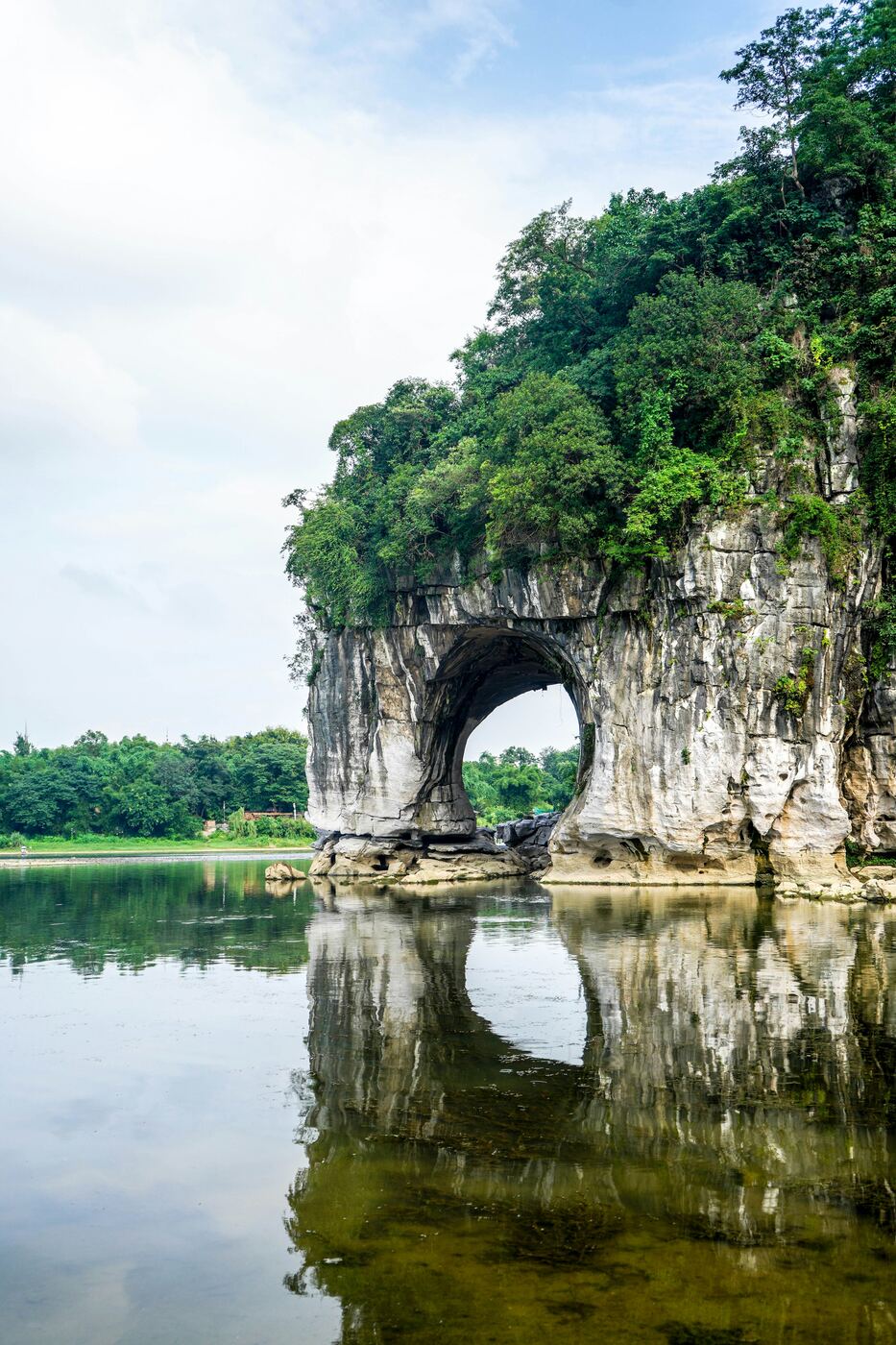
Elephant Trunk Hill (象鼻山, Xiàng Bí Shān) is the most photographed natural landmark in Guilin city — a 55-metre Karst limestone peak standing at the confluence of the Li River and the Peach Blossom River in central Guilin, its distinctive profile resembling an elephant lowering its trunk to drink from the water. The “trunk” is a natural arch at the waterline (the Water Moon Cave, 水月洞) carved by the river; when the arch and its reflection are aligned on the water, it forms a perfect circle — the shape that appears on Guilin's city emblem.
The hill is inside a riverside park with a paved path along the bank — the best photograph is from across the Li River, not from the hill itself (the Elephant-trunk profile is only visible from the east bank, looking west). The park includes a pagoda on the summit accessible via 152 steps and a small Tang-dynasty cave temple. Entry approximately ¥75. Coordinates: 25.265°N, 110.290°E.
Elephant Trunk Hill is 10-15 minutes from central Guilin by taxi. Best photographed in the early morning (soft light, fewer visitors) or at sunset. It pairs naturally with the Two Rivers Four Lakes evening cruise — the cruise route passes the foot of the hill after dark, lit by the waterway illumination system.
Book Elephant Trunk Hill admission tickets on Trip.com →
4. Solitary Beauty Peak (独秀峰) — the Ming palace and the Karst panorama
Solitary Beauty Peak (独秀峰, Dú Xiù Fēng) is a single 152-metre limestone spire rising abruptly from the flat ground inside the walled enclosure of the Ming Prince Jingjiang Mansion (靖江王府) — the best-preserved 14th-century princely palace complex surviving in southern China. The mansion was the seat of a Ming-dynasty branch prince for over 280 years (1372-1650) and its outer walls, inner gates and ceremonial halls remain largely intact; it now functions as the Guangxi Normal University campus.
The combination of a genuine Ming-dynasty walled compound and a Karst peak with a panoramic summit viewpoint makes this Guilin's most historically layered attraction. The climb to the summit of Solitary Beauty Peak takes approximately 15-20 minutes on 306 stone steps and rewards with a 360° view over Guilin city and the surrounding Karst pinnacles — the most complete “sea of peaks” panorama accessible without leaving the city. Coordinates: 25.2806°N, 110.2980°E. Entry to the combined Jingjiang Mansion + Solitary Beauty Peak site: approximately ¥80.
Note: the 306 steps are steep and uneven — not suited to visitors with mobility issues. The Jingjiang Mansion courtyard at ground level is flat and worth visiting independently of the climb.
5. Two Rivers Four Lakes night cruise (两江四湖) — Guilin by water after dark
The Two Rivers Four Lakes (两江四湖, Liǎng Jiāng Sì Hú) is an evening electric-boat cruise of Guilin's central waterway system — the Li River, the Peach Blossom River, and the four lakes (Shan Lake / 杉湖, Rong Lake / 榕湖, Gui Lake / 桂湖, Mulong Lake / 木龙湖) that ring the old city centre. The 10 km circuit takes approximately 90 minutes.
The cruise operates after dark and the attraction is the illumination system: the lake shores, bridges, pavilions and pagodas are lit in coloured light, with architectural structures on the banks including bridges modelled on iconic global designs — an Eiffel-Tower-style iron lattice arch, a Sydney-Opera-House-profile, a traditional Chinese drum tower reproduced in full scale. The Rizhu and Yueyue twin pagodas on Shan Lake — one Tang-dynasty stone, one Song-dynasty copper — are the most photographed structures from the water at night. The cruise also passes the foot of Elephant Trunk Hill, which is lit from the bank.
Standard ticket: approximately ¥185-235 (confirm at time of visit; prices vary by departure pier and cabin class). Departs from the Ronghu Lake Pier or the Shanhu Lake Pier in central Guilin — both within walking distance of the main hotel strip. This is Guilin's best evening activity; Yangshuo visitors with a night in Guilin should prioritise it.
Book Two Rivers Four Lakes cruise tickets on Trip.com →
Yangshuo county picks (attractions 6-10)
Yangshuo's countryside is where the Karst landscape becomes immersive rather than panoramic — you are in it, not looking at it from a riverbank. The five picks below range from pre-dawn hikes (Xianggong Mountain) to flat-water bamboo rafts (Yulong River) to a large-scale outdoor performance (Impression Liu Sanjie). An e-bike hired on West Street is the most flexible way to reach most of them. DiDi works reliably in the Yangshuo area for sites further out.
6. Moon Hill (月亮山) — the natural arch in the Karst
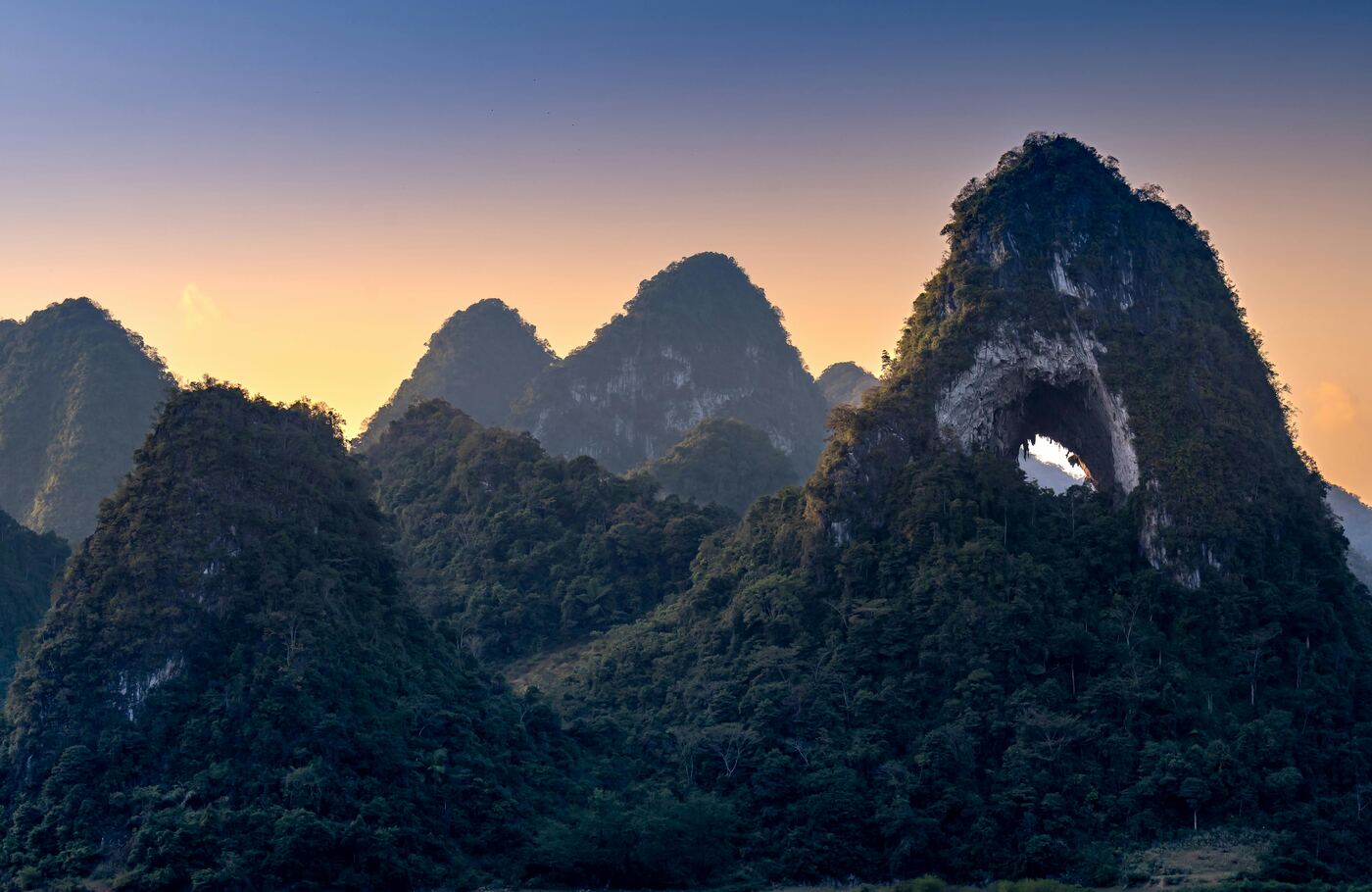
Moon Hill (月亮山, Yuèliàng Shān) is a 230-metre Karst limestone peak approximately 8 km south of Yangshuo town, with a large semicircular natural arch through its summit — the arch is roughly 50 m in diameter and visible from the road below as a circle of sky framed in limestone. As the sun moves, the arch shape shifts from a full circle (seen head-on from the road) to a crescent (seen from the south side of the hill) — the latter giving rise to the name.
The climb from the road to the summit viewpoint takes approximately 25-30 minutes on steep stone steps. The view from the arch itself — through the circle to the Karst valley below — is one of Yangshuo's most distinctive photographs, and substantially better than the view from the road. Entry approximately ¥30. Coordinates: 24.7219°N, 110.4775°E. Reachable in 15-20 minutes by e-bike from West Street or by DiDi.
Moon Hill is best combined with the Yulong River bamboo raft — the raft departure points are in the same southern valley, and the two together make a natural half-day loop from Yangshuo.
7. Yulong River bamboo raft (遇龙河) — the “Little Li River”
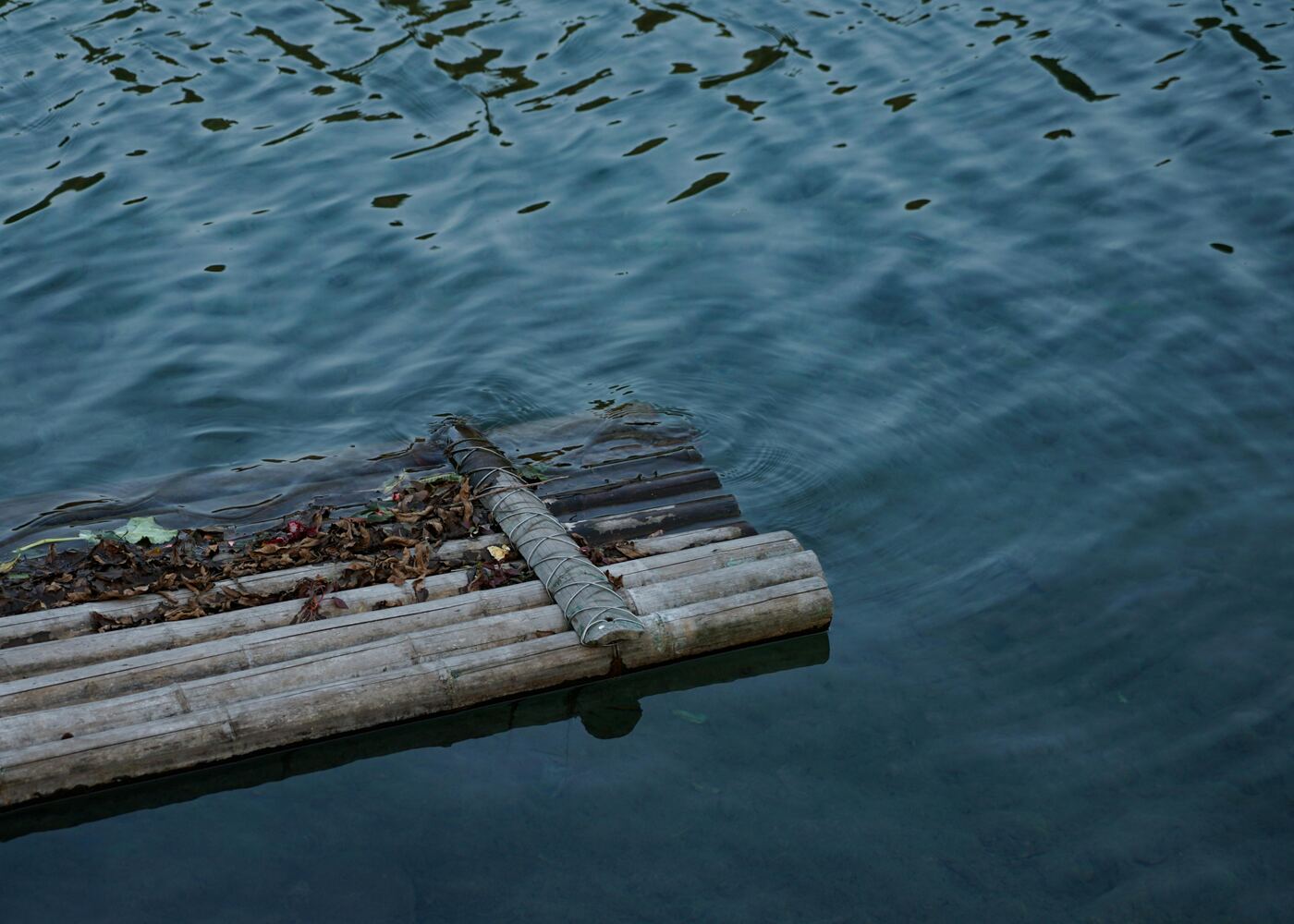
The Yulong River (遇龙河, Yù Lóng Hé) is the quietest and most rural of the Yangshuo waterways — a tributary of the Li River running south of Yangshuo town through a valley of rice paddies, bamboo stands and small Karst peaks, with no motorised boats permitted. The standard experience is a bamboo raft(2-person, poled by a guide) drifting downstream for 1-2 hours, passing under a series of ancient stone weirs that create gentle rapids. The pace is slow; the valley is quiet enough to hear the birds.
This is consistently the experience most foreign visitors describe as their Yangshuo highlight — specifically the contrast with the busier Li River cruise. Coordinates (Jiuxian Raft Station, a common departure point): 24.7775°N, 110.4331°E. Cost: approximately ¥150-300 per raft depending on the route section and departure point; guesthouses on West Street book them at standard prices. An e-bike allows you to cycle the Yulong River road (the valley cycling route is one of the best in Guangxi) and arrange the raft at the river.
Best done in the morning for softer light and fewer other rafts. The Yulong River is also the reason e-bike hire is so central to the Yangshuo experience — the valley road along the river is flat, scenic and connects Moon Hill, the raft stations and several villages. Getting around Guilin and Yangshuo covers e-bike hire logistics.
8. Xianggong Mountain (相公山) — the sunrise viewpoint above the Li River
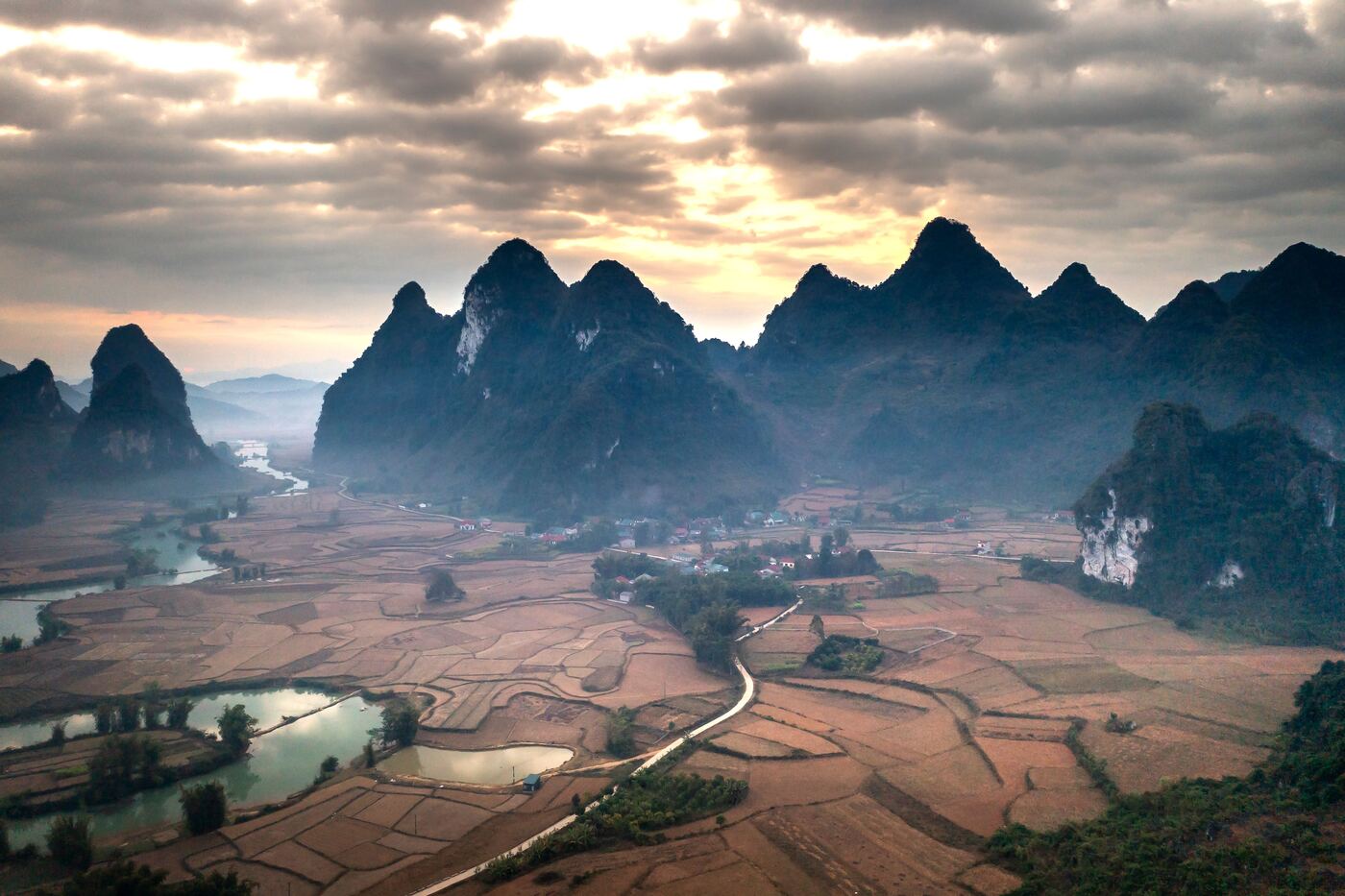
Xianggong Mountain (相公山, Xiānggōng Shān) is a steep rocky hill roughly 20-25 km north of Yangshuo on the east bank of the Li River, approximately 30-40 minutes by DiDi. It is a sunrise-only viewpoint — arriving after 7 am in peak season misses the best light, and in mist the view vanishes. The summit gives one of the most replicated Li River photographs in the world: a 180° bend in the Li River framed by Karst peaks, with morning mist pooling in the valley below and the pale dawn sky behind.
The climb from the road gate to the main viewpoint takes approximately 25-35 minutes on steep, uneven stone steps. A head torch is useful before dawn. Entry: approximately ¥60. Coordinates: approximately 24.916°N, 110.529°E. Depart Yangshuo by 4:30-5:00 am (season-dependent; check sunrise time for your dates). This is for genuinely motivated photographers and early risers; it is not suited for the casual visitor, elderly travellers, or anyone unwilling to make a pre-dawn trip.
Xianggong Mountain is often combined with a visit to Xingping ancient town (below) — both are on the north Li River road and can share a DiDi for the morning.
9. Xingping ancient town (兴坪古镇) — the ¥20-note village
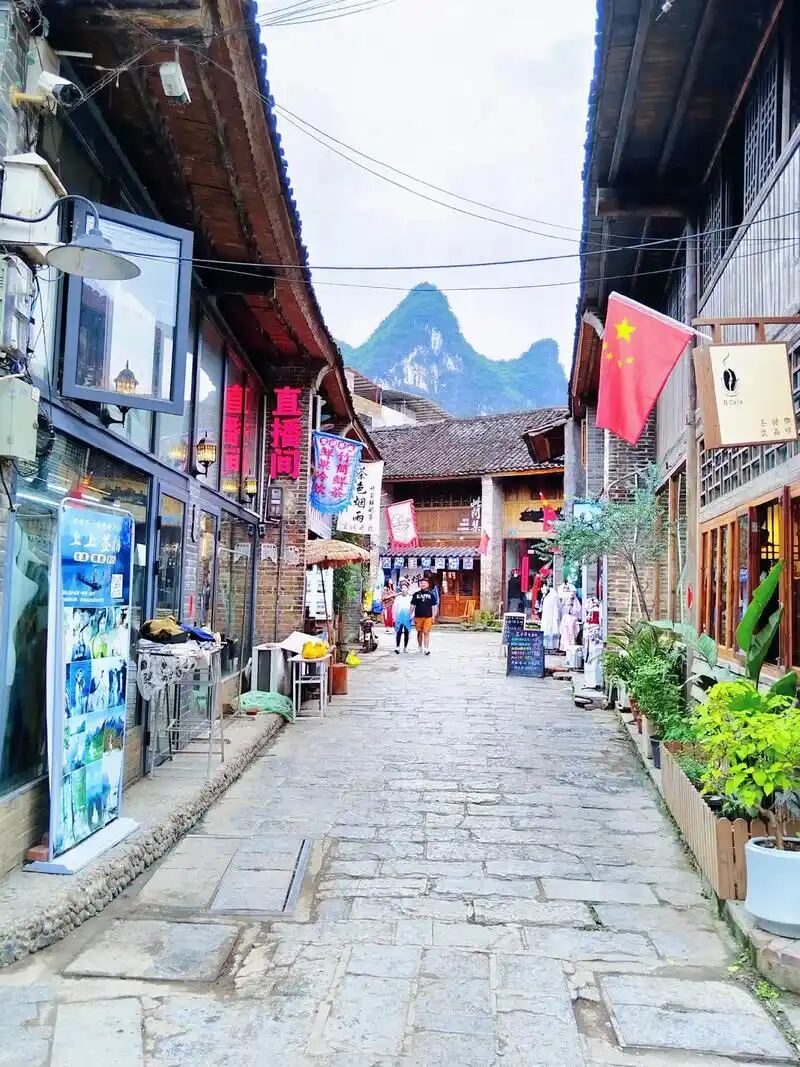
Xingping (兴坪, Xīngpíng) is a Ming-and-Qing-dynasty river town approximately 30 km upriver from Yangshuo — about 40 minutes by DiDi or bus. The village sits on the Li River where the Karst peaks create the most iconic composition on the river; the fishing village viewpoint directly behind Xingping is the exact scene reproduced on the Chinese ¥20 banknote— the jagged peaks of Nine Horses Fresco Hill (九马画山) reflected in the water, with fishermen on bamboo rafts in the foreground. The banknote scene was photographed from the hill immediately east of the town; a short scramble up the hill path reaches the spot.
Xingping town itself has Ming-dynasty street layouts, Qing-era merchant houses, and a quieter atmosphere than Yangshuo's West Street — it is the most authentically preserved of the Li River villages accessible by road. Coordinates: 24.9162°N, 110.5297°E. No park entry fee for the town itself; the viewpoint above the town is free to scramble to. Bamboo raft from Xingping upstream into the most dramatic Karst section of the river (the narrow Li River gorge section between Xingping and Yangdi) is a frequently recommended alternative to the full Guilin-to-Yangshuo cruise for visitors on a second visit.
The Li River cruise from Guilin passes Xingping midway through the journey — the ¥20-note scene is visible from the cruise boat (announced over the PA) — making the full cruise the most efficient way to see it for first-timers. The Xingping base visit is for those who want to linger at the village.
10. Impression Liu Sanjie (印象·刘三姐) — Zhang Yimou's river spectacle
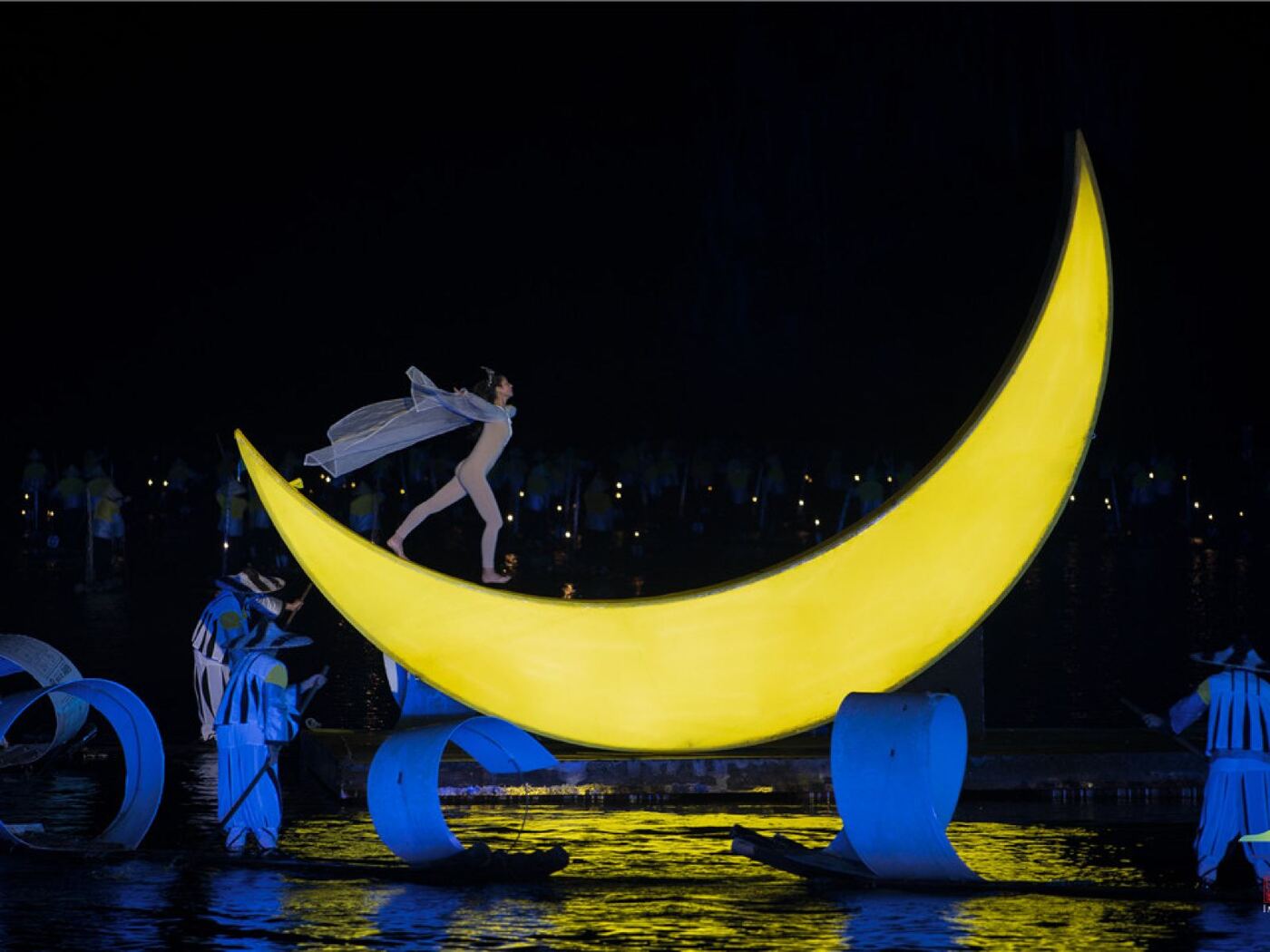
Impression Liu Sanjie (印象·刘三姐) is an outdoor theatrical performance staged nightly on the Li River near Yangshuo, directed by Zhang Yimou — whose past large-scale productions include the 2008 Beijing Olympics opening ceremony. The show runs approximately 75 minutes after sunset on a stretch of river roughly 2 km east of Yangshuo town, using the limestone peaks as the natural backdrop and stage; more than 600 Zhuang minority performers (local Guangxi villagers, not professionals) take part.
The performance draws on the legend of Liu Sanjie, a Zhuang folk singer hero, and incorporates traditional song, bamboo-raft choreography, fishing-lantern scenes and large-scale water effects — with the real limestone peaks lit behind the action, giving the staging a scale that indoor theatres cannot replicate. Seating tiers face the river:
- Bronze seats (侧面) — approximately ¥200; outer sides of the amphitheatre.
- Silver seats (一般) — approximately ¥320; central section.
- Gold seats (贵宾) — approximately ¥388; front-central.
- VIP seats — approximately ¥450; the closest and most central.
Book in advance — Trip.com or guesthouses on West Street; walk-up tickets are sometimes available but prime seating sells out. Performances are occasionally cancelled in heavy rain or high-wind conditions (the river is the stage). Bring a light layer — the riverside is cool after dark even in summer. The venue is 2 km from central Yangshuo by taxi or a 25-minute walk along the Li River bank.
Book Impression Liu Sanjie tickets on Trip.com →
Putting it together — 3-day and 5-day plans
The following sequences assume you arrive into Guilin (by flight or HSR) and depart from Guilin or Yangshuo:
- Day 1 — Guilin city. Check in near the central lake chain. Afternoon: walk to Elephant Trunk Hill (30 min, photos from the east bank, brief park visit) → walk north to Solitary Beauty Peak / Jingjiang Mansion (Ming walls + 306-step climb). Evening: Two Rivers Four Lakes cruise from Ronghu or Shanhu Pier (90 min, ~¥185-235). Dinner near the lake strip.
- Day 2 — Li River cruise to Yangshuo. Hotel transfer to Mopanshan or Zhujiang Pier (arrange through hotel or tour booking). Board the cruise (~8:30-9 am); arrive Yangshuo Pier ~1:30 pm. Taxi to West Street; check in. Afternoon: hire an e-bike and explore the Yulong River valley — the riverside road is mostly flat. Evening: book the Impression Liu Sanjie show (if not pre-booked, check availability at guesthouse). Depart West Street ~7 pm for the riverside venue.
- Day 3 — Moon Hill and Yulong River. Moon Hill in the morning (25-30 min climb, best light before 10 am). Then south to the Yulong River raft (1-2 hours on the water; arrange via guesthouse or at the river). Return to West Street by early afternoon; e-bike or taxi back. Optional: Xingping by bus or DiDi in the afternoon if you have the energy. Transfer to Guilin North or airport for onward journey.
5-day extension adds:
- Day 1 afternoon — Reed Flute Cave before Elephant Trunk Hill (taxi to the cave, back to centre, then the hill).
- Day 4 — Xingping and Xianggong Mountain. Pre-dawn start: DiDi to Xianggong Mountain (arrive by 5:30 am for sunrise; ~30-40 min from Yangshuo). After sunrise, DiDi onward to Xingping for a leisurely morning (the ¥20-note viewpoint, the old street, a bamboo raft on the upper Li River if time). Return Yangshuo for lunch.
- Day 5 — Longji Rice Terraces. A full-day excursion to Longji Rice Terraces (龙脊梯田, Dragon's Backbone Rice Terraces) — roughly 90 minutes by bus or tour van from Guilin. One of southern China's most distinctive landscapes: stepped rice terraces carved into the Longsheng mountain range by the Zhuang and Yao minorities over 650 years. Return to Guilin for an onward flight or train.
The Guilin city guide has the full itinerary planner, transport details (getting to Guilin by HSR via Guangzhou South or direct from other cities), and emergency essentials. For the full where-to-stay decision — Guilin vs Yangshuo areas and specific hotel picks in each — see where to stay in Guilin and Yangshuo.
Browse Yangshuo hotels near West Street on Trip.com →
Frequently asked questions
What are the top things to do in Guilin and Yangshuo?
Should I base myself in Guilin city or Yangshuo?
How do I prioritise if I only have 3 days?
Which sites are suitable for children and elderly visitors?
Is it better to do the Guilin area on a tour or independently?
What is the Impression Liu Sanjie show and how do I book it?
Should I do the Impression Liu Sanjie show or the Two Rivers Four Lakes cruise — or both?
What is the best time of year to visit Guilin and Yangshuo?
How far is Xianggong Mountain from Yangshuo and what time should I arrive?
How do I get from Guilin to Yangshuo other than the Li River cruise?
Related Guilin and Yangshuo guides
- Guilin city guide — getting to Guilin by HSR or flight, getting around, 3/5/7-day itinerary planner, and emergency essentials.
- Li River cruise guide — the headline deep-dive: pier logistics, seating, booking, and what to expect on the 4.5-hour journey.
- Reed Flute Cave Guilin guide — the 180-million-year-old illuminated stalactite cave; what to expect, how to get there, when to go.
- Longji Rice Terraces guide — the Dragon's Backbone day trip from Guilin; best season, which village to climb, overnight options.
- Where to stay in Guilin and Yangshuo — the Guilin-vs-Yangshuo base decision in detail; area picks for each.
- Getting around Guilin and Yangshuo — e-bike hire, DiDi in Yangshuo, buses to Xingping and Longji, the Guilin city bus map.
- Guilin railway station guide — Guilin North HSR station, Guilin Station, Yangshuo Station, and how to arrive from Guangzhou, Beijing or Shanghai.
Sources: editorial team based in Chongqing (8-year mainland-China resident), editor's about page, Amap (高德地图) routing and POI data queried 2026-05-23, aggregated r/travelchina, r/chinatravel and r/Guilin threads 2024-2026, and Trip.com listings. Admission prices, Li River cruise operating status and Impression Liu Sanjie performance schedules change — confirm before your visit.