Guangxi · Guilin → Yangshuo · 漓江
Li River Cruise: Guilin to Yangshuo (2026)
A 4–5 hour downstream journey past the Karst pillars printed on China’s twenty-yuan banknote — how to book, which ticket tier to choose, and what you’ll actually see.
China for Travelers EditorialAggregated, not on-siteUpdated Pier data: Amap routing 2026-06-21Save this — opening times and closures change
- ⏱ Duration
- 4–5 hours
- ~60 km · one-way
- 🛥 Departures
- Mornings only
- 3★ ~9–10:30 · 4★ ~9:30
- 🎫 Tickets
- ¥215–1,200
- 3★ / 4★ / 5★
- 📍 Piers
- Mopanshan · Zhujiang
- by class · ~28 km from Guilin
- 🌤 Best months
- Apr–Jun · Sep–Oct
- peak scenery & weather
- ⚠️ Avoid
- Oct 1–7 · May 1–5
- deep winter may shorten route
Key takeaways
- 1Book ahead with your passport — all tickets are real-name; bring the physical passport on boarding day.
- 2Your pier depends on your class — 3-star boats leave Mopanshan, 4-/5-star leave Zhujiang (6.5 km apart); check your ticket the night before.
- 3The famous views come late — the Mural Hill → Xingping ¥20-note stretch is the final third of the route.
- 4These are not bamboo rafts — cruise boats carry 80–200 people; the raft trip is a separate Yulong River activity.
What the cruise is
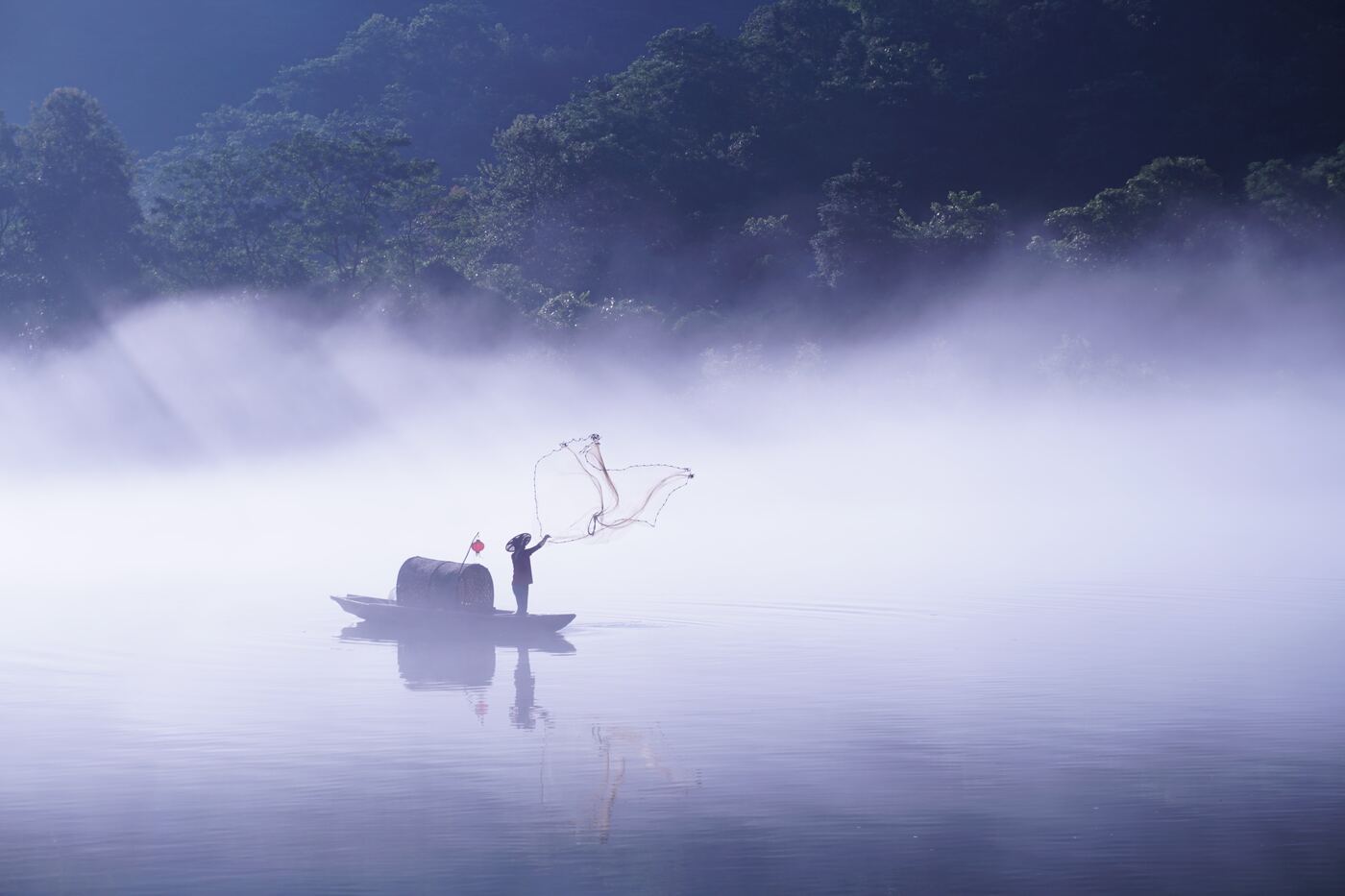
The Li River cruise is a downstream boat journey along the Li River (漓江, Lí Jiāng) from the Guilin piers to Yangshuo. The sailing covers about 60 km of river — the full Guilin-to-Yangshuo waterway is ~83 km, but boats board downstream of the city centre — and takes 4 to 5 hours on a motorised cruise boat, travelling slowly through Karst limestone pillars — peaks that rise abruptly from the valley floor in shapes painted and photographed for centuries. This is the scene on the back of the Chinese ¥20 banknote — specifically the stretch near Xingping ancient town. After the Great Wall and the Forbidden City, it is one of the most recognisable landscapes in China.
What the cruise is not: the boats are not traditional bamboo rafts — they are large 80-to-200-person vessels with enclosed saloons, dining areas and observation decks. The “bamboo raft” label belongs to two different products: the narrow motorised rafts used on the shorter Yangdi–Xingping segment in low water, and the separate Yulong River raft activity in Yangshuo county.
Tickets: three tiers
All licensed boats travel the same route at the same pace — the scenery is identical from every class. The differences are onboard comfort, deck access and crowd density.
| Tier | Price | Deck & facilities | Best for |
|---|---|---|---|
| 3-star (Standard)best valueDeparts Mopanshan Pier (磨盘山) | ¥215 | Enclosed lower deck + open observation deck; lunch sold separately (~¥30) | Budget-conscious travellers — the scenery is identical from every class |
| 4-star (Deluxe)most popularDeparts Zhujiang Pier (竹江) | ¥358–360 | Wider seating, fewer passengers, larger deck; buffet lunch included | Families and older travellers; VIP cabins ¥400–580 |
| 5-star (Luxury)Departs Zhujiang Pier (竹江) | ~¥880–1,200 | Only ~30 passengers, premium buffet, private car transfer included | Special occasions — a comfort, not a scenery, upgrade |
Prices are 2026 figures cross-checked against the official Li River scenic-area site, Trip.com listings and recent traveller reports; exact fares vary by operator, cabin and season — the fare on your own booking is the one that holds. The 3-star fare excludes lunch (~¥30 extra); the 4- and 5-star fares include a buffet. Passport real-name registration is required at check-in for all classes.
Avoid “economy” boats: lower-priced unlicensed or semi-licensed boats are sometimes sold at the pier or by touts. They lack the passenger insurance, catering and regulated schedules of licensed 4-star/5-star operators — book via a recognised platform and confirm the star designation before paying.
A ticket typically includes: the boat journey (Guilin pier → Yangshuo pier), a Chinese-style set lunch on board, and Mandarin commentary (English on select departures — confirm at booking). The return from Yangshuo to Guilin is not included.
The two departure piers
Mopanshan Pier 磨盘山码头 · 3-star
- 110.4327°E, 25.1475°N — Daxu, Lingchuan (灵川县大圩镇)
- The upstream pier — ~6.5 km north of Zhujiang along the river
- Departure pier for the 3-star (Standard) boats
Zhujiang Pier 竹江码头 · 4-/5-star
- 110.4327°E, 25.1269°N — Yanshan District (雁山区)
- ~28 km / ~40 min by car from central Guilin
- Departure pier for the 4-star (Deluxe) and 5-star (Luxury) boats
Arrival: all boats dock downstream at Yangshuo’s Longtou Mountain Pier (龙头山码头, ~110.496°E, 24.776°N), about a 10-minute walk — or a ¥15 electric cart — from West Street (西街). Your ticket states your departure pier; the two Guilin piers are 6.5 km apart, so confirm it the night before.
What you'll see, in order
The downstream sequence · 手卷
Three landmarks, read like a scroll painting
The peaks grow more dramatic as the valley narrows — the most photographed stretch is the final third, in the 30–40 km before Yangshuo.
Mural Hill 画山 · 九马画山
A multi-peak cliff face whose rock staining has been read as nine horses since the Song dynasty — seeing all nine is said to bring exam success. Peaks roughly 80–100 m, reflected on calm days.
Yellow Cloth Reflection 黄布倒影
A golden sandstone shelf produces glassy mirror reflections — a postcard image since the 1970s. Best in still morning air; boats slow down here. Overcast days give it a silver tone photographers prefer.
Xingping ¥20 view 兴坪
The river bend and peak printed on the ¥20 banknote, near Ming-dynasty Xingping ancient town. The boat slows on the composition; most passengers photograph it against the note itself.
¥20Pull out a twenty-yuan note at stop 3 — the boat slows on exactly this composition. Beyond Xingping the peaks taper as the valley broadens toward Yangshuo.
The Yangdi–Xingping raft alternative
A shorter, cheaper option covers only the most photographed stretch: Yangdi → Xingping by motorised bamboo-raft boat (~90 minutes to 2 hours, around ¥200) — past Mural Hill and the Yellow Cloth Reflection on a narrow 6–12 person craft that sits closer to the water. This segment becomes the default route in low-water season, with bus transfers at both ends. You gain intimacy and better low-angle photography; you lose the full Guilin-to-Yangshuo journey, onboard dining and the big observation decks. For first-time visitors the full cruise is the recommended primary experience — the raft works best as an add-on from Yangshuo. (Different again from the manually-poled Yulong River raft.)
How to book
- Trip.com / Ctrip (携程) — the most practical English-language channel: pick date, class and operator, pay with a foreign Visa/Mastercard, and get an e-ticket showing your pier. Passport details are entered at checkout — choose a ticket-only option unless you want the bundled transfer.
- Official 漓江售票处 mini-program — releases next-day tickets at 8pm and takes passport details, but it is Chinese-only, runs inside WeChat and is real-name, so most foreign visitors find Trip.com easier; worth knowing if a date is sold out elsewhere.
- Hotel concierge — most Guilin hotels hosting foreign guests will book the ticket, often bundled with the pier transfer; slightly higher, but it solves transport in one step.
Advance window: about 7 days ahead is safe in peak months; for May Day (May 1–5) and National Day (October 1–7) tickets may be released up to ~15 days ahead and sell out fast. Off-peak, a day or two ahead is usually fine. Collecting your ticket: foreign passengers normally have to pick up a paper ticket at the pier counter 40–50 minutes before departure — the self-service machines often cannot read a passport. Real-name rule: bring the physical passport that matches the booking (a photo is not accepted) for the boarding check.
Browse Li River cruise tickets and hotel-pickup bundles on Trip.com →
Getting to the pier
No regular city bus runs to either pier in the morning cruise window (Amap, 2026-06-21) — take a taxi or DiDi, or buy a pre-booked shuttle seat (¥20–30) through an official transfer or 定制公交 mini-program. Timing rule: boarding opens ~30 minutes before departure and foreign passengers should collect tickets 40–50 minutes ahead — so for a ~9:30 am boat, reach the pier by 8:30–8:45, which means leaving central Guilin by 7:45–8:00 am (allow more in peak-season traffic).
| From | How | Time & cost |
|---|---|---|
| Guilin city centre (station or hotels) | Taxi to your pier — Zhujiang (4-/5-star) or Mopanshan (3-star) | ~40 min · ¥40–50 |
| Guilin North Station (桂林北站, HSR) | Taxi to your pier | ~45–50 min · ¥50–60 |
| Either station or your hotel | Pre-booked shuttle bus (transfer mini-program, or with your ticket) | ¥20–30 per person |
| Yangshuo → Guilin (return) | Scenic-area coach from Longtou Pier (or public bus) | ~1.5–2 h · ¥25–35 |
Driving times: Amap (高德地图) routing, 2026-06-21 (city centre ~24 km / ~40 min; Guilin North ~29 km / ~45 min); taxi fares are recent traveller estimates. The cruise runs downstream only — from Yangshuo, return to Guilin by coach or bus. Easiest for most visitors: bundle the pier transfer into the cruise booking. Arriving from another city? See the Guilin railway station guide.
Best time to go
- April–June — spring green, frequent morning mist (the classic ink-painting look), 18–26°C. Rainy days reduce peak clarity but produce the misty-pillar conditions photographers prefer.
- July–August — domestic peak season, 32–36°C in the valley; afternoon thunderstorms are common but 9:00 am departures usually beat them. Highest, fullest river levels.
- September–October — clearer, cooler, hillside foliage. Early October before Golden Week is arguably the best week of the year.
- Avoid: October 1–7 National Day Golden Week entirely; May 1–5 and Chinese New Year week if you can. Best days: weekdays outside national holidays, April–June or September–October.
Arriving in Yangshuo
From Longtou Mountain Pier (龙头山码头), West Street (西街) is about a 10-minute walk — or a ¥15 electric cart — past restaurants, cafes, bike hire and tour-booking offices. Same-day afternoon options, all bookable from West Street or your hotel: the Yulong River bamboo raft (poled, 90 gentle minutes on a separate tributary), a cycle to Moon Hill (~5 km), or Impression Liu Sanjie — Zhang Yimou’s nightly river-stage spectacle (book ahead on peak evenings). Or stay overnight — see where to stay and the full things-to-do guide. The return bus to Guilin takes ~1.5–2 hours (¥25–35).
FAQ
Which ticket class is worth the money on the Li River cruise?
The river scenery is identical from every class, so the choice is about comfort and which pier you sail from. The 3-star (Standard, ~¥215, lunch sold separately ~¥30) departs Mopanshan Pier and is the best-value option — the decks and views are fine, the meal is just simpler. The 4-star (Deluxe, ~¥358-360, buffet lunch included) departs Zhujiang Pier with wider seating, fewer passengers and a larger deck — the popular family choice, with VIP cabins at ¥400-580. The 5-star (Luxury, roughly ¥880-1,200) carries only about 30 passengers with a premium buffet and private car transfer — a comfort upgrade, not a scenery one. Note that "国宾级 / national-guest class" is a marketing label, not an official star-grade: it usually means a high-end 4-star VIP cabin or a 5-star boat. Avoid roadside "¥100 full-river cruise" offers — those are unlicensed short-leg boats that detour through shopping stops.
What happens in low-water season — does the cruise still run?
In low-water months (typically January through March, sometimes extending into early April or late November depending on rainfall), the river level between Guilin and Yangshuo drops below the depth required by the larger cruise boats for parts of the route. On these dates the cruise is shortened to the Yangdi-to-Xingping leg — roughly a 1.5-hour motorised bamboo-raft segment covering the most scenic stretch (Mural Hill, Nine Horses Fresco Hill, Xingping). Buses transfer passengers from Guilin to Yangdi at one end and from Xingping to Yangshuo at the other. The ticket price is adjusted (lower than the full cruise fare). Check current water conditions with your booking platform before travel; most operators update availability dynamically.
Can you do the Li River cruise in reverse — from Yangshuo to Guilin?
No. The licensed Li River cruise boats travel only in the downstream direction: Guilin (Zhujiang Pier or Mopanshan Pier) to Yangshuo. The downstream journey takes 4-5 hours; the upstream direction against the current would take significantly longer and is not offered by licensed cruise operators. To return from Yangshuo to Guilin, take a public bus from Yangshuo Bus Station (about 1.5-2 hours, ¥25-35) or arrange a private transfer. The bus journey runs through the hills rather than along the river, but it is fast and frequent.
Is the Li River cruise suitable for children and elderly travellers?
Yes — the cruise itself is very gentle: it is a slow, flat boat ride of 4-5 hours on calm river water. There is no strenuous activity involved; you sit or stand on deck and watch the scenery pass. Children typically find the dramatic Karst peaks visually engaging, especially the animation-like quality of the pillars reflecting in still water. The main considerations are: (1) limited toilet facilities on board — go before boarding; (2) sun exposure on open decks — hats and sunscreen are essential; (3) boarding and disembarking involves a short gangway that may be uneven depending on the pier and water level. Elderly travellers with limited mobility can manage the cruise comfortably; the Yangdi-Xingping bamboo-raft alternative involves boarding a lower, narrower vessel which may be harder to board.
What is the difference between the Li River bamboo-raft and the Yulong River bamboo raft?
These are two completely different experiences on different waterways. The "Li River bamboo raft" in this context refers to the motorised bamboo-raft boats used on the Yangdi-Xingping segment of the Li River in low-water season — they are narrow motorised craft (not manually poled) and cover the most photographed Karst section of the Li River. The Yulong River bamboo raft (遇龙河竹筏) is a separate activity entirely: it is a slow, gently poled raft ride on the Yulong River, a small tributary of the Li River in Yangshuo county, running through rice paddies and countryside. Both are frequently called "bamboo rafts" in English, which causes confusion. The full Li River cruise (on large motorised boats) is different from both. See the getting-around guide for the Yulong River bamboo-raft logistics.
What are the main Karst landmarks you see from the boat?
Travelling downstream from Guilin toward Yangshuo, the major landmark sequence includes: the Painted Hill (画山, Mural Hill) — a multi-peak cliff whose rock staining has been interpreted as horses since the Song dynasty (nine horses hidden in the patterns; locals say seeing all nine brings exam success); Nine Horses Fresco Hill (九马画山); the Yellow Cloth Reflection (黄布倒影) — a shallow stretch where the river runs glassy and the pillar reflections are near-perfect, used as a postcard image since the 1970s; and the Xingping reach, where a particular peak-and-river bend was selected for the back of the Chinese ¥20 banknote. Most cruise boats slow or pause briefly at the Yellow Cloth Reflection and the Xingping ¥20-note view so passengers can photograph them.
Do I need to book the cruise in advance?
During peak season (April-October, especially May Day (May 1-5), National Day (October 1-7), and weekends) advance booking of at least 2-3 days is strongly advised. Guilin is one of China's most-visited domestic tourism destinations, and the licensed cruise boats have fixed capacity — same-day walk-up tickets sell out on peak dates. During off-peak months (November, December, January-March) same-day booking is more feasible but water levels may trigger the shorter Yangdi-Xingping route, so always check current availability. Book via Trip.com (Ctrip / 携程), Fliggy, or your hotel concierge. Passport (real-name registration) is required at check-in regardless of booking channel.
What departure time should I aim for?
All Li River cruises sail in the morning — there are no afternoon departures. The 3-star (Standard) boats leave Mopanshan Pier in several sailings between roughly 9:00 and 10:30 am; the 4-star (Deluxe) boats leave Zhujiang Pier at around 9:30 am. The two piers are 6.5 km apart, so check which one your ticket uses. Both are ~24-29 km from central Guilin (~40-45 minutes by car; Amap, 2026-06-21). Boarding opens about 30 minutes before departure, and foreign passengers should collect a paper ticket at the pier counter 40-50 minutes ahead — so leave central Guilin by about 7:45-8:00 am. There is no regular public bus to either pier in the morning window; use a taxi, DiDi, or a pre-booked shuttle.
Is the Li River cruise worth it if the weather is overcast or rainy?
Many photographers and experienced travellers prefer overcast or lightly misty weather for the Li River — the Karst peaks look their most dramatic when wrapped in low cloud, and the diffuse light eliminates harsh shadows and glare on the water reflections. Heavy rain is a different matter: open-deck photography becomes impractical and the boarding/disembarking at the pier can be slippery. If your travel dates are fixed and the forecast shows overcast but not heavy rain, the cruise is worth doing. Heavy sustained rain with no clear window is the only weather condition that meaningfully degrades the experience; check the forecast 24 hours before.
What is there to do in Yangshuo after the cruise arrives?
The cruise disembarks at Yangshuo's Longtou Mountain Pier (龙头山码头), about a 10-minute walk (or a ¥15 electric cart) from West Street (洋人街 / 西街) — the backpacker hub, with restaurants, cafes, bike hire and tour booking for the afternoon. From Yangshuo you can arrange: a Yulong River bamboo raft (遇龙河竹筏), a cycle ride through the rice paddies to Moon Hill (月亮山), Impression Liu Sanjie (印象刘三姐) — Zhang Yimou's river-stage show, staged nightly at about 19:45 and 21:20 — or simply stay overnight and explore at a slower pace the next day. A same-day Guilin-return coach or bus takes about 1.5-2 hours. See the things-to-do guide for the full Yangshuo afternoon options.
Sources
Checked June 2026 · Written from our own first-hand travel in China.
If the Li River is your kind of China
Three more landscape trips from our guides — different regions, the same slow-scenery pace.
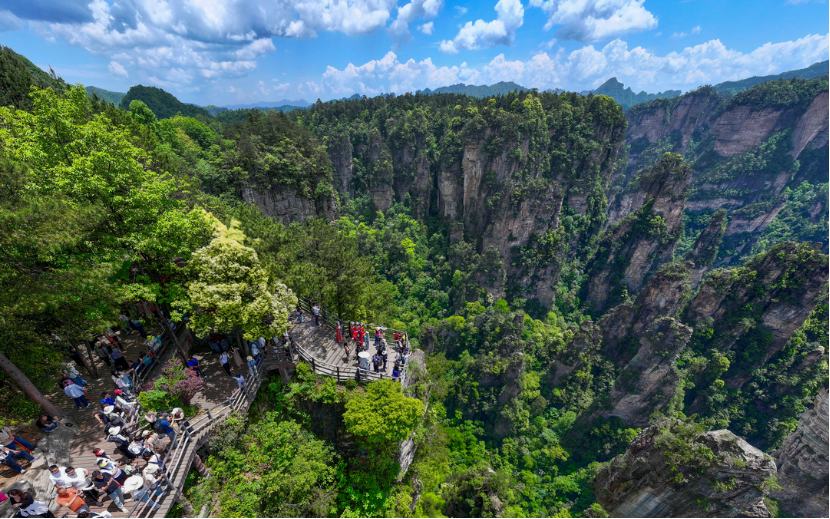 HunanZhangjiajie National ParkThe Avatar quartz-sandstone pillars, glass bridge and Tianmen Mountain — 3- and 5-day plans.
 ChongqingWulong Karst day tripThe UNESCO Three Natural Bridges as a 9–10 hour day trip from Chongqing.
 YunnanLijiang Old TownNaxi cobbled lanes at 2,400 m, with Jade Dragon Snow Mountain behind Black Dragon Pool.