What it is, and what it stopped being in 2025
碑林 means “forest of stelae”, and in English this is the Stele Forest or the Beilin Museum. It is a collection of inscribed stone — imperial edicts, Confucian classics cut in full, the work of the calligraphers whose hands defined how Chinese has been written for a thousand years — housed partly in a Confucian temple complex near the city wall’s south gate.
⭐ It is no longer only that. The museum reopened fully on 12 May 2025 after a rebuild that took the exhibition floor from about 8,000 m² to 23,000 m² and the objects on show from roughly 800 to more than 2,000. Buddhist sculpture, Han carved reliefs and Tang tomb statuary that had been in storage are now out. The new wing is on the north side; the old wing keeps the temple buildings and the original numbered galleries.
⚠️ So discount anything written before mid-2025. The common complaints in older accounts — dim lighting, reflective glass, everything crammed — are about a museum that no longer exists in that form.
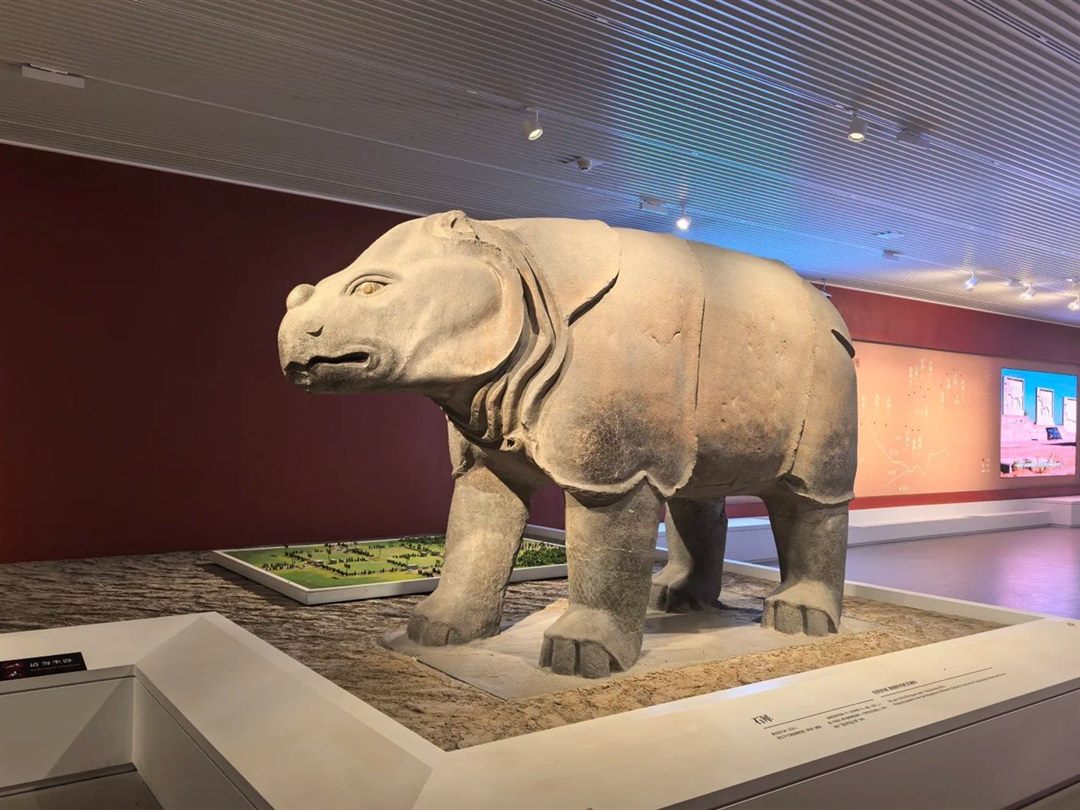
The six steeds: four are real, two are casts
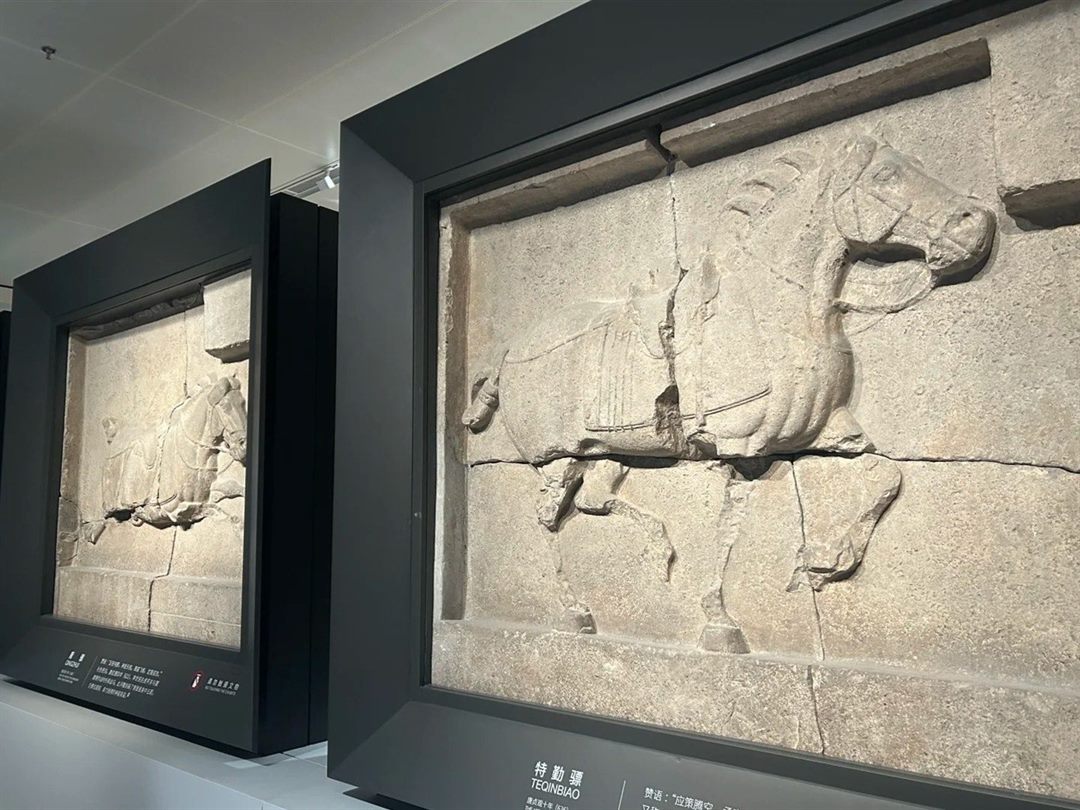
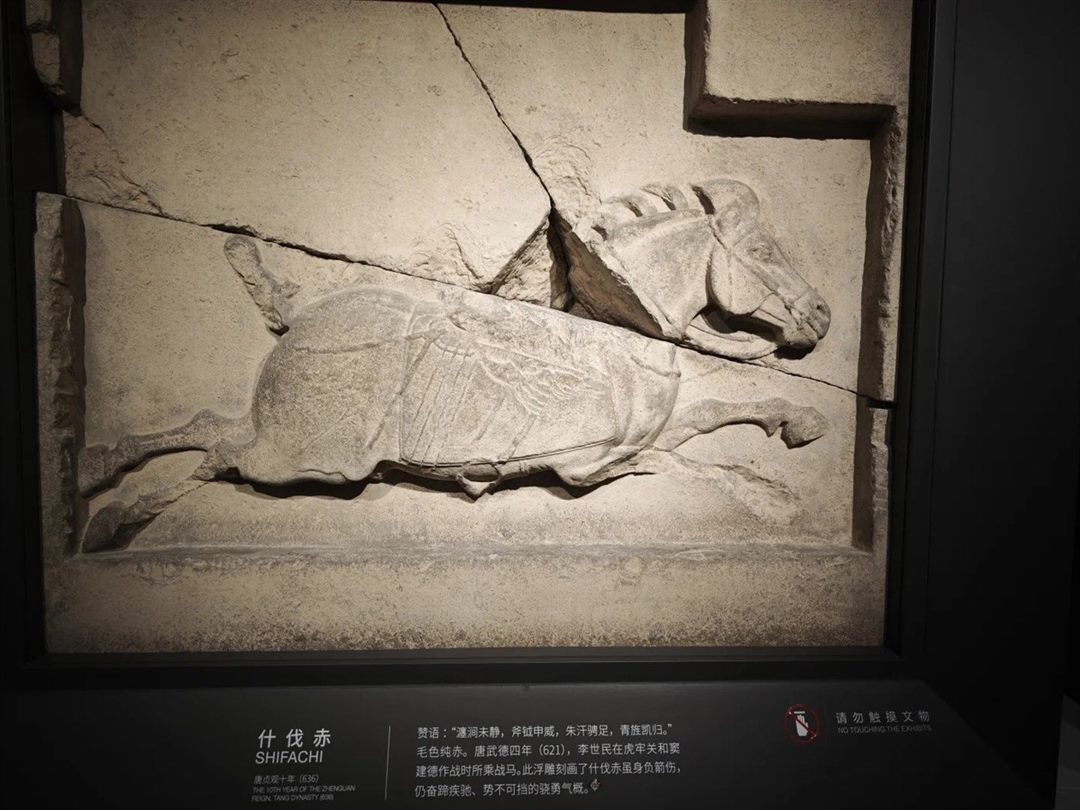
The Zhaoling Six Steeds (昭陵六骏) are six large relief carvings of the warhorses Emperor Taizong rode in the campaigns that founded the Tang. They were cut in 636 CE for his tomb at Zhaoling, north-west of the city, and they are among the most famous objects in Chinese sculpture.
⭐⭐ Two of the six in front of you are replicas. Saluzi (飒露紫) and Quanmaogua (拳毛騧) left China in the early twentieth century and are held by the University of Pennsylvania Museum of Archaeology and Anthropology, reported as purchased at the end of 1920 for US$125,000. What stands in their place in Xi’an are casts. The remaining four — 白蹄乌, 特勒骠, 青骓 and 什伐赤 — are the original carvings. ⚠️ Look for 特勤骠 on the gallery label rather than 特勒骠: the museum spells that one with 勤, and both spellings are in circulation.
This is not a small footnote and it is very hard to find in English. A visitor who does not know it photographs six reliefs and believes they have seen the set. A visitor who does know it is looking at something else entirely: four survivors and two absences, in one room. The museum at Zhaoling has publicly campaigned for the pair’s return.
⚠️ What happened between the reliefs leaving Zhaoling and arriving in Philadelphia is contested, and this page does not narrate it. What is checkable is where all six are now, and that is the part worth carrying into the gallery.
Worth it — on one condition
At ¥85 this is the most expensive museum ticket in Xi’an, in a city whose two best-known museums are free. It is the one people most often skip on price, and the honest counter-argument is not that it is cheap: it is that the free ones are booked out weeks in advance and this one is not.
⭐ But the condition is real. Buy the commentary. The museum’s own saying about itself is 三分看、七分听 — three parts looking, seven parts listening — and that is an unusually candid thing for an institution to admit. The exhibits are text. Without someone telling you why a particular slab matters, you are walking past stones with writing on them, and you will be bored inside twenty minutes however interested you arrived.
The official electronic guide is about ¥10, which against a ¥85 ticket is the cheapest decision on this page and the one that determines whether the rest of the money was worth spending. Official human commentary is also available.
⛔ Refuse the guides who approach you outside. Traveller reports single out unlicensed touts near the entrance whose content is unreliable — and since the entire case for this museum rests on the commentary being good, buying the wrong one costs more here than it would anywhere else.
Tickets, booking and hours
¥85 full, ¥42 half. ⭐ Unusually, that rate came with an expiry: it took effect on 12 May 2025, with no peak/off-peak split and an announced term of two years — so it is formally due for review around May 2027 rather than being an open-ended price.
⚠️ If you find guidance quoting about ¥10, that was the reduced fare charged while the museum was being rebuilt. It is not a discount you can still ask for.
Booking is required. The museum runs timed entry and slots open 5 days ahead through its own WeChat service account, its Alipay mini-programme or its website; entry is on the ID document or the booking QR code. On busy days the daily cap closes sales altogether, so this is not somewhere to turn up and queue.
| When | Hours | Last entry |
|---|---|---|
| August | 08:30–19:00 | 17:30 |
| Rest of the year | 09:00–18:30 | — |
⭐ And it has no weekly closing day, which is worth more than it sounds when you are planning around this city. The Shaanxi History Museum closes on Mondays and the Small Wild Goose Pagoda park (小雁塔) on Tuesdays. The Stele Forest absorbs whichever day the others take off.
Getting there, and the way through
Metro Line 2 to 永宁门 (Yongningmen), exit D2, then 1,199 m on foot. ⚠️ That is further than the “about 800 m” that circulates — budget a quarter of an hour, not five minutes. From the Bell Tower it is 1,685 m, which makes the two a reasonable half-day on foot.
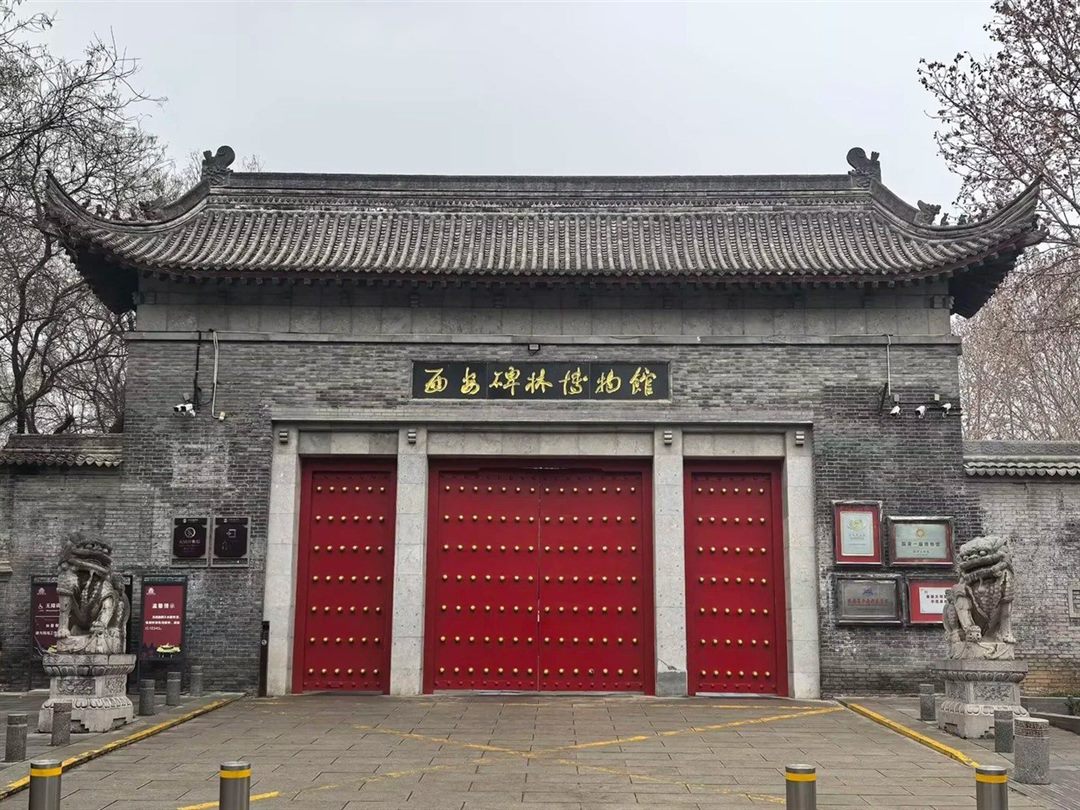
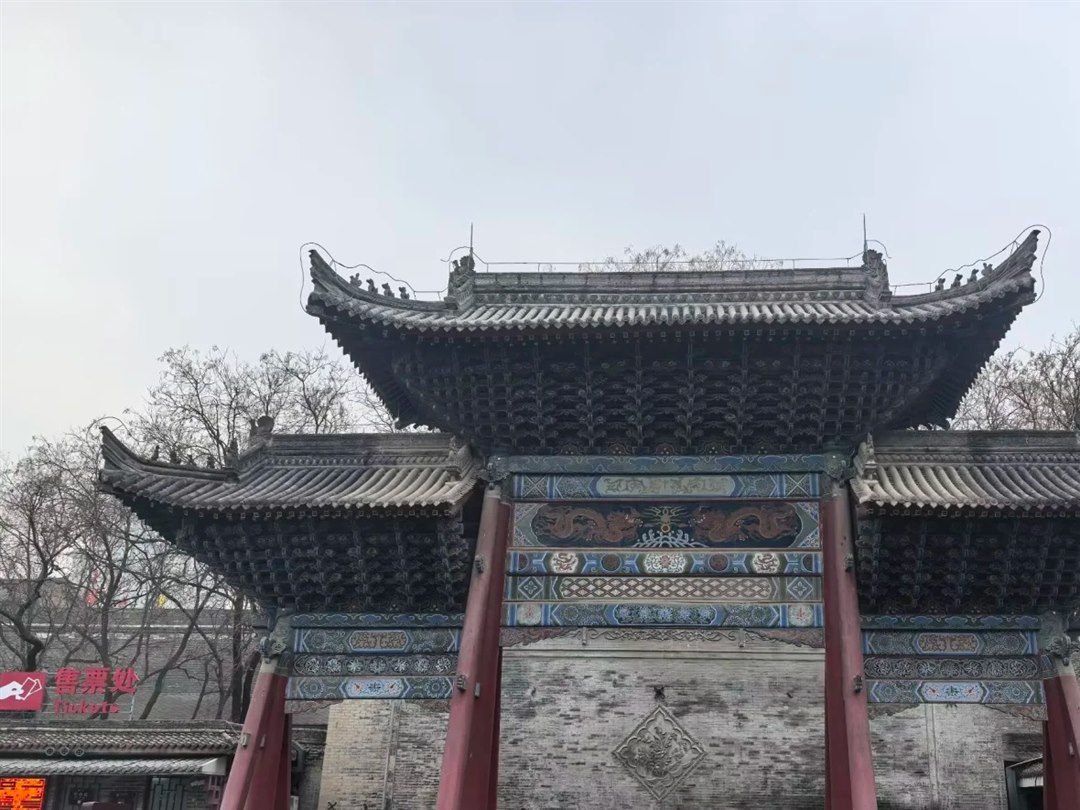
⭐ Go in at the north gate and out at the south. That takes you straight into the new north wing first, then south through the old Confucian-temple galleries, and delivers you onto 书院门 — the calligraphy-supply street, all brushes, ink stones and seal carving — at the end of the visit rather than the beginning. Doing it the other way round means browsing ink before you have any idea why it matters.
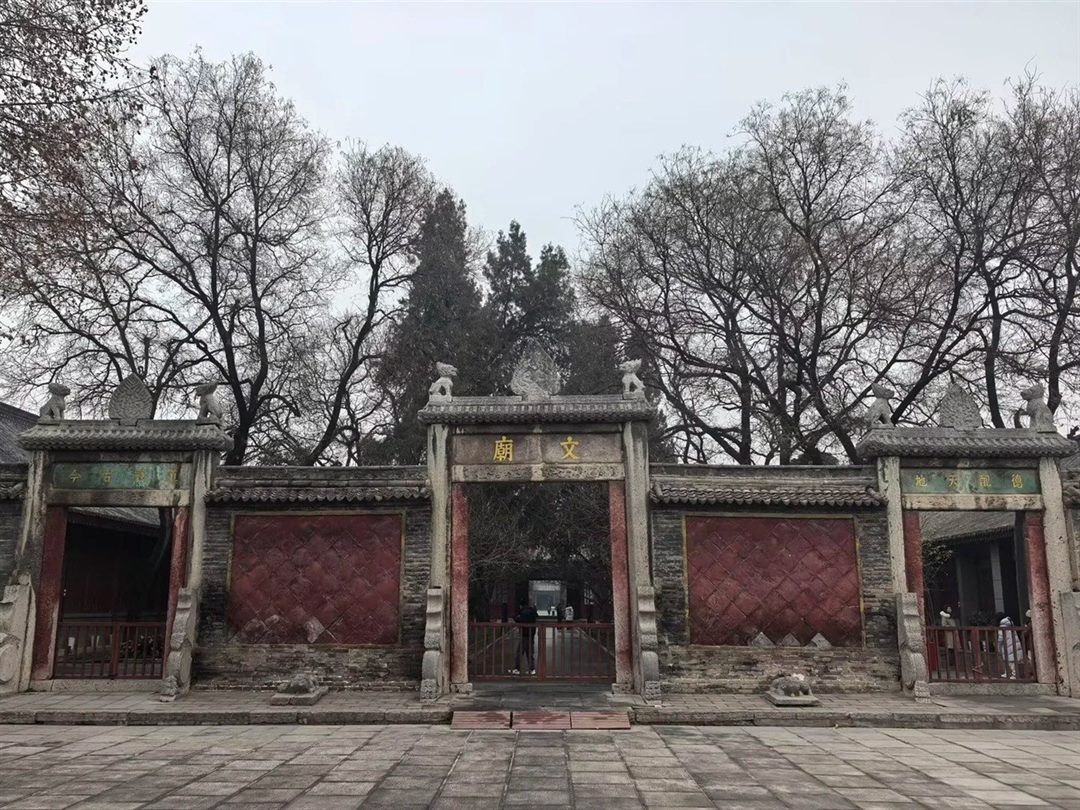
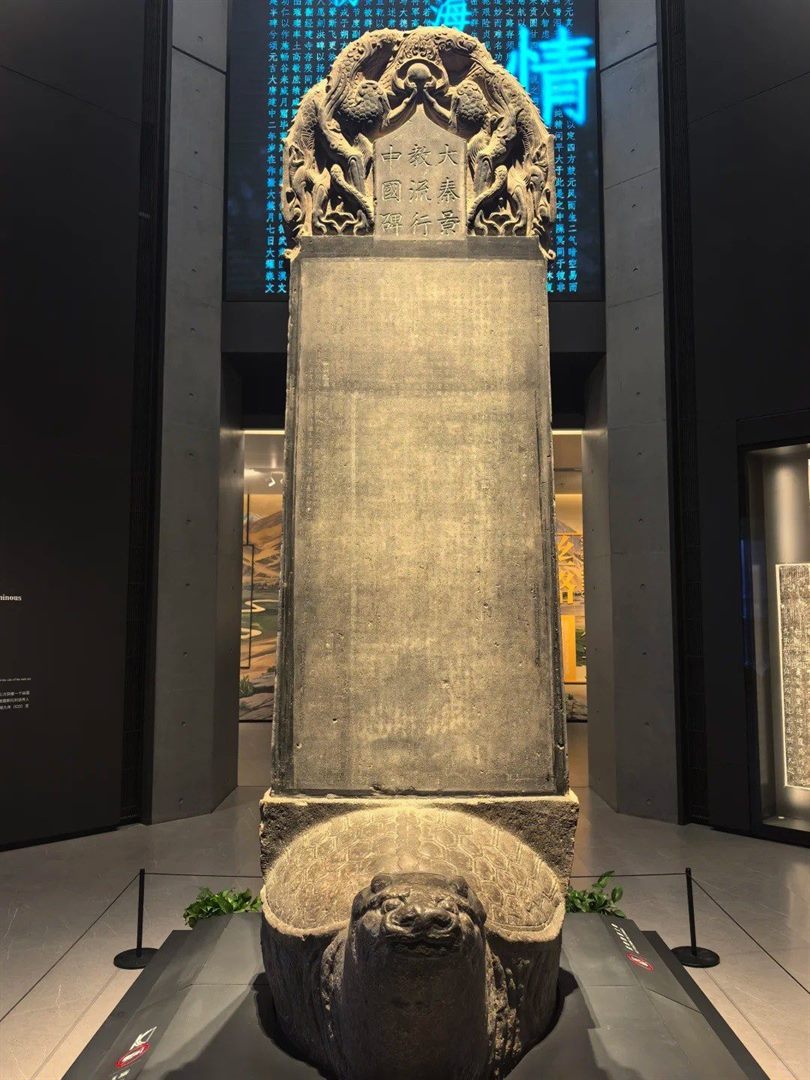
Allow two hours minimum, three with commentary. There is no substantial food inside; 书院门 at the south exit solves that.
⚠️ No flash photography, and do not touch the stones. They are carved surfaces thirteen centuries old in some cases, and the oil from hands is exactly what wears an inscription away.
Key takeaways
- ⭐⭐⭐ Two of the six Zhaoling steeds are replicas. Saluzi and Quanmaogua are at the University of Pennsylvania Museum; the other four here are the real 636 CE carvings. Almost nothing in English tells you which you are looking at.
- ⚠️ Buy the commentary, not a better ticket. The museum’s own saying is three parts looking to seven parts listening. The official electronic guide is about ¥10 and it is the difference between a museum and a room of stones.
- ⭐ Open every day — so it is the one that absorbs whichever day the Shaanxi History Museum (Mondays) or the Small Wild Goose park (Tuesdays) is shut.
- ¥85 is the priciest museum ticket in Xi’an, set in May 2025 on a stated two-year term. Guidance quoting about ¥10 is describing the rebuild period, not a discount.
- Go in the north gate and out the south, which ends you on 书院门 rather than starting you there. Allow two hours minimum since the 2025 rebuild more than doubled the floor area.
Frequently asked questions
Is the Stele Forest worth visiting if I cannot read Chinese?
Yes — but only if you buy commentary, and the museum effectively admits it. Its own saying is 三分看、七分听: three parts looking to seven parts listening. Without a guide these are stones with writing on them. With one they are a walk through Chinese history told in objects, and the official electronic guide costs about ¥10. It also stopped being only a calligraphy museum in 2025 — Buddhist sculpture, Han carved reliefs and Tang tomb statuary all came out of storage.
How much is a ticket?
¥85 full and ¥42 half price. ⭐ That rate took effect on 12 May 2025 with no peak/off-peak split and an announced two-year term, so it is due for review around May 2027. ⚠️ If you find guidance quoting about ¥10, that was the reduced fare while the museum was being rebuilt — not a discount you can still get.
Do I need to book?
Yes. It runs timed entry, and slots open 5 days ahead through the museum's own WeChat service account, its Alipay mini-programme or its website. On busy days the daily cap closes sales altogether, so this is not a place to turn up and queue.
Which day is it closed?
⭐ None — it is open every day, which is genuinely useful to know in this city. The Shaanxi History Museum closes on Mondays and the Small Wild Goose Pagoda park on Tuesdays, so the Stele Forest is the museum that can absorb whichever day the others take off.
Are the Zhaoling steeds real?
Four of the six are; two are replicas, and nothing on site is likely to labour the point in English. Saluzi (飒露紫) and Quanmaogua (拳毛騧) left China in the early twentieth century and are held by the University of Pennsylvania Museum of Archaeology and Anthropology — reported as bought at the end of 1920 for US$125,000 — so what stands in their place here are casts. The other four are the original carvings, made in 636 CE for Emperor Taizong's tomb.
What are the opening hours?
09:00–18:30 for most of the year. August is the exception: 08:30–19:00, with last entry 17:30. Both the mapping record and traveller reports give the same figures, which is rarer than it sounds.
How do I get there?
Metro Line 2 to 永宁门 (Yongningmen), exit D2, then 1,199 m on foot. ⚠️ That is further than the "about 800 m" often quoted — budget a quarter of an hour. From the Bell Tower it is 1,685 m, which makes the two a reasonable half-day on foot.
How long should I allow, and what is the best route through?
Two hours minimum after the 2025 rebuild, three with commentary. Go in at the north gate, straight into the new north wing, then south through the old Confucian-temple galleries and out of the south gate — which drops you onto 书院门, the calligraphy-supply street, at the end rather than the beginning. There is no substantial food inside; eat there afterwards.
Sources
Checked August 2026 · Written from our own first-hand travel in China.
Corrected since publication: we said the new north wing is underground — we could not source that. The museum’s own history wall dates the wing to May 2025 and places it on the north side, and says nothing about the level.