Key takeaways
- Walking the lanes is free and open any time — you only pay for a pedicab or a courtyard museum.
- Best cluster = Drum Tower / Houhai / Nanluoguxiang (subway Line 8 Shichahai · Line 2/8 Gulou Dajie · Line 6/8 Nanluoguxiang).
- Step one lane off the main strip and the crowds vanish into lived-in siheyuan courtyards.
- Licensed pedicabs run ~¥150–200/rickshaw (~40-min loop) — agree per-ride-not-per-person and pay by QR first.
- Go late afternoon into early evening; allow 1.5–3 hours, longer with food and the towers.
What a hutong is
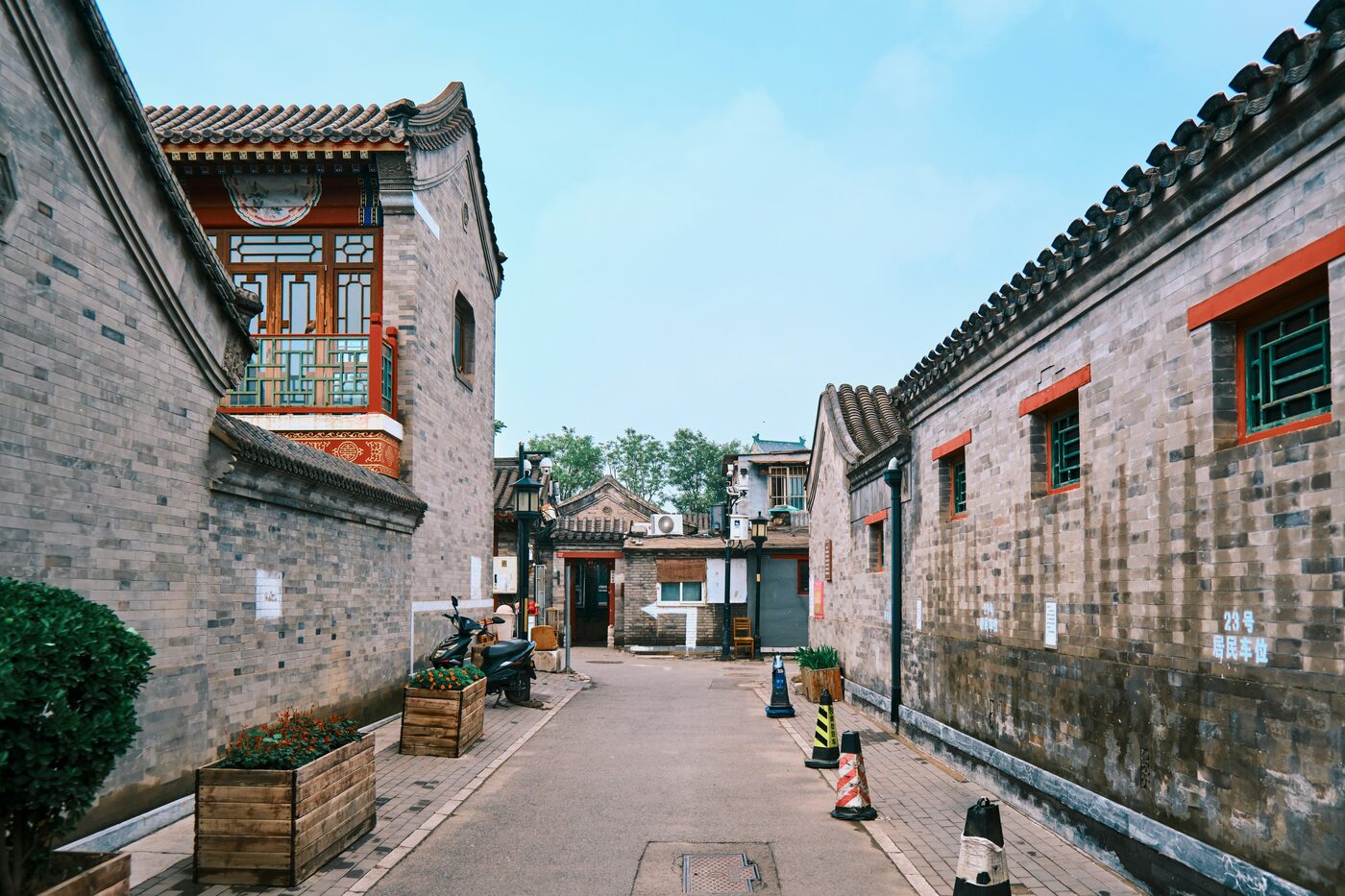
A hutong (胡同) is a lane formed by the outer walls of siheyuan — grey-brick courtyard houses built around a central yard, the basic building block of old Beijing. Inside the former city walls, thousands of these lanes once made a dense low-rise grid that defined how the city looked and lived for centuries. Twentieth-century demolition and road-widening erased most of them, but significant pockets survive, especially in the north of the centre around the Drum and Bell Towers and the Houhai lakes.
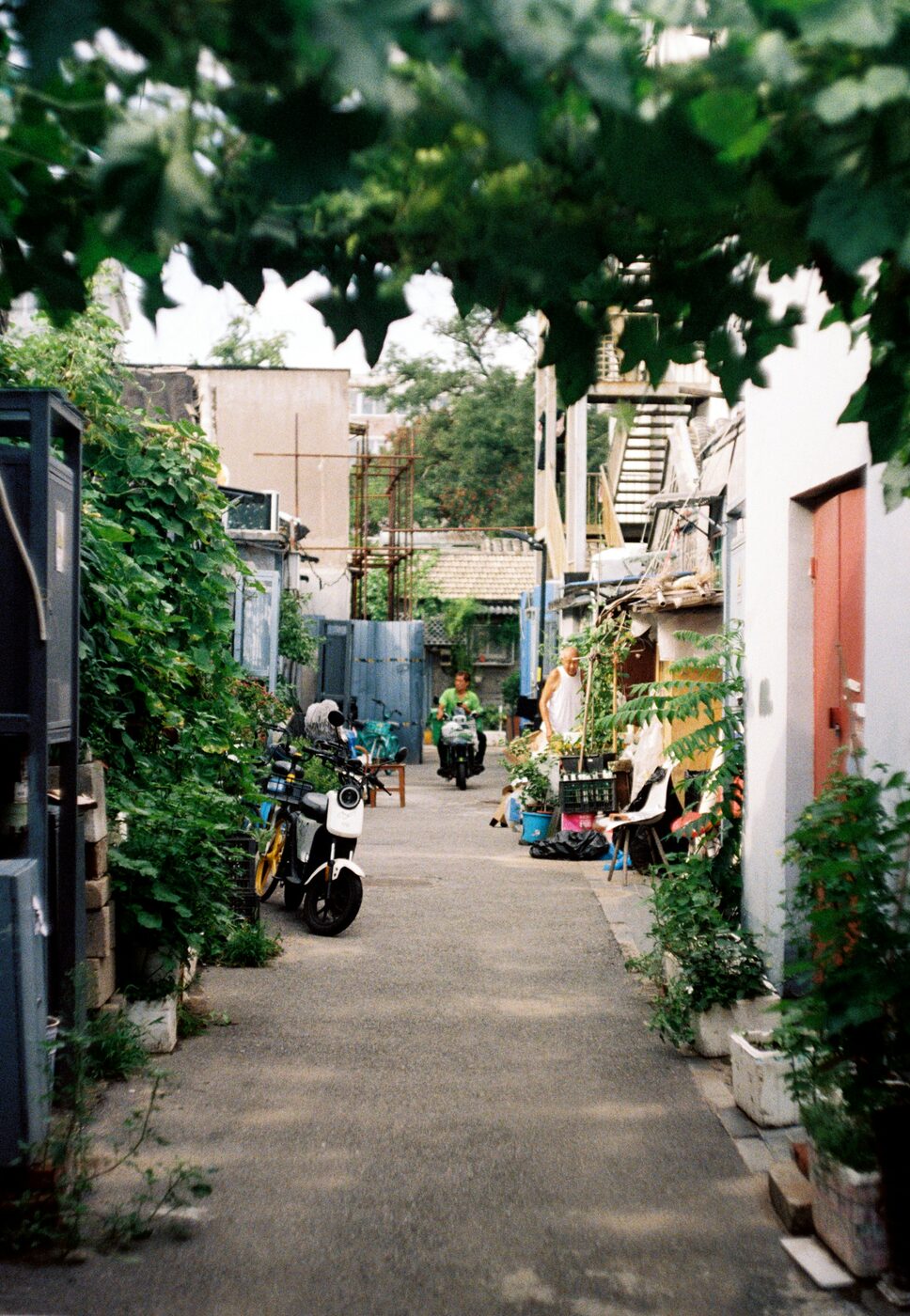
They are the city’s best surviving everyday texture — laundry strung across the lane, birdcages, courtyard cafés, tiny shops, parked bikes and residents on stools — a complete change of scale from the monumental sights like the Forbidden City and Tiananmen. Some courtyards are now boutique hotels, bars or small museums; most are still private homes you simply walk past. Walking the lanes is free and unticketed; the cost, if any, is a pedicab ride or a paid courtyard.
Which areas to walk
The hutongs worth your time cluster in the north of the centre. Pick one area as a base and wander outward; the table covers the five that reward a visit.
| Area | Vibe | Best for |
|---|---|---|
| Drum & Bell Towers 鼓楼 / 钟楼 | Historic heart; busy plaza ringed by lived-in lanes. | A rooftop view over the grey-tiled lanes, then wandering the surrounding hutongs. |
| Houhai & Shichahai 后海 / 什刹海 | Lanes wrapped around a chain of lakes; bars, boats, willow shores. | An evening stroll, lakeside drinks, the prettiest light at dusk. |
| Nanluoguxiang 南锣鼓巷 | The famous restored lane — lively, commercial, crowded; the main strip sells the same mass-market snacks you’ll see nationwide. | A quick first taste, then straight into the side lanes — Mao’er Hutong (帽儿胡同, Empress Wanrong’s house), Yu’er Hutong (雨儿胡同, Qi Baishi’s house) and Ju’er Hutong — where the real old Beijing is. |
| Wudaoying 五道营 | Calmer café-and-boutique strip near the Lama Temple. | A relaxed coffee stop and lower-key browsing, away from the crowds. |
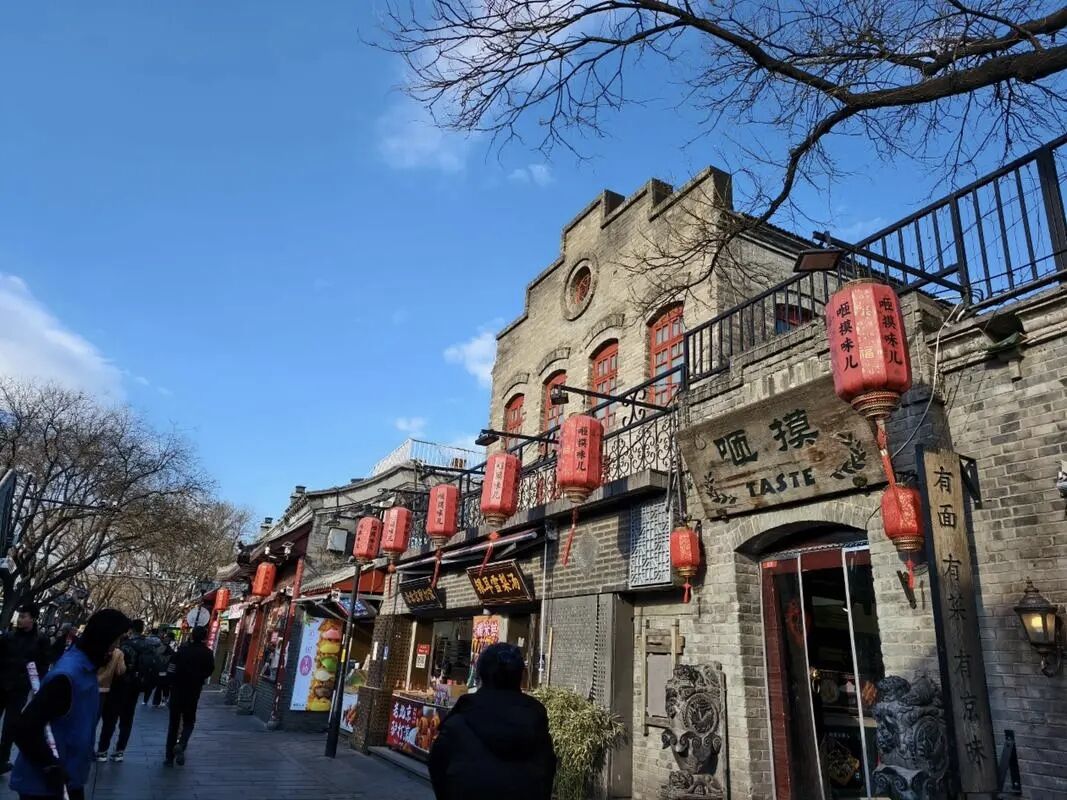
| Yandai Xiejie 烟袋斜街 | Short, slanting old shopping lane linking Houhai to the Drum Tower. | A quick, atmospheric connector with snack and souvenir stalls. |
The single rule that matters: Nanluoguxiang and the main strips are the busy, commercial face; the lived-in siheyuan is one or two lanes off. Walk away from the crowds, not toward them. Our Beijing city guide sets the whole area in a day-by-day plan.
Quieter, more photogenic alternatives to the Nanluoguxiang crush: Yangmeizhu Xiejie (杨梅竹斜街 — a Republican-era book lane, now low-key indie bookshops and cafés), Wudaoying and Shijia Hutong (史家胡同, with its little Hutong Museum), and the lanes ringing the White Dagoba (白塔寺) to the west, where a café’s upstairs frames the classic “hutong-and-white-pagoda” shot. All far calmer than the main strip.
How rickshaw (pedicab) tours work
Rickshaw — pedicab — tours run from the Houhai and Drum Tower area, often looping the lakeside lanes with a short stop at a courtyard home. They’re a pleasant novelty, but the booking is where visitors get caught, so treat the price like a contract:
- The licensed price: a permit-holding pedicab is ¥150–200 per rickshaw (seats 2–3) for a ~40-minute fixed loop past Prince Gong’s Mansion (恭王府) and Silver Ingot Bridge (银锭桥). Unlicensed “black” pedicabs quote anything from ¥100 to ¥300 and play word games.
- Spot the licensed cab: a red-and-blue canopy, a franchise permit sticker and an embossed number plate on the back, and a driver in a matching uniform with a work badge. Unlicensed ones are converted e-trikes with no proper plate.
- The classic scam: “150” quoted as if per ride, then billed per person at the end — three seats become ¥450. Others agree a haggled price, then “remember” it was per person once you’re aboard, shrink the 40-minute loop to a 10-minute dash, or divert you to a commission souvenir shop or a “courtyard visit” surcharge.
- Agree the all-in figure and pay by QR before you sit down: confirm per-ride-vs-per-person, the duration and the route, and settle up first so there’s nothing to argue about at the end. Ignore anyone touting a suspiciously low “¥50 for the whole loop” — that’s a black cab.
- You don’t need one at all: walking Yandai Xiejie and the quiet side lanes is free and often better than a rushed e-trike with an invented commentary. If a ride goes wrong, film it and say you’ll call 12345 (the city complaint line) — that usually ends the dispute. Booking a licensed loop through a hotel or Trip.com avoids the street-stand haggle entirely.
Walking it yourself vs a guided tour
For most visitors, walking wins. The lanes are safe, flat and easy to navigate, and the reward is in getting a little lost in the quiet side alleys rather than the commercial main drags. A guided tour earns its place for specific reasons — here’s the quick decision:
| Option | Cost | Best for |
|---|---|---|
| Walk it yourself | Free | Independent travellers who want to wander, photograph and discover at their own pace — the default. |
| Pedicab loop | ~¥150–200/rickshaw | The novelty of the ride and a quick lakeside circuit; take a short licensed one, then walk. |
| Guided walking / food tour | Varies (book ahead) | Travellers who want the history explained, a vetted courtyard-home visit, or a hutong food-tasting. |
Best time to go
Late afternoon into early evening is the sweet spot — warm light on the grey brick, lit windows, and residents out on the stoops. Here is the fuller picture:
| When | What it’s like |
|---|---|
| Morning | Quiet and residential — good for a calm wander and clean photos before the day-trippers arrive. |
| Late afternoon | The best window: golden light on the lanes, cafés open, lively but not chaotic. |
| Early evening | Lit windows and lakeside bars around Houhai; the most atmospheric, especially in warmer months. |
| Weekends | Nanluoguxiang in particular can be shoulder-to-shoulder — visit on a weekday if you can. |
Season: spring and autumn are the most pleasant. Summer is hot and humid but the lanes offer shade and the lakes a breeze; winter is cold and stark but quiet and photogenic. See our best time to visit China guide for the broader seasonal picture.
Getting there & practical notes
The main hutong cluster is easy to reach on the subway:
| For | Subway |
|---|---|
| Houhai & the lakes | Line 8 to Shichahai (什刹海) |
| Drum & Bell Towers | Line 2 or Line 8 to Gulou Dajie (鼓楼大街) |
| Nanluoguxiang | Line 6 or Line 8 to Nanluoguxiang (南锣鼓巷) |
- Fares & payment: tap in with an Alipay or WeChat Pay QR code — no physical card needed. See the Beijing subway guide.
- Pair it with the Forbidden City: the cluster sits just north, making the hutongs an easy late-afternoon add-on after a morning at the palace.
- Walking surface: lanes are flat and walkable but the brick is uneven in places — flat shoes help.
- Respect the residents: most courtyards are private homes; look in through open gates, but don’t wander into yards or photograph people up close without a nod.
Book a hutong rickshaw or walking tourNASDAQ: TCOM
Trip.com lists licensed pedicab loops, guided hutong walks and food-tasting tours around Houhai and the Drum Tower — booked in English on a foreign card, so you skip the haggling at the street stands.
Where to stay near the hutongs
To wake up in the lanes, base around the Drum & Bell Towers, Nanluoguxiang or Houhai in northern Dongcheng — walkable to the best hutongs, on subway Lines 2/6/8, and a short hop from the Forbidden City. A converted siheyuan courtyard hotel is the splurge that fits the setting, but a reliable home-grown mid-range chain is the value pick for most visitors.
Frequently asked questions
What is a hutong?
A hutong (胡同) is a narrow lane formed by the walls of siheyuan — traditional grey-brick courtyard houses. Together they made up the fabric of old Beijing inside the city walls. Many were demolished in the 20th century, but pockets survive around the Drum and Bell Towers, Houhai lake and Nanluoguxiang, some restored and lively, others still quiet and residential.
Do I need to pay or book to visit the hutongs?
No — walking the lanes is free and open at any hour. You only pay if you take a rickshaw (pedicab) tour or enter a specific courtyard museum. If you do want a pedicab, agree the price and route clearly in writing before you set off, as casual stands are a common spot for inflated fares.
Which hutong area is best for first-timers?
The Drum Tower / Houhai / Nanluoguxiang cluster in the north of the centre is the easiest and most atmospheric. Nanluoguxiang itself is touristy and busy; step one or two lanes east or west and it quickly goes quiet and residential. Wudaoying and the lanes around the Lama Temple are good calmer alternatives.
Are the hutongs worth it, and how long do I need?
Yes — they are the best surviving window into pre-modern street life in Beijing, and a strong contrast to the monumental sights. Allow 1.5 to 3 hours to wander, longer if you stop for food, courtyard cafés or the Drum and Bell Towers. Late afternoon into early evening is the nicest light and mood.
How much does a hutong rickshaw (pedicab) tour cost?
A licensed permit-holding pedicab is ¥150–200 per rickshaw (seats 2–3) for a ~40-minute fixed loop past Prince Gong's Mansion and Silver Ingot Bridge; unlicensed "black" pedicabs quote ¥100–300 and play word games. The classic scam is a "150" that turns out to be per person — three seats billed as ¥450 — plus route-shrinking (a 40-minute loop cut to 10) and forced souvenir stops. Spot the licensed cab by its red-and-blue canopy, franchise permit sticker, embossed rear plate and uniformed driver; agree per-ride-vs-per-person, the duration and the route, and pay by QR before you sit down. Booking through a hotel or Trip.com skips the street-stand haggle entirely.
Should I walk the hutongs myself or take a guided tour?
For most visitors, walking is better — the lanes are safe, flat and easy to navigate, and the reward is in getting a little lost in the quiet side alleys rather than the commercial main drags. A guided tour earns its keep if you want the history explained, a vetted courtyard-home visit, or a hutong food-tasting walk. If you only want the pedicab for the novelty of the ride, take a short licensed loop and walk the rest yourself.
How do I get to the Beijing hutongs by subway?
The main cluster is on the subway: Line 8 to Shichahai for Houhai and the lakes, Line 2 or Line 8 to Gulou Dajie for the Drum and Bell Towers, and Nanluoguxiang has its own station on Lines 6 and 8. Tap in with an Alipay or WeChat Pay QR code — no physical card needed. It is an easy add-on after the Forbidden City, which sits just to the south.
Can you still see real courtyard houses, or is it all shops now?
Both. Nanluoguxiang and parts of the Drum Tower area are heavily commercialised — cafés, bars and boutiques in converted courtyards. But step one or two lanes off the main strip and you are back in lived-in siheyuan: residents on stools, birdcages, parked bikes and laundry. Some courtyards are now boutique hotels or small museums you can enter; most are private homes you simply walk past.
Sources
Checked August 2026 · Written from our own first-hand travel in China.