Key takeaways
- China’s grandest imperial garden — ~290 ha of Kunming Lake, Longevity Hill and pavilions; UNESCO-listed since 1998.
- The through-ticket (联票) is ¥60 peak / ¥50 winter and bundles the inner sights; a plain gate ticket (¥30 / ¥20) skips them — but book it only if Suzhou Street is open (it often closes for repair).
- Enter at Beigongmen (North Gate) on metro Line 4 for the easiest start — climb the hill (fewer crowds than the East Gate), then walk down to the lake.
- Reserve online up to 7 days ahead (release 9pm); on peak weekends and holidays it sells out fast.
- Allow 3–4 hours; the Kunming Lake ferry (~¥30–50) saves your legs and gives the best view of the hill.
What the Summer Palace is
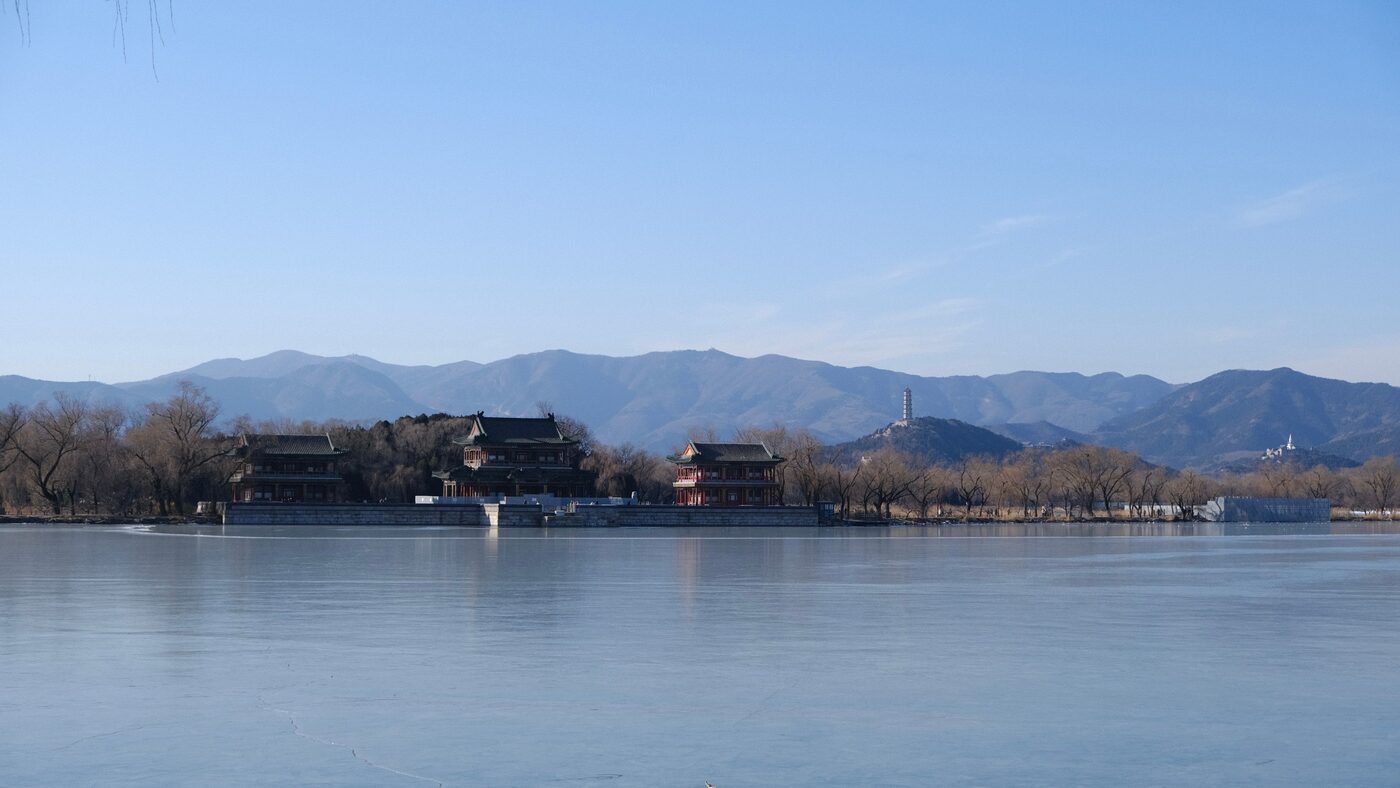
The Summer Palace (颐和园, Yíhéyuán — “Garden of Nurtured Harmony”) is the largest and best-preserved imperial garden in China: a roughly 290-hectare landscape of lake, hill and pavilion in the northwest of Beijing. About three-quarters of it is Kunming Lake; the rest rises over Longevity Hill, crowned by the Tower of Buddhist Incense. It was the summer retreat and political stage of the late Qing court — most famously of the Empress Dowager Cixi, who rebuilt it in the 1880s — and has been a UNESCO World Heritage Site since 1998.
Where the Forbidden City is a tight, walled palace, the Summer Palace is the opposite: open water, long lake walks, bridges and garden set-pieces. It is the place Beijing locals come to row boats and stroll, and it photographs beautifully in spring blossom and autumn colour.
Tickets — through-ticket vs gate ticket
Two ticket types are sold. Most visitors want the through-ticket (联票), which adds the inner sights; the plain gate ticket only lets you into the grounds.
| Ticket | Price | What it covers |
|---|---|---|
| Through-ticket 联票 | ¥60 peak ¥50 winter | The grounds plus the inner “garden-within-a-garden” sites: Tower of Buddhist Incense (¥10), Suzhou Street (¥10), Dehe Garden (¥5) and the Summer Palace Museum / Wenchang Gallery (¥20). Bought separately those add up to ¥75, so the through-ticket saves about ¥15. |
| Park-gate ticket 门票 | ¥30 peak ¥20 winter | The grounds, lake, Long Corridor, Marble Boat and Seventeen-Arch Bridge — everything except the four ticketed inner sites. You can still add the Tower of Buddhist Incense (¥10) on the day if the legs hold up. |
Peak pricing runs April 1 – October 31. Tickets are real-name: reserve up to 7 days ahead on the official “颐和园” or “畅游公园” WeChat account (release around 9:00pm) and scan your passport at the gate; on peak-season weekends and holidays the quota goes fast. Watch one catch: Suzhou Street is often closed for repair, and when it is, the through-ticket loses much of its value — check its status before you pay for the 联票. You can also book tickets and an English-guided tour through a booking site like Trip.com if you’d rather not set up a Chinese account.
Which gate to use
The park has several entrances spread around its edge. Pick the gate by how you arrive — the North Gate is the simplest for most first-timers.
| Gate | Getting there | Best for |
|---|---|---|
| Beigongmen North Palace Gate · 北宫门 | Directly on metro Line 4 | Most first-timers — drops you by Suzhou Street and the climb up Longevity Hill, then down to the lake. |
| Donggongmen East Palace Gate · 东宫门 | ~10 min walk from Xiyuan (Line 4 / 16) | The historic main entrance, opening onto the court halls — natural exit if you start in the north. |
| Xingongmen New Palace Gate · 新宫门 | Southeast corner, by bus / taxi | Closest to the Seventeen-Arch Bridge and South Lake Island — handy if those are your priority. |
The classic no-backtrack loop: in at Beigongmen → Suzhou Street (if open) → over Longevity Hill and up the Tower of Buddhist Incense → down to the Long Corridor → the Marble Boat → along the lake to the Seventeen-Arch Bridge → out at Xingongmen. This climbs first while you’re fresh and ends on the flat lakeshore. Beigongmen draws noticeably fewer people than the East Gate; the park opens early (6am peak / 6:30 winter) and the inner sights at 8:00, so arrive near opening — 9:00–11:00am is the crush, and on a public holiday the entry queue alone can run 40 minutes. If your legs tire, the Kunming Lake ferry (below) cuts out the long shore walk.
What to see — the headline sights
Five set-pieces carry the visit. Three of them — the Tower of Buddhist Incense, Suzhou Street and Dehe Garden — need the through-ticket.
| Sight | What it is | Why stop |
|---|---|---|
| The Long Corridor 长廊 | 728 m covered lakeshore walkway | Every beam painted with a different scene — said to be the longest painted corridor in the world, and the shaded spine of the lakefront. |
| Longevity Hill & Tower of Buddhist Incense 万寿山 / 佛香阁 | Octagonal tower on the hill | Anchors the skyline; climb for the classic view down over Kunming Lake (through-ticket). |
| The Marble Boat 清晏舫 | Lakeside stone “paddle steamer” | A Cixi-era folly at the northwest shore — one of the most-photographed spots in the garden. |
| Seventeen-Arch Bridge & South Lake Island 十七孔桥 | Long marble bridge to an island | Near the east end of the lake; at the winter solstice the low sun lights all seventeen arches from within. |
| Suzhou Street 苏州街 | Recreated canal-side shopping lane | Behind Longevity Hill near the north gate — a playful Qing imperial “market” (through-ticket), but often closed for repair; skip it if it is, and don’t pay for the 联票 just for it. |
If you have to prioritise: the Tower of Buddhist Incense and the Long Corridor are the two must-dos (travellers rate them five stars); Dehe Garden (Cixi’s theatre) and the Summer Palace Museum are worthwhile but secondary, and Suzhou Street is skippable — especially when it’s under repair.
The Kunming Lake ferry — worth it
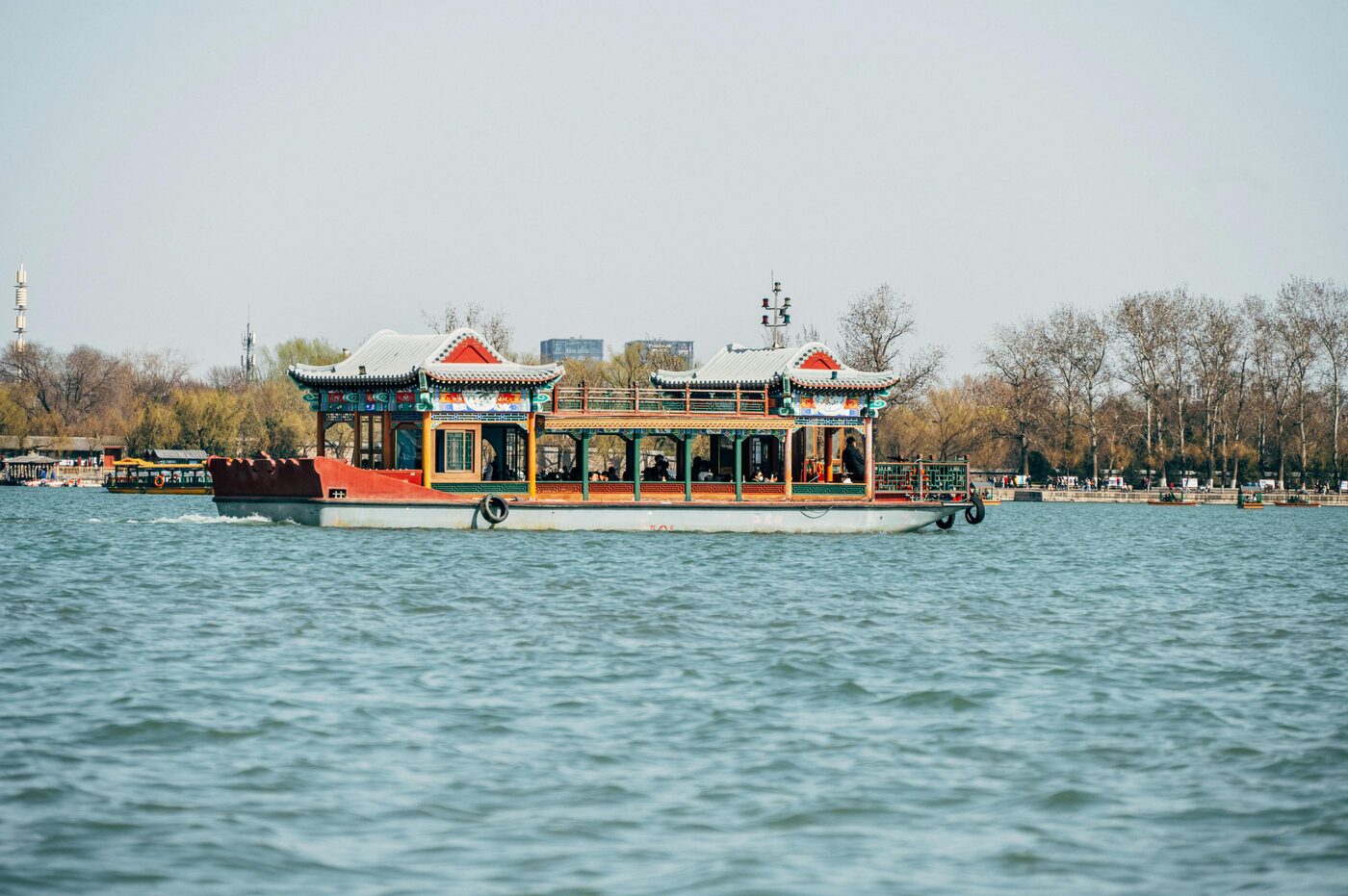
Crossing the lake by boat gives the view of Longevity Hill you can’t get from shore, and saves a long walk. Two kinds run roughly mid-March to early November, 8:30am–5:30pm (ticket sales stop around 4:30pm, so don’t leave it late):
- Big ferry boats — about ¥30–50 per person one way; the useful runs are Paiyunmen dock → South Lake Island, or Shizhangting → the Bronze Ox near the Seventeen-Arch Bridge.
- Small electric boats — about ¥200/hour (¥600 deposit, up to six people) from the Yulantang or Bafangting docks; the self-drive option for a family or group.
Best time & how long
Allow 3–4 hours for the core (Longevity Hill, the Long Corridor, the Marble Boat and a lakeside walk); a full day adds the Seventeen-Arch Bridge, South Lake Island and a slow loop of the lake. It is large and spread out — wear comfortable shoes. Here’s the year by season:
| Season | What it’s like |
|---|---|
| Spring (Apr–May) | Ideal — mild, with blossom around the lake. Among the best half-days in Beijing. |
| Summer (Jun–Aug) | Hot, humid and busy; the Long Corridor and lakeside shade help. Go at opening. |
| Autumn (late Sep–Oct) | The other peak — clear skies and golden colour reflected in Kunming Lake. |
| Winter (Dec–Feb) | Cold but quiet; a frozen Kunming Lake has its own stark appeal, and the solstice sun through the Seventeen-Arch Bridge is a winter highlight. |
Whatever the season, mornings are calmer than afternoons, and any of the three Golden Weeks (Spring Festival, May 1, October 1) are best avoided. See our best time to visit China guide for the broader picture.
Practical for foreigners
Hours & entry
- Park grounds: 6am–8pm peak (last entry 7:00pm); 6:30am–7:00pm winter. The inner ticketed sites keep shorter hours — 8:00am–6:00pm peak, 8:30am–5:00pm winter — so do the Tower of Buddhist Incense before mid-afternoon, not at the end.
- Tickets: real-name; reserve up to 7 days ahead on the official WeChat account (9pm release) and scan your passport at the gate. The through-ticket is valid the same day only, with no re-entry.
- Underfoot: it’s ~5 km of mostly stone paths; wear proper walking shoes, not heels. On-site snacks are pricey (a ¥15 sausage), so bring water — there are cheaper shops just outside the North and East gates.
Scams & touts
Near Beigongmen and Donggongmen you’ll be approached by freelance “guides”offering a “cheap tour” or to “get you in the back way.” They ask for money up front, then rush you, invent history, or steer you to an overpriced boat — refuse them; the only official guides are at the in-park service stations. And don’t leave the lake ferry too late: ticket sales stop around 4:30pm and the holiday queues run long.
Payment & English
Alipay and WeChat Pay are universal at ticket windows, boat docks and snack kiosks; carry a little cash as a backstop. On-site English signage is partial — major sights are labelled, but it helps to download an offline map and a translation app before you go. There is no luggage storage worth relying on, so visit between hotel and station rather than with bags.
How it fits a Beijing trip
The Summer Palace is in Haidian, the northwest of the city — about 45 minutes by metro from the centre on Line 4 (Beigongmen for the north gate, Xiyuan for the east). It works best as a relaxed half-day:
- Summer Palace + Old Summer Palace (Yuanmingyuan) — the ruined imperial garden is one stop north on Line 4; pair them for a full garden day.
- Summer Palace morning + downtown afternoon — do the garden at opening, then ride back in for the hutongs or Houhai.
- Don’t pair it with the Temple of Heaven — the Temple of Heaven is in the far south of the city, too far for the same afternoon.
Where it sits in a trip: on a tight two-day Beijing visit the Forbidden City and Great Wall come first; the Summer Palace earns its place once you have three or more days. The Beijing city guide has the full itinerary.
Book Summer Palace tickets & a guided tourNASDAQ: TCOM
Trip.com lists Summer Palace entry tickets and English-guided half-day tours (often paired with the Old Summer Palace) — booked in English on a foreign card, no Chinese account needed.
Frequently asked questions
How much is a Summer Palace ticket and should I buy the through-ticket?
Two ticket types. The through-ticket (联票) is ¥60 in peak season (April 1 – October 31) and ¥50 in winter, and bundles the four ticketed inner sites — the Tower of Buddhist Incense (¥10), Suzhou Street (¥10), Dehe Garden (¥5) and the Summer Palace Museum / Wenchang Gallery (¥20) — which come to ¥75 bought separately, so it saves about ¥15. A plain park-gate ticket is ¥30 peak / ¥20 winter and covers the grounds, lake, Long Corridor, Marble Boat and Seventeen-Arch Bridge; you can add the Tower of Buddhist Incense (¥10) on the day. One catch: Suzhou Street is frequently closed for repair, and when it is the through-ticket loses much of its value — check its status before paying for the 联票.
Do I need to reserve, and how?
Yes — tickets are real-name and reserved online up to 7 days ahead on the official '颐和园' or '畅游公园' WeChat account, with the daily quota released around 9:00pm; you scan your passport at the gate. On peak-season weekends, holidays and the summer break the quota goes quickly, so book a few days out. If you'd rather not set up a Chinese account, a booking site such as Trip.com sells entry and English-guided tours in English on a foreign card.
How long do you need, and when is it least crowded?
Half a day — about 3 to 4 hours — covers Longevity Hill, the Long Corridor, the Marble Boat and a lakeside walk; a full day adds the Seventeen-Arch Bridge, South Lake Island and a slow loop. It's ~5 km of walking, so wear proper shoes. It's calmest at opening (6:00–8:30am) and after 5pm; 9:00–11:00am is the crush, and on a public holiday (over 100,000 visitors a day) the entry queue alone can run 40 minutes and the boat docks 1–2 hours. A weekday, Tuesday to Thursday, roughly halves the crowds.
Which gate should I use?
Beigongmen (North Palace Gate) is the easiest for most first-timers — it's right on metro Line 4 (~300 m from the gate), draws noticeably fewer people than the East Gate, and drops you by Suzhou Street for the climb up Longevity Hill, then down to the lake. Donggongmen (East Palace Gate, ~800 m from Xiyuan on Line 4) is the historic main entrance opening onto the court halls, but queues more in peak season. Xingongmen (New Palace Gate), in the southeast, is closest to the Seventeen-Arch Bridge and the boats. The classic no-backtrack loop is in at Beigongmen, over the hill, along the lake, out at Xingongmen.
Is the Kunming Lake boat worth it?
Yes — crossing by boat gives the view of Longevity Hill you can't get from shore and saves a long walk. Big ferries are about ¥30–50 per person one way (Paiyunmen dock to South Lake Island, or Shizhangting to the Bronze Ox); small self-drive electric boats are about ¥200/hour (¥600 deposit, up to six people). Boats run roughly mid-March to early November, 8:30am–5:30pm, with ticket sales stopping around 4:30pm — don't leave it late, and skip it if you're short on time and just walk the Long Corridor.
Is the Summer Palace worth it next to the Forbidden City?
Yes, and it is a different experience — the Forbidden City is a walled palace, the Summer Palace is a vast imperial garden of lake, hills and pavilions. If you have three or more days in Beijing it is one of the best half-days; on a tight two-day trip the Forbidden City and Great Wall come first.
Sources
Checked August 2026 · Written from our own first-hand travel in China.