Key takeaways
- A Ming-Qing imperial sacrificial park, built 1420, UNESCO World Heritage 1998 — not a temple in the everyday sense.
- Buy the through-ticket (联票, ¥34 peak / ¥28 winter) — the plain park ticket (¥15 / ¥10) can’t enter the Hall of Prayer, Echo Wall or Circular Mound. Reserve ~7 days ahead; the monuments close Mondays.
- Enter at Tiantan East Gate (metro Line 5, exit A2) and walk the axis south — no backtracking.
- Go at opening: the park (6:00) fills with tai chi, dancing, choirs and water-calligraphy; get to the Hall of Prayer at 8:00 for a near-empty half-hour before the tour groups.
- Don’t miss the Circular Mound’s Heart-of-Heaven stone and the Echo Wall’s Three-Echo Stones — the acoustics beat the Echo Wall itself when it’s crowded.
What the Temple of Heaven is
The Temple of Heaven (天坛, Tiāntán) is not a temple in the everyday sense but a vast imperial sacrificial complex: the ground where the Ming and Qing emperors came once a year to pray to Heaven for a good harvest, performing rites as the “Son of Heaven.” Begun in 1420 — the same year as the Forbidden City — it sits in a large walled park in southern Beijing and has been a UNESCO World Heritage Site since 1998. The whole layout is a piece of cosmology in stone and timber: a square outer wall (earth) and a rounded northern wall (heaven), with the monuments strung along a raised north–south axis. That axis is what makes the visit easy — you walk it once, end to end, rather than circling back.
Tickets — park-gate vs through-ticket
There are two ticket layers, and the difference matters: the cheap park-gate ticket only gets you into the grounds, while the through-ticket (联票) is what lets you go inside the monuments — including the famous round hall.
| Ticket | Price | What it includes |
|---|---|---|
| Park-gate ticket 大门票 | ¥15 peak ¥10 winter | The grounds only — cypress avenues and the morning park life. Does not include the interiors of the monuments. |
| Through-ticket 联票 | ¥34 peak ¥28 winter | Park entry plus the Hall of Prayer for Good Harvests, the Echo Wall / Imperial Vault of Heaven, and the Circular Mound Altar. Buy this — the plain park ticket won’t get you inside the round hall. |
Peak season is April 1 – October 31. Tickets are real-name (tied to your passport) and need an advance reservation — book at least a day ahead (up to ~7 days) on the official “畅游公园” account or the Temple of Heaven ticketing platform, and scan your passport at the gate. Note the monument courtyards close on Mondays (except public holidays), even though the surrounding park stays open — so a Monday visit gets you the park life but not the Hall of Prayer. Booking through an English platform such as Trip.com avoids the Chinese-only reservation flow.
What to see along the axis
Four things make up the visit, three monuments on the raised north–south axis plus the park around them. Walk them in order and you cross the whole site without doubling back.
| Sight | What it is | Don’t miss |
|---|---|---|
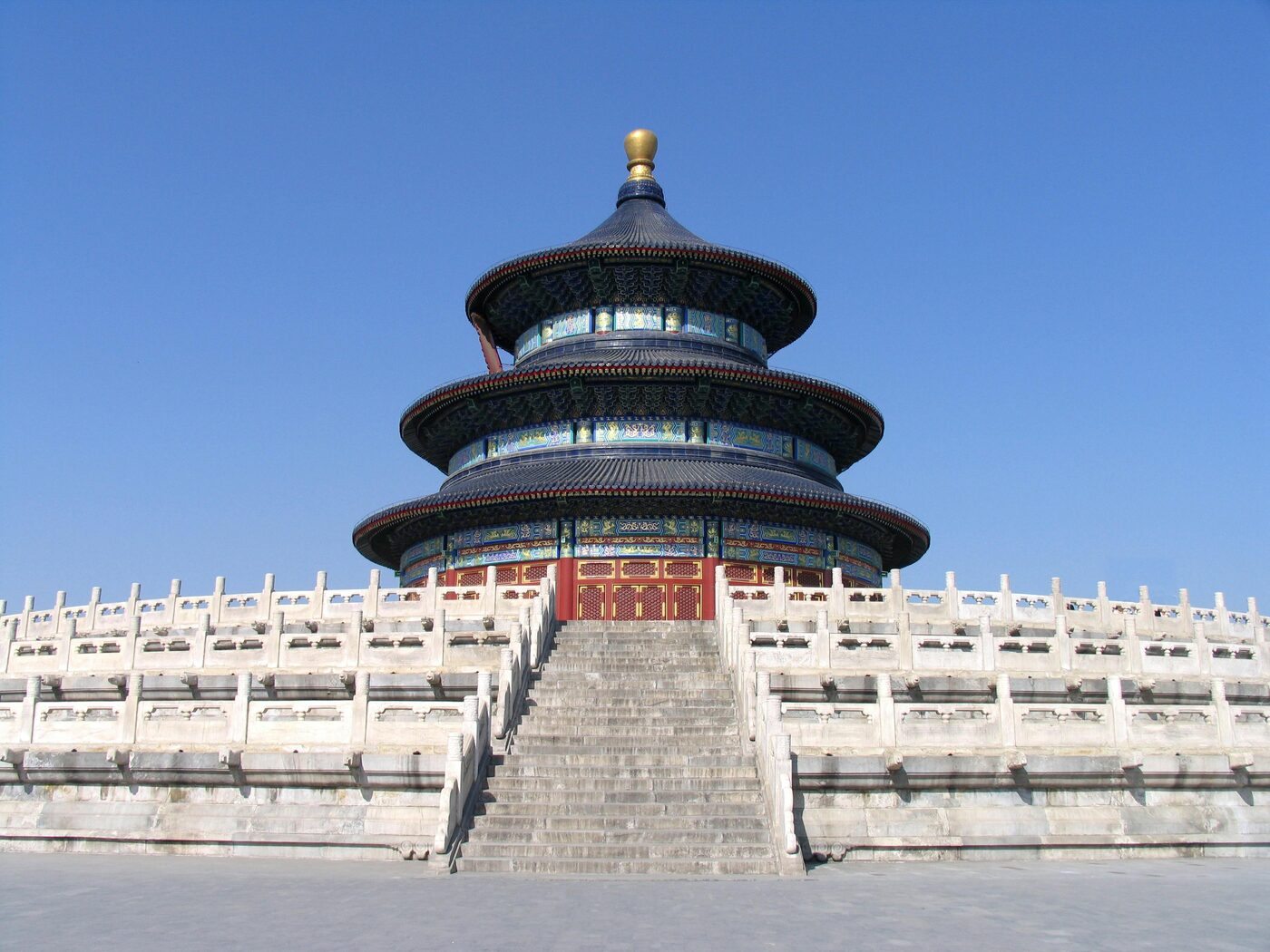
| Hall of Prayer for Good Harvests 祈年殿 | The icon — a 38 m, triple-eaved circular hall of blue-tiled roofs on a three-tiered marble terrace, rebuilt entirely in wood without nails. | The most recognisable round building in China; photograph it early before the crowds. |
| Echo Wall & Imperial Vault of Heaven 回音壁 / 皇穹宇 | A smaller round hall enclosed by a circular wall that is meant to carry a whisper around its curve. | The Echo Wall itself is temperamental (wear, carved graffiti, crowd noise) — the reliable trick is the Three-Echo Stones on the path in front: clap on the third slab and you hear three clear echoes. |
| Circular Mound Altar 圜丘坛 | An open three-tiered marble altar at the south end, where the actual sacrifices were made. | Stand on the round centre stone (天心石, the Heart of Heaven) — your voice is noticeably amplified, and it works even when it’s busy. |
| Hall of Abstinence 斋宫 | The moated compound, off the axis to the west, where the emperor fasted before the rites — a “little Forbidden City.” | The most-missed stop: cypress-shaded, quiet, ringed by a canal, and very photogenic — a calm break from the axis crowds. |
| The park itself 天坛公园 | Ancient cypress groves and wide avenues that, in the early morning, become Beijing’s great open-air community hall. | Arrive at opening — see the next section. |
The early-morning park life
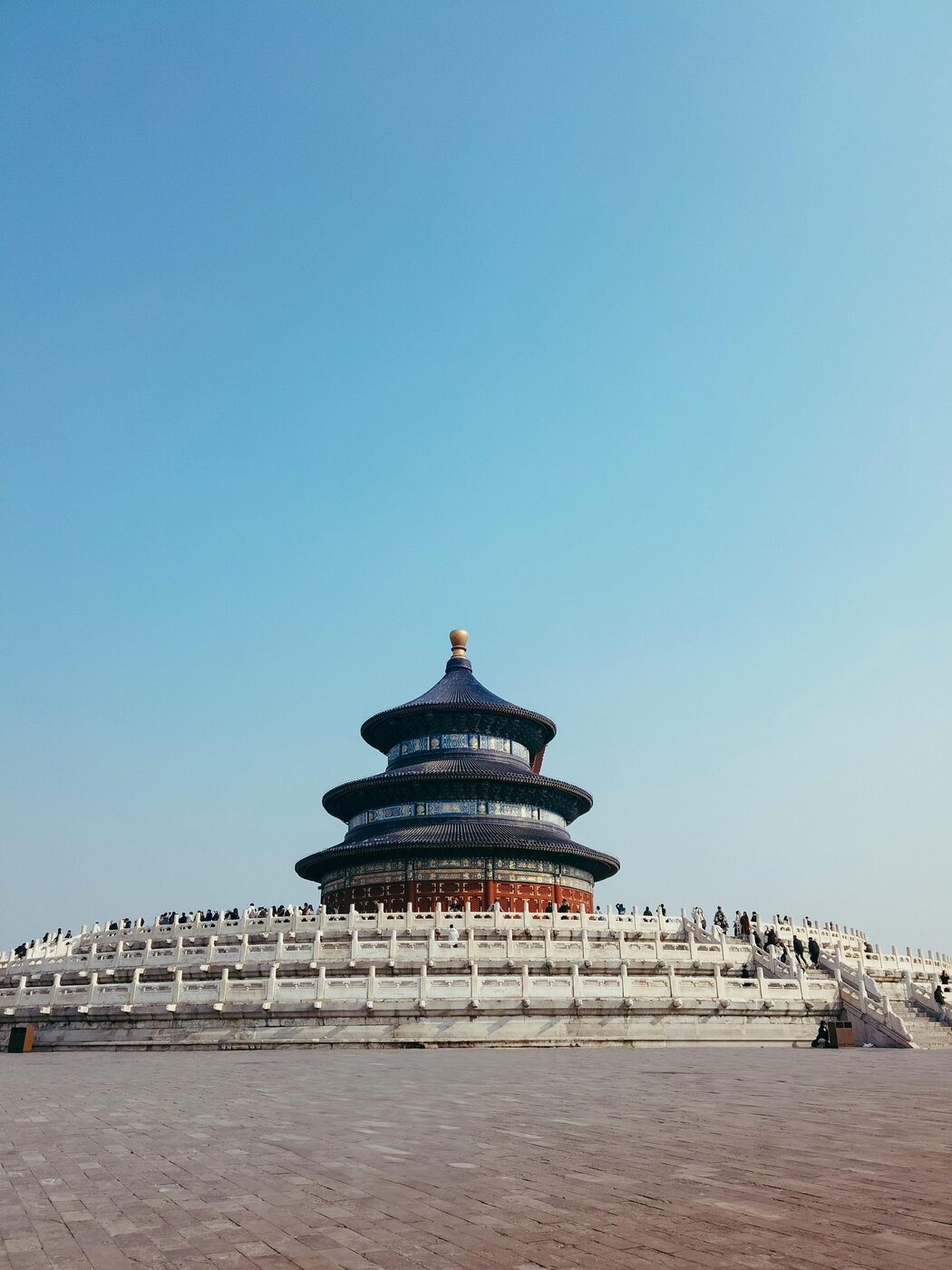
This is the part most guidebooks underplay, and it is the single best reason to come early. The park opens around 6:00 while the monuments open around 8:00, and that two-hour gap is the secret. Arrive at opening and the cypress avenues fill with locals — overwhelmingly retirees — turning the grounds into Beijing’s biggest open-air community hall:
- Tai chi and sword forms in the shade of the old cypresses.
- Ballroom and group dancing to portable speakers on the wide avenues.
- Choirs and amateur opera — clusters of singers, some with erhu and accordion.
- Water calligraphy — characters brushed onto the paving in water that fades as it dries.
- Chess, cards and jianzi (foot-shuttlecock), with fierce huddles of onlookers.
It is the most candid window into everyday Beijing life you will get at a major sight — and it is gone by mid-morning when the tour buses arrive. If you only do one thing right here, time your visit for opening, walk the park first, then go into the monuments when they open at 8:00.
Which gate & getting there
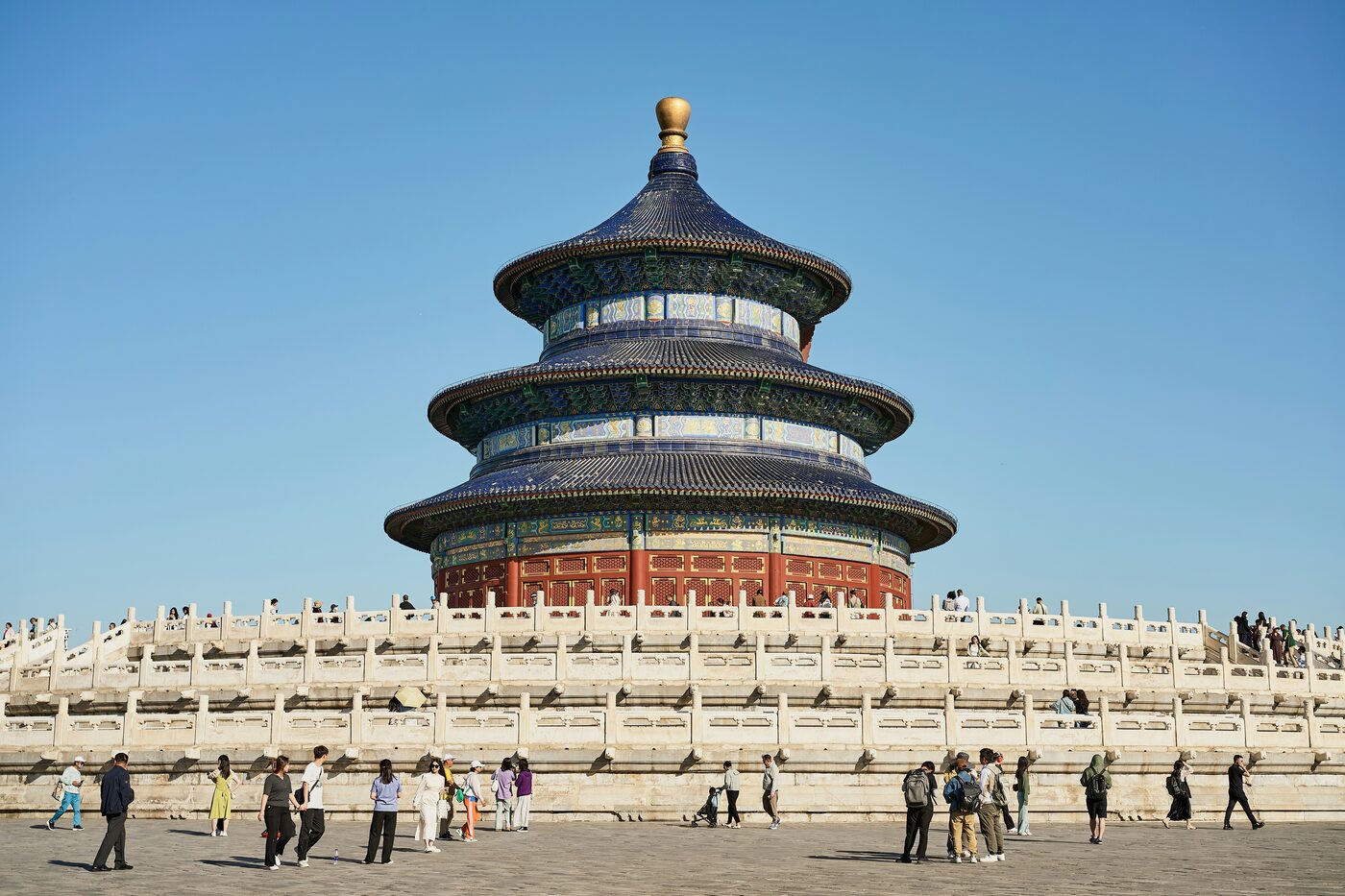
The park has four gates — East, South, North and West — but for most visitors the choice is simple: enter at the East Gate, which sits directly on the metro.
| Gate | Access | Best for |
|---|---|---|
| East Gate 天坛东门 | On metro Line 5 (Tiantan Dongmen station) — come out exit A2, right at the gate. | Default for almost everyone; walk the axis from here. |
| South Gate 南门 | Nearest the Circular Mound Altar, at the south end of the axis. | Walking the axis south → north and finishing at the round hall. |
| North Gate 北门 | Nearest the Hall of Prayer for Good Harvests, at the north end. | Heading straight to the icon first. |
| West Gate 西门 | Toward Tianqiao; closer to the Qianmen / Dashilan old-street area. | Combining with the Qianmen side on foot. |
From the East Gate the Hall of Prayer is closest, and walking south follows the original sacrificial order with no backtracking: East Gate → the Long Corridor → Hall of Prayer for Good Harvests → Danbi Bridge → Echo Wall (Imperial Vault) → Circular Mound Altar → South Gate (detour west for the Hall of Abstinence and exit the West Gate if you have time). The whole walk is 2–3 hours. The Temple of Heaven sits in the south of central Beijing, a short metro hop from the centre. See the Beijing subway guide for Line 5 and the wider network.
Best time & how long
Any clear morning is good, and spring and autumn are the most comfortable seasons. The consistent advice is to go as early as you can — both for the park life and to photograph the Hall of Prayer for Good Harvests before the crowds. Allow a little extra on weekends, when the morning community scene is at its liveliest (but also when advance reservation is most likely to be needed).
| When | What it’s like |
|---|---|
| ~6:00–8:00 | Park open, monuments still shut — the local morning scene at its peak; cool air, soft light, almost no tour groups. |
| 8:00–10:00 | Monuments open; best window to walk inside the round hall before the buses arrive. |
| Mid-morning on | Tour groups fill the axis; the candid park life has thinned out. |
Plan on 2–3 hours overall. Because the monuments line up along the axis, you can walk it end to end without backtracking; add time at the start if you want to linger over the morning park life. See our best time to visit China guide for the seasonal picture across the country.
Practical for foreigners
Hours, tickets, access
- Park hours: 6am–10:00pm peak (6:30 in winter) — the grounds stay open late.
- Monuments: 8am–6pm peak (last entry 17:30), 8:00–5:00 winter — the 6:00–8:00 gap is the morning-park-life window. The monument courtyards close on Mondays (except public holidays); the park stays open.
- Park-gate ticket: ¥15 peak / ¥10 winter — grounds only.
- Through-ticket (联票): ¥34 peak / ¥28 winter — adds the Hall of Prayer for Good Harvests, Echo Wall / Imperial Vault, and Circular Mound Altar. Buy this one.
- Real-name & reservation: tickets are tied to your passport; reserve at least a day ahead (up to ~7 days) and scan the passport at the gate.
Payment & getting in
Alipay and WeChat Pay are universal in Beijing, and an English-language platform such as Trip.com lets you reserve the park-gate or through-ticket on a foreign card without the Chinese-only official reservation site. Bring your passport — it is both your ticket ID and, often, the only way through the real-name gate.
How it fits a Beijing trip
The Temple of Heaven sits on the same north–south central axis as the Forbidden City, so the two pair naturally into one day, with the Qianmen / Dashilan old-street area in between. It is on the opposite side of the city from the Summer Palace in the northwest, so don’t try to combine those two in a single outing. For neighbourhood texture, the hutong lanes make an easy afternoon counterpoint.
Book Temple of Heaven tickets & a guided tourNASDAQ: TCOM
Trip.com lists real-name park and through-tickets plus guided Temple of Heaven tours — reserved in English on a foreign card, avoiding the Chinese-only official booking site.
Frequently asked questions
How much is a Temple of Heaven ticket, and do I need the through-ticket?
Get the through-ticket (联票): ¥34 in peak season (April 1 – October 31), ¥28 in winter. The plain park-gate ticket (¥15 peak / ¥10 winter) only covers the outer park — it does NOT get you into the Hall of Prayer for Good Harvests, the Echo Wall or the Circular Mound Altar, which are the whole point. Skipping the ¥19 upgrade to save a little is the classic regret. Tickets are real-name; the monument courtyards are closed on Mondays (except public holidays), while the park stays open.
Do I need to book in advance, and how?
Yes — reserve at least a day ahead (up to ~7 days) on the official '畅游公园' account or the Temple of Heaven ticketing platform, and scan your passport to enter. If you'd rather avoid the Chinese-only reservation flow, an English platform such as Trip.com sells the ticket and English-guided visits on a foreign card. Always confirm the current rule before you travel.
How long do you need, and why go early?
About 2 to 3 hours — the monuments line up on a north–south axis, so you walk it end to end without backtracking. Go at opening: the park itself opens at 6:00 (6:30 in winter) and fills with locals doing tai chi, dancing, choirs, and water-calligraphy — it's the best window into everyday Beijing in the city. The monuments open at 8:00; arrive then for a near-empty half-hour in the Hall of Prayer before the tour groups pour in around 10:00.
Which gate should I use, and what is the best route?
The East Gate (Tiantan Dongmen 天坛东门) is directly on metro Line 5 — come out exit A2, right at the gate. From the East Gate the Hall of Prayer for Good Harvests is closest, and walking south follows the original sacrificial order with no backtracking: East Gate → Long Corridor → Hall of Prayer for Good Harvests → Danbi Bridge → Echo Wall (Imperial Vault of Heaven) → Circular Mound Altar → South Gate. Detour west for the Hall of Abstinence and exit the West Gate if you have time.
What is worth seeing, and does the Echo Wall really work?
The Hall of Prayer for Good Harvests (its triple blue-tiled roof and gilt top) is the icon. Two under-rated stops: the Hall of Abstinence (斋宫), a moated 'little Forbidden City' that's quiet and very photogenic, and the Circular Mound Altar, where the central Heart-of-Heaven stone amplifies your voice. The famous Echo Wall works only in ideal conditions — years of wear, carved graffiti and holiday noise mean a casual shout won't echo; stand close to the wall and murmur, early or late. When it's crowded, the better acoustic trick is the Three-Echo Stones in front of the Imperial Vault: clap on the third slab and you hear three clear echoes, and the Heart-of-Heaven stone still works too.
How do you get from the Forbidden City to the Temple of Heaven?
They sit on the same north–south central axis, so they pair naturally into one day. The simplest route is metro: from the Forbidden City / Qianmen area take Line 2 or Line 5 south toward Tiantan Dongmen (the East Gate, on Line 5). It is a short hop of roughly 20–30 minutes door to door, and you can walk part of it through the Qianmen / Dashilan old-street area in between.
Sources
Checked August 2026 · Written from our own first-hand travel in China.