Key takeaways
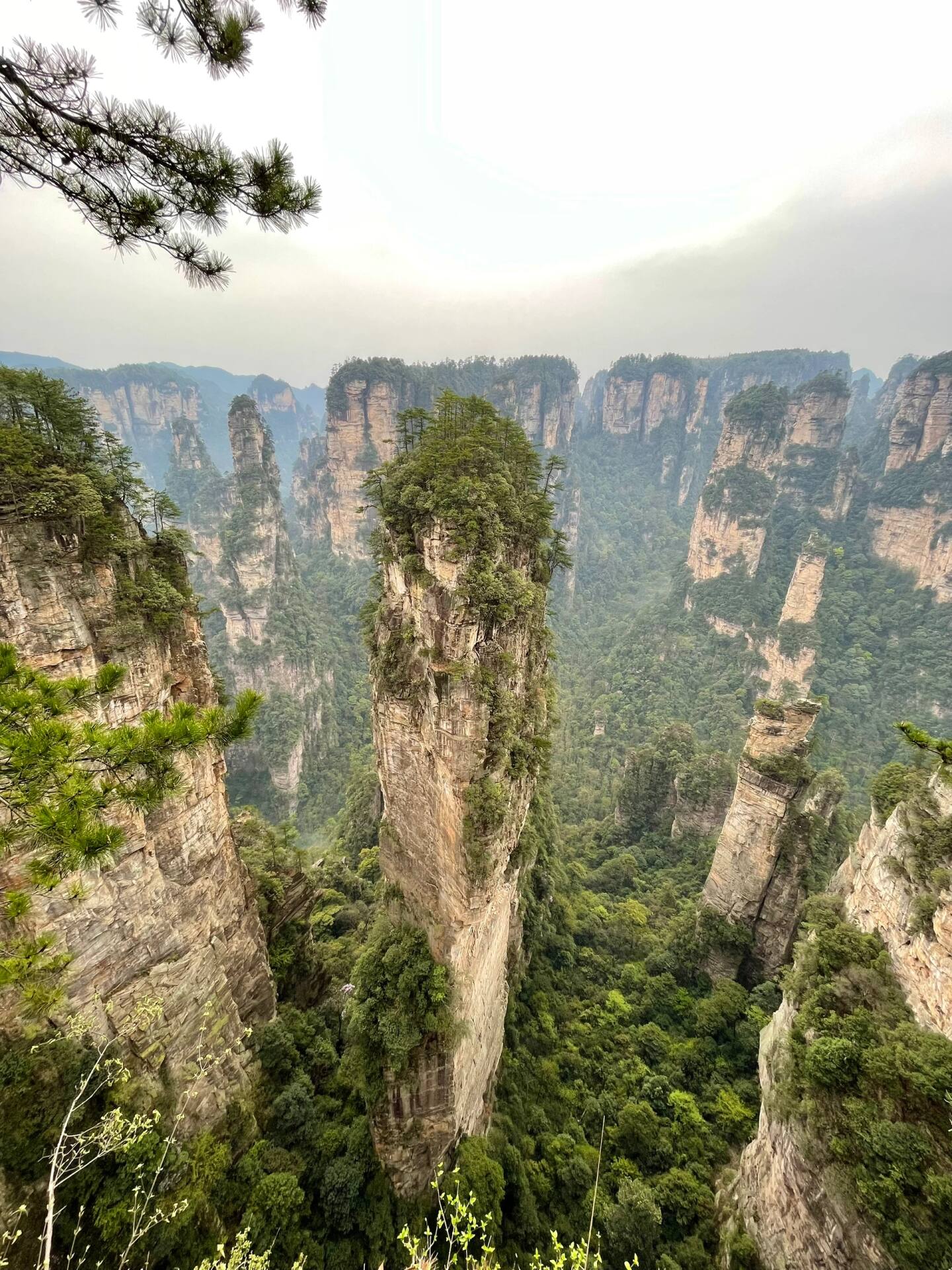
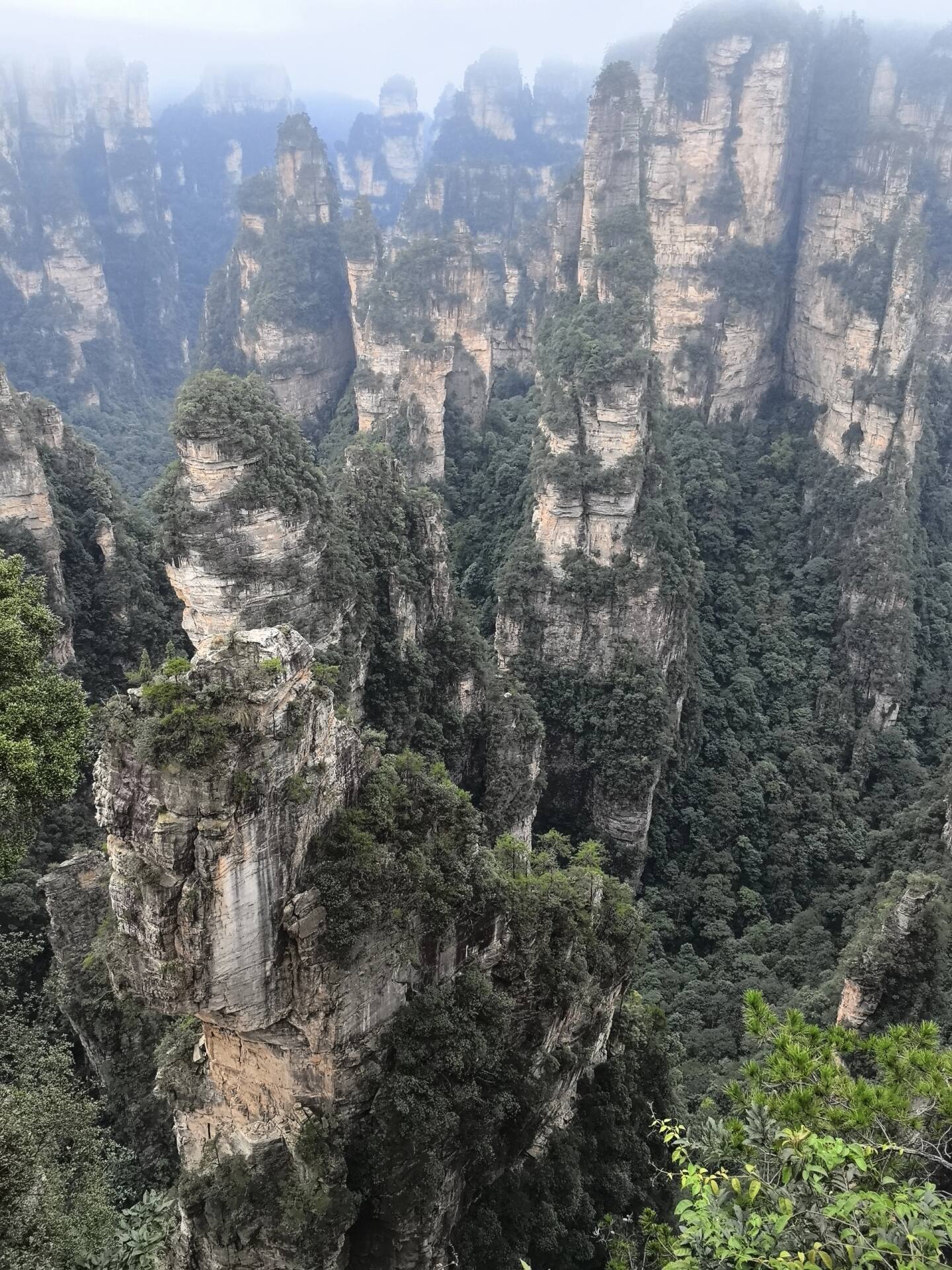
- The “Avatar mountains” are the quartz-sandstone pillars of Zhangjiajie National Forest Park, Hunan. One specific pillar — the 150 m Southern Sky Column on the Yuanjiajie plateau — was officially renamed “Avatar Hallelujah Mountain” on 25 January 2010.
- The film was not shot here. In December 2008 Hollywood photographers spent ~4 days shooting the pillars as design references; Pandora’s floating mountains are CGI.
- Seeing it needs no separate ticket: the ¥236 four-day park pass covers it. Ride the Bailong Elevator up (¥65 one way) — the first viewpoint is 15–20 minutes from the top station.
- Walk the platforms in order — Mihuntai → Hallelujah Mountain → No. 1 Bridge — before 7:30am or after 3pm; the “floating” cloud-sea shot happens on the first clear morning after rain.
Which mountain is the Avatar mountain?
Three names, one rock — and the signage has changed over the years, which is why first-timers stand at the viewpoint double-checking their map. The pillar is a free-standing quartz-sandstone column about 150 m tall, its summit at 1,074 m elevation, on the southern edge of the Yuanjiajie plateau:
| Name | What it is |
|---|---|
| Qiankun Pillar 乾坤柱 | The original geological name — still on older maps and in many Chinese guides. Amap’s POI today is literally “乾坤柱 (阿凡达悬浮山)” — “Qiankun Pillar (Avatar floating mountain)”. |
| Southern Sky Column 南天一柱 | The older tourist name, from its “pillar holding up the southern sky” profile — the name most English write-ups used before 2010. |
| Avatar Hallelujah Mountain 哈利路亚山 | The official name since 25 January 2010, when the park renamed the pillar after the film and mounted a plaque. Park signs and guides use this (or “阿凡达悬浮山”, the Avatar floating mountain) today. |
The renaming was a tourism play and it worked — but it also drew real pushback in China at the time, with critics asking why a UNESCO-listed Chinese landmark should carry a Hollywood name. Fifteen years on, the name has stuck: follow signs for Hallelujah Mountain, and don’t be thrown when an older map calls the same rock Qiankun Pillar.
Was Avatar actually filmed here?
No — and this page won’t pretend otherwise. Avatar (2009) was shot on soundstages, and Pandora’s Hallelujah Mountains are computer-generated. The genuine connection: in December 2008, Hollywood photographers spent about four days shooting Zhangjiajie’s pillar forest, and those photographs served as design references for the floating-mountain look. Chinese guides often compress this to “the film took scenes here” (取景) — the accurate version is photographed as reference, not filmed on location.
Two honest footnotes. First, James Cameron’s team has also cited Huangshan (Yellow Mountain) among the film’s visual inspirations — Zhangjiajie’s claim is strong but not exclusive. Second, the “floating” look is not pure invention: when cloud fills the valleys here, the pillar bases vanish and the tops genuinely appear to drift — the film exaggerated a real weather effect this park produces on the right morning (more on chasing it below).
How to stand in front of it
The pillar is inside Zhangjiajie National Forest Park — there is no separate “Avatar mountain ticket.” The ¥236 four-day park pass covers the area and the internal eco-buses; since 2025 every entry needs an advance timed reservation tied to a gate (foreigners book in English online with a passport number, then use the staffed passport lane). The classic approach, start to viewpoint:
- Base at the east gate (Wulingyuan town) and book the east-gate B-line — the booking line that routes you up the Bailong Elevator.
- Eco-bus from the gate to the Bailong Elevator base (~20–25 min), then ride up — ¥65 one way, 326 m, under two minutes. This is the park’s worst queue: 60–90 minutes on a normal summer morning, 2–3 hours on holidays. Be at the gate for the ~7:00 opening, or dodge it entirely by booking the A-line (Tianzi cable car up, elevator down).
- From the elevator’s top station, walk ~5 minutes to the plateau eco-bus stop, ride 1–2 stops, then ~10 minutes of flat boardwalk — 15–20 minutes total to the first platform.
- Walk the viewpoints in this order: Mihuntai → Hallelujah Mountain platform → No. 1 Bridge Under Heaven. Reversed, you fight an uphill backtrack. Allow 1.5–2.5 hours for the string.
- One quirk worth knowing: the plateau eco-buses run in segments — you usually reboard at a different stop from where you got off (at the No. 1 Bridge end, the return stop toward the elevator is back at the Mihuntai side). Follow the signs rather than waiting where you alighted.
This page deliberately stops at the pillar. For the full picture — gates, the A/B-line decision, lift passes, queue tactics and the two-day plan — use the Zhangjiajie National Park guide and the day-by-day Zhangjiajie itinerary.
The viewpoints — and the floating shot
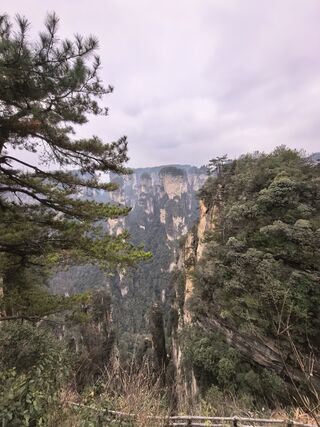
The wide one — a near-360° sweep over the pillar forest, the platform photographers rate first. Best for the "three thousand peaks" panorama.
The signposted head-on view of the renamed pillar itself. The busiest spot on the plateau — wait out the tour-group waves, or step a few metres down the side boardwalk for a cleaner angle with tree foreground.
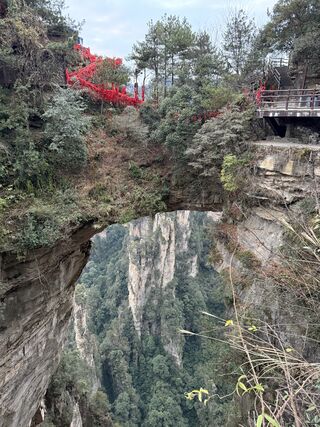
A natural rock arch spanning two pillars — the plateau's other headline formation, 20–30 minutes further along the same boardwalk.
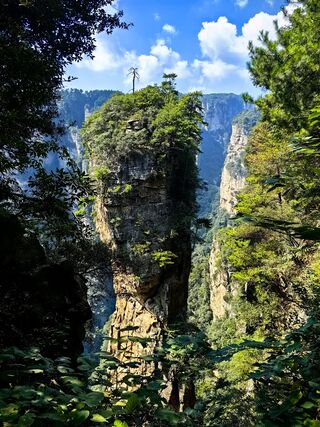
The quiet one nobody's tour bus visits: a side loop ~400 m off the main circuit (its stop is not on the main eco-bus run — ask the driver for Hòuhuāyuán, or walk in from the No. 1 Bridge parking area). Eye-level views of the pillars, spring-fed waterfalls, and almost no crowds.
Light and timing: be on the platforms before 7:30am or after 3pm — tour groups own them roughly 9:30–16:00, and midday light flattens the pillars; late-afternoon side-light carves them back out. The floating shot: it happens on the first clear morning after rain, when cloud-seas fill the valleys, swallow the pillar bases and leave the tops adrift — light drizzle still reads as ink-wash mist, but steady rain erases the view entirely. April–June has the best cloud-sea odds; September–November the most stable skies.
Expectation management (the thing traveller reports keep repeating): if you measure the single pillar against the glowing CGI version, you’ll be underwhelmed — it is, in the end, a vegetated rock column. The people who come away stunned are the ones who pull back and take in the whole amphitheatre: hundreds of pillars rising out of the forest at once, something no screen conveys. Shoot the panorama, not just the celebrity.
Book the park ticket & Avatar-mountains toursNASDAQ: TCOM
Trip.com sells the timed park entry and English guided day-tours to the Avatar viewpoints — booked in English on a foreign card.
Where to stay for the Avatar mountains
Base in Wulingyuan town by the east gate — it is the gate with the direct eco-bus to the Bailong Elevator, and being 5 minutes away is what makes the 7am queue-beating start possible. Full base-by-base comparison in where to stay in Zhangjiajie.
Stay by the east gate (the Avatar-pillar side)
Wulingyuan town sits minutes from the east gate — the gate with the direct eco-bus to the Bailong Elevator and the Avatar viewpoints. Base here to be on the plateau before the tour buses.
- Wulingyuan town, ~5 min from the east gate.China's most reliable mid-range chain — spotless, modern, and close enough for the 7am elevator run.
- Wulingyuan town, ~10 min from the east gate.Design-led mid-range chain foreign guests rate highly — the comfortable pick by the park.
Frequently asked questions
Where exactly are the Avatar mountains in China?
Inside Zhangjiajie National Forest Park in Hunan province, south-central China — about 32 km north of Zhangjiajie city. The specific pillar renamed 'Avatar Hallelujah Mountain' stands on the Yuanjiajie plateau, the park's most famous zone, reached via the Bailong Elevator from the park's east gate. The nearest airport is Zhangjiajie Hehua (DYG); most foreigners fly to Changsha and take the 1.5-hour high-speed train to Zhangjiajie West.
Was Avatar actually filmed in China?
No. Avatar (2009) was shot on soundstages, and Pandora's floating Hallelujah Mountains are computer-generated. The real link: in December 2008 Hollywood photographers spent about four days shooting Zhangjiajie's sandstone pillars, and those photographs became design references for the film's floating-mountain look. James Cameron's team has also cited Huangshan among its visual inspirations, so Zhangjiajie's claim is about reference imagery — not a filming location.
Which mountain was renamed after Avatar?
The Southern Sky Column (南天一柱, geological name Qiankun Pillar 乾坤柱) — a free-standing quartz-sandstone pillar about 150 m tall, its summit at 1,074 m elevation, on the Yuanjiajie plateau. Zhangjiajie officially renamed it 'Avatar Hallelujah Mountain' (哈利路亚山) on 25 January 2010 to capture the film's fame — a move that drew real controversy in China at the time. Park signage now says Hallelujah Mountain, while older maps still say Qiankun Pillar; all three names are the same rock.
Are the mountains really floating?
No — that's the film's CGI. The real pillars rise from the valley floor. But there is a genuine version of the effect: after rain clears, a sea of cloud fills the valleys, hides the pillar bases and leaves the tops drifting above white mist — the closest the real park comes to the movie shot. Photographers plan for the first clear morning after rain for exactly this reason.
Do I need a separate ticket to see the Avatar mountain?
No separate ticket — it is inside Zhangjiajie National Forest Park, covered by the ¥236 four-day park pass (which includes the internal eco-buses). The Bailong Elevator up to the plateau costs extra (¥65 one way), and since 2025 every park entry needs an advance timed reservation tied to a gate. Foreigners book online in English with a passport number and use the staffed passport lane at the gate.
How long does it take to see the Avatar mountain viewpoints?
Plan 1.5–2.5 hours on the Yuanjiajie plateau for the classic viewpoint string — Mihuntai, the Hallelujah Mountain platform and the No. 1 Bridge Under Heaven, walked in that order on a mostly flat boardwalk (each viewpoint is worth 20–30 minutes; reverse order means an uphill backtrack). From the top of the Bailong Elevator it is about 15–20 minutes to the first viewpoint: a ~5-minute walk to the eco-bus stop, one or two stops, then ~10 minutes of boardwalk. Most people fold this into a full day across the plateau zones.
When is the best time to photograph the Avatar mountains?
Before 7:30am or after 3pm. Tour groups flood the platforms roughly 9:30am–4pm, and midday light is flat; late-afternoon side-light gives the pillars depth. For the 'floating' shot, go the first clear morning after rain, when cloud-seas fill the valleys. Season-wise, April–June has the highest sea-of-cloud odds and September–November the most stable skies.
Is the glass bridge on the Avatar mountain?
No — that's a common mix-up. The famous glass-bottomed bridge is at Zhangjiajie Grand Canyon, a separate scenic area about 30 minutes east of Wulingyuan town with its own ticket. Tianmen Mountain — the cliff-face glass skywalk and the 999-step 'Heaven's Gate' — is a third separate mountain by Zhangjiajie city. None of the three share a ticket; the Avatar pillar area is covered only by the National Forest Park pass.
Sources
Checked July 2026 · Written from our own first-hand travel in China.