Key takeaways
- The Bailong Elevator is the world’s tallest outdoor lift — 326 m of glass cabin bolted to a Zhangjiajie cliff (Guinness, 2015), carrying you from the valley floor to the Avatar-pillar plateau in under two minutes.
- It costs ¥65 one way and you ride it once — up on the east-gate B-line, or down on the A-line — not round-trip. It is a paid add-on, not part of the ¥236 park pass.
- The queue is the real story: ~1–1.5 h up on a normal morning, 3 hours+ over the big holidays, and it queues to come down too. Be there for the ~7am opening, or ride up after 3pm.
- If the wait is brutal, skip it — take the Tianzi cable car up and the elevator only down, or walk the stair path. And it closes periodically for maintenance — keep the cable car in the plan as the fallback.
What the Bailong Elevator actually is
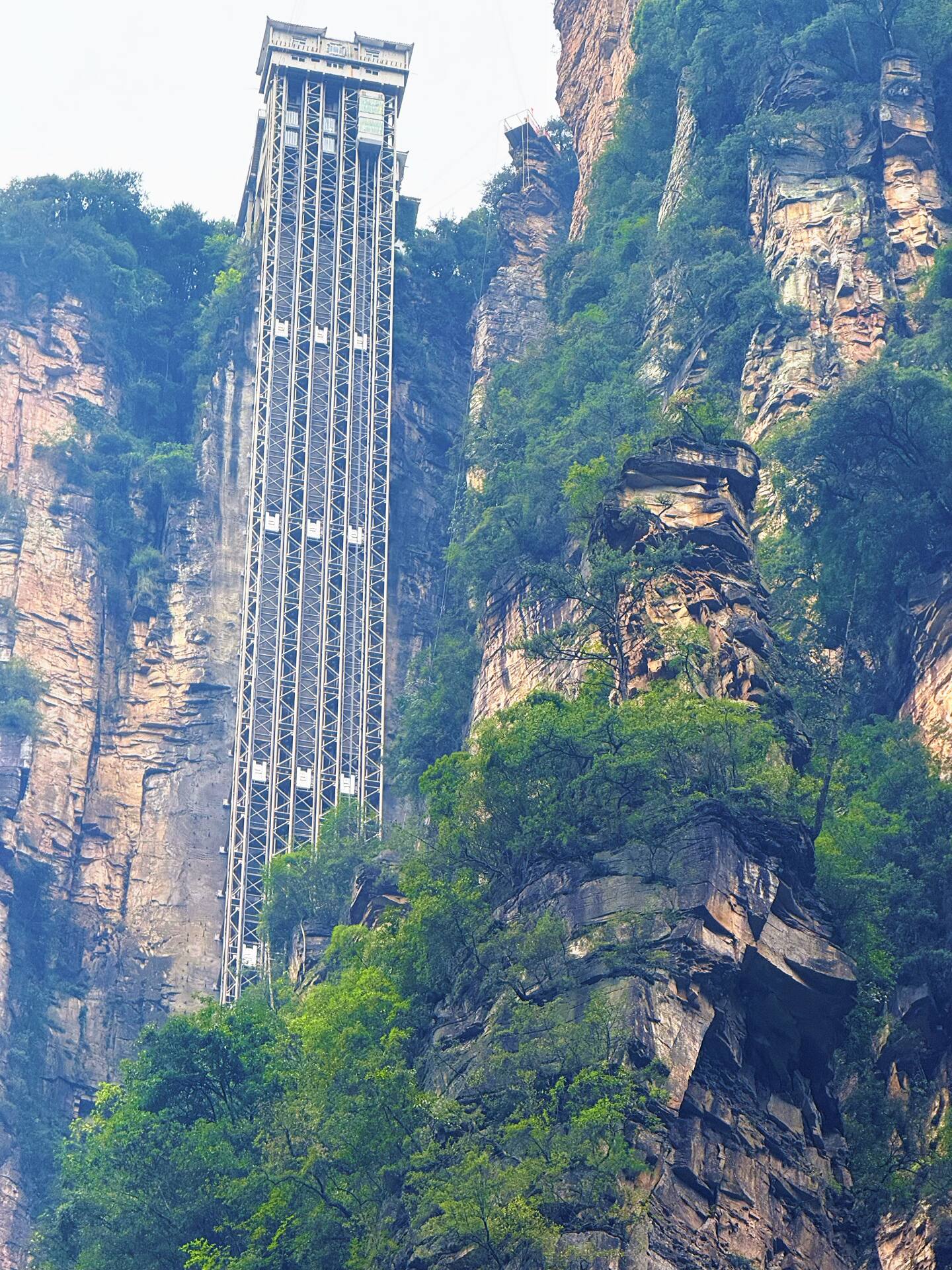
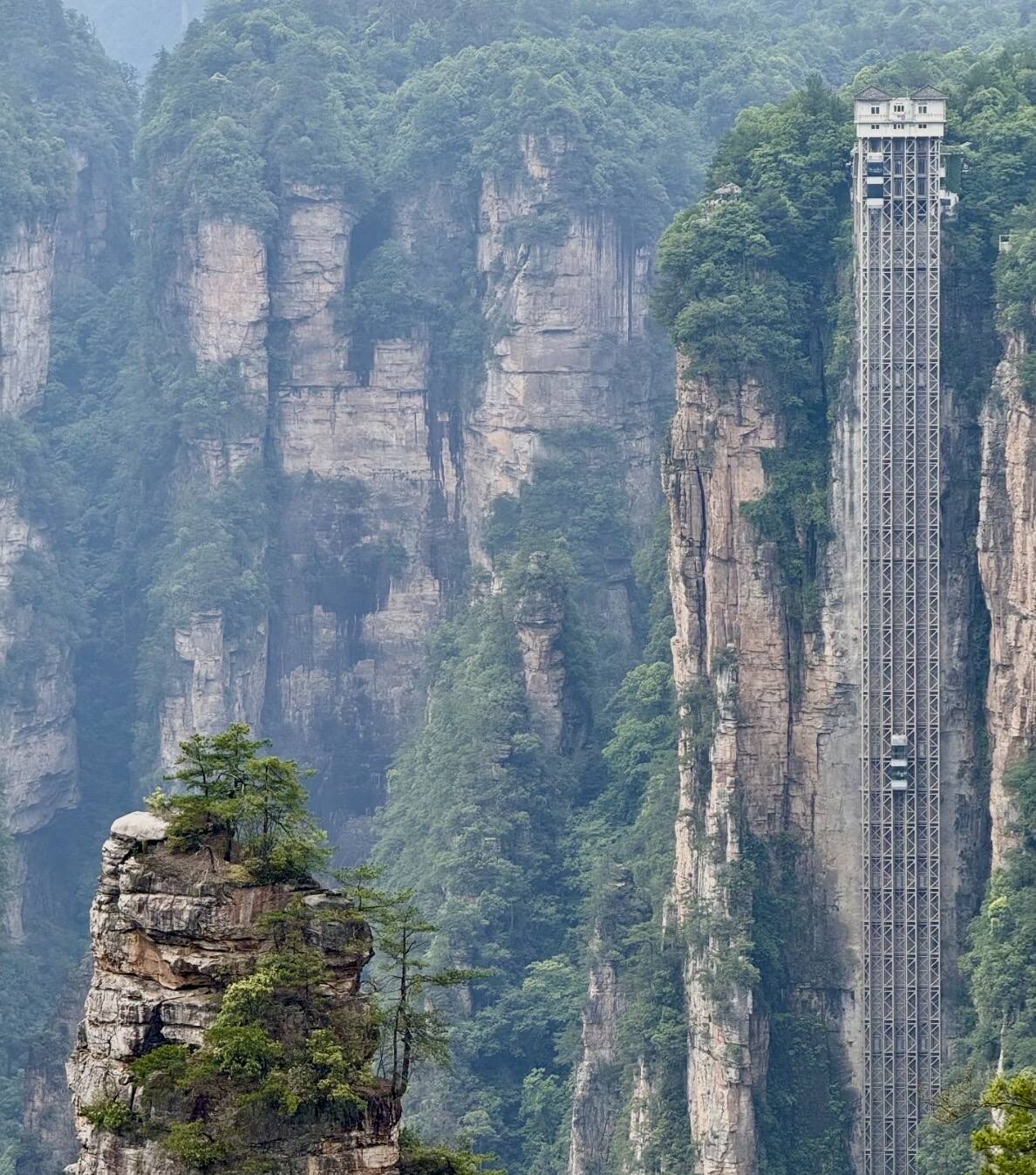
The Bailong Elevator (百龙天梯, “Hundred Dragons Sky Elevator”) is exactly what it looks like: a bank of three glass, double-deck lifts running straight up the face of a quartz-sandstone cliff inside Zhangjiajie National Forest Park. It is a genuine record-holder — on 16 July 2015 Guinness World Records listed it as the world’s tallest outdoor elevator. It exists to solve one problem: the park’s most famous viewpoints sit on the Yuanjiajie plateau, hundreds of metres above the valley floor, and the elevator closes that gap in about a minute and a half instead of a two-hour climb.
| Height | 326 m (1,070 ft) — a lower ~154 m rising inside the rock, an upper ~172 m up an exposed steel tower |
| Record | World’s tallest outdoor elevator (Guinness, 16 Jul 2015) |
| The ride | Three twin-deck glass cabins · under two minutes top to bottom |
| What it connects | Golden Whip Stream valley floor (Shuiraosimen) → the Yuanjiajie plateau (the “Avatar mountains”) |
| Fare | ¥65 one way — a paid add-on, not in the ¥236 park pass |
One thing to fix up front, because the search results muddle it: the Bailong is an elevator — not a cable car, and not a bridge. The famous glass-bottomed bridge is a separate attraction (Zhangjiajie Grand Canyon); the cliff-edge glass skywalk is a third one (Tianmen Mountain). More on that mix-up at the end.
Built into a UNESCO cliff: the story
Construction began in October 1999 and the elevator opened in 2002, built as a private tourism venture for about US$20 million. It was contentious from the start: Wulingyuan is a UNESCO World Heritage site, and bolting a 326-metre steel tower onto a protected natural cliff drew loud objections — both on aesthetic grounds and from conservationists who argued it would funnel still more visitors into an already-crowded park. Soon after opening it was shut for roughly ten months in 2002–03 to address safety concerns in what is an earthquake-prone region; the cars now carry earthquake detectors for a quick evacuation.
One question comes up so often it has its own search suggestions: how many people died building the Bailong Elevator? The honest answer is that there is no credible public record of construction deaths — the claim circulates widely but traces to no verifiable source, so we won’t invent a number to satisfy it. What is documented is the engineering: two shafts drilled and built into the mountain, a ten-month safety pause, and, since 2015, a Guinness plaque.
Riding it: the 90 seconds, the glass, the vertigo
The ride itself is short and genuinely dramatic. For the first 15–20 seconds you are in an enclosed shaft inside the mountain — dark, unremarkable — and then the cabin bursts out of the rock and the whole pillar forest drops open in front of you; the carload gasps every single time. The catch for nervous riders: the upper half is fully suspended against the open cliff, the valley falling away beneath the glass, and the quick ride can leave your ears popping. If you happily walk a glass skywalk you’ll love it; if those unsettle you, it is over in about ninety seconds.
Two things travellers wish they’d known before boarding:
- It is not all glass. The cabin has solid metal walls near the doors, so where you stand matters. For the view, get to the front row, centre-right — the left side is partly blocked by the cliff. Phone flat against the glass kills the reflection.
- Ride UP for the view, not down. Going up, the peaks explode into view; going down you are mostly looking back at the platform. There is no air-con in the cabin, so it can be stuffy on a hot afternoon.
At the top station, two small realities: the plateau has wild macaques that snatch plastic bags and visible snacks (keep food out of sight), and there are very few toilets around the Yuanjiajie viewpoints — use the one at the station before you wander off.
The queue — and how to beat it
Here is the part the brochures skip: the Bailong Elevator is the park’s worst bottleneck, and it queues in both directions. A 90-second ride can cost you two hours of standing in a switchback line. What travellers actually report:
| When | Up | Down |
|---|---|---|
| Normal morning | ~1–1.5 h (under 30 min at the ~7am opening; 1.5–2 h once groups arrive ~9–10am) | ~1–2 h (worst 2–4pm) |
| Big holidays (May 1, Oct 1) | 3 hours or more | 2–3 h and up |
Hours & timing. The elevator carries passengers ~07:00 (peak) / ~08:30 (off-season), and the last car is ~17:30 peak (last queue ~17:15; up and down stop together) / ~17:00 off-season. Be at the base for the opening, or flip it and ride up after about 3pm, once the tour groups have cleared — late in the day the line thins to almost nothing and you can catch the sunset from the top. If you’re stuck in the descent queue, use the right-hand channel: it’s railed and staffed, while the wider left side gets cut in front of. And one small mercy on arrival: the long stair from the eco-bus stop up to the lower station hides a free lift on its right side — most of the crowd climbs right past it.
The VIP fast-track — worth it?
There is an official paid fast-track — sold at the elevator windows and on booking sites, traveller-reported at around ¥100 on top of the ¥65 fare. The honest verdict from riders: worth it only over the big holidays, or with elderly travellers or kids who can’t queue for hours — off-season it’s money for a line that’s already short. It sometimes just walks you to the gate where you re-merge with the crowd, and can close early on a busy afternoon. Ignore any “private/internal VIP” pitched by touts or drivers outside the park — those are fake or wildly overpriced.
Book the park entry & Zhangjiajie toursNASDAQ: TCOM
The elevator fare is paid on-site or in a lift pass — but Trip.com sells the timed park entry that gets you to it, plus English guided day-tours, booked on a foreign card.
When to skip the elevator
You never have to ride the Bailong — it is one of several ways onto the plateau, and on a bad queue day it is the wrong one. Your options:
- Ride up, descend another way (the standard play). Take the elevator UP on the east-gate B-line, then come down by the Tianzi Mountain cable car (¥72) on the far side of the plateau — you skip the elevator’s descent queue entirely.
- Flip it on a holiday. Take the Tianzi cable car UP first (the east-gate A-line) and ride the Bailong only DOWN — the down-queue is usually a little shorter than the morning up-queue.
- Walk it. A stone stair path climbs from the Golden Whip Stream valley to the plateau — but it is ~2,000 steps and 1.5–2 hours, punishing on the knees, and sections have been closed at times. It’s a fallback for fit hikers, not a plan for most.
- Enter by a quieter gate. The middle (Zimugang) gate reaches the same elevator with far less queue; the far north gate skips the lifts entirely (its eco-bus climbs to the plateau) — see the Zhangjiajie itinerary for the full six-gate breakdown.
One more reason to have a backup: the elevator closes periodically for maintenance (travellers reported rotating closures in mid-2026), so it may not be running on your day — always have a backup (the Tianzi cable car). And large luggage isn’t allowed on board — store your bags at the east gate or your Wulingyuan hotel and go up light.
Where to stay for an early elevator run
The only way to beat the queue at the ~7am opening is to already be minutes from the east gate. Base in Wulingyuan town — it’s the gate with the direct eco-bus to the elevator base. Full base-by-base comparison in where to stay in Zhangjiajie.
Stay by the east gate (the elevator side)
Wulingyuan town sits minutes from the east gate — the gate with the direct eco-bus to the Bailong Elevator base. Base here to be on the first cars before the tour buses arrive.
- Wulingyuan town, ~5 min from the east gate.China's most reliable mid-range chain — spotless, modern, and close enough for the 7am elevator run.
- Wulingyuan town, ~10 min from the east gate.Design-led mid-range chain foreign guests rate highly — the comfortable pick by the park.
Frequently asked questions
What is the Bailong Elevator?
The Bailong Elevator (百龙天梯, "Hundred Dragons Sky Elevator") is a glass double-deck lift bolted to a quartz-sandstone cliff inside Zhangjiajie National Forest Park, Hunan. At 326 m (1,070 ft) it is listed by Guinness World Records (16 July 2015) as the world's tallest outdoor elevator. It carries you from the Golden Whip Stream valley floor up to the Yuanjiajie plateau — the "Avatar mountains" zone — in under two minutes.
How much is the Bailong Elevator, and is it included in the park ticket?
It is ¥65 one way and you ride it ONCE — up on the east-gate B-line, or down on the A-line — not round-trip (a return would be ¥130). It is a paid add-on, NOT part of the ¥236 four-day park pass. If you'll use several lifts, the ¥238 four-ride or ¥298 unlimited 三索一梯 lift pass covers it; for one ride, just buy a single fare on the day. In 2026 the fare is unchanged at ¥65.
How long is the queue for the Bailong Elevator?
The queue is the elevator's real story — it is the park's worst bottleneck, in both directions. On a normal morning it runs about 1–1.5 hours to go up (under 30 minutes if you're there for the ~7am opening, 1.5–2 hours once tour groups arrive around 9–10am) and 1–2 hours to come down. Over the big holidays (May 1, Oct 1) travellers report 3 hours or more to go up. Be at the base for opening, or ride up after about 3pm once the groups clear.
Is the Bailong Elevator worth it?
As transport, yes — riding up saves you a punishing 1.5–2 hour, ~2,000-step stair climb and keeps your legs for the Yuanjiajie viewpoints. As a standalone thrill it depends on you: the 90-second burst out of the cliff over the pillar forest is a genuine rush, but if you tally "¥65 for 90 seconds" it can feel steep. The sweet spot is to ride it UP once (or take the last car at dusk for the sunset) and descend another way.
Is the Bailong Elevator scary if you have a fear of heights?
It can be. The lower stretch runs up an enclosed shaft inside the rock, but the upper half is fully suspended against the open cliff, with the valley dropping away beneath the glass — and the fast ride leaves some riders with briefly popping ears. If you can walk a glass skywalk you will be fine; if those unnerve you, stand toward the back and know it is over in about 90 seconds. For the view, the front row, centre-right, sees the most (the left side is partly blocked by the cliff).
Can you walk up to Yuanjiajie instead of taking the elevator?
Yes, but it is hard work. A stone stair path climbs from the Golden Whip Stream valley up to the plateau — travellers report roughly 2,000 steps and 1.5–2 hours, brutal on the knees, and sections have been closed at times, so treat the stairs as a fallback rather than a plan. Most people ride the elevator up, or take the Tianzi Mountain cable car (¥72) up instead and use the elevator only to come down.
Who built the Bailong Elevator and when?
Construction began in October 1999 and it opened in 2002, built as a private tourism venture at a cost of about US$20 million. It was controversial — many objected to a giant steel elevator inside the Wulingyuan UNESCO World Heritage site — and it was shut for roughly ten months in 2002–03 to address safety concerns in this earthquake-prone terrain (the cars now carry quake detectors). A widely searched claim about deaths during construction has no credible public source, so we don’t repeat a number.
Is the Bailong Elevator the same as the Zhangjiajie glass bridge?
No — a common mix-up. The Bailong Elevator is a lift, not a cable car and not a bridge. The glass-bottomed bridge is at Zhangjiajie Grand Canyon, a separate scenic area with its own ticket about 30 minutes east of Wulingyuan. The cliff-face glass skywalk and the 'Heaven's Gate' arch are on Tianmen Mountain, a third separate mountain by Zhangjiajie city. None of the three share a ticket.
Sources
Checked July 2026 · Written from our own first-hand travel in China.