Key takeaways
- The old town is free and ungated — permanently, since 18 January 2023. Only six heritage houses charge, and only at their own doors.
- The ¥85 combined ticket is valid 48 hours with unlimited re-entry — the exact opposite of Wuzhen’s single-entry, same-day rule, and the reason an overnight stay here actually pays.
- ⭐ The pass saves ¥10 only against the complete set: drop the ¥10 ticket and the other four already cost ¥85, the pass price exactly. Buy it only if you will do all six; the two best are ¥45 at the door.
- Nanxun has its own high-speed station, 7.7 km out (Wuzhen’s is 29 km away in Tongxiang) — but the direct shuttle reportedly runs only at weekends and on holidays. On a weekday, take a taxi.
- The honest bit: Baijianlou’s riverside is now restaurant tables and you cannot sit at them without ordering. The free public walkway behind them is where the view actually is.
What Nanxun is — and where the money came from
Nanxun sits on the canal network in the far east of Huzhou, Zhejiang, roughly between Shanghai and Hangzhou and about 30 km from Wuzhen. It is the least visited of the delta’s major water towns and the only one whose selling point is architectural rather than atmospheric — and the reason for that is a single piece of local slang worth knowing before you arrive.
Late-Qing Nanxun ranked its silk merchants by fortune, in animals: four elephants, eight oxen and seventy-two golden dogs (四象八牛七十二黄金狗). More than ten million taels of silver made you an elephant — there were four families, the Liu, Zhang, Pang and Gu. Five to ten million made you an ox, and there were eight. Three hundred thousand to five million made you a golden dog, of which seventy-two were counted. Bronze figures of them stand at the east gate.
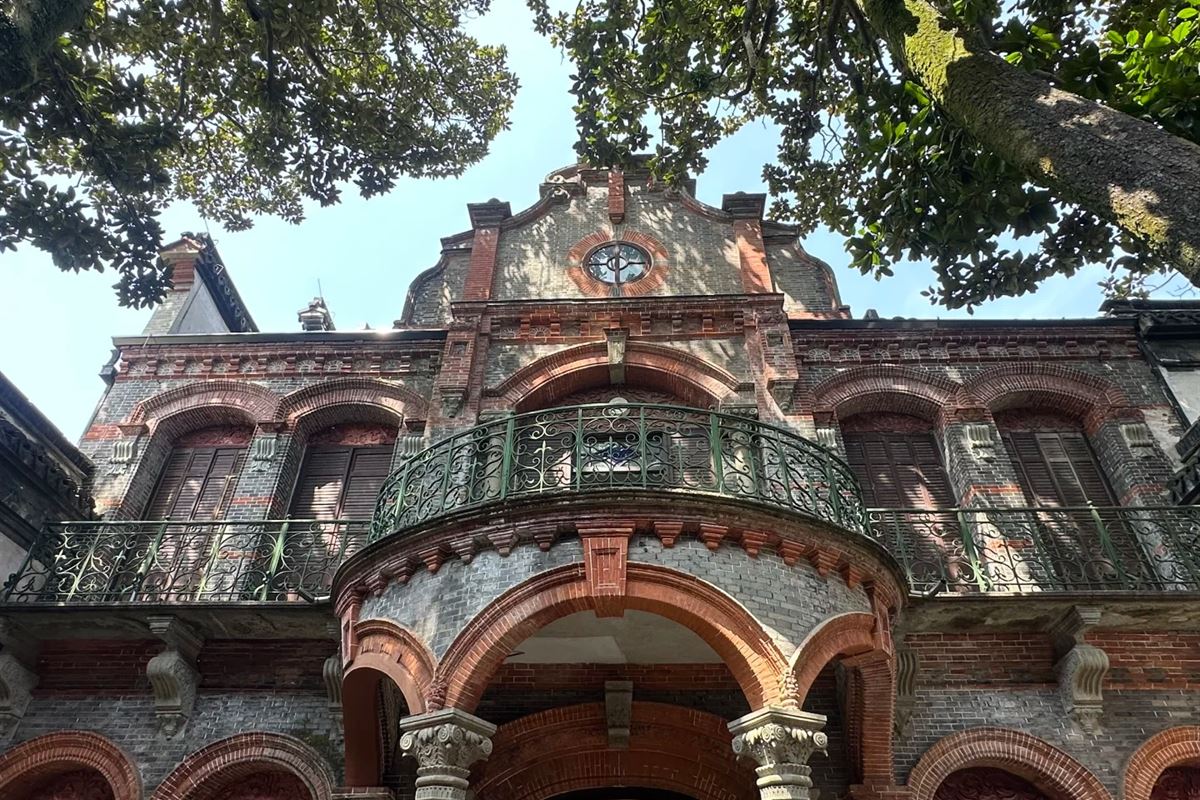
That is not folklore trivia; it is the explanation for everything you will look at. Nanxun’s raw silk went to Europe through Shanghai, and the money came back as buildings. A town this size therefore contains a French Renaissance ballroom with imported stained glass, red-brick Baroque façades behind Chinese horse-head gables, carved stone Corinthian capitals, and — in the middle of it — a private library that was once the largest in China. No other water town in the delta has this, and it is why Nanxun rewards a visitor who likes buildings more than one who wants a lantern-lit evening.
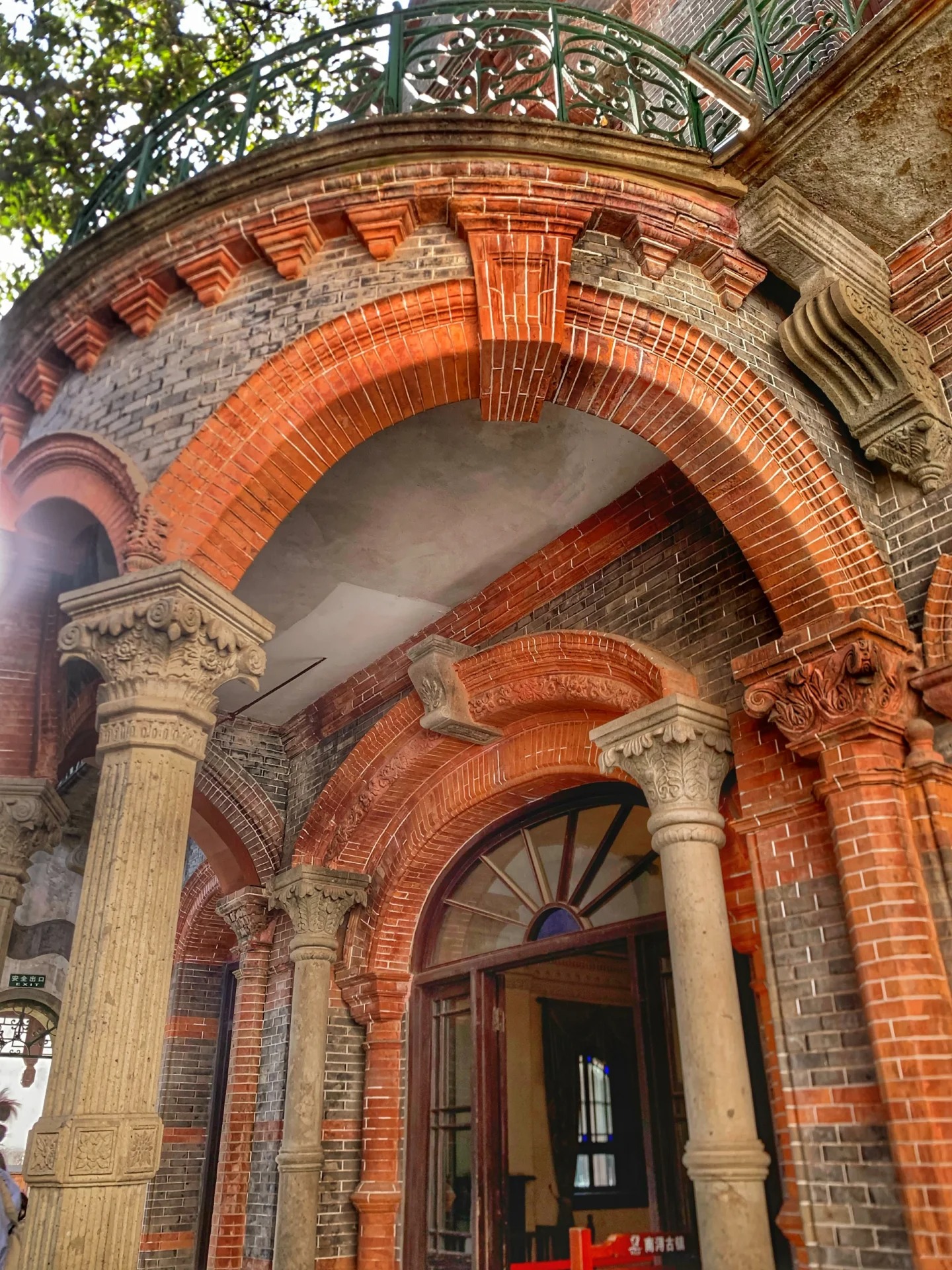
The other thing to understand is the shape of the place. Nanxun is linear: the town runs roughly north–south along its canal for about 1.5 km, with the visitor centre and south gate at the bottom, the east gate near the top, and the six paid houses strung out between them in a single line. That is why the ticket decision and the walking route are really the same decision, and it is the one structural fact most write-ups omit.
The lay of the town — one line along one canal
No gate to passNo doubling backOne line, one canal, no gate. Nanxun is not a ring and not a maze: the houses sit in order along a single waterway, so the walk is simply the length of the town once. Come in at the south gate and go north and you finish at Baijianlou — free, never ticketed, and the most lived-in stretch of the town, which is the right note to end on. Arriving at the east gate reverses the order and nothing else. The streets themselves cost nothing; only the houses sell tickets, and which of them you open is the only real decision here.
Free to enter — and the six houses that are not
On 18 January 2023 Nanxun dropped its gate fee for visitors from anywhere in the world and opened all 2.18 km² of the old town. There is now no gate, no turnstile, nothing to book and nothing to queue for: the canals, the stone bridges, the lanes and the 400-metre Ming riverside terrace at Baijianlou are free at any hour of the day or night. It is Huzhou’s only 5A-rated scenic area and the fourth free one in Zhejiang, after West Lake, Lu Xun’s native place and Mount Tiantai’s Guoqing Temple.
⚠️ What most guides still say, and why it is wrong. English write-ups — and some Chinese archive pages that were never updated — still describe a ¥95 all-inclusive ticket that you need in order to enter. That has been wrong since January 2023. A second stale claim also circulates: that arriving by high-speed train lets you swap your rail ticket for free entry to all six houses. That was a launch promotion tied to the new line, it ran for three months, and it lapsed in March 2025. Do not build a budget around either.
Six heritage houses charge, at their own doors and at the visitor centres. Five tickets cover them, because the Xiaolianzhuang garden and the Jiaye Library share one:
| Ticket | Price | Where it is |
|---|---|---|
| Xiaolianzhuang garden + Jiaye Library 小莲庄 · 嘉业堂藏书楼 | ¥25 | South, by the visitor centre |
| Zhang Shiming's Former Residence 张石铭旧宅 | ¥20 | Middle |
| Liu's Tihao — the Red House 刘氏梯号 | ¥20 | Middle |
| Zhang Jingjiang's Former Residence 张静江故居 | ¥20 | North, near the east gate |
| Yiyuan garden 宜园 | ¥10 | North, by the east gate |
| All six, bought separately | ¥95 | — |
| Combined ticket 南浔古镇联票 | ¥85 at the window · ~¥75 online | ⭐ Valid 48 hours, unlimited re-entry |
Two things fall out of that table, and both are decisions. The first is arithmetic, and it is sharper than the usual “buy the combo, it’s better value”. The pass saves ¥10 — but only against the complete set. Drop a single ticket, the cheapest one (Yiyuan garden at ¥10), and the remaining four already come to ¥85: the pass price, exactly. Every smaller selection is cheaper at the door. So the honest rule is buy the combined ticket only if you actually intend to visit all six houses — and most visitors do not want six house museums in one day. If you want the two best, Xiaolianzhuang with the Jiaye Library and Zhang Shiming’s house, that is ¥45 at the door. Buy singles and put the difference into an evening boat.
The second is the 48-hour validity, and it is the quietest but most useful rule in this whole cluster of towns. Almost every Chinese scenic ticket is single-entry and same-day; Wuzhen’s famously is. Nanxun’s combined ticket lets you walk out, sleep, and walk back in the next morning on the same purchase. If you are going to buy the pass at all, that is the reason to stay the night.
Hours, and the one scheduling trap. The paid houses open 08:00–17:00 from April to October and 08:00–16:30 from November to March, and stop admitting thirty minutes before they close — so 16:30 in summer, 16:00 in winter. The town around them never closes at all. An afternoon arrival therefore gets you a lovely free evening and none of the mansions — which is how an afternoon arrival wastes the trip. Do the houses in the morning and keep the free streets for the light. Concessions: students half price, over-70s and children of 1.2 m or under free with ID, 6–18s and 1.2–1.5 m children discounted.
The six houses, south to north
They sit in a line along the canal, which makes the route obvious once you know it: start at whichever end you arrive at and walk the length of the town once. Working from the south gate — where about 90% of visitors enter — the order is:
| House | What it is |
|---|---|
| Xiaolianzhuang garden + Jiaye Library 小莲庄 · 嘉业堂藏书楼 ¥25 · South, by the visitor centre | The private garden of Liu Yong, first of the Four Elephants, and next door the library his grandson Liu Chenggan built — once the largest private library in China, its main hall still hung with the imperial plaque 欽若嘉業. One ticket covers both, and they share a single national-monument listing made by the State Council in June 2001. If you buy one thing, buy this. |
| Zhang Shiming's Former Residence 张石铭旧宅 ¥20 · Middle | Called "Jiangnan's finest private house", and the clearest illustration of what silk money did here: Chinese courtyards and carved brick on the outside, a French Renaissance ballroom with imported stained glass on the inside. The transition between the two halves is the thing to look for. |
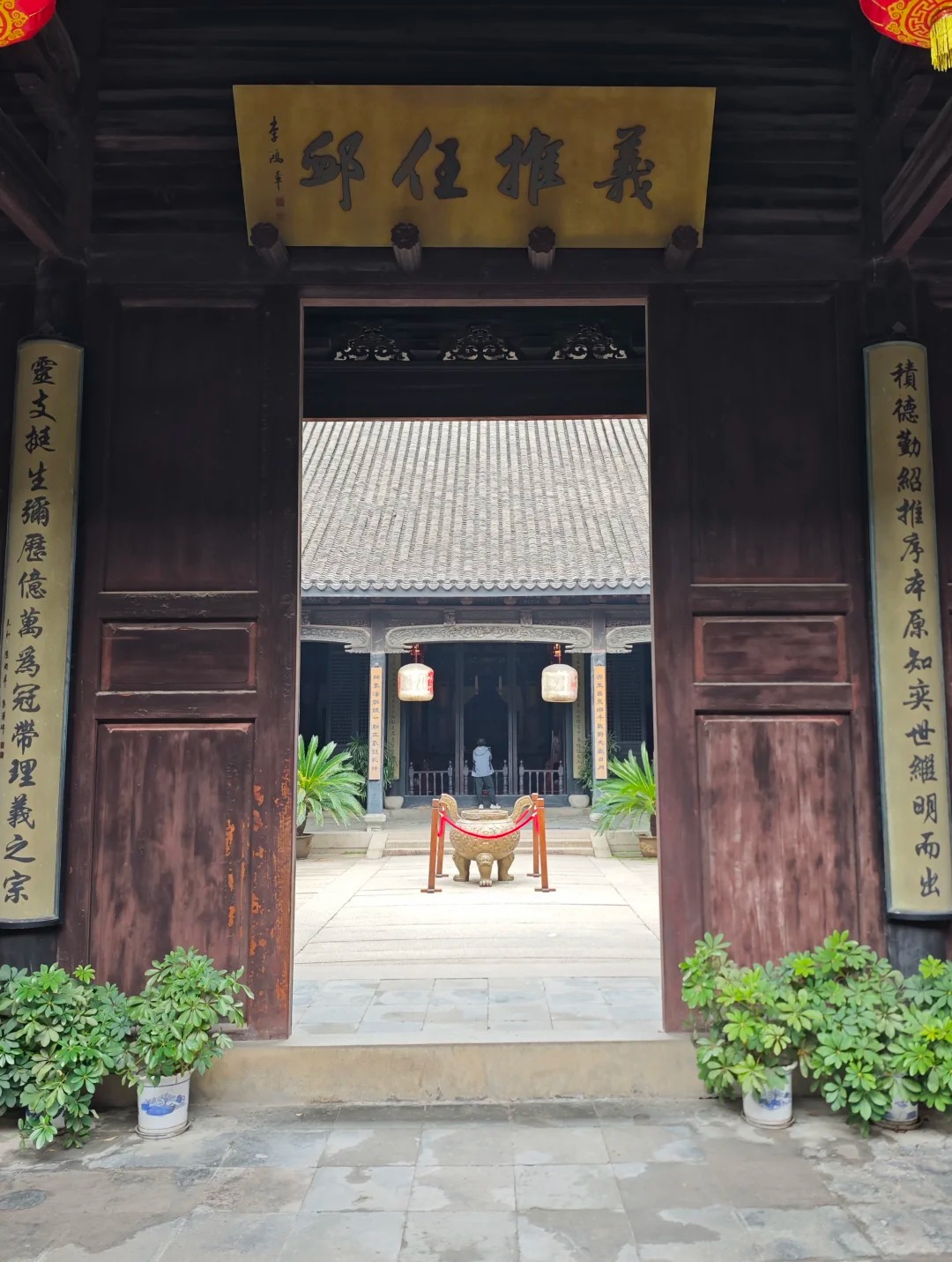
| Liu's Tihao — the Red House 刘氏梯号 ¥20 · Middle | Red-brick Baroque sitting behind Chinese horse-head gables, which should not work and does. The family temple nearby carries a board reading 義推任卹 signed by Li Hongzhang. |
| Zhang Jingjiang's Former Residence 张静江故居 ¥20 · North, near the east gate | A house museum about a financier of the 1911 revolution. Travellers who skip one of the six usually skip this — it is a long walk up and rewards an interest in modern Chinese history rather than in architecture. |
| Yiyuan garden 宜园 ¥10 · North, by the east gate | A reconstructed garden at the top of the town, and the cheapest of the six. It also hosts an evening banquet-and-performance product; travellers report the performance points are scattered too far apart to enjoy with children or older relatives. |
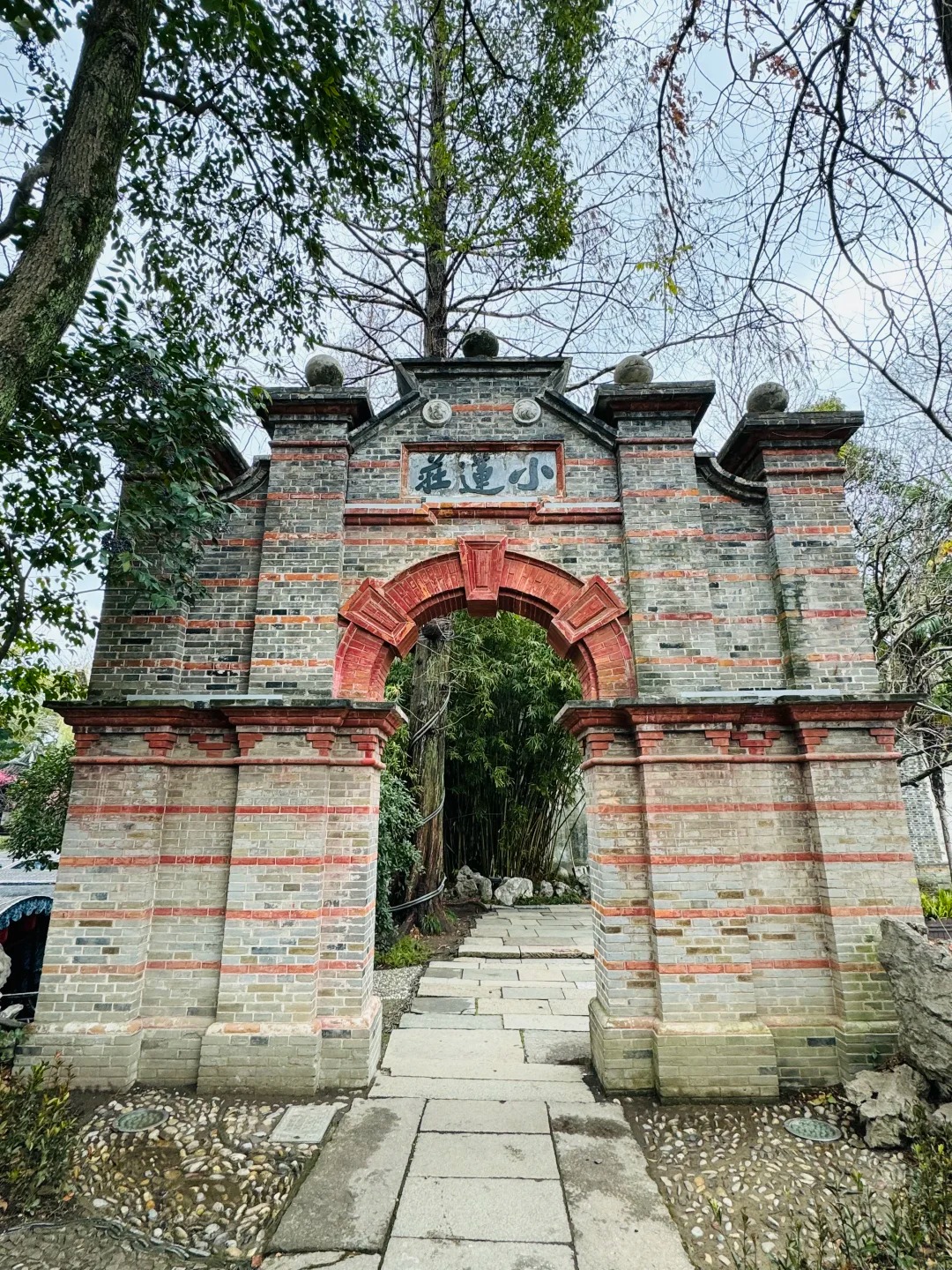
What is free and still worth your time. The mansions are the reason to buy anything, but the town outside them is not filler. Baijianlou (百间楼), at the north end, is a 400-metre run of Ming riverside housing and the most lived-in stretch of the town — it has never been ticketed. The canal frontage on Nanxi Street, the stone bridges, the covered walkways and the lanes off them cost nothing, and on a weekday morning you will have long sections to yourself.
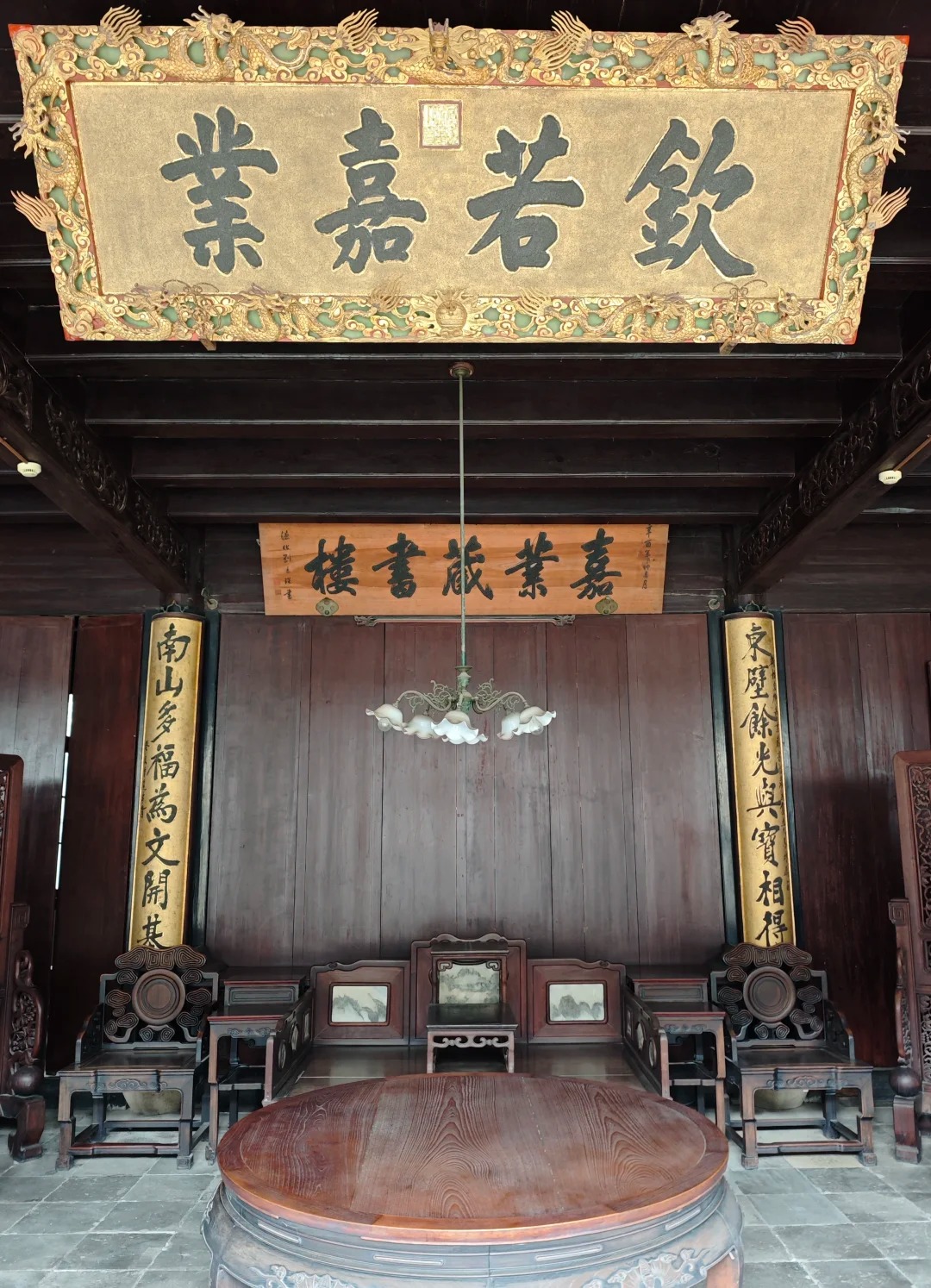
What travellers say to skip. Two things come up repeatedly, and both are worth repeating because a paid channel will not tell you. Zhang Jingjiang’s house and the Shen Yinmo art museum are a long walk to the north end and mostly reward an interest in early-twentieth-century Chinese politics and calligraphy respectively. And the evening banquet at Yiyuan spreads its performances across points far enough apart that people travelling with children or older relatives describe it as tiring rather than atmospheric.
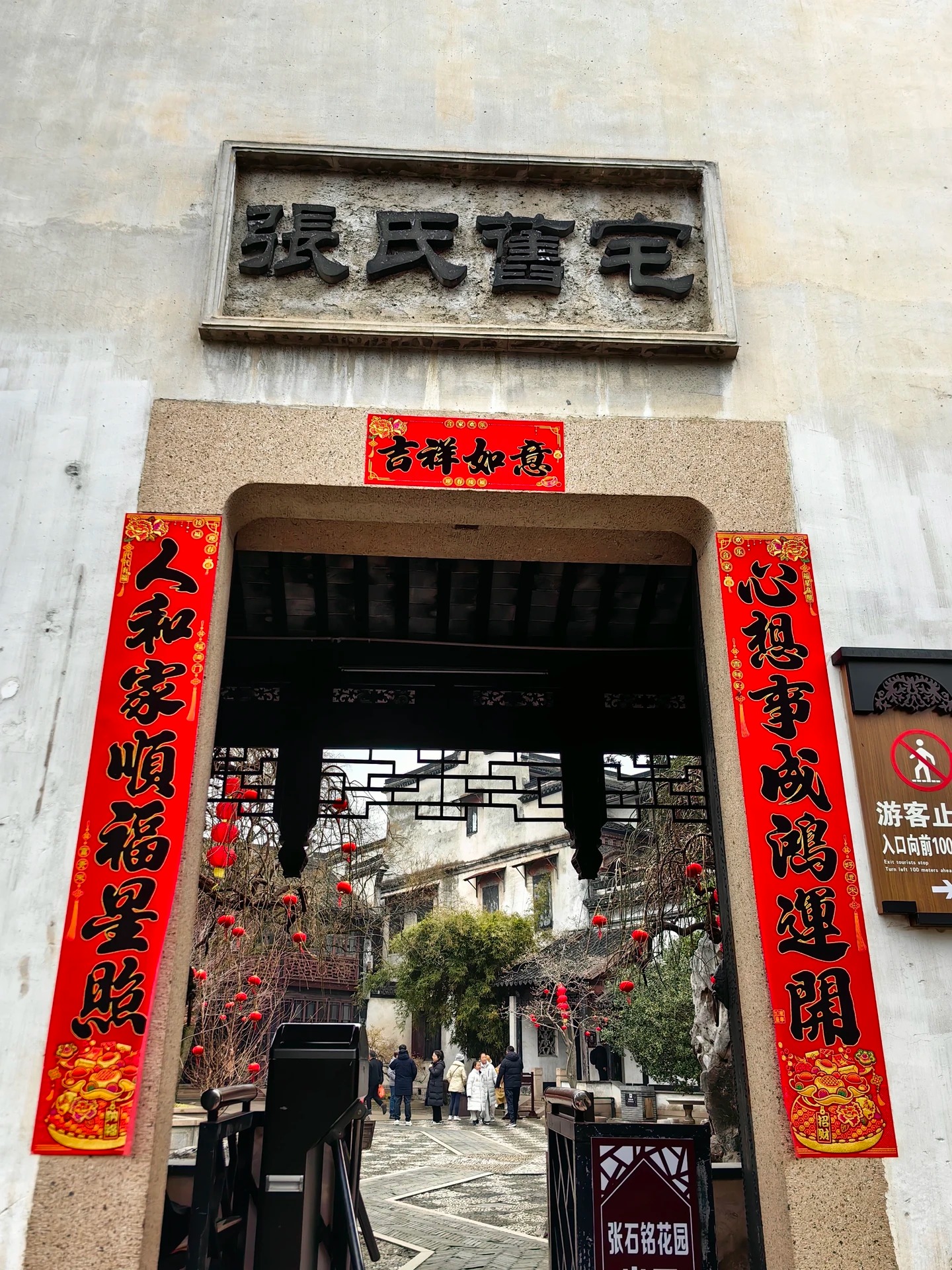
Nanxun vs Wuzhen — the mirror
These two get recommended interchangeably in English, as though the choice were only about travel time. They are close to opposites, and once you see how they differ the decision usually makes itself.
| Nanxun 南浔 | Wuzhen 乌镇 | |
|---|---|---|
| Entry | ⭐ Free and ungated since Jan 2023 — only six houses charge | Two separately gated zones, a ticket for each |
| Ticket rule | ⭐ ¥85 combined, 48 hours, unlimited re-entry | Single entry, valid the day you buy it — walk out and it is spent |
| Nearest railway | ⭐ Its own station, 7.7 km out (opened Dec 2024) | Tongxiang, 29 km away — or a direct coach instead |
| The draw | Architecture — French ballrooms, Baroque brick, the library | Atmosphere — canal-side night lighting, boats, the theatre festival |
| Residents | Still a lived-in town | Almost none inside Xizha; every shop is leased by the operator |
| Evening | Lanterns from about 18:30, then quiet — shops shut early | The best in the region, and open until 22:00 |
| Prices inside | Ordinary market pricing — including pay-to-sit riverside tables | Centrally set and posted; no touts inside the gate |
How to choose. If this is your first water town, you do not read Chinese and you want the evening to simply work, Wuzhen is the safer purchase — its managed quality is a feature, not a compromise. If you have seen one already, or you care more about buildings than about lanterns, or you are travelling on a budget, Nanxun is the better afternoon and costs nothing to try. They are about 30 km apart and pair naturally over two days.
And the others. Xitang is the loud one — a long covered riverside arcade, hanfu photography, a bar street — and it is really a Shanghai day trip rather than a Hangzhou one. Tongli belongs to Suzhou’s orbit, so in practice it competes with Suzhou’s gardens rather than with anything on this side of the delta; we have not researched it to the standard we hold ourselves to, and say so rather than pretending to a verdict. Nanxun’s advantage over all of them is the same one: it is free, so finding out whether you like it costs you only the travel time.
The water — and the pricing flip after dark
There are three ways onto the canal and they are priced on completely different logics, which is where money gets wasted.
| Option | Price | When | What to know |
|---|---|---|---|
| Water bus 水上巴士 | ¥3 per person | ~09:00–16:00 | An ordinary local public service, not a tour. The cheapest way to cover the town end to end — but tickets sell only at the wharf window, there is no online channel at all, and only a few departure slots are released at a time. Allow about an hour of queueing. |
| Hand-poled boat, daytime 摇橹船 | ¥160–380 per boat | 08:00–16:20 | Sold by the boat, not the seat: roughly ¥160 Xiaolianzhuang to Guanghui Bridge, ¥280–320 on to Zhang Jingjiang’s house, about ¥380 through to Baijianlou. Up to eight aboard, so gather others at the wharf and split it rather than paying for six empty seats. |
| ⭐ Evening boat | ¥50 hand-poled · ¥35 motorised, per person | 17:00–20:30 | The pricing flips after 17:00 — per head instead of per boat. Two people who would pay ¥160 in the afternoon pay ¥100 at night, under the lanterns, for the better version of the same trip. This is the single best-value thing on the page. |
Fares are per one-way trip rather than per hour, and are bought at the official windows. Link an international card to Alipay or WeChat Pay before you arrive — the wharf windows, the snack stalls and most small shops here are effectively cashless. See our Alipay guide.
The evening — lanterns, and the pay-to-sit riverside
The lanterns come on around 18:30, and because there is no gate you can be wherever you like when they do. Nanxun’s evening is quiet rather than spectacular: this is not a night-tourism town, the shops shut early, and if a big lit-up evening is what you are travelling for, Wuzhen does it better. What Nanxun has instead is an empty, softly lit town you can walk through for nothing, and a dawn — mist sits on the water at Baijianlou before eight — that a gated town simply cannot sell you.
⚠️ The honest bit about Baijianlou. Nanxun is widely recommended as the uncommercialised alternative, and along its best stretch that is no longer quite true. The riverside at Baijianlou is now lined end to end with restaurant tables. They belong to businesses, and travellers are consistent that you will be moved along if you are not ordering — the row of chairs facing the water is not public seating. This does not spoil the place, but it does change how you use it: the free public walkway runs behind the tables, and that is where the view is. Walk it early or after the lanterns come on, and if you want to sit down, the teahouses set back from the water charge normal prices for the same evening.
The contrarian route. Roughly nine visitors in ten come in at the south gate and walk north, which means the crowd moves as one body through the day. Travellers who know the town do it backwards: enter at the north or east end, take the ¥3 water bus down, walk Baijianlou while it is still empty, and finish at Xiaolianzhuang. You spend the whole day against the flow, and you arrive at the best garden when the tour groups have already left it.
Getting there — and the last mile that catches people
This is the one place where Nanxun clearly beats every other water town in the delta: it has its own high-speed station. Huzhou Nanxun opened on 26 December 2024 with the Shanghai–Suzhou–Huzhou line and now sees roughly 103 trains a day. Wuzhen, by comparison, has no station of its own and its nearest is 29 km away.
| From | How | Time | Cost |
|---|---|---|---|
| Shanghai Hongqiao | ⭐ Direct high-speed train to Huzhou Nanxun | from ~43 min | Rail fare |
| Hangzhou | A few services call at Hangzhou West; otherwise expect a change — the line was built to link Shanghai and Huzhou, not Hangzhou | ~1–1.5 h | Rail fare + transfer |
| Huzhou Nanxun station → south gate | ⭐ Taxi or ride-hail, 7.7 km. The answer if you have luggage. | ~17 min | ~¥15–25 |
| Huzhou Nanxun station → east gate | Taxi or ride-hail, 8.7 km | ~16 min | ~¥15–25 |
| Station → town by bus | A direct scenic line is signed at a stop ~180 m from the station exit; city bus 南浔170路 is the fallback | ~20 min direct, longer on the local line | ¥2, or free on the direct line |
- ⚠️ Do not plan a weekday arrival around the shuttle. Travellers report the direct scenic line runs only at weekends and on public holidays, and Amap lists a second scenic shuttle at the coach station flagged as suspended. On a Tuesday with a suitcase, take the taxi — it is fifteen minutes and the price of a coffee.
- ⚠️ Ignore the “train to Huzhou, then bus 101 or 101B” advice that a lot of English and older Chinese guides still repeat. It predates the new station. Bus 101 runs between Taian Road and Huzhou’s high-speed station and never reaches Nanxun, 101B is a Changxing line entirely, and Huzhou station itself is about 40 km in the wrong direction.
- Long-distance coaches arrive at the Taian Road coach station, about 1.4 km west of the old town — a short taxi ride or a twenty-minute walk, not a gate arrival.
⭐ Left luggage, which is what makes the day trip work. Both visitor centres store bags free — register and take a numbered tag. The catch is the closing times, and they are earlier than you would guess: the south-gate centre wants bags collected by 17:00, and the east-gate centre, 200–300 m inside the gate, is staffed only until 16:30–17:00. If you are on an evening train, use the paid options instead: a convenience store opposite the south gate takes bags at ¥5–10 a day and stays open late, and third-party lockers near the south gate run to 23:59 at ¥5 a backpack and ¥10 a suitcase. One more practical note — the lanes are stone flags and steps, and dragging a wheeled case over them is genuinely hard work. Store the bag first, then walk.
Day trips & the combined ticketNASDAQ: TCOM
You do not need a ticket to enter Nanxun. What is worth booking in English is the transport — day trips from Shanghai and Hangzhou that solve the last mile — and the six-house combined ticket, which is a little cheaper online than at the window.
Staying over — and why it is worth it here
A night in Nanxun buys two specific things, and neither is nightlife. The first is the 48-hour ticket: sleep here and the six houses split comfortably across two mornings instead of being raced against a 16:30 last admission. The second is the early morning — mist on the water at Baijianlou before eight, and lanes you have to yourself. Because the town is ungated you simply walk out into it, with no pass to show and no gate to wait for. That is the thing a free town can offer that a gated one structurally cannot.
| Where | What it is | The trade |
|---|---|---|
| Waterside guesthouses inside the old town | Converted houses, some with windows straight over the canal; owners will usually mind your bags. Look around Baijianlou and deeper into the lanes. | Atmosphere and the dawn — but a hard drag over flagstones with a suitcase, and the higher prices. |
| Hotels by the south and east gates | Ordinary modern rooms on a main road, with taxis, supermarkets and pharmacies at the door. | Duller, easier, cheaper, and five minutes’ walk from the same streets. |
There is no inside-the-gate trap of the Wuzhen kind to fall into here, because there is no gate: a room “near the old town” costs you a short walk rather than a second ticket. If you are arriving with big luggage and want to be inside, message the guesthouse in advance — the usual arrangement is that someone meets you at the nearest vehicle access point.
Rooms on the water, and rooms you can wheel a suitcase toNASDAQ: TCOM
Canal-front rooms against the ordinary hotels five minutes away by the gates. Either way the 48-hour pass is what a night here buys you — two unhurried mornings instead of one forced march, with the canal to yourself before the coaches arrive.
Eating — and the three-course tea
The local plate is shuangjiao noodles (双交面), which means the bowl comes with both toppings rather than one — fried fish and crisp pork together — plus xun ti (浔蹄), a slow-braised pork knuckle, and xiuhuajin, a green that grows here and travels badly.
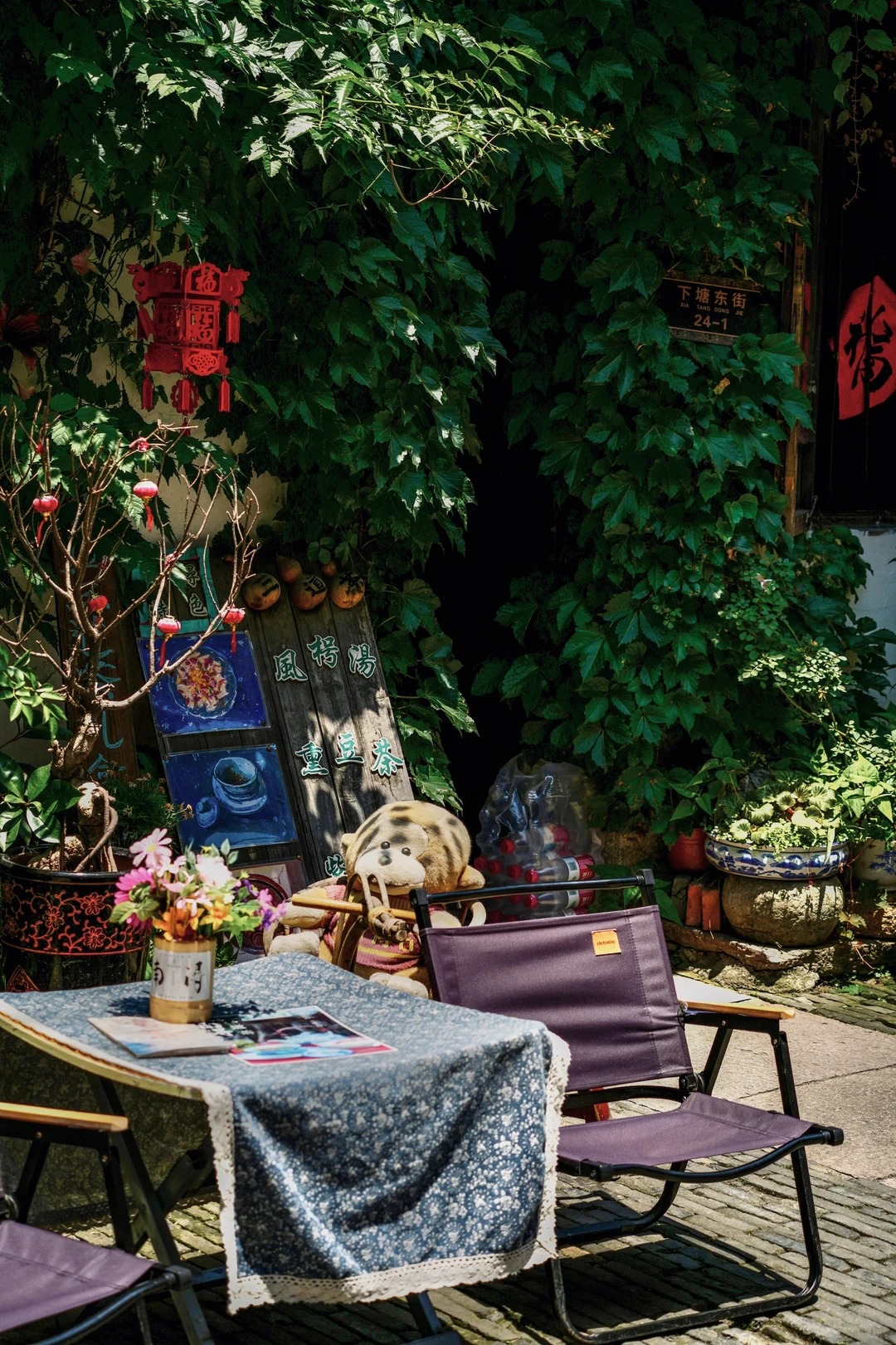
The thing worth going out of your way for is santaocha (三道茶), “one sweet, two savoury, three plain”: a rice-crisp tea, then a smoked-bean tea, then a plain green, served in that order. It is a Nanxun custom rather than a tourist product, and the teahouses set back from the canal do it at ordinary prices.
What to avoid: the photogenic riverside places with a minimum spend; anything a pedicab driver at the gate recommends; and — the one that costs real money — silk bought inside the old town. Nanxun’s fortune was built on raw silk and the trade is still here, but it is out at the Jiuguan silk park, not in the souvenir shops.
Practical for foreign visitors
- There is no gate to get through, which removes the friction that dominates a visit to most Chinese scenic areas — no turnstile that cannot read a passport, no real-name booking, no capacity cap. The six houses are staffed doors, not machines. Xiaolianzhuang and the Jiaye Library carry English interpretation panels.
- Set up mobile payment before you arrive. Link an international card to Alipay or WeChat Pay: the boat windows, snack stalls and small shops are effectively cashless. See our Alipay guide.
- Ignore anyone at the gates offering to get you in. Pedicab drivers still pitch “free entry, I know the way” — the town has been free since 2023, so the offer is meaningless and the ride ends at a commission shop.
- Wear flat shoes. The lanes are stone flags with steps; this is the most common complaint after the luggage.
- Costume photography is heavily marketed and near-identical between operators; dyed cheongsams are a recurring complaint, and there is no realistic route to a refund.
- Around a major holiday, check the evening. A maintenance notice in February 2026 closed the night sights and the boats over the Spring Festival period. Because entry is free there is also no capacity cap to thin the crowd on a public holiday — a weekday is a different town.
Planning the wider trip? See our Wuzhen guide, the Hangzhou city guide and things to do in Hangzhou.
Frequently asked questions
Is Nanxun Ancient Town free?
Yes, and it has been since 18 January 2023, when the scenic area dropped its gate fee for visitors from anywhere in the world and opened all 2.18 km² of the old town. There is no gate, no turnstile and nothing to book: the canals, the stone bridges, the lanes and the 400-metre Ming riverside terrace at Baijianlou cost nothing at any hour. Six heritage houses charge at their own doors, and that is the only money the scenic area takes. This is worth stating plainly because most English guides — and some Chinese archive pages — still describe a ¥95 all-inclusive ticket that you supposedly need in order to get in. That has been wrong for over three years.
How much are Nanxun tickets, and is the combined ticket worth it?
Only six houses charge, on five tickets: Xiaolianzhuang garden + Jiaye Library ¥25, Zhang Shiming's Former Residence ¥20, Liu's Tihao (the Red House) ¥20, Zhang Jingjiang's Former Residence ¥20, Yiyuan garden ¥10 — ¥95 for the lot. The combined ticket is ¥85 at the window and around ¥75 online, and unusually it is valid for 48 hours with unlimited re-entry rather than a single same-day entry. Whether it is worth it has a sharper answer than most guides give: it saves ¥10, but only against the complete set. Drop just the cheapest ticket — Yiyuan garden at ¥10 — and the other four already come to ¥85, which is the pass price exactly. So the combined ticket pays only if you intend to visit all six; for anything less, buy at the door. The two best houses, Xiaolianzhuang with the Jiaye Library and Zhang Shiming's house with its French ballroom, are ¥45 that way. Students pay half; over-70s and children of 1.2 m or under go free with ID.
Nanxun or Wuzhen — which should I pick?
They are near-perfect opposites, so the honest answer depends on what you want to be true of the evening. Wuzhen is the polished one: two separately-gated scenic areas, a ticket for each, the best night lighting in the delta, fixed posted prices and almost no residents left inside. Nanxun is free, still lived-in, far quieter, and its draw is architectural rather than atmospheric — late-Qing silk fortunes built French Renaissance ballrooms, stained glass and red-brick Baroque behind Chinese horse-head gables, and nothing else in the region has that. Pick Wuzhen if you want a big managed evening that simply works without any Chinese. Pick Nanxun if you want old buildings, low prices and space to walk, and can accept that shops shut early. Practically: Nanxun is cheaper, has its own high-speed station and lets you re-enter for two days; Wuzhen is easier to reach from Hangzhou and much livelier after dark. Doing both is reasonable — they are about 30 km apart.
How do I get to Nanxun from Shanghai or Hangzhou?
From Shanghai it is genuinely easy: Huzhou Nanxun station opened on 26 December 2024 on the Shanghai–Suzhou–Huzhou high-speed line, sees roughly 103 trains a day, and the fastest run from Shanghai Hongqiao takes about 43 minutes. The station is 7.7 km from the south gate — about 17 minutes and ¥15–25 in a taxi or ride-hail, which is the answer if you have luggage. From Hangzhou it is less tidy, because the line was built to connect Shanghai and Huzhou rather than Hangzhou: a few services call at Hangzhou West, but there is no frequent direct pattern from Hangzhou East, so expect a change and around an hour and a half door to door. Ignore the widely-copied advice to take a train to Huzhou and then bus 101 or 101B — that route is out of date, bus 101 runs between Taian Road and Huzhou's high-speed station and never reaches Nanxun, and Huzhou station is about 40 km the wrong way.
How long do I need in Nanxun, and is it worth staying the night?
Half a day covers the six houses at a brisk pace; a full day is comfortable. Staying over is worth it for two specific things rather than for the town being livelier at night — it is not. The first is that the six-house ticket runs 48 hours, so a night lets you split the mansions across two mornings instead of racing the 16:30 last admission. The second is the early morning: mist sits on the water at Baijianlou before eight, and because entry is free and ungated you can simply walk out into it, which is not true of a gated town. Sleeping inside the old town means a waterside guesthouse and a hard drag over the flagstones with a suitcase; the hotels by the south and east gates are duller but sit on a main road with taxis and shops. There is no inside-the-gate trap of the Wuzhen kind here, because there is no gate.
What does "four elephants, eight oxen and seventy-two golden dogs" mean?
It is the late-Qing local slang for Nanxun's silk merchants, ranked by fortune. A family worth more than ten million taels of silver was an "elephant" — there were four, the Liu, Zhang, Pang and Gu. Five to ten million made you an "ox", and there were eight of those. Three hundred thousand to five million made you a "golden dog", of which seventy-two were counted. Bronze figures stand at the east gate. It sounds like folklore trivia, but it is the single most useful thing to know before you walk in: it is the reason a canal town of this size contains a French ballroom, imported stained glass and red-brick Baroque mansions. Nanxun's raw silk went to Europe and the money came back as architecture.
Are the Nanxun boats worth it, and which one?
There are three water options and the pricing flips after dark, which is the thing nobody writes down. In daylight the hand-poled boats are sold BY THE BOAT — roughly ¥160 from Xiaolianzhuang to Guanghui Bridge, ¥280–320 on to Zhang Jingjiang's house, about ¥380 through to Baijianlou, up to eight aboard, running 08:00 to 16:20 — so alone or as a couple you are paying for six empty seats unless you gather others at the wharf. After 17:00 the evening boats switch to PER PERSON at ¥50 hand-poled or ¥35 motorised, until 20:30. Two people who would pay ¥160 in the afternoon pay ¥100 at night, under the lanterns, for the better version of the same trip. Separately there is a ¥3 water bus, an ordinary local public service running about 09:00 to 16:00 — good value and the fastest way to cover the town north to south, but it sells only at the wharf window, has no online channel at all, and releases a few time slots at a time, so allow an hour of queueing for the departure you want.
Xitang or Nanxun? Tongli or Nanxun?
Xitang against Nanxun is a clean split: Xitang is the loud one, with a kilometre-long covered riverside arcade, hanfu photography and a bar street, and it is a Shanghai day trip rather than a Hangzhou one. Nanxun is the quiet, cheap, architectural one. If you want an evening with noise in it, Xitang; if you want mansions and space, Nanxun. Tongli we have not researched to the standard we hold ourselves to, so treat this as orientation rather than a verdict — the thing that usually settles it is not character but geography: Tongli is a Suzhou day trip, so it competes with Suzhou's gardens rather than with a Hangzhou or Shanghai itinerary. Nanxun's real advantage against all of them is the same one: it is free, so it costs you nothing but travel time to find out whether you like it.
Sources
Checked July 2026 · Written from our own first-hand travel in China.
Corrected since publication: Two claims still circulating are wrong: the all-inclusive entry ticket was abolished in January 2023, and route 101 from Huzhou does not reach Nanxun.