Why the map lies here
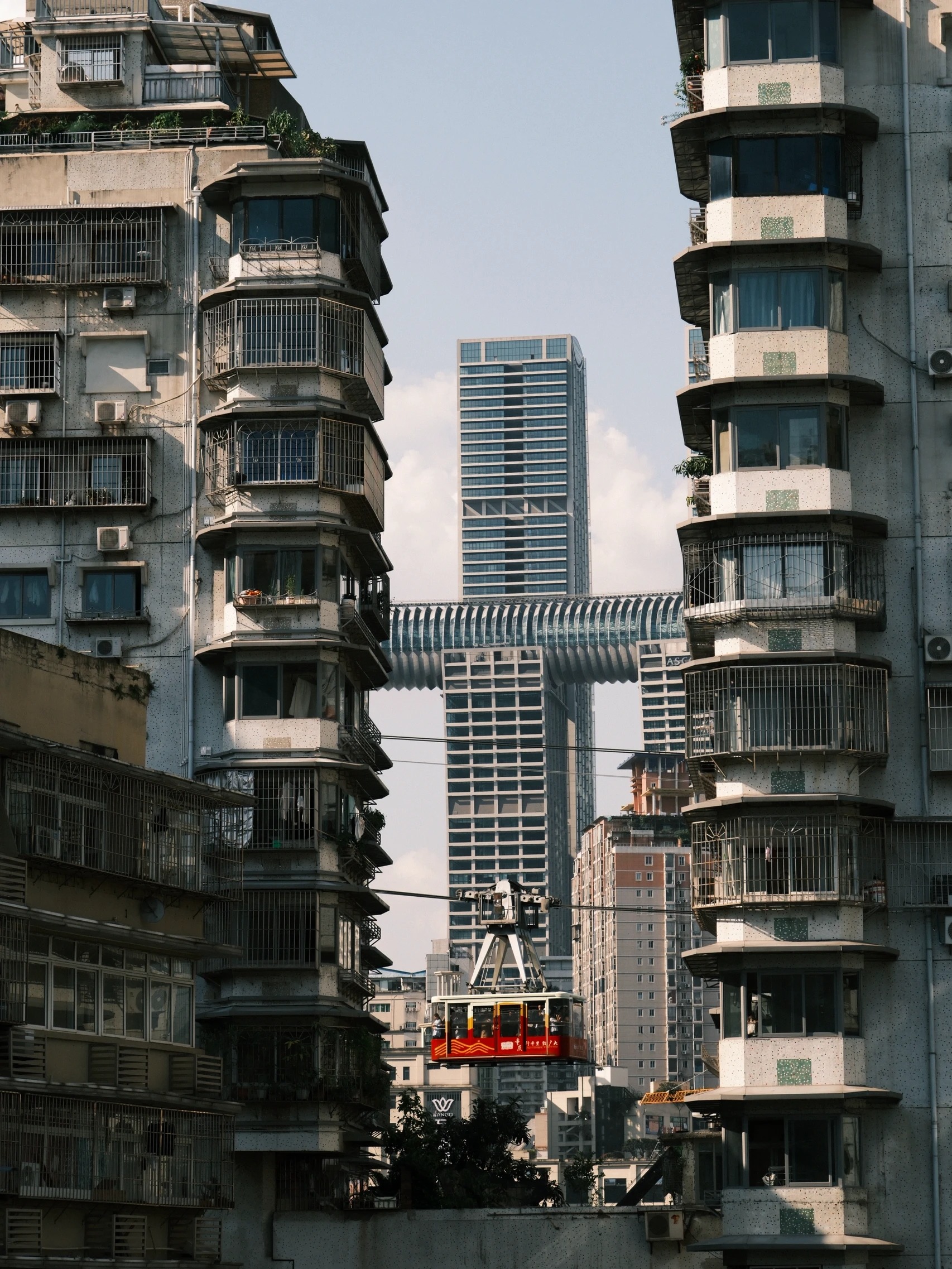
Chongqing is built on ridges above the point where the Jialing runs into the Yangtze, and it has grown upward rather than outward. Roads run over roofs. A building’s twenty-second floor opens onto a street. Public lifts and a cable car exist because walking was not a reasonable answer to the gradient.
The practical consequence is that a routing app measures the ground plan and misses the part that costs you. Ask a local for directions and the useful question is not how far something is but whether it is 上面 (above) or 下面 (below) — that is the axis people here actually navigate on, and it is the one your phone cannot show you.
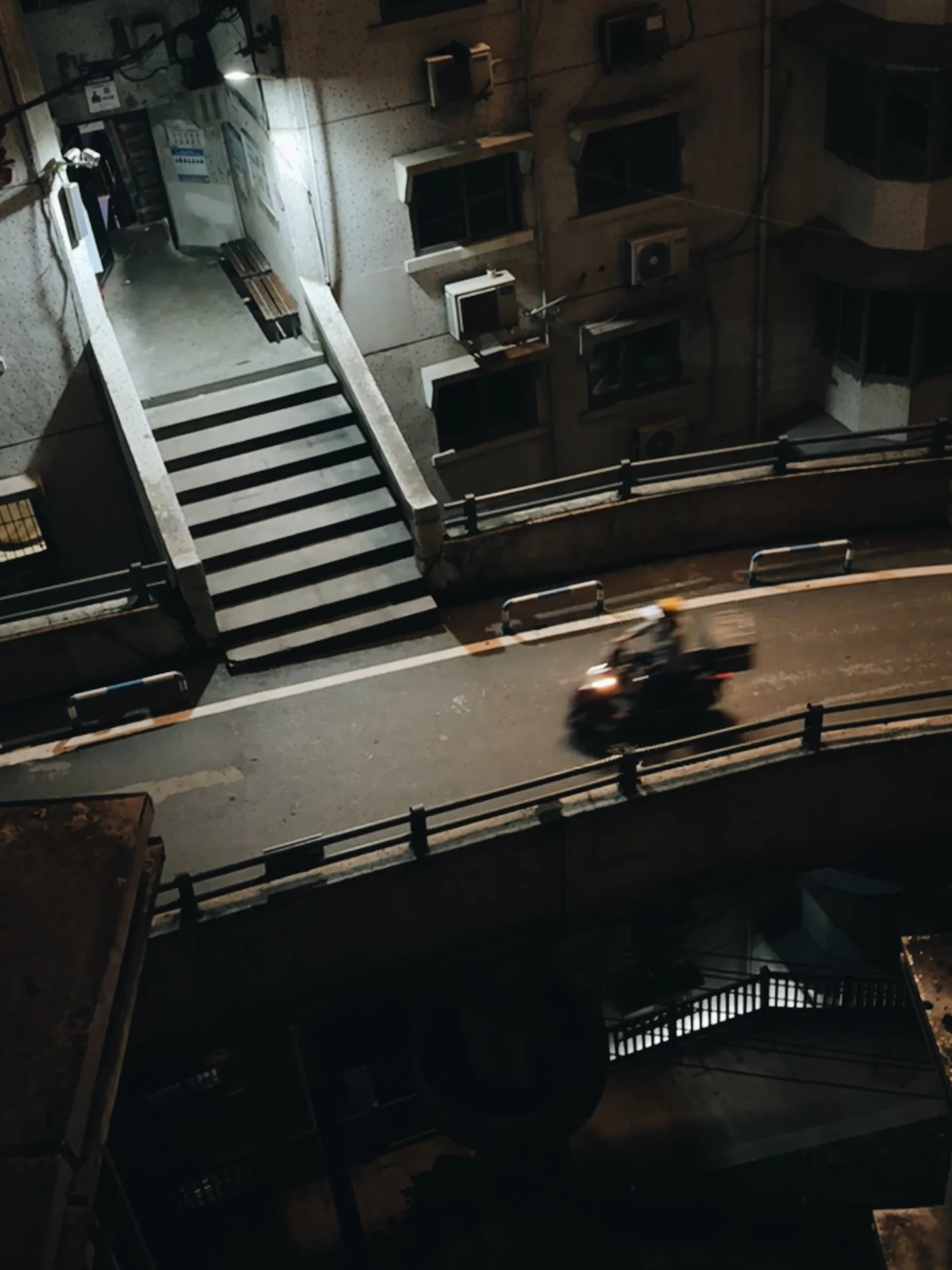
None of this makes the city hard to visit. It makes it hard to improvise in. Plan the day as a descent and it works; plan it as a list of nearby dots and you will spend the afternoon on stairs.
What is actually worth your time
In rough order of how much they reward the trip across, rather than by fame:
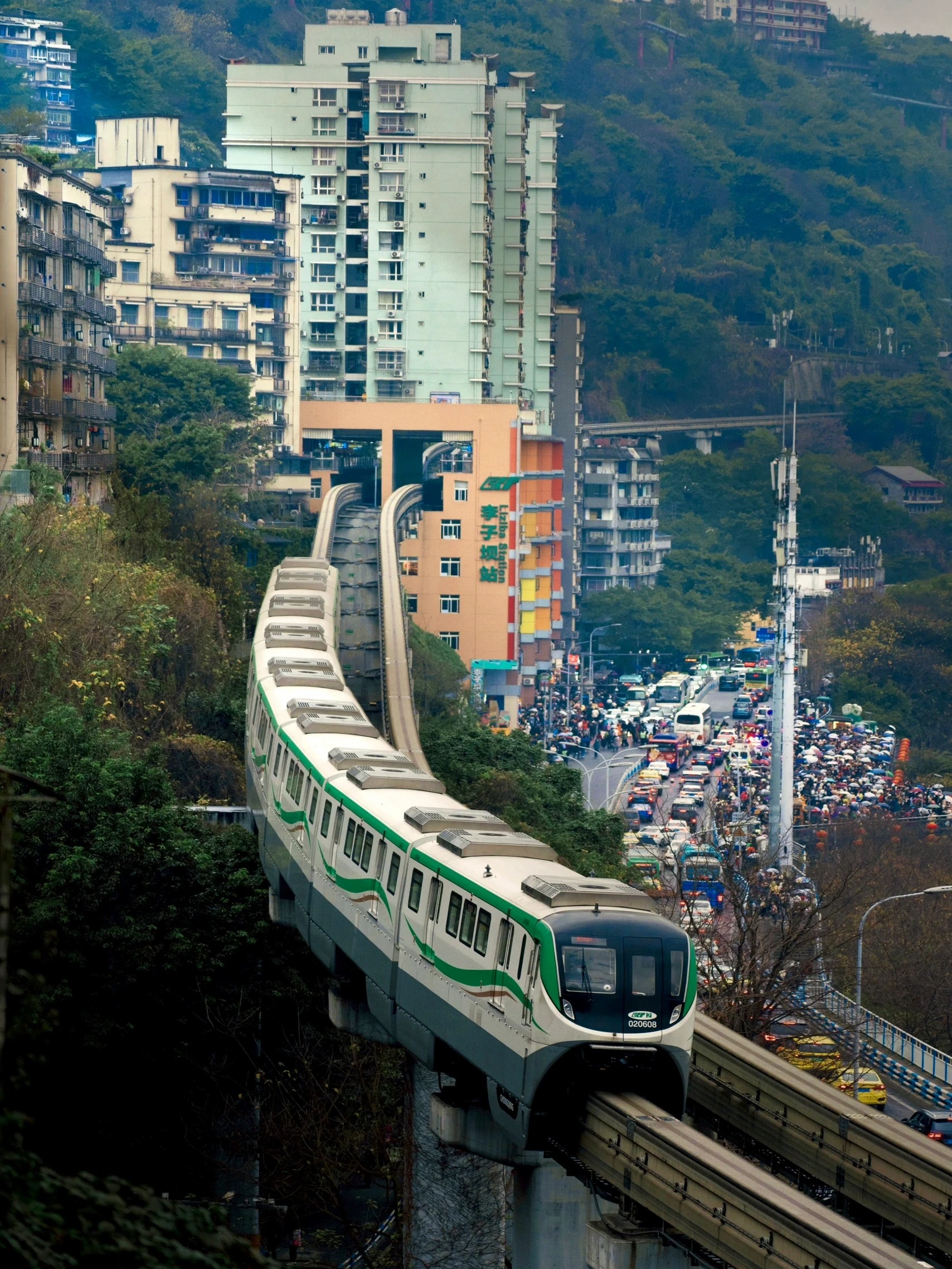
A metro train enters a residential tower at the sixth floor and leaves at the eighth. Free, takes twenty minutes, and it is the single image people come away with.
A working river crossing from 1987 that survives as the best cheap ride in the city. Single ticket, not return.
Hongyadong洪崖洞
The stilt-house complex everyone photographs — from the far bank, at light-on, not from inside.
Shibati十八梯
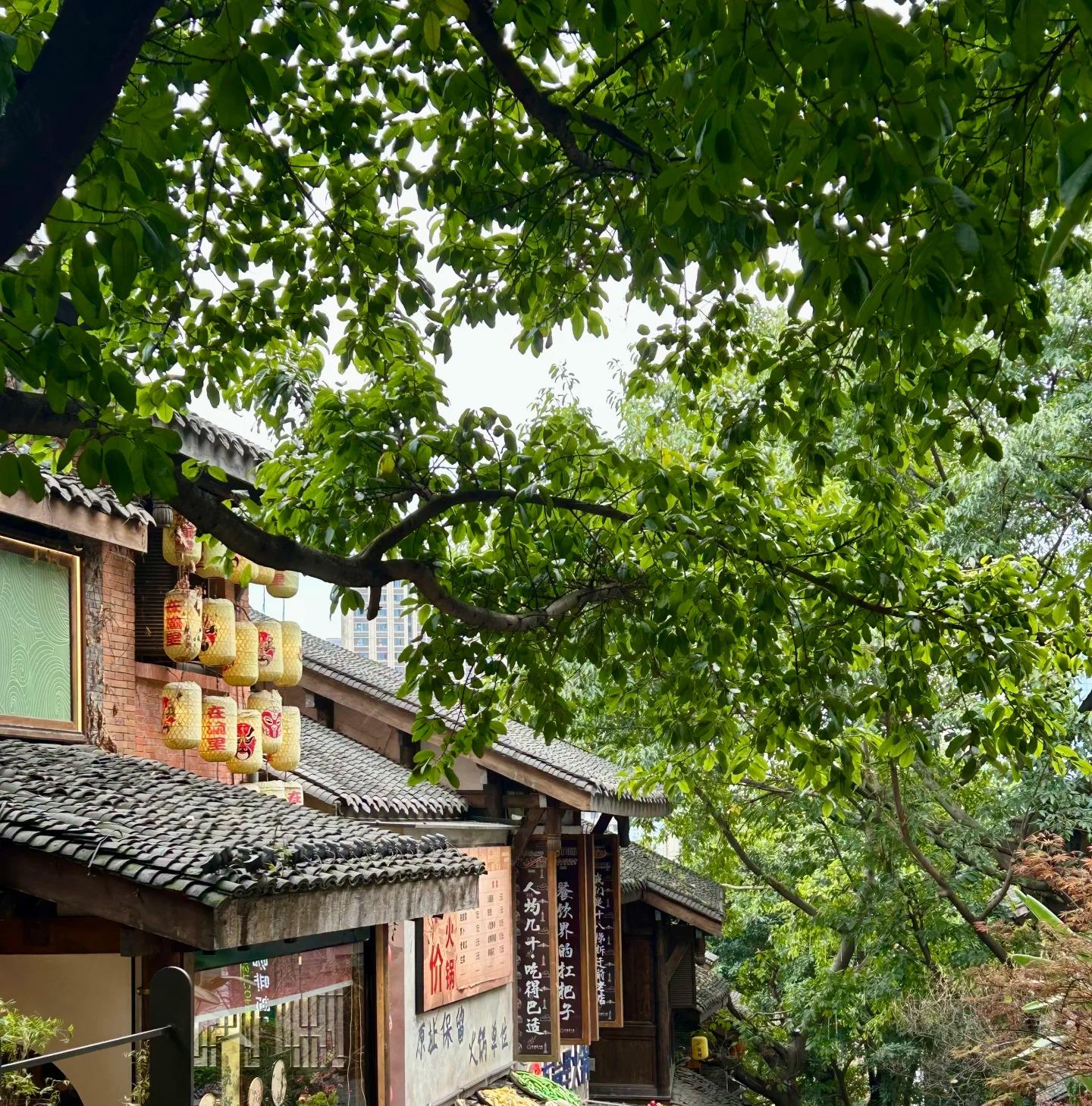
A rebuilt quarter of stepped lanes connecting the upper and lower city. Signed in English as Chongqing Shibati Traditional Style Blocks.
Jiefangbei & Kuixinglou解放碑 · 魁星楼
The monument, and next to it a free sky plaza 22 floors up that you reach at ground level.
Longmenhao & Xiahaoli龙门浩 · 下浩里
South-bank old streets rebuilt around cafés and galleries. The alternative to Ciqikou, and quieter.
Ciqikou磁器口
The famous old town. Worth it if you get past the first, most commercial stretch — many visitors do not.
A day trip: three natural limestone arches, reachable by high-speed train.
A day trip: UNESCO-listed Buddhist cliff sculpture, 9th–13th century.
Two things are deliberately not on that list. The Three Gorges Museum is excellent and free, but it is an indoor museum in a city whose whole appeal is outdoors — it belongs on a wet afternoon, and it has its own guide. And Chongqing hot pot is not a sight; it is dinner, and it is dealt with below.
One day on the peninsula, in the order that works
This is the itinerary the geography supports rather than the one a list would produce. It starts high and west, ends low and east, and uses the cable car as the way back rather than as an out-and-back errand.
| Time | Where | Why then | Getting there |
|---|---|---|---|
| 08:00 | Liziba Monorail Station | The monorail through the building. Early is the whole trick, and earlier than feels necessary — the 10:00–11:30 compromise is a trap, because the queue has already formed. | metro · ¥2 |
| 10:00 | Jiefangbei | The monument, then the free 22nd-floor Kuixinglou plaza, where the lift lets you out onto what is, at that height, flat ground. | Line 2 |
| 12:00 | Shibati | The rebuilt stepped quarter, walked downhill. | walk 1.1 km |
| 14:00 | Shancheng Trail | Cliff-edge walkway above the river, entered at Lingshi Lane so the walking is downhill. | Line 1 / taxi |
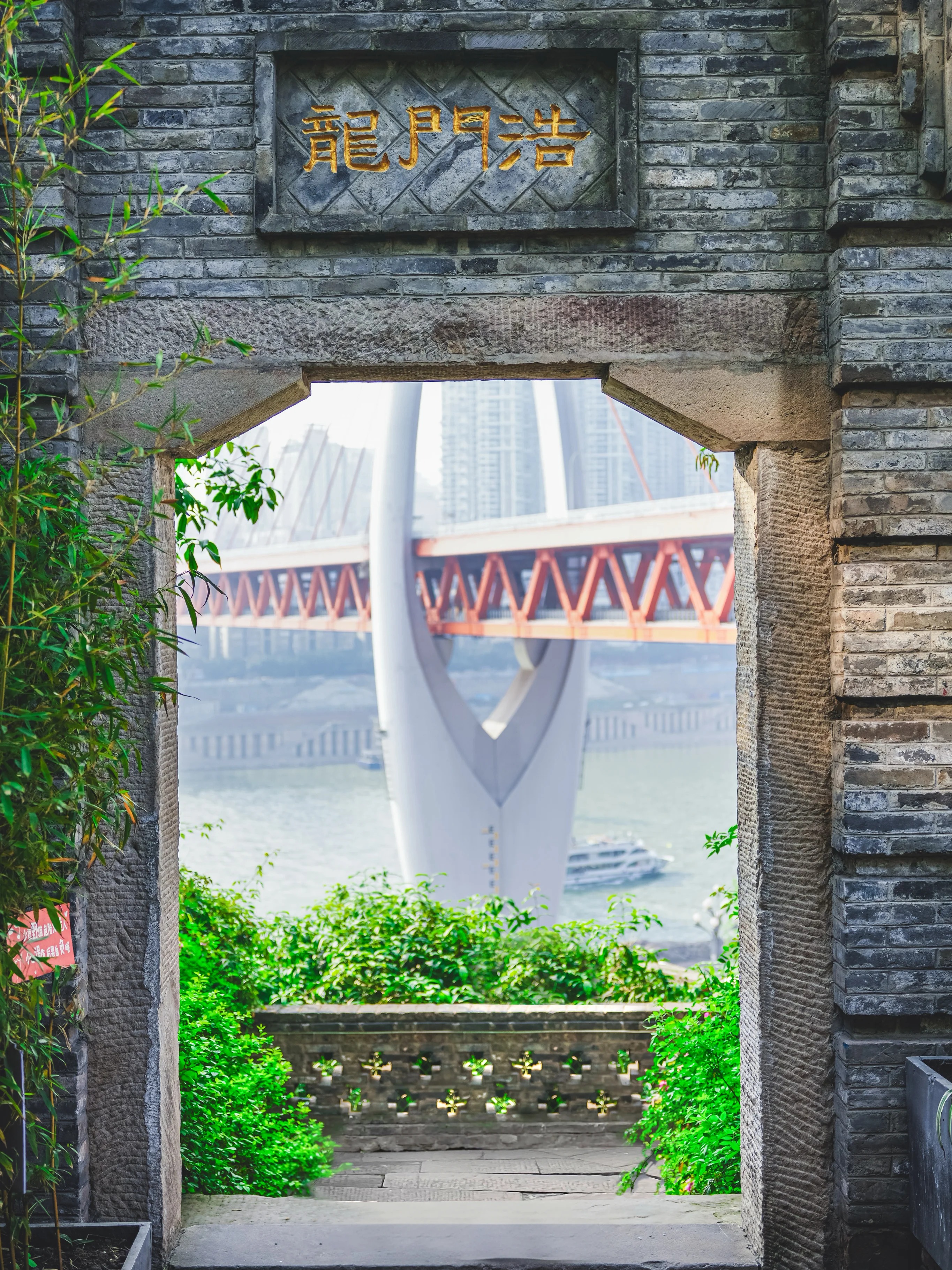
| 16:00 | Longmenhao Old Street | The old streets of the south bank, Xiahaoli included — rebuilt around cafés and galleries, and far quieter than Ciqikou. | Line 1 + 6 |
| 18:15 | Cableway south station | Take a queue number. Buy a single, not a return. | walk 600 m |
| 18:30 | Yangtze River Cableway | Cross south to north, back to the peninsula, as the light goes. | cable car |
| 19:30 | Qiansimen Bridge | The frame for Hongyadong, from the Jiangbei side of the bridge. | Line 6 |
The morning half of that clock holds all year. The evening half moves with sunset, because the thing it is timed to is light-on:
- Spring and autumn — the printed clock is written for this, so run it as it stands.
- Summer, roughly June–September — push the evening half about half an hour later.
- Winter, roughly December–February — bring the evening half forward by about an hour and a half, leaving the south bank near 16:45.
The one timing conflict
Both ends of this move are seasonal, and they shift in opposite directions — which is why it looks tighter than it is. The cable car runs 08:00–22:00 Mar 1–Nov 30; 08:00–21:00 Dec 1–end Feb; public holidays 07:30–22:30, and admission stops before that: allow 30 minutes, i.e. be inside by ~21:30 in summer and ~20:30 in winter. Hongyadong’s lights follow sunset across three bands, not two — Summer (roughly Jun–Sep) 20:00 · winter (roughly Dec–Feb) 18:00–18:30 · spring and autumn around 19:30. So in summer you have roughly 20:00 light-on against a ~21:30cut-off: an hour and a half, comfortable rather than the dash it is usually described as. In winter the lights come on at 18:00–18:30but the last cabin is an hour earlier too, so the margin is about the same. The awkward one is spring and autumn, when light-on sits around 19:30and the summer timetable is still running. Check the current schedule before you commit the evening; it moves with sunset.
Three pairs you should not walk between
Each of these looks like a short stroll on a phone. The straight-line distance is in the first column and the app’s own routed walk is in the second — note how unremarkable the routed figures are. That is the whole problem: nothing in the number warns you, because a flat measurement cannot.
Jiefangbei ↔ Hongyadong
657 m straight · app says 850 m
The lowest detour factor on the peninsula and still the one locals tell you not to walk: the two are separated by upwards of ten flights of steps. The router is not lying — it is measuring the only thing it measures, which is exactly why people set off on an ordinary-looking 850 m and meet the stairs.
Instead: Xiaoshizi (小什字) exit 9, and enter Hongyadong at the TOP.
Shibati ↔ Shancheng Trail
615 m straight · app says 885 m
Two points on the same ridge with a large slope between them. Walked cold it is a leg-killer, and it is the link visitors most often underestimate.
Instead: Enter at Lingshi Lane (领事巷): there is an internal lift, and from there the route runs downhill.
Cable-car north station ↔ Jiefangbei
725 m straight · app says 975 m
Both sit in Yuzhong district, but the station exit is upstairs and Jiefangbei is downstairs — several building-storeys of height between them.
Instead: Xiaoshizi (小什字) — it puts you out on Jiefangbei’s own level.
Two of those three are answered by the same station, which is worth knowing on its own: Xiaoshizi (小什字) on Lines 1 and 6 sits between Jiefangbei, Hongyadong and the cable car’s north station, and it is the piece of infrastructure that makes that corner of the peninsula work on foot at all.
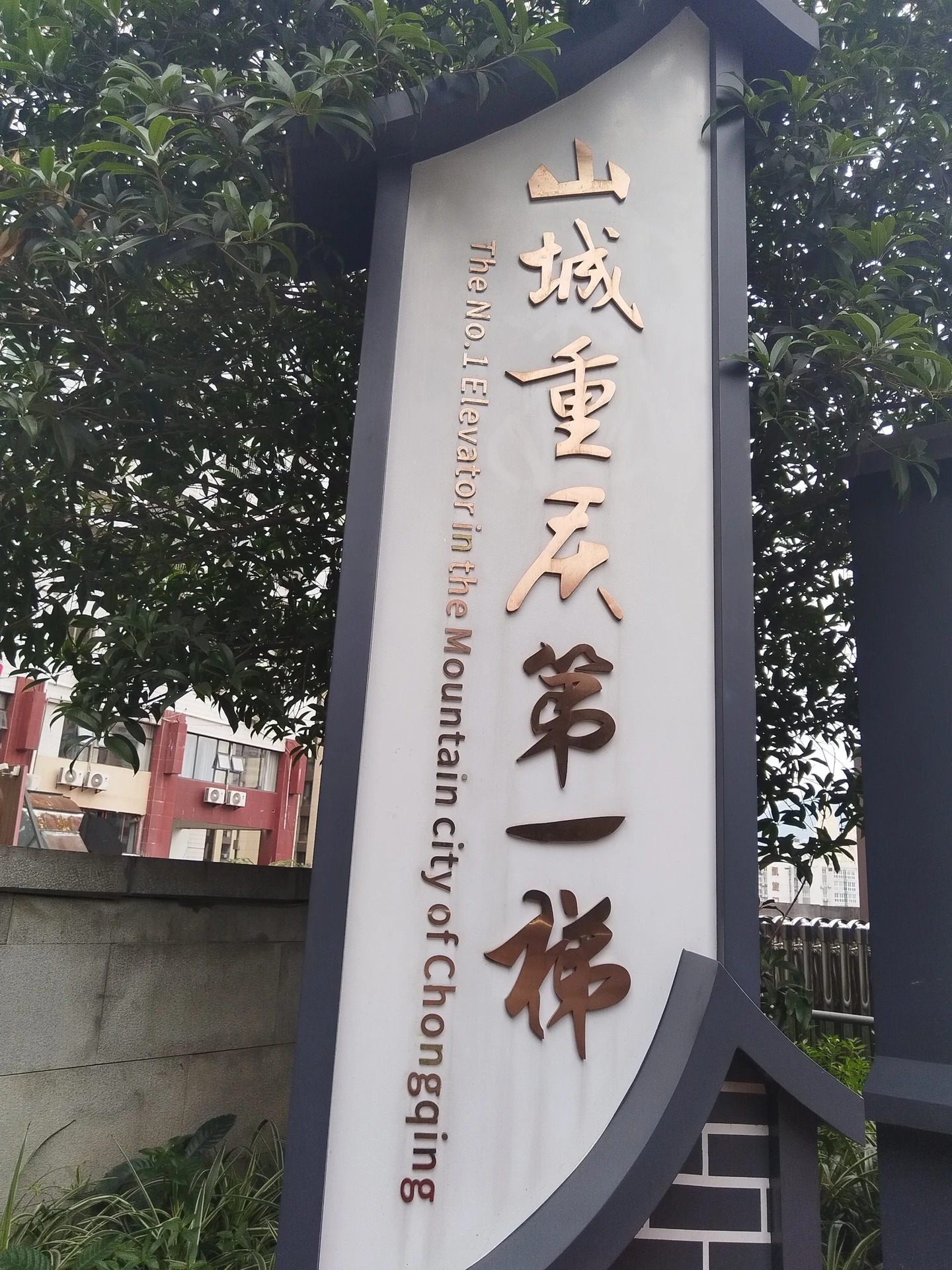
There is a fourth case worth knowing about even though it is not a walk at all. Where the climb is steep enough, the city has simply built machinery: the 第一梯 public lift on Kaixuan Road, signed in English as The No.1 Elevator in the Mountain city of Chongqing, is a piece of vertical public transport about 400 m from Jiaochangkou metro station. It is the clearest single illustration of what this city does with height.
The south bank, and why the cable car goes that way
Most itineraries treat the Yangtze cable car as a there-and-back attraction. It works far better as a piece of transport, and the reason is what sits at its southern end: Longmenhao Old Street (龙门浩老街) and Xiahaoli (下浩里) are both a few hundred metres from Shangxinjie station, rebuilt around cafés, galleries and river views rather than souvenir stalls.
So the sequence that makes sense is: metro under the river in the afternoon, walk the old streets, then board the cable car on the south side and cross north as the light goes. You land 725 m from Jiefangbei and 566 m from Hongyadong, which is exactly where the evening wants you. Buy a single — the return leg sends you back to a fresh queue at the far station, which on a busy evening means the same wait twice for a four-and-a-half-minute ride.
What foreign visitors rate differently
Chinese hosts who regularly show Western friends around Chongqing report a consistent split, and it is worth knowing because it runs against the standard ranking.
Lands harder than expected
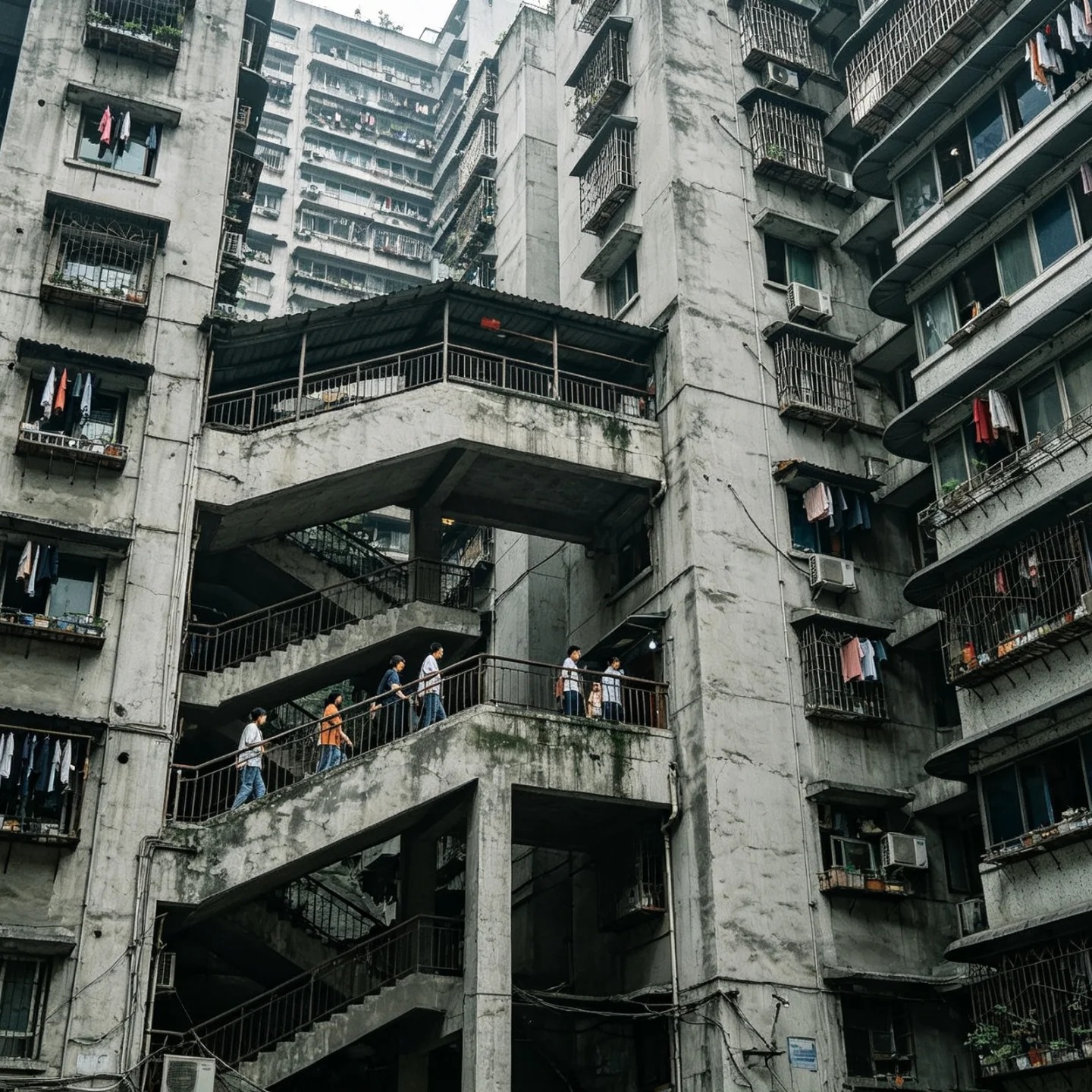
- The vertical city itself — the monorail through the tower, a lift as public transport, the stacked walkways of an old apartment block
- A neighbourhood hotpot in the ground floor of somebody’s flats, rather than a famous one with a queue
- A few yuan of noodles from a lane stall
- An afternoon in an old teahouse doing nothing in particular
Lands softer than expected
- The first, most commercial stretch of Ciqikou
- Restaurants with an hour-long queue
- The paid night cruise — a good number rate it poor value against walking the riverside for free
- Indoor museums, on a trip whose appeal is outdoors
We publish a full guide to the night cruise and it remains the only way to get the mid-river angle. But the criticism is real and stating it is more useful than pretending otherwise: if what you want is the skyline lit up, Nanbin Road and the Jiangbeizui riverside park cost nothing.
Hotpot, and how to order it
Two words save the evening. 鸳鸯锅 (yuānyāng guō) is the split pot, chilli oil on one side and a clear broth on the other. Ask for it. 微辣 translates as “mildly spicy” and is not a concession — it is the local floor, and it will still be hot. The split pot used to be regarded as a compromise; it is now completely ordinary, and nobody will think anything of it.
If you end up at 串串香 (skewers) rather than hotpot proper, the bill is counted from the sticks you have finished, so leave them tidily on the table. And the advice locals give about where to eat is consistent: get off the main street. The small places in residential lanes are better and cheaper than the ones with a queue and a photo wall.
Out of the city
Chongqing is the launch point for two very different day trips and one long one.
- Wulong Karst — three natural limestone arches in a gorge, reachable by high-speed train. The binding constraint is not the closing time but the last coach back from the visitor centre, so build the day backwards from it.
- Dazu Rock Carvings — UNESCO-listed Buddhist cliff sculpture from the 9th to 13th centuries, about 35 minutes by high-speed train plus a transfer.
- The Three Gorges cruise — the multi-day sailing downstream. Worth reading about before booking: most ordinary sailings pass the longest gorge overnight.
Practicalities
- Shoes. This is not padding. Days here run to a lot of steps and every local guide leads with it.
- Metro over taxi on the peninsula at busy hours — the road network is as vertical as everything else and traffic loses to the train.
- One scam to know. At Hongyadong, people at the entrance sell a “fast track” (快速通道). The lift they are pointing at is the ordinary one and it costs nothing.
- Where to stay. Jiefangbei is central and priciest; Guanyinqiao and the Line 1 corridor around Shiyoulu are better value and still close. Our districts guide works through the trade-offs.
- Summer. Chongqing is genuinely punishing in July and August. Plan indoor or shaded hours in the middle of the day and move the walking to early and late.
Frequently asked questions
How many days do you need in Chongqing?
Two full days covers the city itself: one on the Yuzhong peninsula (the monorail station, the old quarters, the cable car, the night view) and one for whichever out-of-town trip you pick. Three days lets you do both Wulong and Dazu without rushing, or add the south bank properly. One day is enough only for the peninsula, and you will be choosing between the old quarters rather than seeing them all — the constraint is not opening hours, it is that moving between neighbouring sights here takes far longer than the map suggests.
Why does the map say 200 metres when it takes 20 minutes?
Because the distance is vertical and the map is flat. Chongqing is built across steep ridges above the confluence of two rivers, and a routing app measures the ground plan: it will happily report an 850-metre walk between two places separated by ten or more flights of steps. The rule travellers repeat is to follow the terrain downhill rather than fight it, and when you ask directions, ask whether the place is 上面 (above) or 下面 (below) rather than how far it is. Where the climb is genuinely unreasonable this page says so and gives the metro or taxi instead.
Which direction should you ride the Yangtze cable car?
South to north — board at Shangxinjie (上新街) on the south bank and cross toward the peninsula. It is the better order for two reasons that have nothing to do with the view, which is the same either way. First, the south station sits beside Longmenhao Old Street and Xiahaoli, so you can spend the afternoon there and use the crossing as the transition rather than as an errand. Second, you land on the peninsula about 725 m from Jiefangbei and 566 m from Hongyadong, which is where you want to be as the lights come on. Buy a single, not a return: the return leg makes you take a fresh queue number at the far station.
Is Hongyadong worth going inside?
The photograph is the reason to come, and the photograph is taken from across the river — not from inside the complex, where you are standing in the thing you came to see. If you do go in, enter at the TOP: take Line 1 or Line 6 to Xiaoshizi (小什字) exit 9 and walk level to the floor-11 entrance, then work down through the building. Arriving at the riverside entrance at the bottom means climbing eleven floors of stairs and ramps. Ignore anyone at the door selling a 快速通道 'fast track' — the lift they are pointing at is the ordinary one and it is free.
What do foreign visitors like in Chongqing that guidebooks skip?
Chinese hosts who take Western guests around report the same pattern: the reaction is strongest to the vertical city itself and to ordinary daily life, not to the big-name sights. The monorail entering a residential tower, a lift that works as public transport, the stacked walkways of an old apartment block, a neighbourhood hotpot under someone's flats, a bowl of noodles from a lane stall, an afternoon in an old teahouse. The reverse also holds — the first, commercial half of Ciqikou and the queue-for-hours restaurants tend to lose people quickly, and a good number find the paid night cruise poor value against walking the riverside for nothing.
Is the Two Rivers night cruise worth it?
It depends what you want, and the honest answer includes a caveat we hear repeatedly: plenty of visitors think it is poor value and prefer walking the Nanbin Road promenade or Jiangbeizui riverside park, both free, for a comparable view. What the boat genuinely buys is the mid-river angle — Hongyadong, the Qiansimen bridge and the Raffles towers in one moving frame — which no land viewpoint gives you. Sail as the lights come up rather than at the end of the timetable: the boats keep selling after the landmarks go dark, so the last departure is a trap rather than a deadline.
How spicy is Chongqing hotpot really, and what do you order?
Order a 鸳鸯锅 (yuanyang guo), the split pot with a clear broth on one side. 微辣 translates as 'mildly spicy' and does not mean what a visitor expects it to mean — it is the local floor, not a concession. Locals used to regard the split pot as a compromise and now treat it as normal, so nobody will mind. If you are eating skewers (串串香) rather than hotpot, the bill is counted from the sticks you leave behind, so keep them tidy on the table.
Where should you stay in Chongqing?
Jiefangbei puts you inside the evening walking radius, which matters more here than in a flatter city, but it is the priciest area and travellers repeatedly recommend Guanyinqiao across the river or the Line 1 corridor around Shiyoulu instead — more local, better value, and still a short metro ride from the peninsula. Our separate guide to where to stay in Chongqing works through the districts.
Sources
Checked August 2026 · Written from our own first-hand travel in China.