Three names, three different places
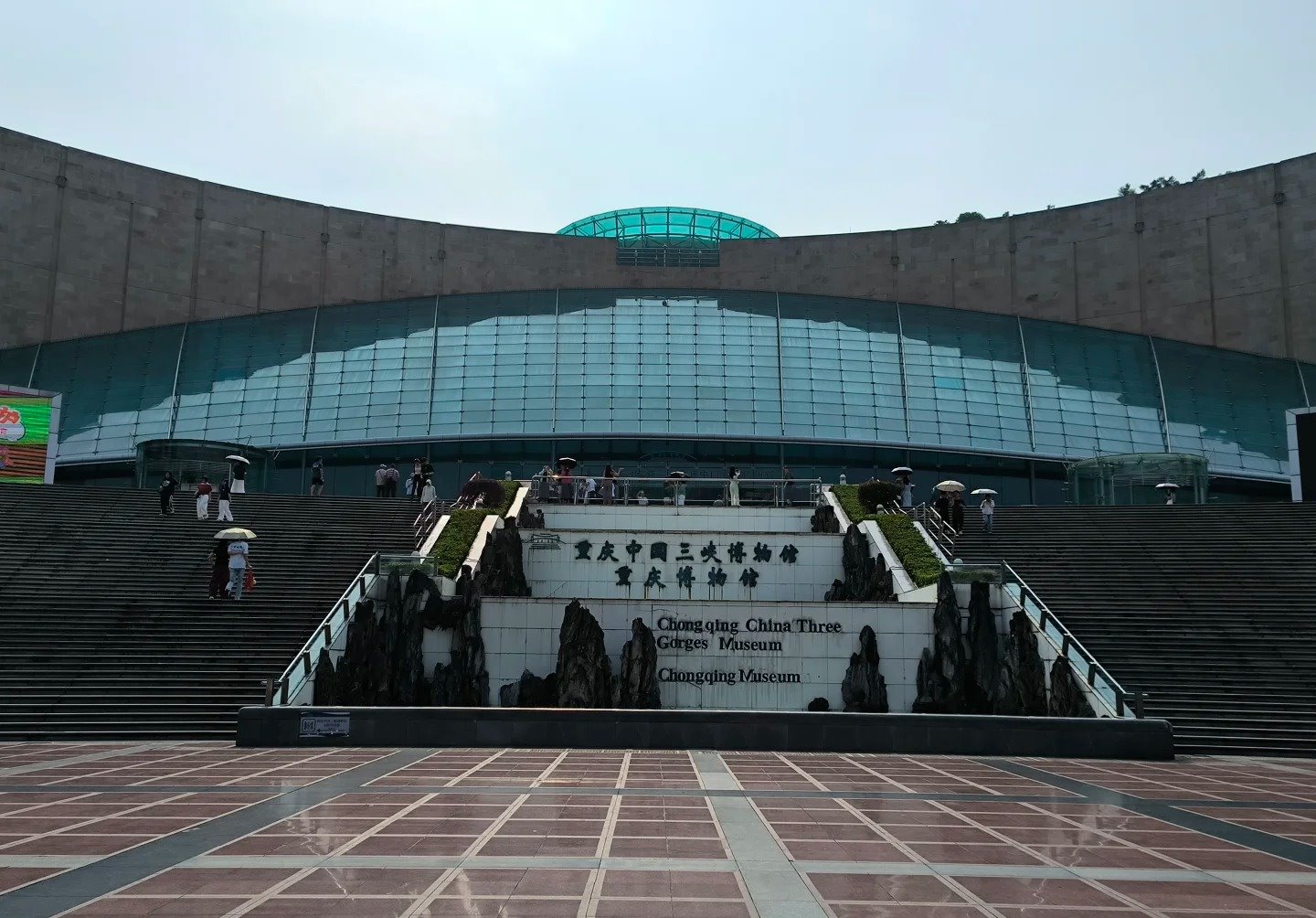
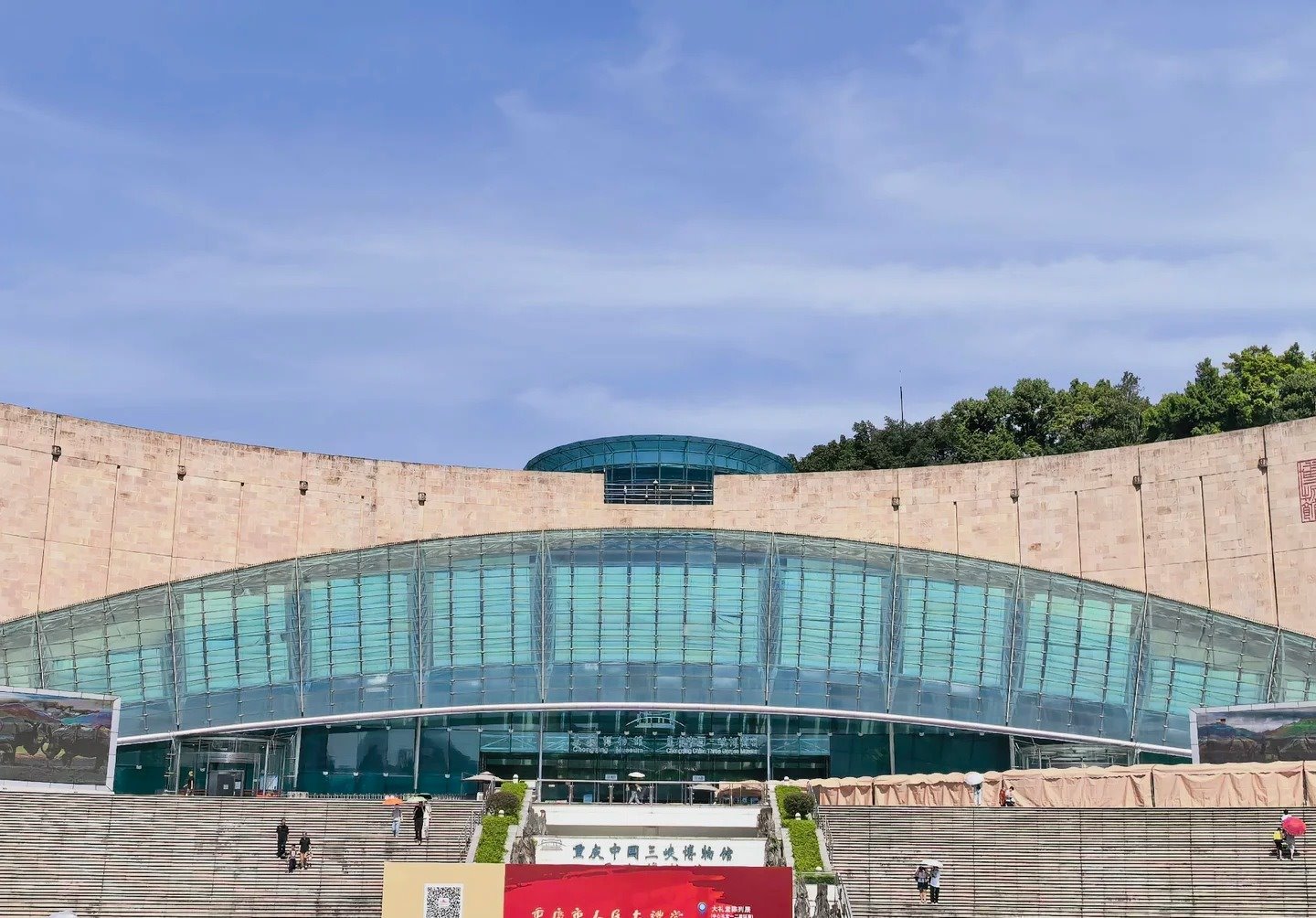
More people arrive at this search wanting something else than at almost any other Chinese attraction, so it is worth separating the three things before anything else. The Three Gorges are the river gorges downstream of Chongqing, which you see from a boat. The Three Gorges Dam is a dam at Yichang, in Hubei — a different province some 450 km away in a straight line and considerably further by river, and the far end of the cruise route rather than anywhere near Chongqing. The Three Gorges Museum is the building this page is about: a free city-centre history museum on People's Square, in the middle of Chongqing.
There is no dam museum in Chongqing. If the engineering is what you came for, what you want is a Yangtze cruise, which ends at the dam, or a separate trip to Yichang. What this museum holds instead is the story of what the reservoir covered: the Ba and Shu bronze cultures of the upper Yangtze, the river-port trade that built the peninsula, and Chongqing's years as China's wartime capital.
The Chinese name, 重庆中国三峡博物馆, doubles as the Chongqing Museum, and you will see it listed both ways. They are the same building.
You no longer need to book — whatever else you have read
Corrected
None. Advance booking was abolished on 2025-10-01 by the museum’s own announcement; most third-party pages still describe the old rule.
Until autumn 2025 this museum ran a capped, real-name reservation system: everyone under 60 booked a slot, up to seven days ahead, through the museum's WeChat mini-programme. On 30 September 2025 the museum published a notice cancelling it, effective the following day. Visitors now enter on a valid identity document, with nothing to book and nothing to buy.
We are flagging this loudly because the old rule is still what you will find almost everywhere else, including on pages carrying 2026 datelines. It also happens to be the specific barrier that made this museum sound hard for foreign visitors — the mini-programme wanted a Chinese phone number, which is why older guides suggested booking a tour just to get inside a free museum. That is no longer necessary.
One caveat worth carrying: if you have no identity document on you at all, the museum's WeChat account can still register you for an entry QR code. With a passport in your pocket you will not need it.
Getting there
Zengjiayan station (曾家岩) on Line 2 and Line 10, Exit 3 — the museum entrance is about 120 m away, and there is an underground passage so you never surface into the heat or rain.
That underground passage is worth taking deliberately rather than by accident. People's Square sits on top of the ridge that runs down the Yuzhong peninsula, the streets around it are narrow and frequently jammed, and Chongqing summers are genuinely punishing. Coming up inside the museum forecourt saves you the climb.
If you are arriving by train, Line 10 runs from Chongqing North straight to Zengjiayan in about half an hour with no interchange. Taxis are less appealing than they look: drivers can reach the square, but the approach roads are one-way and congested, so give a specific drop-off point rather than “People's Square”.
Show a driver
重庆中国三峡博物馆
人民路236号,渝中区
The museum and the Great Hall share an address block on Renmin Road, so a driver who knows one knows the other. Note the district: Yuzhong, the central peninsula. Listings that place this museum across the river in Nan'an are wrong.
Opening hours, and the Monday that catches everyone
| Open | 09:00–17:00, Tuesday to Sunday |
|---|---|
| Last admission | 16:00 by the museum's own visitor notice (halls clear from 16:45); Amap and recent visitor reports say 16:30 — treat 16:00 as the cutoff |
| Closed | Mondays, except public holidays |
The last-admission figure deserves a word, because two sources disagree and we have not averaged them. The museum's own visitor notice puts the cutoff at 16:00, with the halls cleared from 16:45 and the doors shut at 17:00. Amap and recent visitor accounts both say 16:30. Build your afternoon around 16:00 and the question stops mattering; turn up at 16:20 and you are relying on the more generous of two readings.
No — the museum closes on Mondays, apart from public holidays, and the square outside gives no clue, because everything else on it stays open. The Great Hall of the People directly opposite is open seven days a week, and the square between them is free and always open. Zhongshan Fourth Road, a few minutes west, is a shaded street of Republican-era houses that costs nothing to walk.
What is inside, and how to do it in two hours
Seven permanent galleries, listed here with the Chinese you will actually see on the doorways — the wall signs are bilingual, but the English wording on them does not always match what guidebooks use, so the characters are the reliable way to know which room you are standing in. Temporary exhibitions run alongside them on every floor.
| On the sign | What it covers |
|---|---|
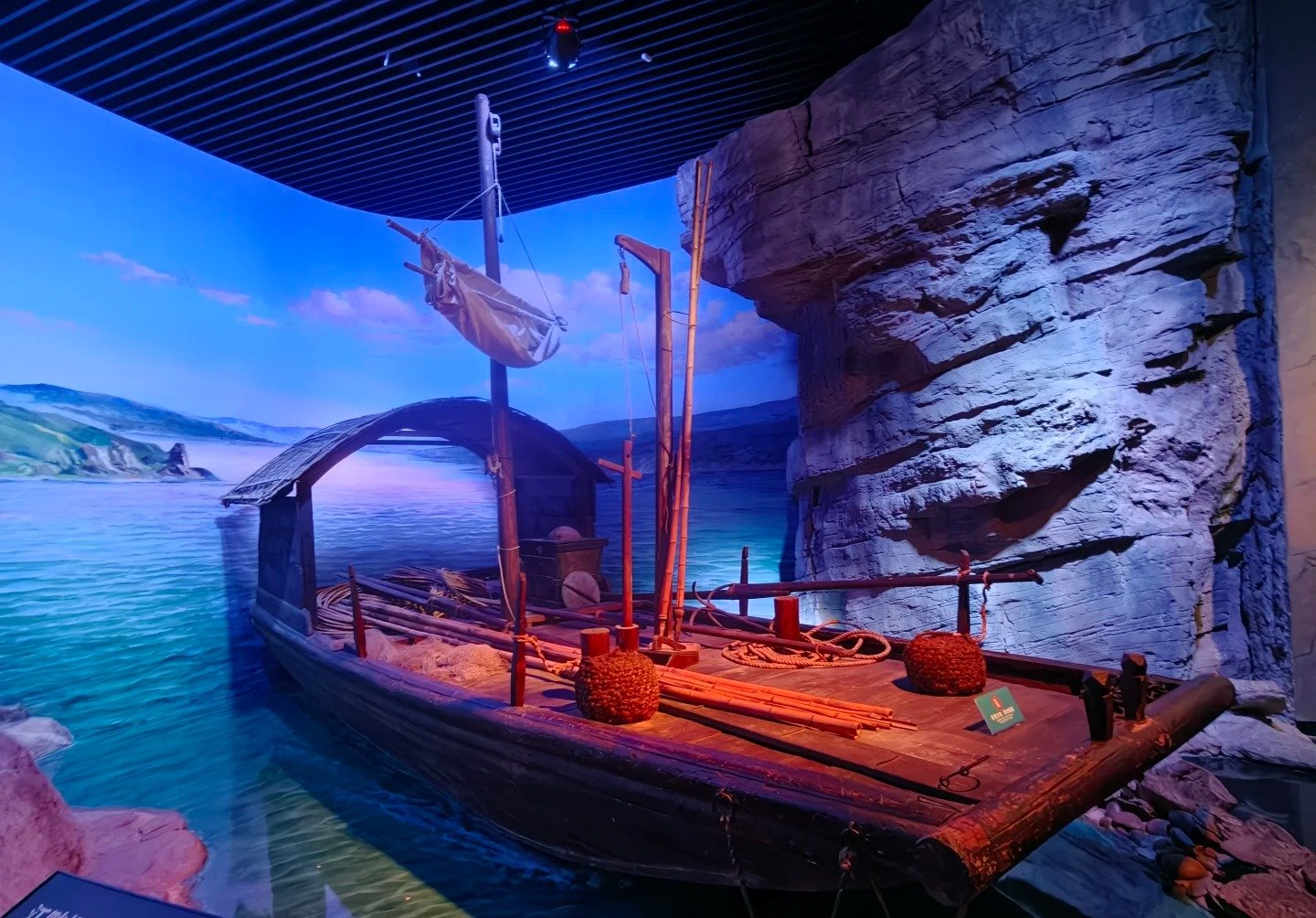
| 壮丽三峡 The Majestic Three Gorges | The flagship. The gorge landscape and the river towns the reservoir covered. |
| 抗战岁月 The wartime years | Chongqing as China's capital under bombardment. |
| 重庆:城市之路 Chongqing: road of a city | How a river port became this city. |
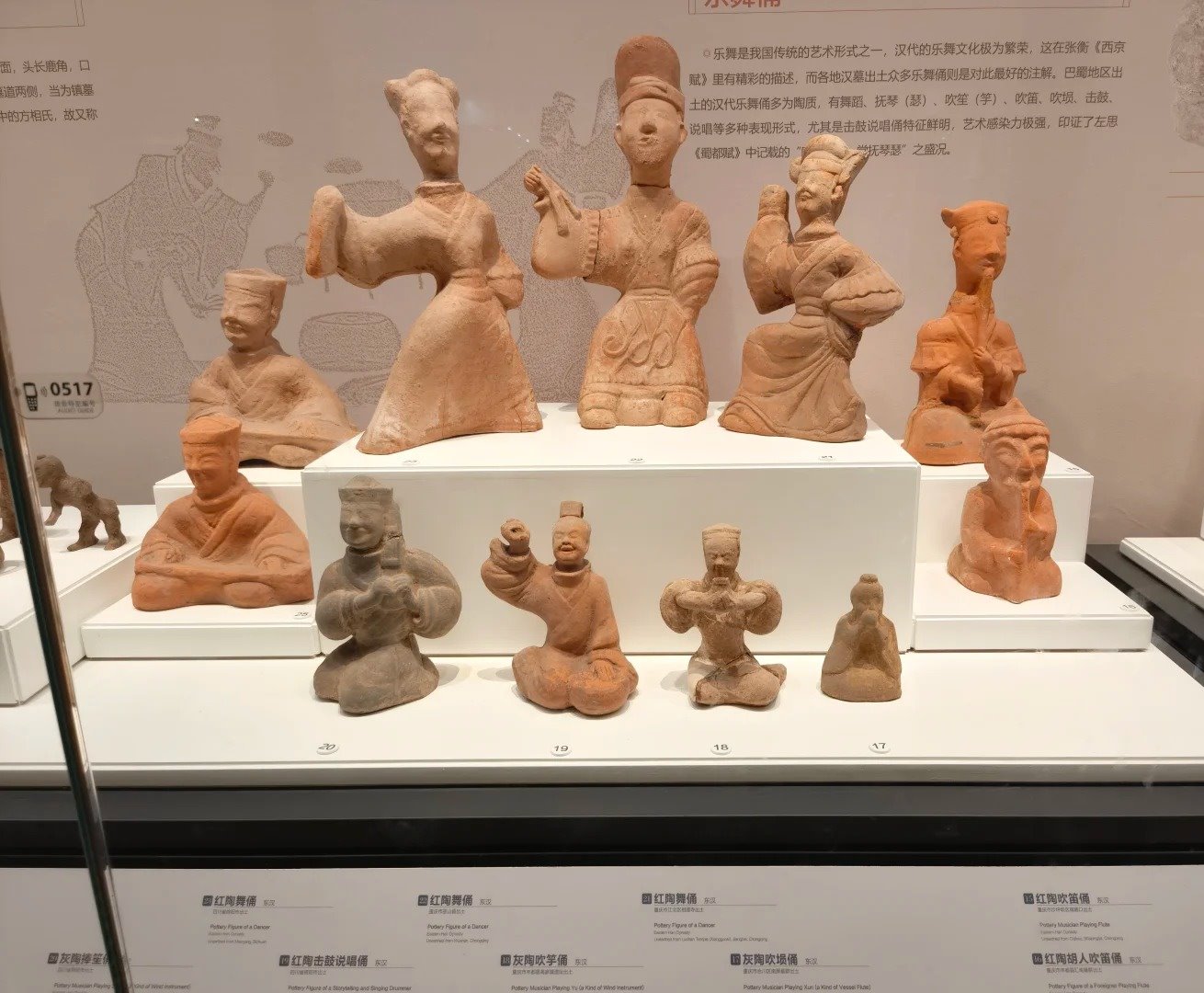
| 巴蜀汉代雕塑艺术 Han-dynasty sculpture of Ba and Shu | Tomb figurines and carved brick — the local Han world. |
| 历代瓷器 · 历代钱币 Ceramics · coins | Specialist collections. The coins in particular are for enthusiasts. |
| 西南民族民俗风情 Southwest ethnic cultures | Good, but you will see far more of this in Yunnan and Guizhou. |
Two of those are why the museum is worth an afternoon rather than an hour. 壮丽三峡 is the one that justifies the building's name — it reconstructs the landscape and the settlements that the reservoir drowned, which is the context nothing on a cruise boat will give you. The wartime gallery covers the years when this was China's capital under bombardment, and it is where foreign visitors tend to linger longest, because the period connects to a war they already know from the other side.
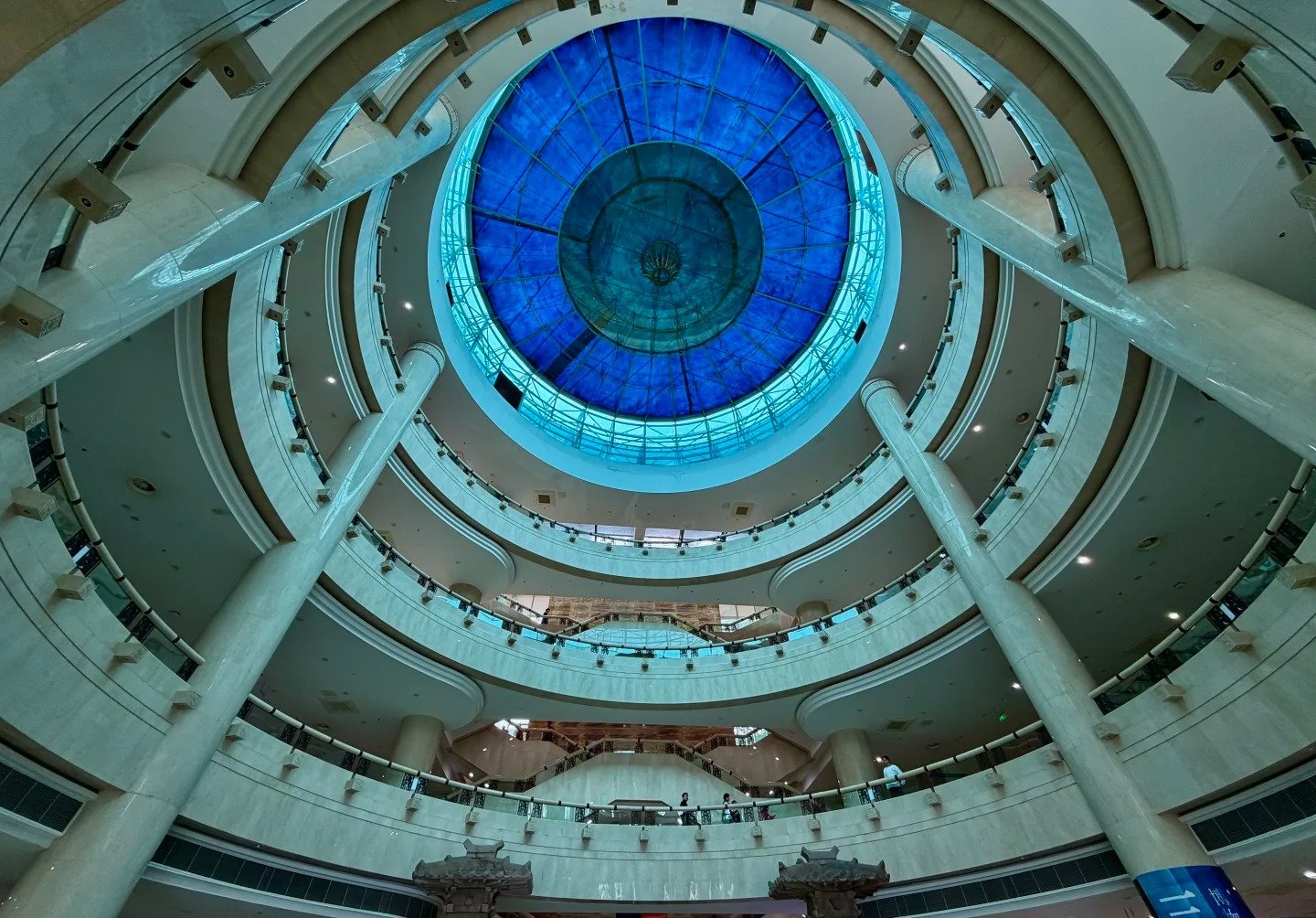
On practicalities: the building has four floors, and the advice from people who have done it is to start at the top and work down. Coach groups enter and climb, so descending keeps you out of phase with them. Two to three hours covers the highlights comfortably. If you are tight on time, the galleries most often skipped without regret are the coin collection, which is specialist, and Southwest Ethnic Customs, which is good but competes with far more of the same thing in Yunnan and Guizhou.
There are free screenings inside — a wide-screen film about the gorges downstairs and a painted panorama of the wartime bombing upstairs — both running to a fixed daily timetable. We are not printing showtimes because we could only confirm them from visitor reports, not from the museum; ask at the ground-floor desk when you arrive.
Getting in on a passport, and what you can take inside
A passport counts as a valid ID here. The self-service gates read passports unreliably, so use the staffed security lane — a member of staff checks the passport by hand and waves you through. Two of the museum’s branch sites are NOT free: the Baiheliang Underwater Museum in Fuling and the Song Qingling Residence both still sell tickets.
Security queues run about 10 to 20 minutes on an ordinary weekday, and 20 to 30 at weekends and on public holidays. Arriving at opening or after 15:00 avoids the worst of it.
Inside, the rules are stricter than most Western museums about cameras and looser about almost everything else. Still photography without flash is fine; flash, tripods and selfie sticks are banned, and video recording in the galleries is banned outright. Food and drink may not be carried in, but an empty bottle is allowed and there are drinking-water taps. Free self-service lockers sit by the security check and the volunteer desk takes larger bags, which is genuinely useful if you have come straight from a station. The galleries are air-conditioned hard enough that a light layer is sensible in summer.
On language: the gallery labelling is bilingual, and the museum's own notice describes free multilingual audio guides released over its WeChat account alongside free wifi in the halls. Visitors also report an English audio-guide handset at the ground-floor service desk. Worth collecting either way — the labels are bilingual but compressed, and the Ba and Shu bronzes are unfamiliar even if you know Chinese history from elsewhere.
The Great Hall opposite, and the rest of People’s Square
The museum faces the Great Hall of the People across People's Square — about 270 metres, and the same Exit 3 serves both. It is the domed, red-columned building that appears on every Chongqing postcard, finished in 1954 and modelled loosely on the Temple of Heaven. The square between them is free and open at all hours, and the pairing is the reason this is a half-day rather than a two-hour stop.
Going inside the Great Hall is a separate, small charge, with concessions for students and seniors and free entry for young children, over-65s and military. It opens daily from 08:00 to 18:00, with on-site ticket sales stopping at 17:30 — and crucially it does not close on Mondays, which is what makes it the answer when you have mistimed the museum. What you get for the ticket is the building itself: a circular auditorium under a gold dome, with famously good acoustics. It is architecture rather than exhibits, and it occasionally shuts to visitors when a conference or performance is on. The exterior and the square are unaffected.
A few minutes west, Zhongshan Fourth Road is a shaded, banyan-lined street of Republican-era houses that costs nothing to walk and is widely held to be the handsomest street in the city. Between the three you have a comfortable half day that needs no tickets and no planning.
Is it worth your time?
Our verdict
It is free, it is bilingual, and it is the one place in Chongqing that explains why the city looks the way it does — the gorges that were drowned, the wartime capital, and the river trade that built the peninsula. It is not a substitute for the Three Gorges themselves and it is not a dam museum. Skip it if you have only one day and came for the cyberpunk skyline.
The honest framing is that this is the best free indoor thing to do in central Chongqing, and that it does a job no other stop in the city does — it explains the landscape. Most Chongqing itineraries are built around the skyline, the monorail and the hotpot, all of which are outdoors and none of which tell you why a city ended up stacked on a ridge between two rivers. If you are taking a Yangtze cruise, seeing this first changes what you are looking at from the boat.
It is also the obvious wet-weather and hot-afternoon answer in a city that has a lot of both. Where it does not earn its place is on a single-day stop where you came for the cyberpunk Chongqing — in that case Liziba and Hongyadong are the better use of daylight.
Seeing the gorges themselves
The museum needs no ticket and no tour. The river does — the gorges the galleries reconstruct start well downstream of the city, and getting onto them means a cruise or a guided day trip. Our Yangtze cruise buyer's guide compares the ship lines first; if you would rather browse what is running from Chongqing while you are here, that is a booking question.
Browse Chongqing tours & river trips on Trip.comWhere this fits in a Chongqing trip
People's Square sits in the middle of the Yuzhong peninsula, so the museum slots into a day rather than requiring one. From Zengjiayan it is a few metro stops to Jiefangbei and the Hongyadong stilt-house frontage, and Line 2 runs on to Liziba, where the train passes through a residential block. A common shape is museum in the morning, Great Hall and Zhongshan Fourth Road at midday, then down to the river for the evening lights.
For where to base yourself, our Chongqing neighbourhood guide compares the areas; anywhere on the peninsula puts this within a short metro ride. If you are coming from Chengdu, the high-speed train takes about an hour and a half.
Common questions
Do I need to book the Three Gorges Museum in advance?
No. The museum abolished advance reservation on 1 October 2025 — its own announcement, published 30 September 2025, says visitors may enter in an orderly queue on a valid identity document. Almost every third-party page still describes the previous system, in which anyone under 60 had to reserve a slot up to seven days ahead through a WeChat mini-programme; that rule no longer applies. This matters more to foreign visitors than to anyone else, because the mini-programme expected a Chinese phone number and was the reason older guides told you the museum was awkward to visit. It is not awkward. Turn up with your passport.
Is the Three Gorges Museum free?
Yes — the permanent galleries carry no admission charge and there is no ticket to buy. Two outlying sites run by the same institution do still charge: the underwater museum out at Fuling, and the Song Qingling house. Going inside the Great Hall across the square also costs a little, but that is a separate operation, and standing on the square itself is free.
Is the Three Gorges Museum the same as the Three Gorges Dam?
No, and this is the most common mix-up in the whole search. Three different things share the name. The Three Gorges themselves are the river gorges downstream of Chongqing. The Three Gorges Dam is at Yichang, in Hubei — a different province, about 450 km away in a straight line and the far end of the Yangtze cruise route. The Three Gorges Museum is in central Chongqing, well upstream of the dam, and it is a regional history museum about the gorges and the culture that was moved when the reservoir filled. There is no dam museum in Chongqing, so if the dam is what you want to see, you want a cruise or a trip to Yichang instead.
What day is the Three Gorges Museum closed?
Mondays, apart from public holidays. The trap is that the Great Hall of the People directly opposite stays open seven days a week, so People's Square looks perfectly busy from the outside on a day the museum is shut. If your only free day in Chongqing falls on a Monday, take the Great Hall instead — its exterior and the square are free and always open, and its interior opens daily for a small charge.
How do I get to the Three Gorges Museum, and how long does it take to see?
Take the metro to Zengjiayan, which is served by Line 2 and Line 10, and leave by Exit 3 — the museum entrance is about 120 metres away and there is an underground passage, so you do not surface into Chongqing's heat or rain. From Chongqing North railway station it is about 30 minutes on Line 10 with no interchange. Allow two to three hours inside. The building has four floors; travellers consistently recommend starting at the top and working down, which runs against the coach groups climbing from the ground floor.
Can I get in with a passport, and is there anything in English?
Yes. Carry the passport itself rather than a photocopy, and head for the manned lane at security instead of the automatic barriers — those are built around the Chinese identity card and frequently will not resolve a foreign document, whereas an officer clears one in seconds. Allow roughly ten to twenty minutes to get through on a weekday and twenty to thirty at weekends or over a public holiday. Once you are in, exhibit labelling runs in Chinese and English throughout, and free audio guides are offered in several languages.
What are the rules inside — photography, bags, food?
Take photographs, but leave the gear: flash, tripods and selfie sticks are all prohibited, and filming video in the galleries is prohibited outright. Nothing edible or drinkable clears security, though an empty bottle does and there are water taps to fill it from. Bulky bags go in the free lockers at the entrance or with the volunteer desk. The halls are kept cold enough that a layer is worth carrying in summer.
Is the Three Gorges Museum worth visiting?
For most visitors, yes — it costs nothing, it is indoors, and it is the only stop in Chongqing that explains the landscape the rest of your trip is spent looking at. The people who should skip it are easy to identify: if you have a single day and you came for the skyline, the monorail and the hotpot, this is the thing to drop. Two other groups get more from it than they expect — anyone taking a Yangtze cruise, because it reframes what you see from the boat, and anyone caught out by Chongqing's weather, which supplies a great deal of both heat and rain.
Editor · 编
Admission, opening hours, the Monday closure, the photography and baggage rules and the seven permanent gallery names were read from the museum's own site (参观须知 and the 常设展览 listing) on 6 August 2026. The end of advance reservation is taken from the museum's own announcement of 30 September 2025, effective 1 October 2025. Coordinates, the address, the metro exit and walking distance, and the Great Hall's hours and position were measured against Amap on the same date. Queue times, the top-down route, the staffed-lane advice and the English audio-guide handset come from recent traveller reports and are marked as such in the text.
Not confirmed: the timetable for the two free in-house screenings — visitor accounts agree they run daily to a fixed schedule, but we could not match the times against the museum, so none are printed here.