Key takeaways
- ⭐ The wash label decides it. China’s fibre-labelling standard makes 100% 桑蚕丝 the wording for pure mulberry silk — “100% 真丝” is not compliant, so the phrase that sounds most reassuring is the one to distrust.
- 真丝 is a vague umbrella word; 桑蚕丝 (mulberry) is the premium fibre, 柞蚕丝 (tussah) and 绢丝 (spun) are real but lesser, and 仿真丝 is polyester.
- Ask for the momme (姆米) — silk’s weight unit, ~4.31 g/m² each. ~19 for pyjamas and shirts, 16–19 summer bedding, 25–30 winter.
- Buy at Silk Town (600+ shops, metro Line 2 Zhonghebei Rd exit D) or a fixed-price house (都锦生 · 喜得宝 · 万事利). Avoid West Lake / Hefang St shops and anywhere a driver takes you.
- The China National Silk Museum is free, needs no booking and accepts a passport — but closes Mondays, while the Tea Museum closes Tuesdays.
The label — and why the reassuring phrase is the wrong one
Almost everything else on this page is secondary to one rule. China’s national standard for fibre-content labelling, GB/T 29862, requires that when a product is made entirely of a single fibre it be marked 100%, 纯 or 全 — and it requires the fibre to be named. The name of the premium silk fibre is 桑蚕丝 (mulberry silk).
So the compliant label on genuine pure silk reads 100% 桑蚕丝. A label reading “100% 真丝” is not compliant wording — 真丝 is a loose umbrella term, not a fibre name — and in practice it is the standard marking on goods that are not mulberry silk at all. Hangzhou market shopping advice puts it more bluntly than any standard would: if the label says 100% 桑蚕丝 it is silk; if it says 100% 真丝, it is not.
Look for
100% 桑蚕丝
Mulberry silk, named as the standard requires.
Distrust
100% 真丝
Not a compliant fibre name. Commits to nothing.
This is worth spelling out because it inverts a foreign buyer’s instincts. The English on the swing tag — “100% Real Silk”, “Pure Silk” — is the part written for you, and it is the part that carries no weight. The part that carries the weight is four characters you cannot read. Photograph the sewn-in wash label rather than the tag, and check it says 桑蚕丝.
One more free check, for Chinese-made woven silk: bolt goods carry a product number (品号) whose first digit encodes the material — 1 for all-silk (including 桑蚕丝 and 绢丝), 2 for synthetic, 3 for a blend. It will not appear on a finished scarf, but it does on fabric sold by the metre.
Which silk is which
English collapses five different Chinese words into “silk”, and the price gap between them is the entire commercial game. Two of the five are genuine silk of lower grade — perfectly honest products when sold as themselves.
| Term | What it is | Read |
|---|---|---|
| 桑蚕丝 Mulberry silk | Reeled from silkworms fed on mulberry leaves. Long, smooth, lustrous filament — the fibre "Hangzhou silk" means. | ⭐ What you are paying for. The label must say this. |
| 柞蚕丝 Tussah silk | Real silk from wild oak-fed silkworms. Coarser, more yellow-brown, harder to dye pale colours. | Genuine silk, cheaper, a different product. Fine if sold as itself. |
| 绢丝 Spun silk | Real silk spun from shorter broken fibres rather than reeled as one filament. Slightly matte, more prone to pilling. | Genuine silk of lower grade. Fine if disclosed. |
| 真丝 “Real silk” | An umbrella word meaning "real silk", with no species and no grade attached. | ⚠️ Commits to nothing. This is the word a label uses when it would rather not specify. |
| 仿真丝 Imitation silk | Polyester or another synthetic woven and finished to mimic silk. Often convincing to the eye. | ⛔ Not silk. Warm to the touch, springs back stiffly, melts to a bead. |
The reason mulberry silk looks the way it does is structural rather than mystical: the filament’s cross-section is a rounded triangle, so it refracts light from several planes at once and produces that shifting sheen. Ordinary polyester filament is round in cross-section, which is why imitation silk tends to shine flatly and evenly, in one direction, like plastic — once you have noticed the difference in a shop window you can usually see it across a street.
The hand tests, and the burn test
Two of these you can do standing in the shop, holding the goods. The third you cannot, and it is worth knowing anyway.
| Test | Real mulberry silk | Imitation |
|---|---|---|
| Touch | Distinctly cool against the palm, and it warms slowly | Neutral or warm; feels slick rather than cool |
| Crush and release | Takes soft, natural creases and relaxes gradually | Springs back stiffly, or holds a sharp crease |
| Burn a single thread | Burns slowly with no open flame, shrinks to a ball, smells of burnt hair; ash is black and granular and crushes to powder | Flares up, smells of plastic or faintly sweet, leaves a hard bead that will not crush (polyester leaves a hard black sphere) |
Obvious but worth saying: the burn test is for a loose thread from a seam or fringe, and it is realistically something you do after buying, or on a thread a confident seller offers you. Do not set fire to merchandise. In the shop, the label plus the two hand tests carry the decision.
For anything expensive, ask for the invoice (发票) and the quality card that should accompany graded silk goods. It is a normal request, it is the paperwork that makes a complaint possible later, and a seller’s reaction to being asked is itself informative.
Momme — the spec worth asking for
Silk is graded for weight in momme (姆米, written mm), roughly 4.31 g/m² per momme. It is silk’s equivalent of thread count, and like thread count, higher is not automatically better — it means heavier, denser and more hard-wearing, at a higher price. What matters is matching the weight to the item.
| Item | Usual weight | Why |
|---|---|---|
| Shirt or blouse | 19 momme and up | Below this it is too sheer to wear as a shirt and snags easily |
| Pyjamas | ~19 momme | The usual sweet spot — the best hand-feel without weight |
| Bedding, summer | 16–19 momme | Light enough to sleep under in a Hangzhou summer |
| Bedding, winter | 25–30 momme | Substantial and durable; considerably more expensive |
| Eye mask | 22 momme | Best feel, though some find that weight heavy on the face |
Asking “how many momme?” is the single most useful question you can put to a silk seller, because it does two jobs: you learn the specification, and you learn from the speed of the answer whether you are talking to someone who deals in real fabric.
Where to buy — and where not to
Hangzhou silk has been a protected geographical-indication product since 2011, which means the name is regulated in the same way West Lake Longjing tea’s is — and, as with the tea, the protection sits behind the marks rather than in front of the shopfront. In practice your choice is between a wholesale market, where prices are lower and the checking is yours to do, and a fixed-price house, where you pay more for someone else having done it.
Hangzhou China Silk Town 杭州中国丝绸城
200 Fengqi Road, beside exit D of Zhonghebei Road station (metro Line 2). Reported as China’s largest silk market at over 600 shops. Finished garments, scarves and ties along the main street; fabric by the metre, including 香云纱 and 宋锦 brocade, in the side lanes.
⭐ The main event. Compare three shops before buying, and check every label.
Huanbei silk garment market 环北丝绸服装城
160 Fengqi Road, a couple of minutes from Silk Town. Cheaper and more wholesale in character.
⚠️ Keeps market hours — Amap lists 06:00–17:00, so an afternoon plan can arrive to shutters.
Dujinsheng 都锦生
One of Hangzhou’s two long-established silk houses, known for woven silk pictures. Shops at 79-1 Xijiankang Road inside Silk Town (08:30–17:00), at 92-1/94 Youdian Road about 350 m from Longxiangqiao station (09:00–21:00), and on Longyou Road.
Fixed prices, no haggling, no sorting. The Youdian Road shop is the convenient one for a West Lake day.
Xidebao 喜得宝
The other old house. 57 Huanchengbei Road, and a shop on the ground floor of the Zhejiang Erqing Building at 398 Yan’an Road open until 23:30. There is also a counter at Hangzhou Xiaoshan airport terminal 3 (10:00–21:00).
The airport counter is the genuine last resort if you run out of time — at airport prices.
Wensli 万事利
The big modern Hangzhou silk brand. 69 Baochu Road, a store at 209-1 Yan’an Road whose own name is “24-hour outlet”, and a flagship at its innovation centre, 1233 Xintang Road near Hangzhou East station (08:30–18:00), which pairs an exhibition space with the shop.
Gift-grade scarves and packaging. The Yan’an Road branch solves a late-night present.
⛔ Where not to buy. Shops clustered around West Lake and Hefang Street are widely reported to sell 仿真丝 as real silk to visitors — the highest footfall and the least accountability in the city. And never buy silk at a shop a driver, guide or tour offers to take you to: those visits run on commission and the same goods are reported at roughly double. In the markets, haggling is expected; in the fixed-price houses it is not.
Silk duvets — the biggest-ticket trap
A silk-floss quilt is the most expensive thing most visitors buy in a Chinese silk market, and the hardest to check, because the fibre is sealed inside a cover. It has its own national standard, GB/T 24252, and the standard is useful to you for three specific reasons.
- The label must name the silk and state the proportion. Not “silk quilt” — the type of silk (桑蚕丝 or 柞蚕丝) and its content percentage.
- There are named grades: 优等品 (superior), 一等品 (first grade) and 合格品 (qualified), each with a minimum silk content. A quilt sold without a grade is telling you something by omission.
- ⭐ The standard includes a laboratory test for artificially weighted silk floss. Read that as an admission: the fraud of adding weight to the filling is common enough that the national standard has a method for detecting it. So a quilt that feels impressively heavy for an unimpressive price is the exact thing that test exists to catch.
Practically: buy a quilt only where you can get an invoice and a quality card, look for a label naming 桑蚕丝 with a percentage and a grade, and be aware that a genuine mulberry-silk quilt is light for its warmth rather than heavy. If you cannot verify it, a scarf is a much safer souvenir than a duvet.
The China National Silk Museum
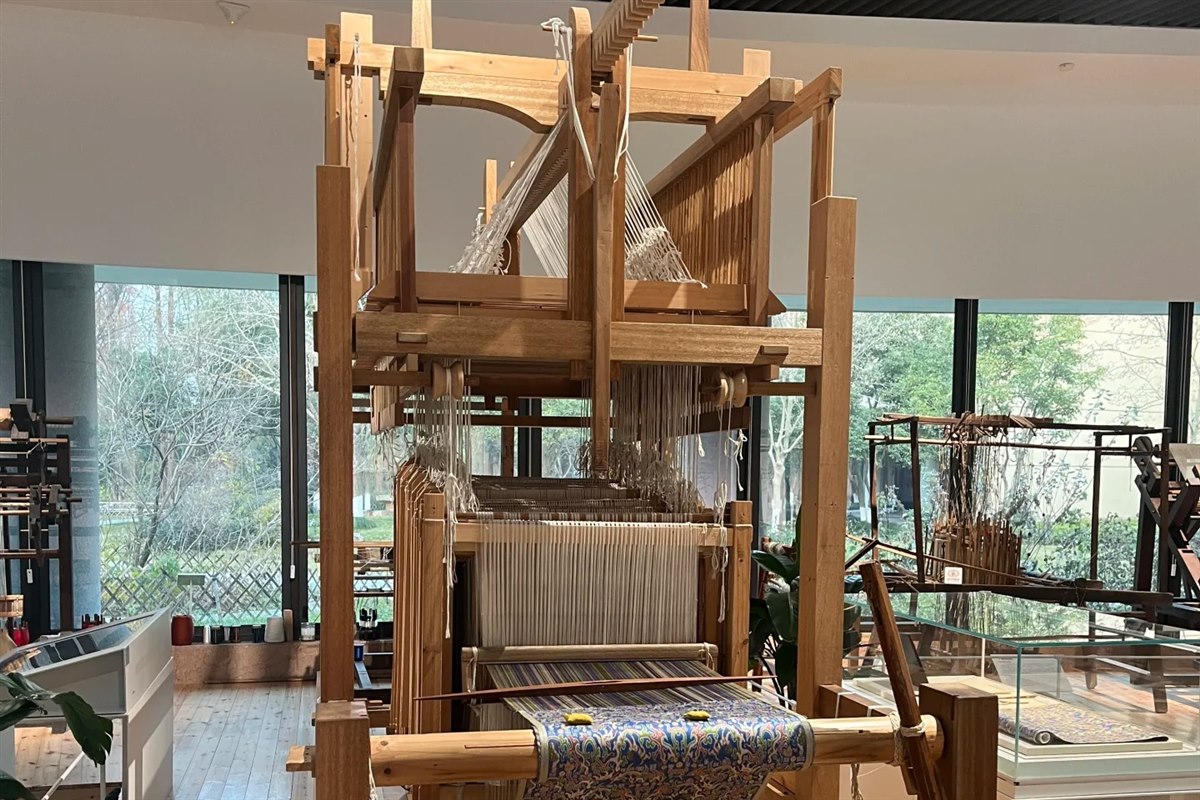
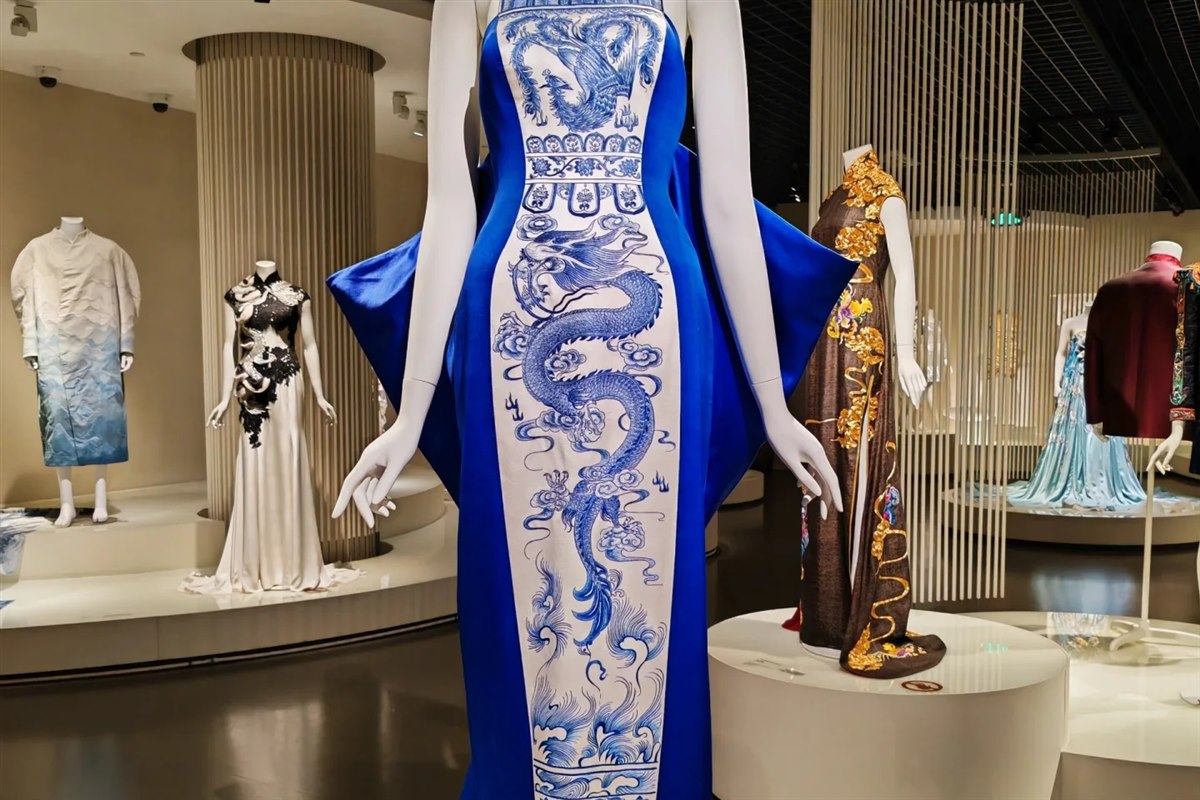
If you want to understand what you are buying before you buy it — or you simply want the best free two hours in Hangzhou that is not the lake — the China National Silk Museum (中国丝绸博物馆) sits at 73-1 Yuhuangshan Road, just south of West Lake. It has been free since 2004, and its own visitor information is unusually accommodating by Chinese museum standards: no advance reservation is needed, and a passport counts as valid ID at the door. Free guided tours, free audio guides and demonstrations of historic looms are part of the offer.
| Detail | Value |
|---|---|
| Admission | Free (since 2004) |
| Hours | Tue–Sun 9:00–17:00, last entry 16:30 |
| Closed | All day Monday — but open as normal on national public holidays |
| Booking | Not required for individual visitors |
| ID | ID card or passport |
⚠️ The scheduling trap: Hangzhou’s two craft museums close on different days
Visitors often pair the Silk Museum with the China National Tea Museum in the tea hills, since both are free and both are the “what Hangzhou actually makes” museums. They do not share a closing day. The Silk Museum closes Mondays. The Tea Museum closes Tuesdays — genuinely, per its own visitor page, despite most listing sites saying Monday. So there is no single day of the week on which you can see both, and either day off will cost you one of them if you assume they match.
For the wider craft cluster, the umbrella, fan and arts-and-crafts museums sit together in the Qiaoxi historic district by the canal, with hands-on workshops — covered on our Grand Canal guide. Wensli’s innovation centre near Hangzhou East station also pairs a silk exhibition with its flagship store, which is a convenient combination if you are leaving by train.
Frequently asked questions
How can I tell real silk from fake in Hangzhou?
Read the wash label, and read it for one specific phrase. Under China's fibre-content labelling standard (GB/T 29862), a product made entirely of one fibre must be marked '100%', '纯' or '全' — and '100% 真丝' is not compliant wording. The label that denotes genuine pure mulberry silk is '100% 桑蚕丝'. This is the opposite of what an English-speaking buyer expects: '100% real silk' printed in English or as 真丝 is the phrase to distrust, and 桑蚕丝 is the one that counts. Hangzhou market shopping advice states the same rule in plainer terms — if it says 100% 桑蚕丝 it is silk, if it says 100% 真丝 it is not. Back that up by hand: real silk feels cool to the touch, and creases naturally when you crush it and let go, where polyester springs back stiffly.
What is the difference between 真丝, 桑蚕丝 and 仿真丝?
They are not synonyms, and the gap between them is where the money goes. 桑蚕丝 (mulberry silk) is the premium fibre, reeled from silkworms fed on mulberry leaves — this is what 'Hangzhou silk' means. 柞蚕丝 (tussah silk) is real silk from wild oak-fed silkworms: coarser, more yellow-brown, cheaper, and legitimate but not the same product. 绢丝 (spun silk) is real silk spun from shorter waste fibres, so it is genuine silk of lower grade. 真丝 is a loose umbrella word meaning 'real silk' with no grade attached, which is exactly why it is the word used on labels that do not want to commit. 仿真丝 is imitation silk — polyester or another synthetic — and is not silk at all.
How does the burn test work?
Take a single thread from a seam or fringe, not the garment. Real silk burns slowly with no open flame, shrinks into a ball, smells distinctly of burnt hair, and leaves a black granular ash you can crush to powder between your fingers. Imitation silk flares up, smells of plastic or faintly sweet, and leaves a hard bead along the edge that will not crush. Polyester in particular leaves a hard black round bead. It is a reliable test, but obviously not one to perform in a shop — it is for checking a purchase afterwards, or for a fringe thread the seller volunteers. In the shop, the hand tests plus the label do most of the work.
What does momme mean, and which weight should I buy?
Momme (姆米, written mm) is silk's weight-per-area unit — silk's equivalent of thread count — where 1 momme is about 4.31 g/m². Higher momme means a heavier, denser, more durable fabric, and a higher price; it does not straightforwardly mean better, because the right weight depends on the item. The trade's usual guidance: about 19 momme is the sweet spot for pyjamas and the practical minimum for a shirt; 16–19 for summer bedding and 25–30 for winter; 22 momme gives an eye mask the best feel, though some find it heavy. Asking a seller what momme a fabric is tells you two things at once — the answer, and whether they know.
Where should I buy silk in Hangzhou?
The wholesale district is Hangzhou China Silk Town (杭州中国丝绸城) at 200 Fengqi Road, right by exit D of Zhonghebei Road station on metro Line 2 — reportedly China's largest silk market at over 600 shops, with finished garments and scarves along the main street and fabric by the metre in the side lanes. Nearby Huanbei silk garment market (环北丝绸服装城, 160 Fengqi Road) is cheaper but keeps market hours and shuts at 17:00. If you would rather not sort through a market, Hangzhou's two long-established silk houses, Dujinsheng (都锦生) and Xidebao (喜得宝), have city-centre shops with fixed prices, and Wensli (万事利) runs a 24-hour store on Yan'an Road near Longxiangqiao station. Where not to buy: shops around West Lake and Hefang Street, which are widely reported to pass imitation silk off as real, and any shop a driver or guide offers to take you to.
Is the China National Silk Museum worth visiting, and do I need to book?
It is free, it needs no reservation, and its own visitor information says a passport counts as valid ID — so it is one of the least friction-laden museum visits in Hangzhou. It sits at 73-1 Yuhuangshan Road, just south of West Lake, open 9:00–17:00 with last entry at 16:30, and closed all day Monday, though it opens normally on national public holidays. It has been free since 2004 and runs free guided tours, free audio guides and demonstrations of ancient looms. ⚠️ One scheduling trap: if you are pairing it with the China National Tea Museum in the tea hills, note the two close on different days — the Silk Museum on Mondays, the Tea Museum on Tuesdays.
What should I check when buying a silk duvet?
Silk quilts are the biggest-ticket silk souvenir and have their own national standard, GB/T 24252, which is worth knowing because of what it requires on the label: the type of silk and the content proportion must both be stated. The standard grades products as 优等品 (superior), 一等品 (first grade) and 合格品 (qualified), sets a minimum silk content for each, and — telling in itself — includes a laboratory test for artificially weighted silk floss, which means adulteration is common enough to be standardised against. So look for a label naming 桑蚕丝 with a stated percentage and a grade, ask for the invoice and quality card, and be sceptical of a heavy quilt at a light price. Weight without a stated fibre content is the thing the weighting test exists to catch.
Sources
Checked August 2026 · Written from our own first-hand travel in China.