Key takeaways
- ⭐ There is no single closing day. Seven shut Mondays, but six shut Tuesdays — including all four canal craft museums, so a Tuesday craft plan loses the whole cluster.
- ⚠️ There is no day of the week on which you can see both the Silk Museum (closed Mon) and the Tea Museum (closed Tue).
- Nearly all are free, and booking has been getting easier: the Zhejiang Provincial Museum dropped its reservation in September 2025. Liangzhu is the only one that still always needs one — and even there a door QR usually works on a weekday.
- ⚠️ “Liangzhu” is two places 4–5 km apart. The free museum holds the jade; the ruins UNESCO listed in 2019 are at the archaeological park, which is ticketed and a separate half-day. Most English write-ups merge them.
- Easiest good visit: the China National Silk Museum — free, no booking, and its own visitor information says a passport counts as ID.
- The one object to make room for: a Warring States rock-crystal cup that looks like modern glassware, in Hangzhou Museum — on China’s list of objects banned from leaving the country, so nowhere else shows it.
Which day they close — and why the obvious answer is wrong
Chinese museums close on Mondays. That is a reliable rule across the country, it is what every guidebook says, and in Hangzhou it will lock you out of six museums — including, painfully, all four of the canal craft museums, which sit within a few hundred metres of each other. Turn up on the wrong day and you do not lose one visit, you lose the whole cluster.
Closed Tuesdays — the exceptions
- · 杭州博物馆 Hangzhou Museum
- · 中国茶叶博物馆 Tea Museum
- · 杭州工艺美术博物馆 Arts & Crafts
- · 中国伞博物馆 Umbrella
- · 中国扇博物馆 Fan
- · 中国刀剪剑博物馆 Knife, Scissors & Sword
Closed Mondays — the usual pattern
- · 良渚博物院 Liangzhu
- · 中国丝绸博物馆 Silk
- · 浙江省博物馆之江馆 Zhejiang Provincial
- · 浙江自然博物院杭州馆 Natural History
- · 中国湿地博物馆 Wetland
- · 中国京杭大运河博物馆 Grand Canal
- · 南宋德寿宫遗址博物馆 Deshou Palace
Two consequences worth planning around. There is no day of the week on which you can visit both the Silk Museum and the Tea Museum — the two free museums about what Hangzhou actually makes, and they take opposite days off. And a canal day splits awkwardly: the Grand Canal Museum closes Monday while the craft museums a short walk away close Tuesday.
The holiday exception, which works in your favour: almost all of these open as normal on national public holidays and take their closure on the following day instead. So a Monday inside a public holiday is usually fine — and the Tuesday after it usually is not.
Reservations — fewer than you have been told
Because entry is free, booking used to be the thing that decided whether you got in — and this is the part of visiting Hangzhou that has changed most, in your favour. Museums here have been switching their systems off, not on. Three patterns are left, in ascending order of pain for a visitor without a Chinese phone and a WeChat account.
| Pattern | Which museums | What it means for you |
|---|---|---|
| ✅ No booking, ever | China National Silk Museum · Zhejiang Provincial Museum (Zhijiang) · Hangzhou Museum · Grand Canal Museum · Wetland Museum · the Qiaoxi craft museums | Walk in. The Silk Museum’s own visitor information states that an ID card or passport is accepted, which is the cleanest confirmation of the lot. The Zhejiang Provincial Museum dropped its reservation requirement in September 2025 and asks overseas visitors to register passport details in its own mini-programme, then verifies them at the door on the day. |
| ◐ Weekdays free, weekends booked | China National Tea Museum · Deshou Palace site museum | Go on a weekday and it is a walk-in — Deshou Palace states that on non-weekends and non-holidays individuals enter on an ID document with no reservation. At weekends and on holidays you need a free advance booking, released three days ahead at 09:00, and travellers report the weekend slots going quickly. |
| ⚠️ Always booked | Liangzhu Museum | Free, but real-name booking 1–7 days ahead through a Chinese mini-programme, one booking per ID document per day, and you must arrive inside your slot. There is a QR code at the entrance: on a weekday it usually still has slots, at weekends and on holidays it usually does not. |
⭐ This is getting easier, and most guides have not caught up: Hangzhou’s museums have been dropping their reservation systems rather than adding them. The provincial flagship let its requirement go in September 2025, and Hangzhou Museum had already dropped its own. English pages — and a fair number of Chinese ones — still describe a city where you must fight for a slot at four or five museums. In practice there is one left, and it has a QR code on the door.
Plan accordingly: build your day out of the walk-in museums, and treat Liangzhu as the one commitment to arrange in advance — a hotel front desk will usually make that booking if you ask a day ahead, and it is a routine request rather than a favour. If nobody can book for you, you still have the Silk Museum, the provincial flagship, the craft cluster, Hangzhou Museum and the canal, which is a good two days of museums on its own.
The museums, in the order worth your time
Until 18 October 2026 — the provincial museum has a queue problem
A free special exhibition reuniting four of the bronze zodiac heads looted from the Old Summer Palace opened at the Zhejiang Provincial Museum (Zhijiang) on 30 July 2026 and runs to 18 October. It has been drawing about 20,000 visitors a day. At weekends the queue has reached the metro station and staff have been telling people to expect four to five hours; inside, the crowd moves you past the heads in a couple of minutes. The museum itself has publicly asked visitors to come on another day.
What actually works: a weekday, when travellers report walking straight in. Failing that, after about 15:30, or in rain, cuts it to roughly 1.5–2 hours. ⭐ Best of all — but only until 31 August 2026, while the summer evening hours run — is to arrive around 18:00: the daytime queue has gone, the wait drops to fifteen or twenty minutes, and the galleries are quiet. Last entry in that window is 19:00, closing 19:30. From 1 September the museum returns to 09:00–17:00 with last entry 16:30, and the evening option disappears.
None of this needs a booking — the exhibition is free and unticketed, and the queue is the only gate. The rest of the museum is not the bottleneck; if the line is impossible, the permanent galleries are usually walk-straight-in.
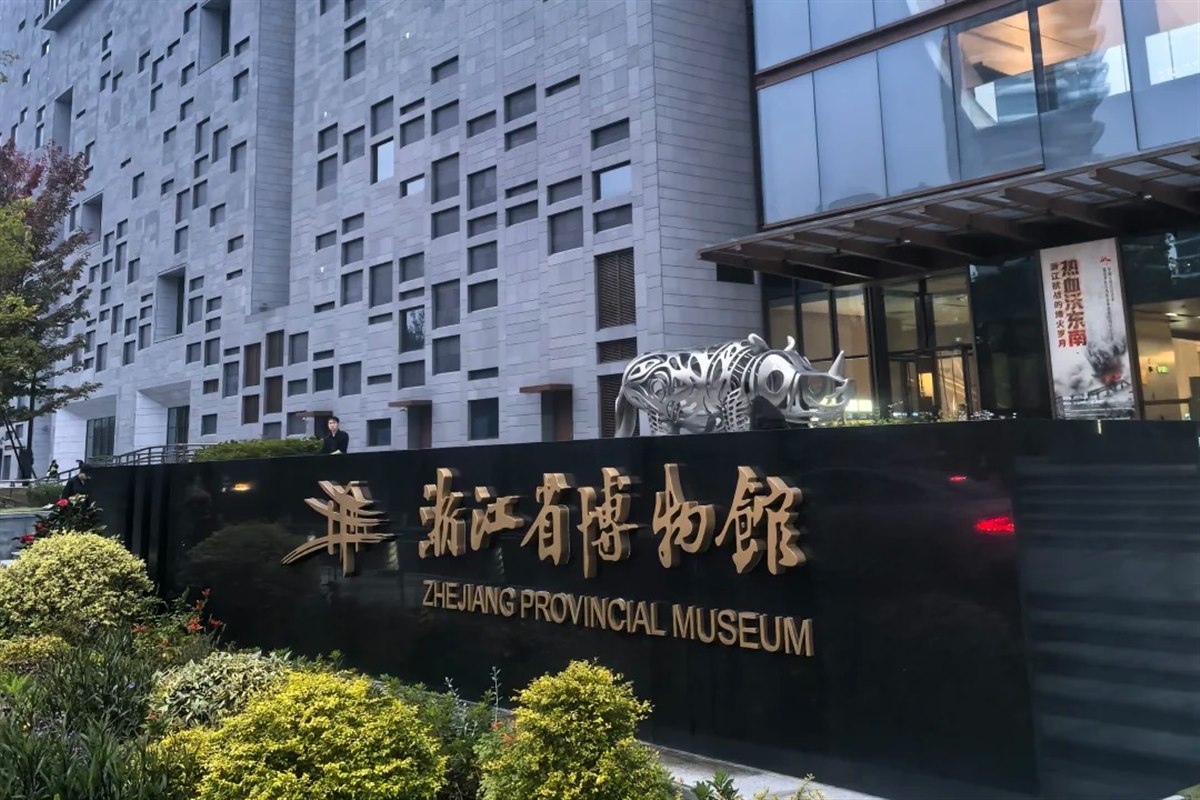
Ranked for a first-time foreign visitor rather than by collection size — which changes the order, because the museums that land hardest are the ones whose subject you already have a reference point for.
Liangzhu Museum 良渚博物院
⭐ Best single museum in Hangzhou for a foreign visitor
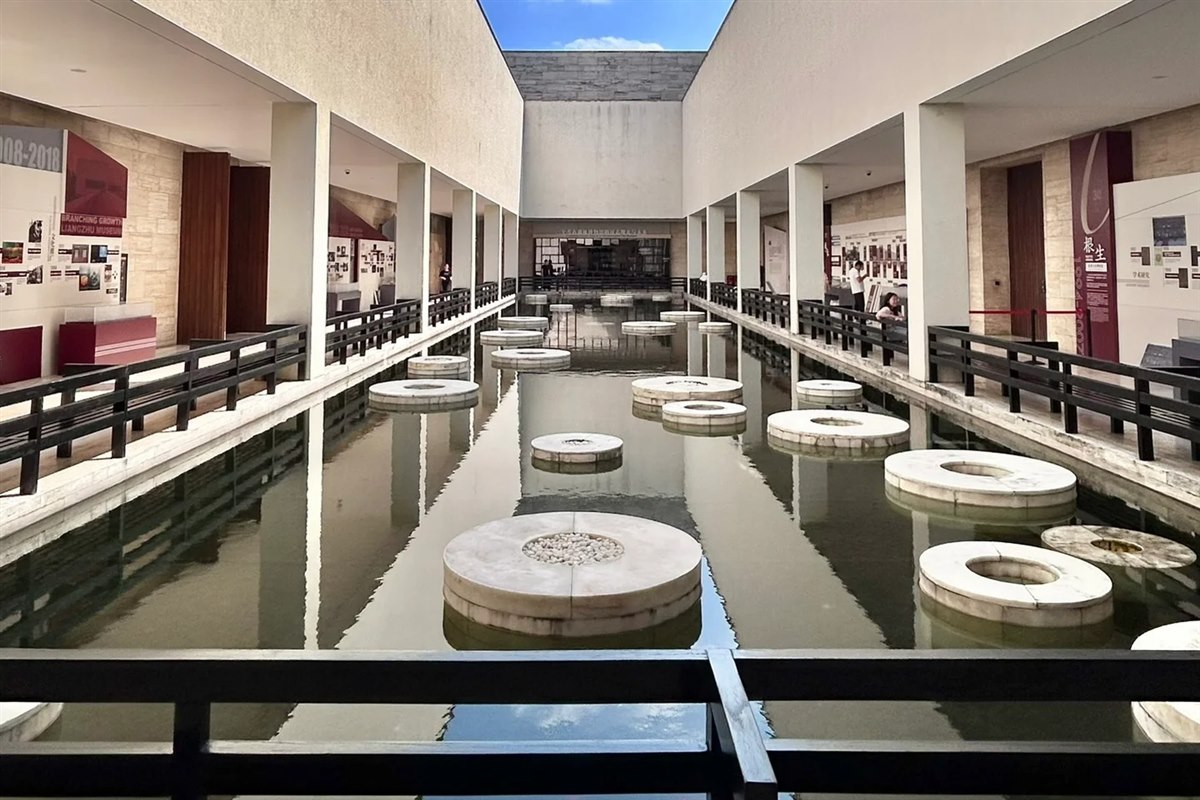
The jade is the reason to come: worked to a precision nobody expects from 5,000 years ago, by people with no metal tools. The third gallery, "Jade Soul", is the one to give your time to. The building is by David Chipperfield, Pritzker laureate 2023 — four not-quite-parallel bars clad in yellow travertine around three courtyards, on the concept of jade cones scattered on the ground. ⚠️ Two things are elsewhere: the ruins themselves are a separate ticketed site outside town, and the most famous single piece of Liangzhu jade — the 6.5 kg "king of cong" — is across the city at the Zhejiang Provincial Museum.
- Hours
- 09:00–17:00, last entry 16:30
- Booking
- Real-name, 1–7 days ahead — the one museum here that still always needs it
- Where
- 1 Meilizhou Road, Liangzhu — north-west, a genuine excursion. ⚠️ This is the museum, not the ruins (see below)
China National Silk Museum 中国丝绸博物馆
⭐ Easiest genuinely good visit — no booking, passport fine
The subject is what Hangzhou actually made, and silk is the one Chinese export already sitting in a Western school-history syllabus, so the referent is there before you arrive. Free since 2004, with free guided tours, free audio guides and demonstrations of historic looms on a garden campus.
- Hours
- 09:00–17:00, last entry 16:30
- Booking
- ✅ None needed. Official visitor information says an ID card or PASSPORT is accepted at the door
- Where
- 73-1 Yuhuangshan Road — just south of West Lake, easy to fold into a lake day
Qiaoxi canal craft cluster 工艺美术 · 伞 · 扇 · 刀剪剑博物馆
⭐ Best value per minute — and the whole cluster shuts Tuesday
Four museums in converted canal factories — arts and crafts, umbrellas, fans, and knives-scissors-swords — with hands-on intangible-heritage workshops (cutting paper, making an oiled-paper umbrella) and the Gongchen Bridge and canal lanes immediately outside. Treat it as one half-day, not four visits.
- Hours
- 09:00–16:30, last entry 16:00
- Booking
- None for the museums themselves; hands-on workshops may have their own sign-up
- Where
- Xiaohe Road 334 / 336 / 450, on the Grand Canal in the north — one walkable group
Zhejiang Provincial Museum (Zhijiang) 浙江省博物馆(之江馆区)
The province’s flagship, and the museum that actually holds the headline objects. The 6.5 kg jade cong from the Fanshan royal tomb — the finest single object Liangzhu produced — is here, not at the Liangzhu museum. So is the extravagantly carved “ten-thousand-workers” bridal palanquin (万工轿), and the museum’s half of Huang Gongwang’s “Dwelling in the Fu Chun Mountains”, burned in 1650 and surviving in two pieces, the shorter here and the longer in Taipei. ⚠️ Fragile paintings rotate; do not cross the city assuming the scroll is out. There is also a separately-ticketed interactive hall downstairs, aimed at children — the free permanent galleries are what you came for.
- Hours
- 09:00–17:00, last entry 16:30. ⚠️ Extended to 19:30 (last entry 19:00) from 29 July to 31 August 2026
- Booking
- ✅ None since September 2025 — individual visitors walk in
- Where
- Zhijiang Culture Centre, out west
Deshou Palace site museum 南宋德寿宫遗址博物馆
A Southern Song imperial palace excavated in situ and roofed over, which is the rarest kind of Chinese heritage site to visit: you are looking at the actual foundations rather than a reconstruction. Central enough to slot into an afternoon. A separately-ticketed evening banquet programme runs alongside it.
- Hours
- 09:30–17:00, last entry 16:30
- Booking
- None on weekdays; free advance booking at weekends and on holidays (opens 3 days ahead)
- Where
- 228–264 Wangjiang Road, ~460 m from Jiangchenglu metro exit E — central
Hangzhou Museum 杭州博物馆
⭐ Where the single most startling object in Hangzhou lives
Chinese visitors tend to rate this the weakest of the city museums, and on breadth of collection they are right. It is on this list for one object: a Warring States rock-crystal cup, excavated in Hangzhou in 1990, which looks so exactly like a modern drinking glass that it is disorienting to read the date on the label. In 2002 it was put on China’s first list of objects banned from ever leaving the country for exhibition — so this room is the only place on earth you can see it. Free, no booking, and a five-minute walk above Hefang Street.
- Hours
- 09:00–16:30, last entry 16:00
- Booking
- ✅ None, weekdays or weekends — swipe an ID at the door
- Where
- 18 Liangdaoshan Road, on Wushan hill above the old quarter (South building; a North building sits alongside and the two connect)
The Beijing-Hangzhou Grand Canal Museum 中国京杭大运河博物馆
The canal is a UNESCO World Heritage waterway and the reason Hangzhou became rich; this explains the engineering and the traffic, and it opened in 2006. ⚠️ It closes Monday while the craft museums a short distance away close Tuesday, so the two halves of a canal day do not share a day off. ⚠️ Do not confuse it with the vast new Grand Canal museum being built a few kilometres north — that building passed its completion inspection in June 2026 but has not opened to visitors, and mapping apps already list it with daily opening hours.
- Hours
- 09:00–16:30, last entry 16:00
- Booking
- None
- Where
- 34 Jinhua Road, Canal Culture Square — north, near the craft cluster
Wetland Museum 中国湿地博物馆
Free, quiet, heavy on interactive and AR displays, and the natural pairing with a Xixi Wetland visit rather than a standalone trip.
- Hours
- 09:00–16:30, last entry 16:00
- Booking
- None
- Where
- 402 Tianmushan Road, at the edge of Xixi
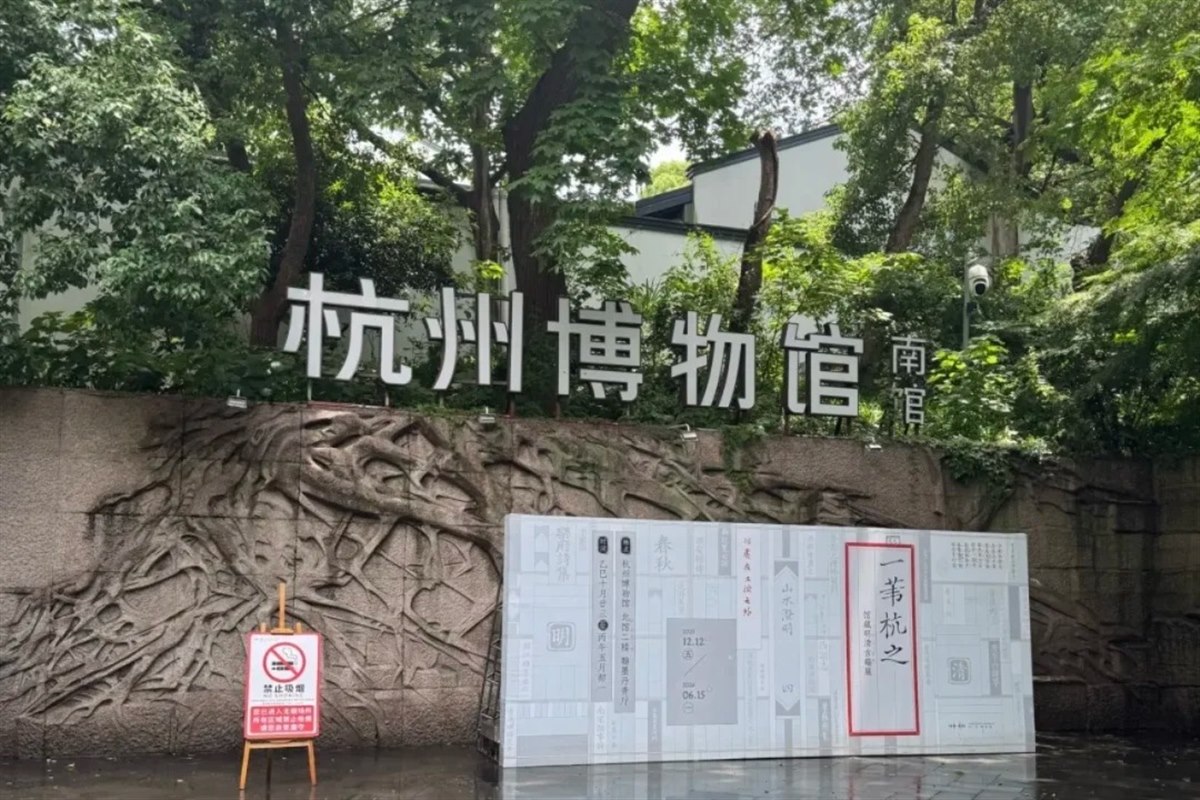
One more worth knowing about rather than planning around: the Zhejiang Museum of Natural History (浙江自然博物院) at West Lake Culture Square, closed Mondays and with seasonal hours, which is the one to use if you are travelling with children.
“Liangzhu” is two places, and most guides merge them
This is the one thing on the page worth reading twice, because getting it wrong costs a whole afternoon. Almost every English write-up treats the Liangzhu Museum and the Liangzhu ruins as a single visit. They are 4–5 km apart, they charge differently, and the World Heritage listing belongs to the second one. Follow a guide that merges them and you will spend the day looking at jade in an air-conditioned gallery and never see the 5,000-year-old city you came for — or the reverse, and stand in a field wondering where the jade is.
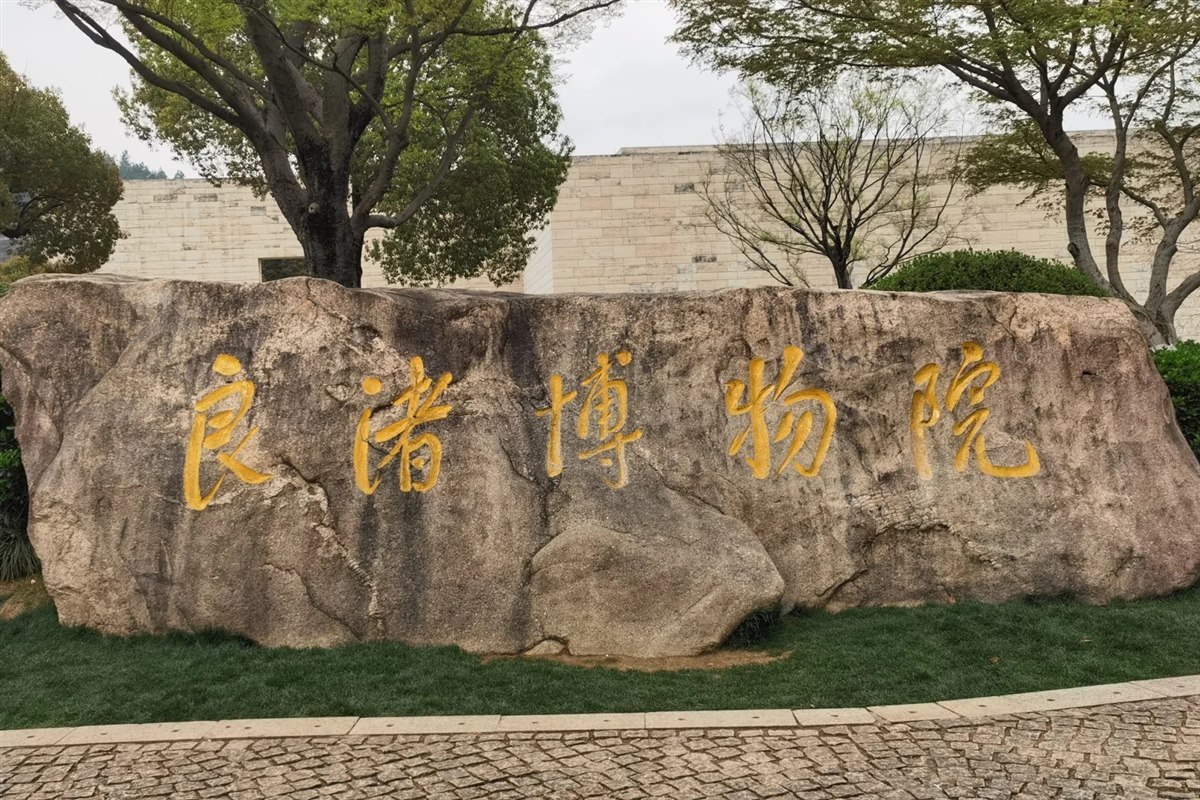
- Liangzhu Museum 良渚博物院
- Indoors, free, the jade and the Chipperfield building. Two to three hours, air-conditioned, quiet. Booking required (door QR usually works on a weekday).
- Liangzhu Ancient City ruins park 良渚古城遗址公园
- Outdoors, ¥60 plus ¥20 for the shuttle, and the shuttle is not optional in practice — the site is about 3 km². This is the walled city UNESCO inscribed in 2019: palace foundations, granaries, a deer enclosure. Entry 09:00–16:00, booked 1–7 days ahead in hourly slots.
Only doing one? Take the museum. The park rewards people who already know the story and want to stand in the place; visitors without that background consistently describe it as large grass fields and earth mounds, and in summer it is exposed and very hot. Getting between the two: metro Line 2 to Liangzhu, then bus 428M or 1222M, which also links the museum and the park; a taxi between them is 15–20 minutes.
Grouping them, because they are scattered
Hangzhou is large and these museums are not near each other. Grouping by geography rather than by theme is what makes them fit a normal trip.
| Cluster | What is there | Pair it with |
|---|---|---|
| South of West Lake | China National Silk Museum | A West Lake day — it is close enough to be an add-on rather than a trip |
| The canal, north | The four craft museums (closed Tue) + Grand Canal Museum (closed Mon) | The Grand Canal and Gongchen Bridge, straight out of the door |
| Central, Wushan | Hangzhou Museum (closed Tue) · Deshou Palace site museum | Hefang Street and the old quarter directly below |
| North-west excursion | Liangzhu Museum (book ahead) and, separately ticketed, the Liangzhu archaeological park | Nothing — give it its own half-day and book first |
| The tea hills | China National Tea Museum (closed Tue) | The Longjing tea villages — it belongs to a tea afternoon, not a museum day |
If you have one museum morning, take the Silk Museum and read the silk buying guide before you go anywhere near a shop. If you have a whole day and can get a booking, take Liangzhu. If you have a rainy afternoon and want to make something with your hands, take the canal craft cluster — but not on a Tuesday.
Frequently asked questions
Which day are Hangzhou museums closed?
There is no single answer, and this is the trap. Most of China's museums close on Mondays, and most of Hangzhou's do — Liangzhu Museum, the China National Silk Museum, the Zhejiang Provincial Museum's Zhijiang building, the Zhejiang Museum of Natural History, the Wetland Museum, the Grand Canal Museum and the Deshou Palace site museum all shut on Monday. But six close on TUESDAY instead: Hangzhou Museum, the China National Tea Museum, and all four museums of the Qiaoxi canal craft cluster — Arts and Crafts, Umbrella, Fan, and Knife, Scissors and Sword. So a Tuesday plan built around the canal craft museums loses all four at once, and there is no day of the week on which you can see both the Silk Museum and the Tea Museum. Nearly all of them open as normal on national public holidays and take the closure the following day instead.
Do I need to book Hangzhou museums in advance, and how does that work with no WeChat?
Less than most guides suggest, because Hangzhou has been removing these systems rather than adding them. Three patterns now. No booking at all: the China National Silk Museum (whose own visitor information says a passport counts as valid ID), the Zhejiang Provincial Museum's Zhijiang building — which dropped its requirement in September 2025 and asks overseas visitors to register passport details in its own mini-programme and be verified at the door — plus Hangzhou Museum, the Grand Canal Museum, the Wetland Museum and the Qiaoxi craft cluster. No booking on weekdays but a free advance booking at weekends and holidays: the China National Tea Museum and the Deshou Palace site museum, where slots are released three days ahead at 09:00 and travellers report the weekend ones going quickly. And exactly one museum that always needs booking: Liangzhu, real-name, one to seven days ahead through a Chinese mini-programme, one booking per ID document per day. Even Liangzhu has a QR code at the entrance that usually still has weekday slots. If you do not use WeChat, build your day out of the walk-in museums and ask a hotel front desk to make the Liangzhu booking — it is a routine request, not a favour.
Which Hangzhou museum is best for a first-time foreign visitor?
Liangzhu Museum, on two independent grounds. Its subject is a 5,000-year-old culture roughly three thousand years older than the Terracotta Army — the comparison that makes it land for a visitor who has one Chinese-archaeology reference point — and the jade was worked to a precision nobody expects from people with no metal tools. The building itself is by David Chipperfield, who won the Pritzker Prize in 2023: four not-quite-parallel stone bars around three courtyards, built on the concept of jade cones scattered on the ground. Two catches. It is the one museum that still always needs an advance reservation, though a door QR usually works on a weekday. And the walled city UNESCO inscribed in 2019 is not here — it is at the archaeological park 4–5 km away, which is ticketed and a separate half-day. Second pick is the China National Silk Museum, which is free, needs no booking, accepts a passport and explains the thing Hangzhou actually made.
Is the Liangzhu Museum the same thing as the Liangzhu ruins?
No, and merging them is the most common mistake in English coverage of Hangzhou. The Liangzhu Museum (良渚博物院, 1 Meilizhou Road) is an indoor, free museum holding the jade and the archaeological interpretation. The Liangzhu Ancient City Ruins Park (良渚古城遗址公园) is the World Heritage site itself — the excavated walled city, its palace foundations and granaries — about 4–5 km away, entered on a ¥60 ticket with a ¥20 shuttle pass on top, and it is roughly 3 km² so the shuttle is not really optional. The park books one to seven days ahead in hourly slots and stops admitting at 16:00. If you only have time for one, take the museum: the park rewards visitors who already know the story and want to stand in the place, while people without that background tend to describe it as grass and earth mounds, and in summer it is exposed and very hot. To move between them, take metro Line 2 to Liangzhu and then bus 428M or 1222M, which serves both; a taxi is 15–20 minutes.
Are Hangzhou’s museums free?
The main ones are, yes — Liangzhu Museum, the China National Silk Museum (free since 2004), the China National Tea Museum, the Zhejiang Provincial Museum, the Deshou Palace site museum, the Wetland Museum and the Qiaoxi craft museums are all free to enter. What costs money is a layer on top: temporary special exhibitions at some museums, and separately-ticketed evening programmes such as the Deshou Palace night event. Free does not mean walk-in, though — several of these need a reservation, which is the constraint that actually shapes your day rather than the price.
What is in the Zhejiang Provincial Museum that I would not see elsewhere?
Three signature objects, and the first one surprises people who have just come from Liangzhu. The 6.5 kg jade cong from the Fanshan royal tomb — the largest and finest object the Liangzhu culture produced, and the piece its carved deity-and-beast motif is defined by — is held here, not at the museum named after Liangzhu. Then the 'ten-thousand-workers' bridal palanquin' (万工轿), an extravagantly carved late-Qing wedding sedan chair. And the museum's half of Huang Gongwang's 'Dwelling in the Fu Chun Mountains' — the painting was burned in 1650 and survives in two pieces, the shorter fragment here in Hangzhou and the longer scroll in Taipei, which makes it one of the more poignant objects in Chinese art. ⚠️ Fragile paintings are shown in rotation rather than permanently, so look up the current rotation on the museum's own listing before crossing the city specifically for the scroll. Note that the Warring States rock-crystal cup often listed among this museum's treasures is not here either — it belongs to Hangzhou Museum, up on Wushan.
How should I fit museums around the rest of Hangzhou?
Group them geographically, because they are scattered and Hangzhou is large. The Silk Museum is just south of West Lake and folds into a lake day easily. The Qiaoxi craft cluster — four museums plus workshops — sits together on the Grand Canal in the north, and you walk out of them onto the Gongchen Bridge, so treat that as one half-day and not four visits. The Deshou Palace site museum is central. Liangzhu is a genuine excursion to the north-west and wants its own half-day plus the reservation. The Zhejiang Provincial Museum's big new building is out west at the Zhijiang Culture Centre. The Tea Museum is up in the tea hills and belongs to a Longjing afternoon, not to a museum day.
Sources
Checked August 2026 · Written from our own first-hand travel in China.